
How to Read RSRP, RSRQ and SINR When a 5G Router Keeps Dropping Offline
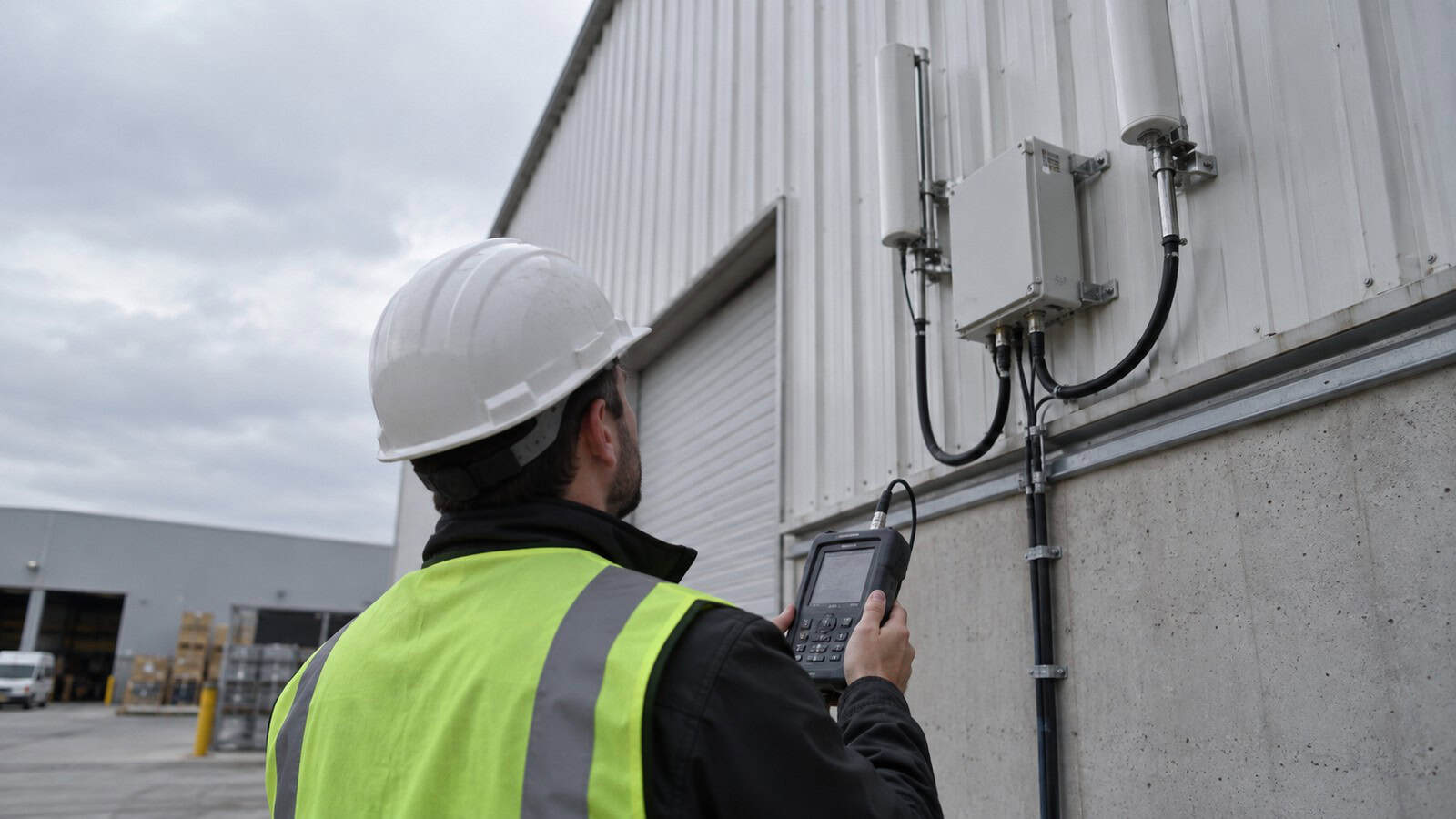
The Robustel R5010 Industrial 5G Router is useful in difficult RF installations because its compact form and Ethernet or USB handoff allow the cellular device to be positioned closer to a practical antenna location. When a connection drops, however, relocation should follow evidence. RSRP, RSRQ and SINR describe different parts of the radio condition, and none proves that the application is healthy.
What RSRP, RSRQ and SINR Say Together
RSRP indicates received reference-signal power. RSRQ adds a quality view influenced by total received energy and load. SINR describes useful signal relative to interference and noise. Names and implementations vary between LTE and 5G measurements, so use the router’s reported technology, band and cell alongside the values.
| Pattern | Likely interpretation | First check |
|---|---|---|
| Weak RSRP, acceptable quality | Coverage or feeder loss may dominate | Antenna position, cable and connectors |
| Adequate RSRP, poor RSRQ/SINR | Interference, congestion or an unsuitable cell may dominate | Time-of-day and cell/band changes |
| All metrics fluctuate together | Movement, obstruction, loose RF path or cell reselection is plausible | Physical installation and event timeline |
| Metrics stable, service fails | Look beyond RF | Registration, IP, VPN and application logs |
Do not apply a universal “good” threshold without context. A stable low-rate telemetry session and a high-rate upstream workload have different margins, and operators may expose measurements differently.
The Robustel R5010 5G router introduction video helps explain why an externally positioned cellular handoff can be valuable. It should prompt a site-placement test, not a conclusion that moving the router alone will fix every dropout.
Reconstruct the Minute Before the Dropout
From a support engineer’s perspective, a screenshot taken after service has recovered is weak evidence. I would align radio measurements with registration, IP addressing, VPN state and the application alarm on one timeline. The first layer to change narrows the investigation; later changes may simply be consequences.
Collect a time series rather than a screenshot. Record RSRP, RSRQ, SINR, radio technology, band, serving cell, registration state, IP address and the application symptom. A five-minute average can hide the short event that actually breaks a VPN or remote session.
The incident timeline should distinguish four recoveries: radio registration, IP reachability, VPN establishment and application usability. If the radio recovers at 10:02 but the application returns at 10:07, the remaining five minutes belong to another layer. This avoids repeatedly adjusting antennas for a session-recovery problem.
Robustel’s Jones Technology retail resilience case study records the operational reality of a distributed cellular estate, where local RF and installation conditions differ. It supports per-site baselining and central visibility; it does not supply a transferable signal threshold.
When Strong Signal Still Produces a Poor Link
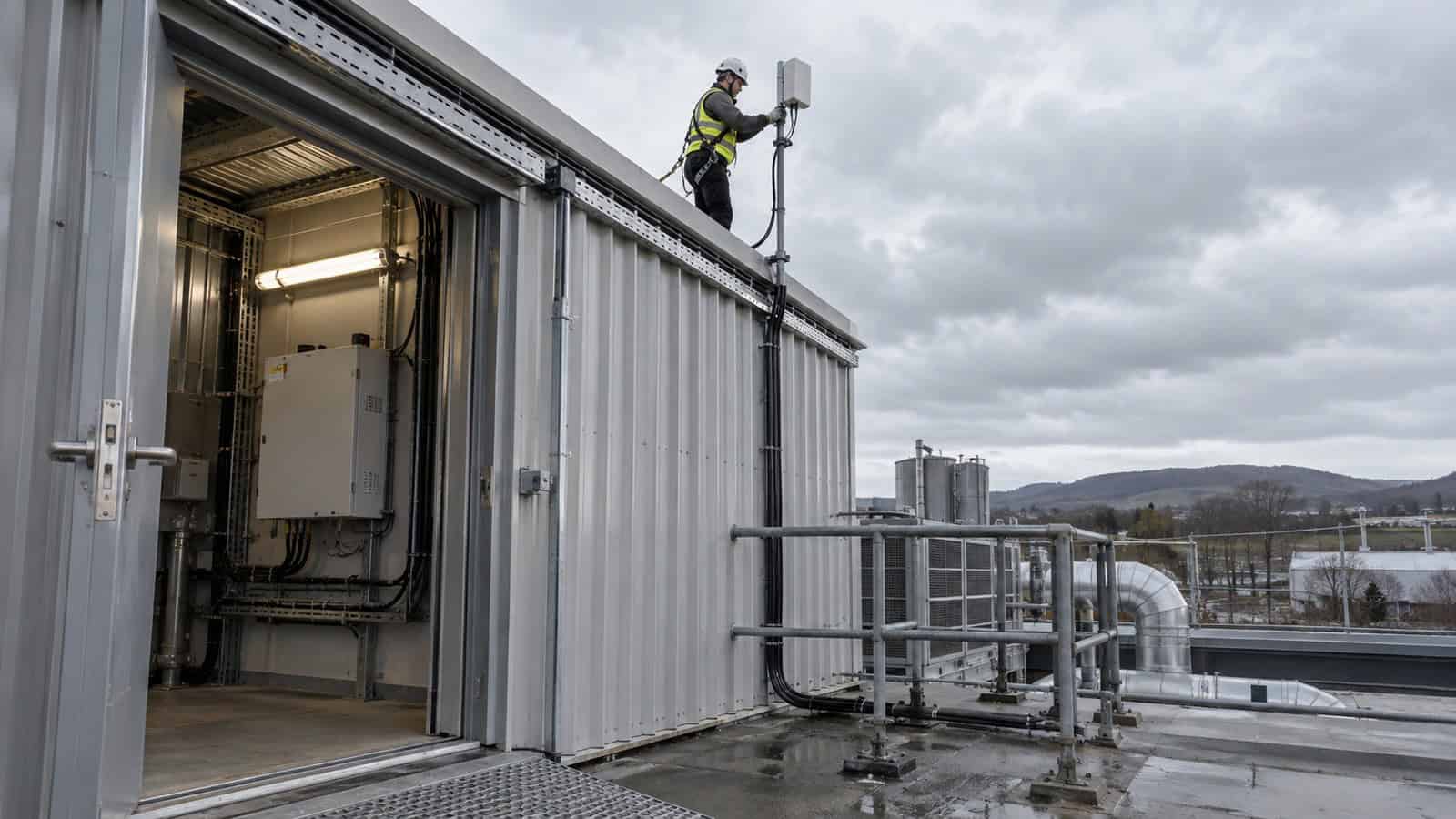
When RSRP is weak across repeated observations, inspect antenna placement, polarization, cable loss, connectors and obstructions before changing network policy. Test at the intended mounting point and during representative operating periods. A temporary antenna on an open desk is not evidence for a closed metal cabinet.
When power is reasonable but quality deteriorates, compare busy and quiet periods and note cell or band changes. The radio may be receiving a strong signal in a contested environment. An antenna change that raises power but also collects more interference can leave the application no better.
Use the following fault record so each intervention has a measurable result:
- capture the failure timestamp and user-visible symptom;
- preserve radio, registration, IP and VPN state around the event;
- change one variable—position, cable, antenna, band policy or operator;
- repeat the same workload and observation period; and
- accept the change only if both radio stability and application recovery improve.
Using the Robustel R5010 Industrial 5G Router to Move the RF Boundary
Robustel R5010 industrial 5G router provides global 5G/4G/3G support, four cellular antenna connections, dual physical SIM slots, one 2.5 GbE LAN port, USB modem mode and RCMS management. The design allows the cellular endpoint to sit where the RF path is more workable while handing service to an existing firewall or appliance.
RCMS visibility can help operations compare signal strength and network status across a fleet. That is valuable for spotting a site whose baseline has changed, but it does not prove the antenna, carrier or application is at fault. Preserve local event logs and correlate layers before dispatching an engineer.
| R5010 evidence | What it can answer | What still needs testing |
|---|---|---|
| Signal and network status over time | Whether RF or registration changed near the event | Antenna cause, interference source and carrier condition |
| Dual-SIM behaviour | Whether an alternate subscription restores service | Shared antenna, power and router failure domains |
| Ethernet or USB handoff | Whether the upstream appliance sees link and IP recovery | VPN and application session recovery |
Robustel’s Fixed-Line Backup over 5G with the R5010 Application Example makes the handoff boundary explicit. Use it to test the cellular and firewall recovery sequences separately; the architecture is illustrative, not a measured coverage result.
What a Useful Escalation Record Contains
If the problem survives placement and configuration checks, send the operator or support team a compact record: timestamps with timezone, site coordinates at suitable precision, router and modem versions, SIM/operator, serving technology and band, metric traces, registration events and a description of the failing traffic. Remove credentials and personal data.
A reproducible evidence pack shortens the argument over whether the symptom is “poor signal”. It also gives engineering a before-and-after record when firmware, antennas or carrier policy changes.
Preguntas frecuentes
Q1. What is a good signal strength for a 5G router?
There is no single value that guarantees a stable application. Interpret RSRP with RSRQ, SINR, the active band and a representative workload, then compare the result with a known-good baseline at the same site.
Q2. What is the difference between RSRP and RSRQ?
RSRP describes received reference-signal power, while RSRQ adds information about signal quality relative to the wider received energy. Strong power with poor quality can indicate a busy or interfered radio environment.
Q3. Why does my 5G router keep disconnecting with a strong signal?
Signal power is only one layer. Poor quality, cell changes, registration faults, IP renewal, VPN recovery or the application’s own retry behaviour can all interrupt service even when RSRP looks strong.
Q4. Does an external antenna improve 5G router signal?
It can improve the RF path when correctly selected and installed, but cable loss, polarization, band support and interference matter. Compare logged metrics and application stability before and after the complete antenna installation.
Q5. When is the Robustel R5010 Industrial 5G Router a good fit for weak-signal sites?
It fits architectures that benefit from placing a compact managed 5G endpoint near a better antenna position and handing connectivity to an existing network appliance. The final antenna, carrier and installation still require a site-specific test.
Conclusión
For sites where antenna placement and radio evidence matter more than local port count, the Robustel R5010 Industrial 5G Router provides a focused cellular boundary for investigation. The model is a fit when the upstream network function already exists and the engineering team can position the cellular endpoint where the RF conditions justify it.
The next decision comes from the timeline: identify whether radio, registration, addressing, VPN or application state changes first, then change one part of the installation and repeat the same test.
Explore More Articles About Robustel 5G Routers
Acerca del autor
Robert Liao | Technical Support Engineer
Robert is an IoT Technical Support Engineer at Robustel, specializing in industrial networking and edge connectivity. A certified Networking Engineer, Robert focuses on the deployment and troubleshooting of large-scale IIoT infrastructures. His work centers on architecting reliable, scalable system performance for complex industrial applications, bridging the gap between field hardware and cloud-side data management.