
E2C Facility
Smart Building Edge Integration for Distributed Facilities
Bring wired and wireless building systems together on a single operational edge platform. E2C Facility helps organisations modernise existing buildings, simplify integration across diverse devices and protocols, and create a more consistent operational layer across distributed sites.
Designed to work alongside the systems customers already rely on, E2C Facility extends existing BMS, Niagara and enterprise environments rather than replacing them. The result is a practical way to add new sensors, improve local automation, strengthen operational visibility and scale smarter building solutions with less engineering overhead.
Talk to an Building Technology Specialist
Why Smart Buildings Need E2C Facility
Modern buildings are full of useful systems, sensors and operational data, but they are rarely designed to work together. HVAC may run on BACnet, lighting on KNX, metering on M-Bus or P1, and newer wireless sensors on LoRaWAN. Each technology may work perfectly well on its own, yet the result is often a fragmented environment that becomes harder to integrate, monitor and scale as requirements grow.
The problem becomes even greater when organisations need to modernise existing buildings or operate many smaller sites. Traditional retrofit projects can involve costly wiring, multiple gateways, extensive on-site engineering and repeated commissioning at every location. What should be a simple improvement quickly becomes a major integration project.
Retrofitting Shouldn’t Mean Rebuilding
Adding new sensors to an existing building can mean opening walls, installing conduit and disrupting normal operations. Wireless technologies create a much simpler path to modernisation, particularly where new cabling is expensive or impractical.
Too Many Systems, Too Little Integration
BACnet, KNX, M-Bus, Modbus, LoRaWAN and other building technologies often exist as separate ecosystems. Without a common edge layer, projects can require multiple gateways and integration tools just to make operational data available where it is needed.
One Site Is Manageable. One Hundred Is Different.
Distributed estates such as retail stores, restaurants, bank branches, schools and other smaller facilities introduce a different challenge. Repeating hardware, software, engineering and maintenance at every site quickly increases cost and operational complexity.
Building Intelligence Should Extend What You Already Have
Most organisations already have a BMS, cloud platform, enterprise software or established operational workflows. Modernisation should make those investments more useful, not force customers into another isolated system or a disruptive replacement project.
E2C Facility creates the operational edge layer between these worlds, helping customers connect existing building systems, introduce new wireless technologies and scale smarter facility operations without starting again.
Who is E2C Facility Designed For?
E2C Facility is built for organisations that need smarter buildings without the cost, disruption or complexity of traditional building automation projects.
Whether the challenge is modernising an existing site, standardising hundreds of smaller facilities, integrating mixed building technologies or adding intelligence around OEM equipment, E2C Facility provides a practical edge platform that helps turn fragmented systems into a more connected, scalable operational environment.
Smart Building
System Integrators

Deliver building automation and retrofit projects faster using familiar engineering workflows, reusable templates and a common edge platform across multiple sites. E2C Facility helps reduce repeated engineering, simplify integration across wired and wireless systems, and support projects that need to connect existing BMS environments with new sensors, protocols and cloud services.
Facility Owners
& Operators

Improve visibility, monitoring and control across individual buildings or distributed estates without replacing existing infrastructure. E2C Facility helps bring building systems, meters, wireless sensors and operational data together, making it easier to understand site performance, respond to issues and introduce smarter facility management capabilities gradually as operational needs evolve.
OEMs & Equipment Manufacturers

Turn standalone HVAC, refrigeration, chiller, pump and other equipment into more complete site-level solutions. E2C Facility adds connectivity, local control, visualisation and remote operations around existing equipment, helping OEMs deliver greater customer value while reducing the need for customers to source separate gateways, servers and integration software.
Multi-Site
Organisations

Standardise how retail, hospitality, banking, education, healthcare and other distributed facilities are connected, monitored and managed. E2C Facility helps reduce repeated site engineering, simplify deployment and create a consistent operational model across large estates, while still allowing individual locations to retain the building systems and equipment already in place.
Simplifying Building Systems Integration
Modern buildings rarely rely on a single technology. HVAC, lighting, metering, environmental sensors and control systems often use different protocols, different management tools and different integration methods. Each system may work well on its own, but bringing them together can quickly add cost, engineering effort and operational complexity, particularly when new wireless technologies are introduced alongside existing wired infrastructure.
E2C Facility creates a common edge layer between these systems, making it easier to collect, process and exchange building data without forcing customers to replace the platforms they already use. By combining multi-protocol integration, local intelligence and support for both wired and wireless devices, it provides a more practical foundation for modernising individual buildings and scaling consistent operations across distributed sites.
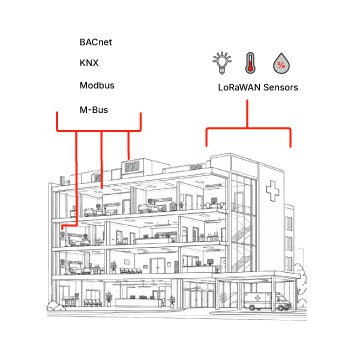
Bring Wired and Wireless Systems Together
E2C Facility brings LoRaWAN sensors together with BACnet, KNX, Modbus, M-Bus, P1 and other building technologies through a common edge platform. Instead of adding separate gateways, middleware and management tools for every new system, organisations can create a more consistent integration layer that connects existing building infrastructure with newer wireless technologies as requirements evolve.
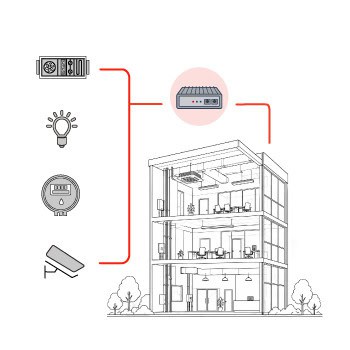
Modernise Without Rewiring the Building
Upgrading an existing facility should not automatically mean opening walls, installing new conduit or disrupting normal operations. E2C Facility makes it easier to introduce wireless sensors and monitoring alongside established wired systems, providing a practical retrofit path for buildings where conventional installation costs, construction work or site downtime would otherwise make modernisation difficult to justify.
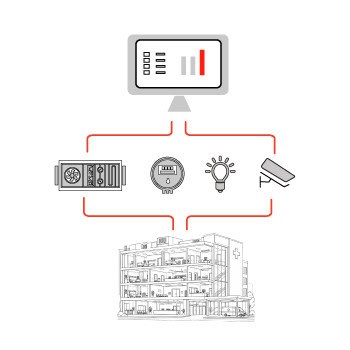
Create a Unified Operational View
Building data is often spread across HVAC, lighting, metering, environmental monitoring and other systems that were never designed to work together. E2C Facility collects and normalises this information at the edge, making it easier to build a more complete picture of facility performance and deliver useful operational data into BMS, dashboards, cloud services and enterprise applications.
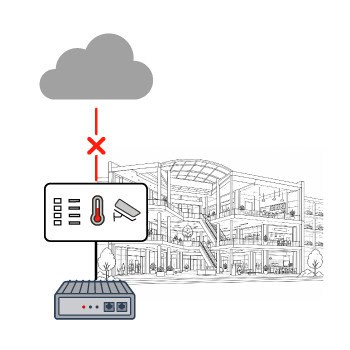
Run Automation and Intelligence Locally
Not every building decision should depend on a cloud connection. E2C Facility supports local data processing, alarms, control logic and automation directly at the edge, allowing important workflows to continue even when external connectivity is unavailable. This also helps reduce response times and gives organisations greater flexibility over where building data is processed and operational decisions are made.
Scale Consistently Across Multiple Sites
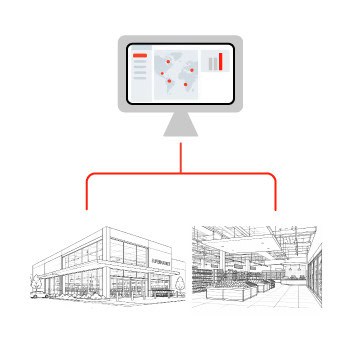
Managing one building is very different from managing dozens or hundreds of smaller locations. E2C Facility provides a repeatable edge architecture that can be applied across chain stores, campuses, schools, clinics, OEM sites and other distributed estates. Standardising how sites are connected, integrated and managed helps reduce repeated engineering while making future deployments easier to commission, support and expand.
Extend the Systems You Already Use
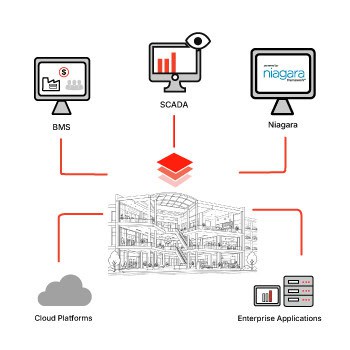
E2C Facility is designed to strengthen existing building ecosystems rather than replace them. It works alongside BMS, SCADA, Niagara, cloud platforms and enterprise applications, providing an edge integration layer that helps those systems access more devices, protocols and operational data. Customers can modernise gradually while protecting existing software investments, engineering knowledge and established operational workflows.
Built for Modern Building Operations
E2C Facility is designed to help organisations simplify building system integration, wireless retrofits, local automation, and operational visibility across individual buildings and distributed estates. From connecting existing building infrastructure through to adding new sensors and integrating with BMS and cloud platforms, E2C Facility supports practical modernisation without requiring wholesale replacement of proven systems.
|
Operational Challenge |
How E2C Field Helps |
|---|---|
|
Costly & Disruptive Building Retrofits |
Introduce new sensing, monitoring, and control capabilities using LoRaWAN alongside existing wired infrastructure, reducing the need for extensive new cabling, construction work, and disruption when modernising occupied or established facilities. |
|
Fragmented Building Protocols |
Bring BACnet, KNX, Modbus, M-Bus, P1, LoRaWAN, OPC UA, and other supported technologies together through a common edge integration layer designed to simplify communication across mixed building environments. |
|
Complex Sensor Onboarding |
Accelerate wireless deployments using built-in LoRaWAN device codecs and zero-touch onboarding workflows that simplify discovery, payload decoding, and consistent data mapping across multiple supported sensor types. |
|
Limited Visibility Across Building Systems |
Collect operational data from HVAC, lighting, metering, environmental sensors, and other facility systems to support local dashboards, alarms, historical data, and a more complete view of building performance. |
|
Dependence on Cloud Connectivity |
Process data and execute alarms, logic, and automation locally at the edge, helping important facility workflows continue during network interruptions while synchronising operational information with upstream systems when connectivity is available. |
|
Complex Building Automation Workflows |
Support local automation through scenario management, Node-RED logic orchestration, alarm management, data processing, and Niagara-based control options, giving integrators multiple ways to build workflows appropriate to each facility. |
|
Disconnected BMS & Operational Platforms |
Deliver building data into existing BMS, SCADA, Niagara, MQTT, cloud, and enterprise environments through interoperable northbound interfaces, helping customers extend the systems they already use rather than creating another isolated platform. |
|
Scaling Across Multiple Facilities |
Standardise deployments using repeatable architectures, reusable engineering approaches, and remote management capabilities designed for chain stores, campuses, OEM sites, and other distributed estates where repeating traditional engineering at every location becomes difficult to scale. |
Core Operational Capabilities of E2C Facility
E2C Facility combines building connectivity, edge processing, automation, data management, visualisation and system integration within a single operational platform. These capabilities work together to help organisations modernise existing facilities, introduce new wired and wireless technologies, reduce integration complexity and manage building operations more consistently from the edge.
Unified Building Data Collection
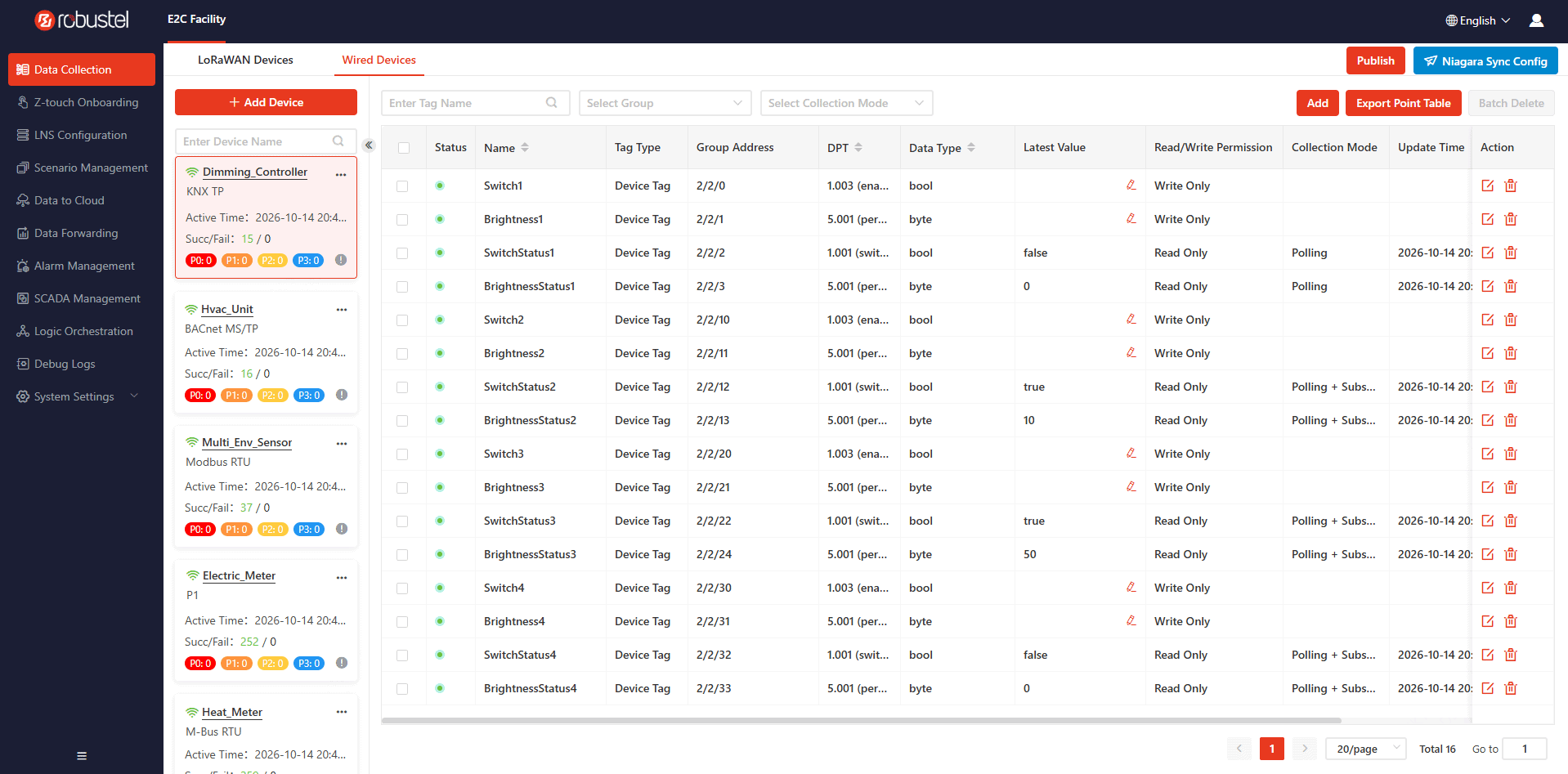
Collect data from wired and wireless building systems through a common edge platform, including LoRaWAN, BACnet/IP, BACnet MS/TP, KNX TP, Modbus TCP/RTU, OPC UA, M-Bus, P1 and local I/O. Built-in device support, integrated LNS functionality, codec libraries and zero-touch sensor onboarding help simplify device discovery, payload decoding and data mapping, reducing the engineering required to connect new sensors and integrate them alongside existing building infrastructure.
Logic Orchestration
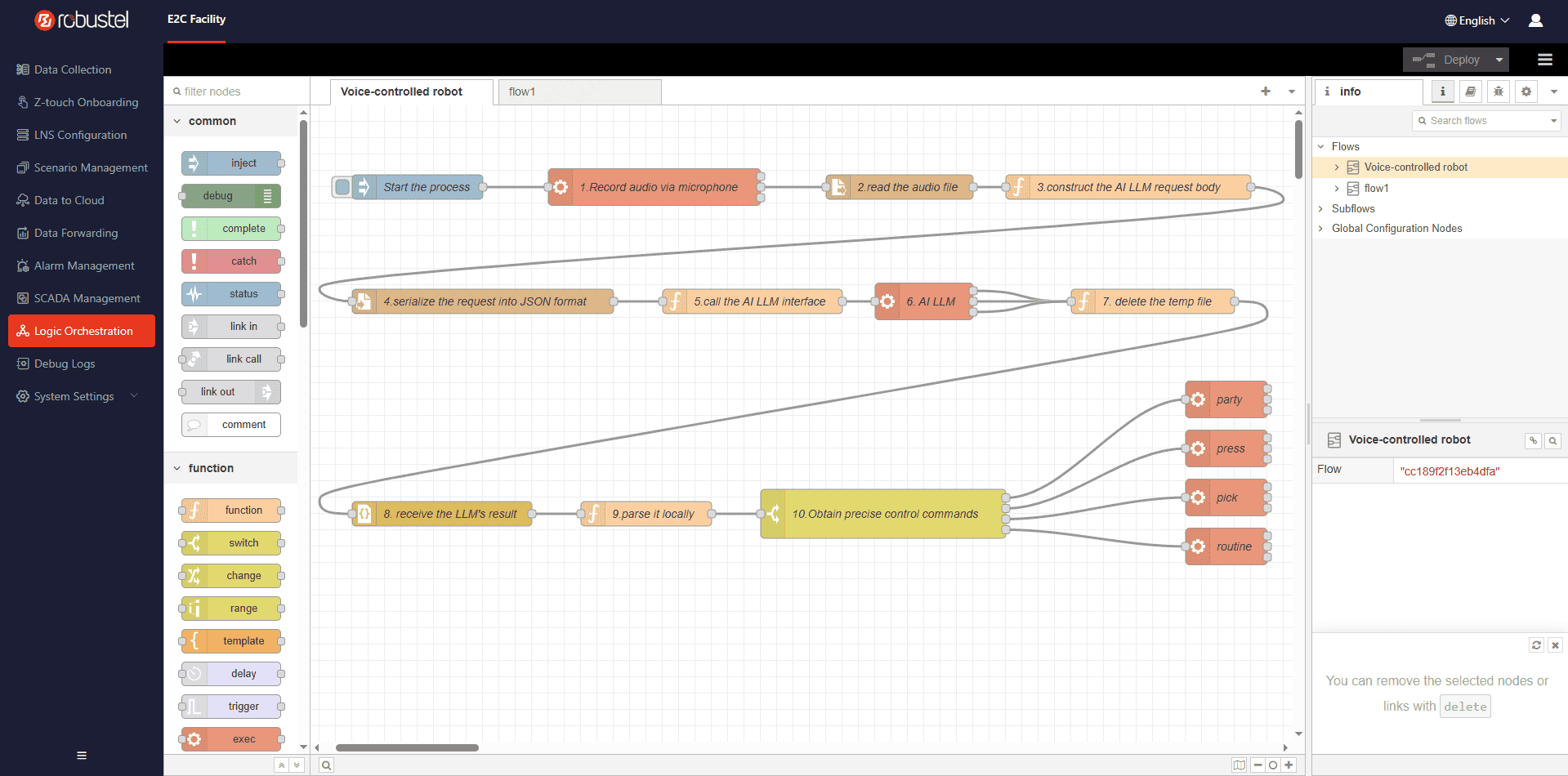
Build edge workflows visually using Node-RED and dedicated E2C nodes that connect collected operational data directly into processing, automation and integration flows. Engineers can read, transform and write device data using drag-and-drop logic, create custom workflows and deploy private algorithms or AI models without developing every integration from scratch. This provides a flexible low-code environment for adapting E2C Facility to specific building, energy and operational requirements.
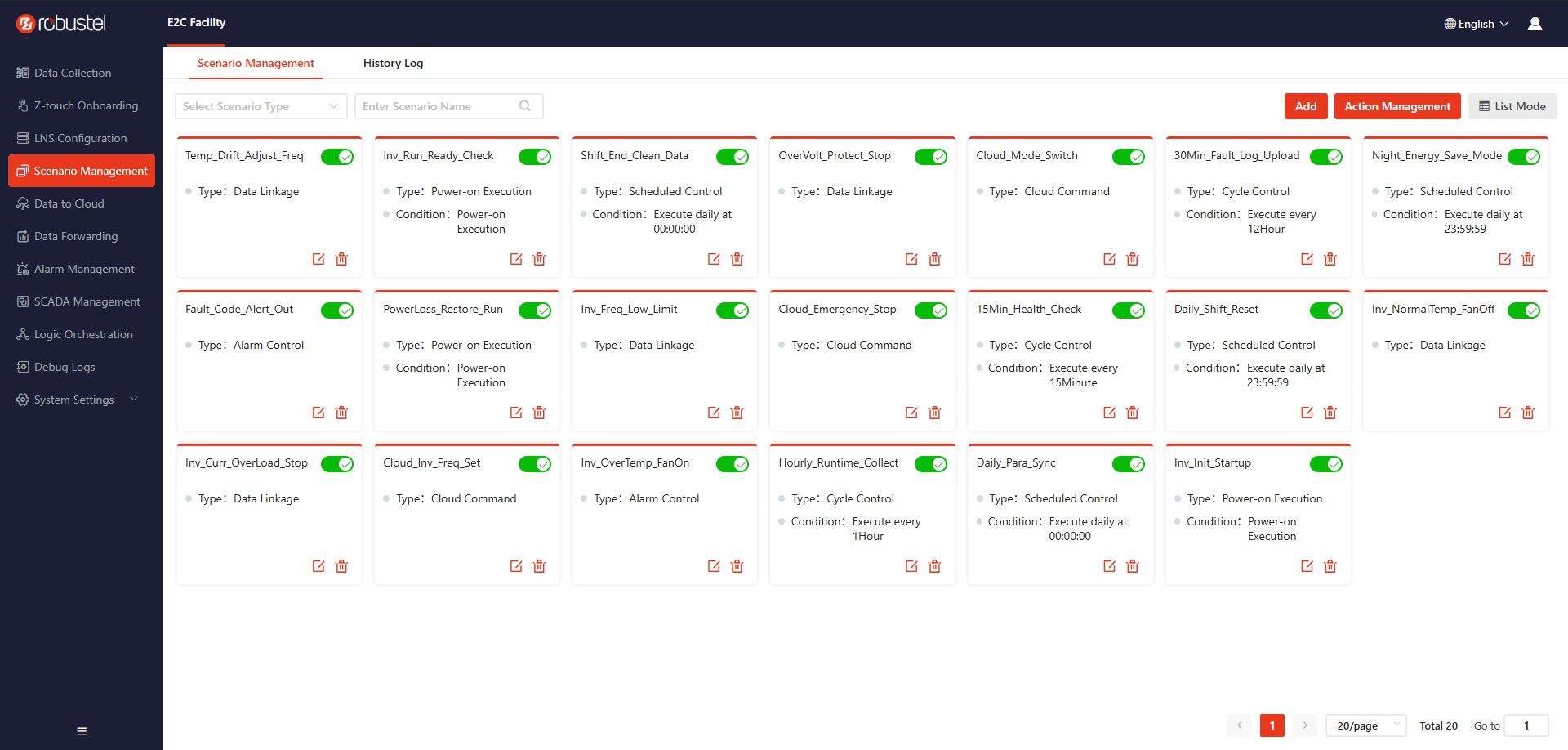
Scenario Management
Create automated building workflows using configurable triggers, schedules, alarms, linkage rules, cloud commands and reusable formulas. Scenario Management provides a visual, zero-code approach to common automation tasks, allowing engineers to define actions and responses without conventional application development. Reusable logic, execution logs and traceability make it easier to standardise workflows across equipment, rooms, buildings or distributed sites while maintaining visibility into how each scenario is operating.
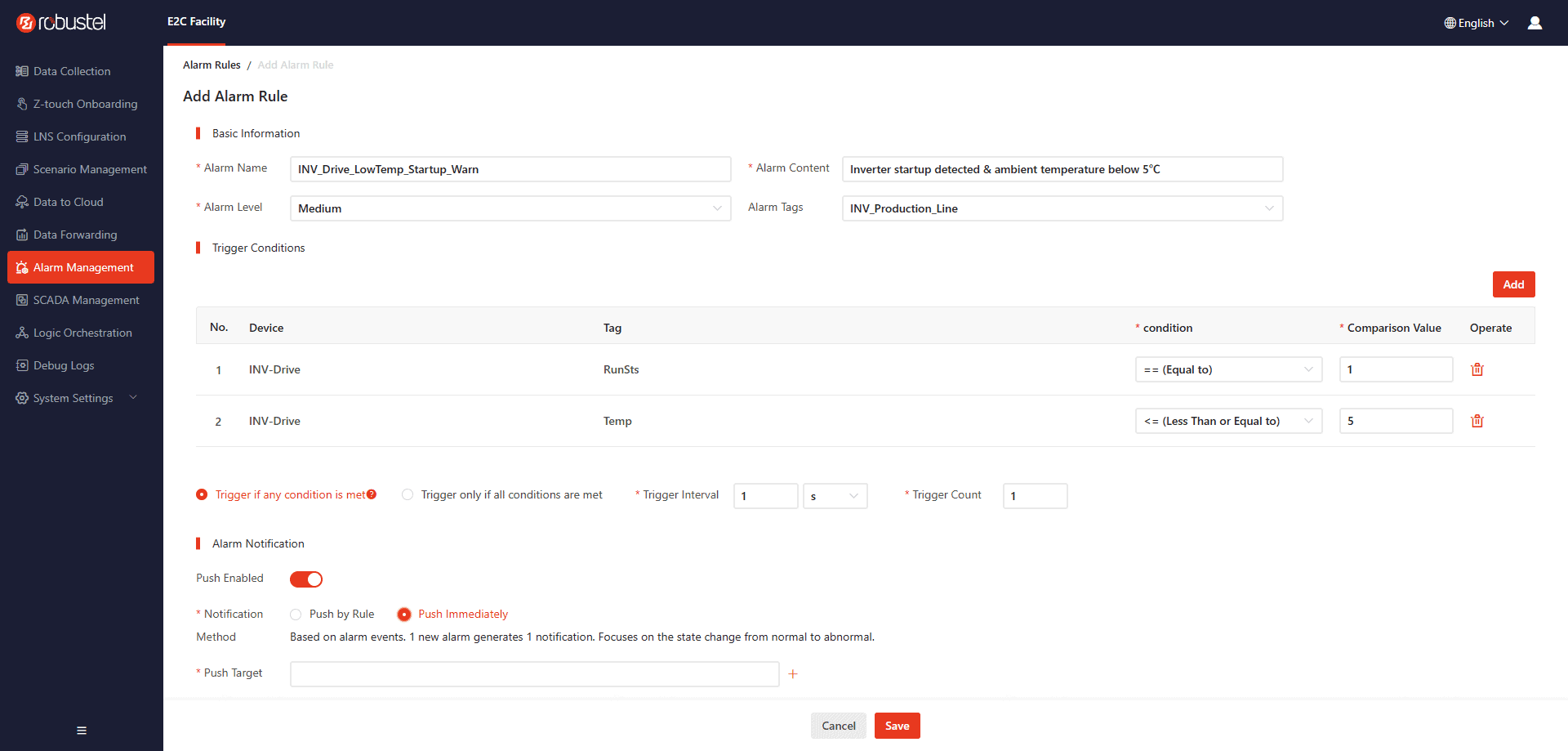
Real-Time Alarm Management
Turn building and equipment data into actionable operational alerts using flexible alarm rules, threshold monitoring, historical logs and configurable notification workflows. E2C Facility supports multi-channel notifications including email, SMS and supported messaging platforms such as WhatsApp, Telegram and WeCom. Custom message templates and alarm status tracking help operators focus on meaningful events, improve response times and maintain a clearer operational record across individual buildings and distributed facility environments.
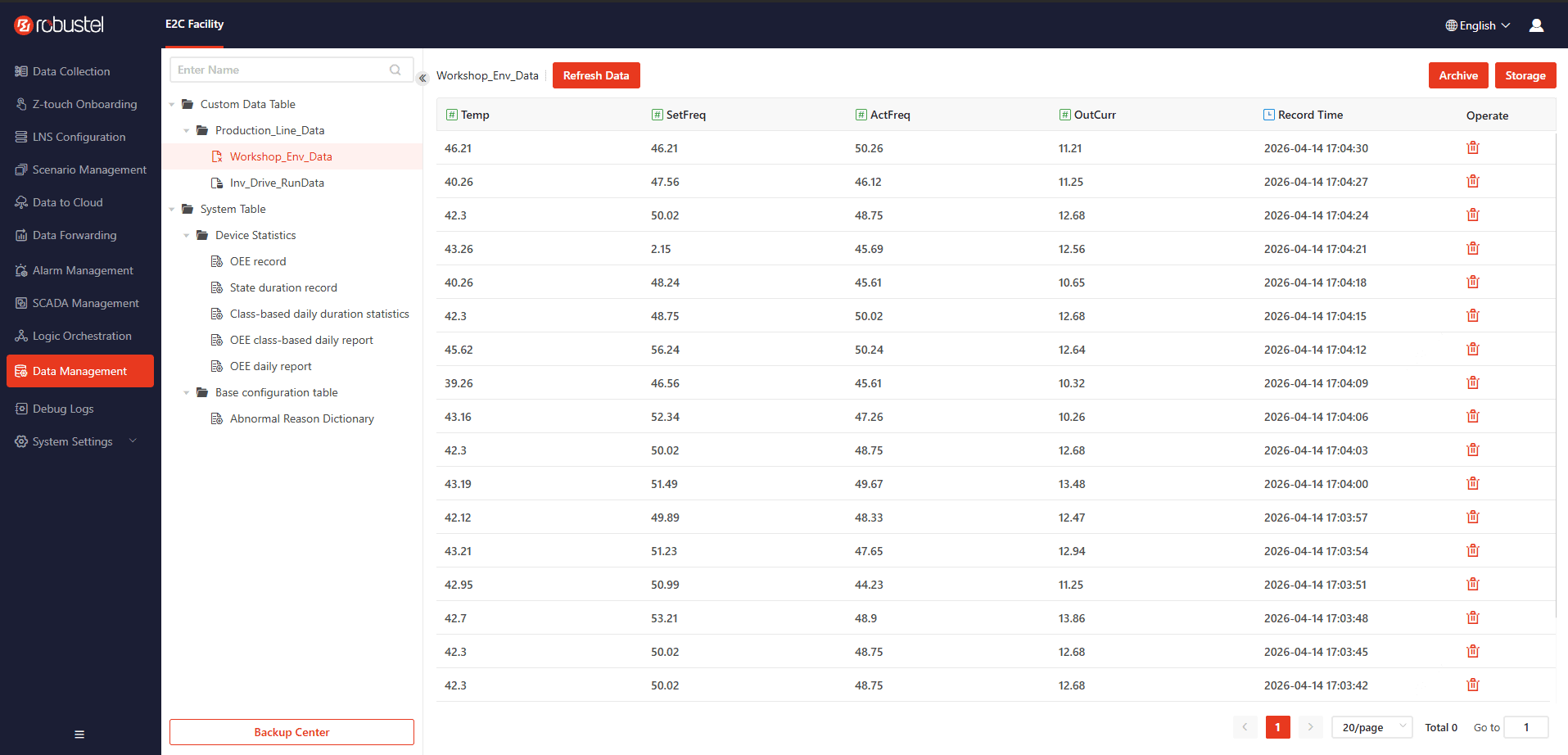
Operational Data Management & Continuity
Store, organise and process operational data locally using built-in time-series and relational data capabilities. Information from multiple building systems and devices can be combined into structured datasets using configurable formulas and data models, while store-and-forward functionality protects information during network interruptions. Built-in queueing, breakpoint resumption and configurable FIFO or LIFO handling help maintain data continuity and ensure valuable operational information can be delivered upstream when connectivity is restored.
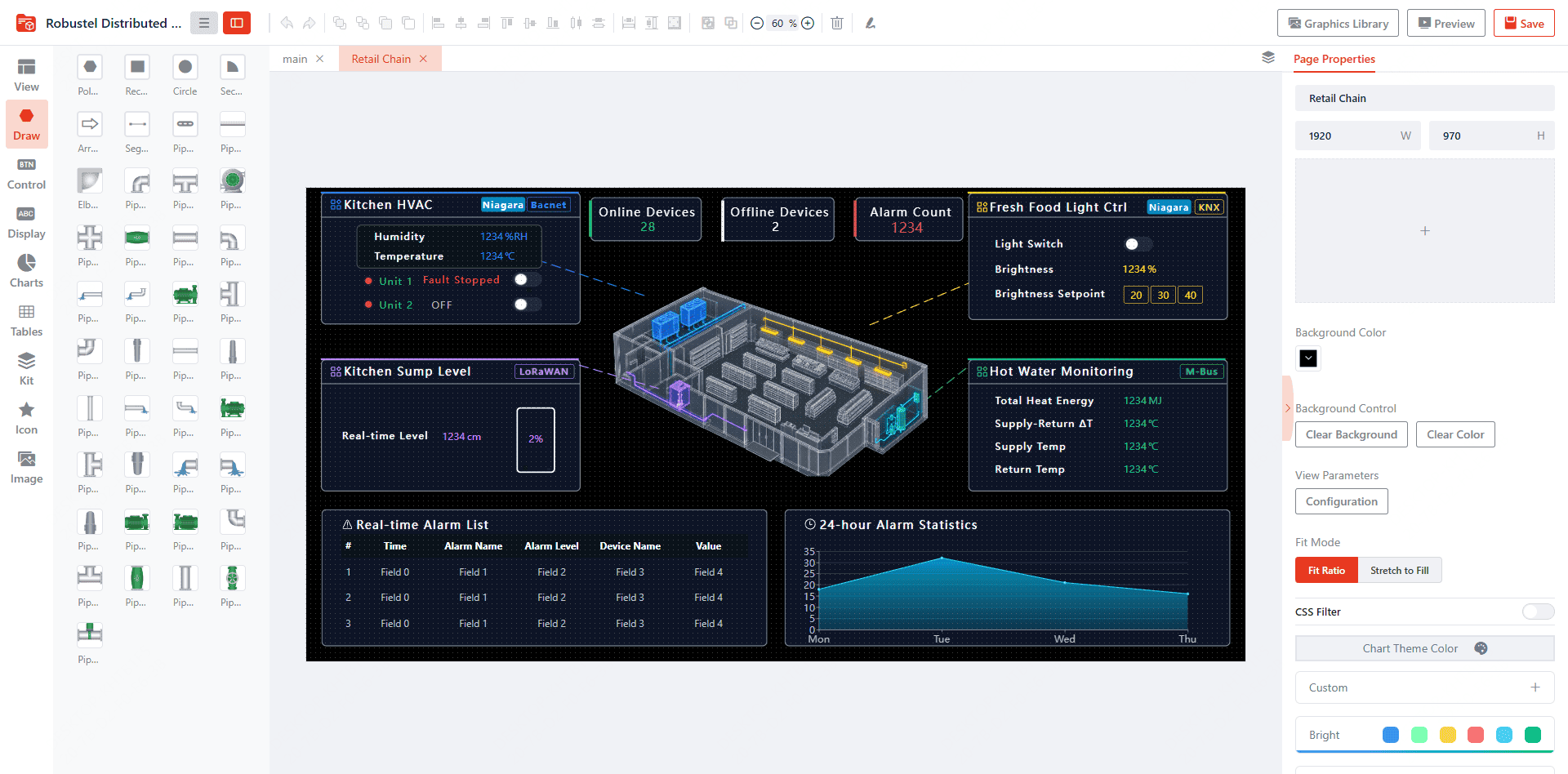
Edge SCADA & Visualisation
Create browser-based dashboards, monitoring screens and operational interfaces directly at the edge for real-time visualisation, alarms and control. E2C Facility combines design and runtime capabilities within the same web-based environment, removing the need for separate client software or dedicated SCADA infrastructure in smaller deployments. WYSIWYG design tools, charts, alarms, scripting, camera integration and reusable templates help integrators build facility-specific interfaces faster while keeping operational visibility local to the site.
Building, Cloud & Enterprise Integration
Connect local building systems with existing BMS, SCADA, cloud and enterprise platforms using MQTT, HTTP, Sparkplug B, Modbus TCP, BACnet/IP and other supported northbound interfaces. E2C Facility can forward operational data into IoT platforms and cloud applications while also exposing data directly to local OT systems. Bidirectional communication allows commands to return to field devices, creating an interoperable bridge between building OT, edge applications and wider IT environments.
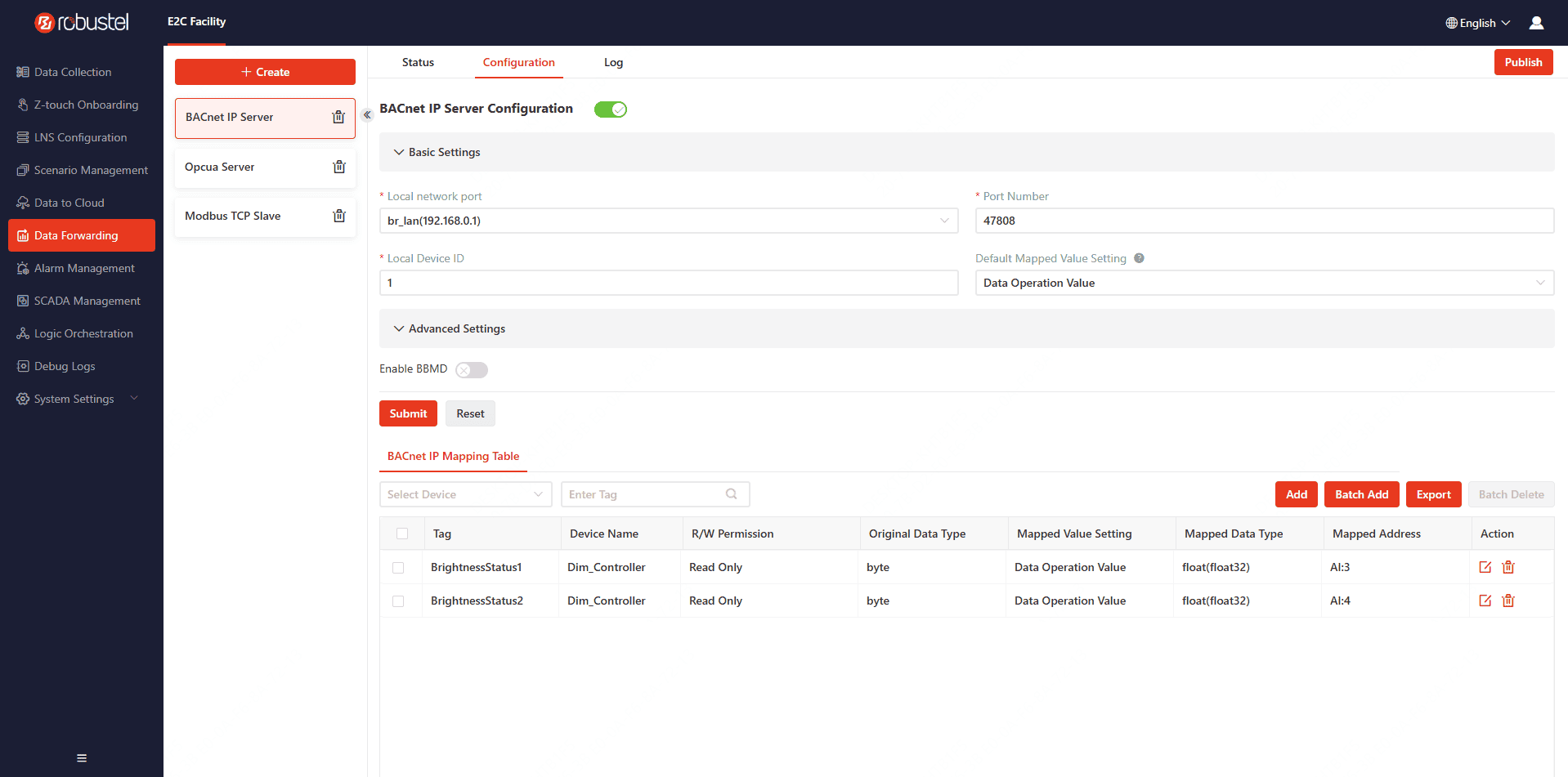
Integrated Edge Architecture for Smart Building Operations
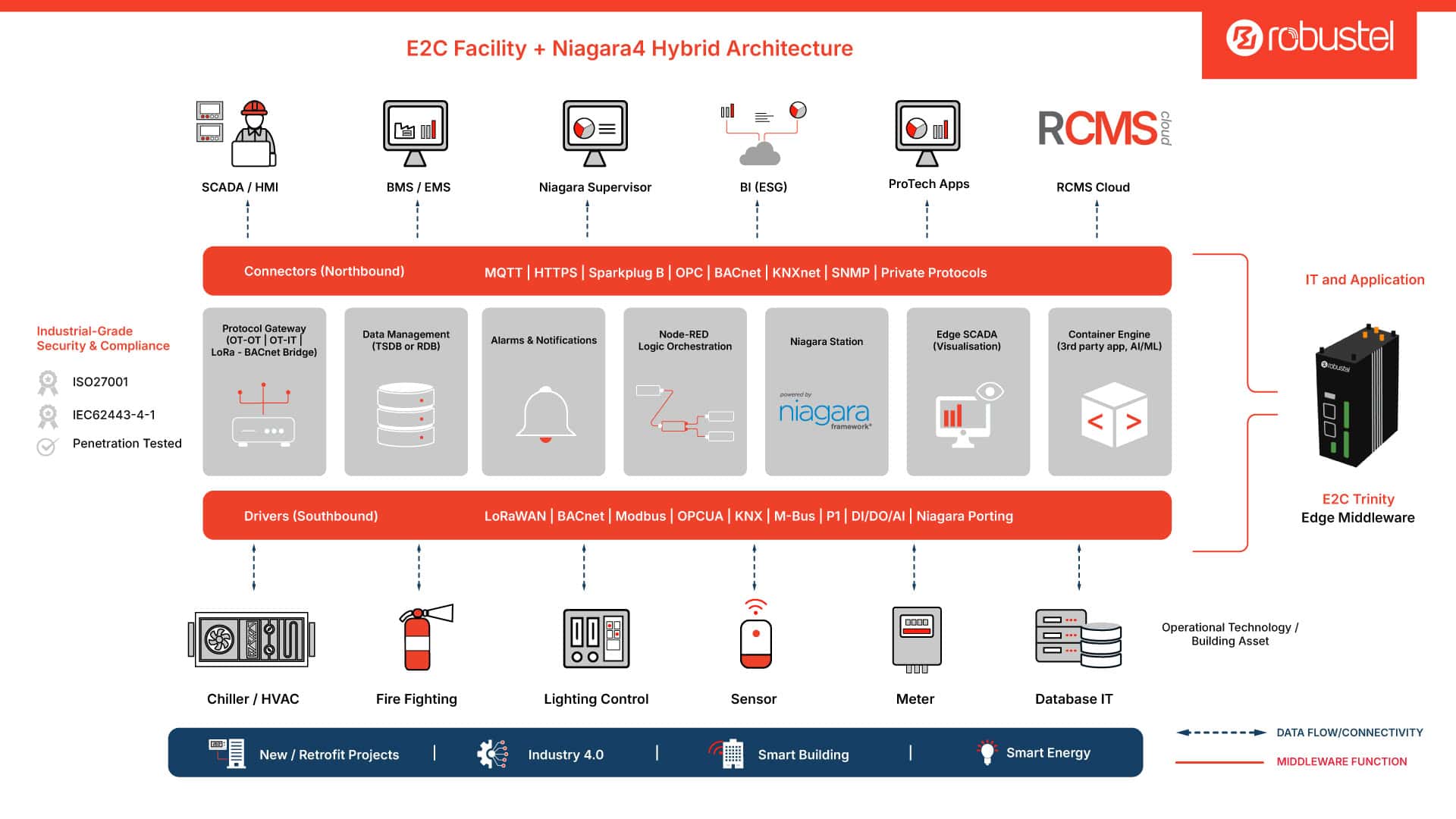
E2C Facility brings wired building systems, wireless sensors, local automation and enterprise integration together around a single intelligent edge platform. Existing BACnet, KNX, Modbus, M-Bus and P1 infrastructure can operate alongside LoRaWAN sensing, allowing organisations to modernise facilities without rebuilding established building automation environments.
At the centre of the architecture, the LG5120 runs E2C Facility with native Niagara Station operation, combining multi-protocol data acquisition, local automation, alarms, historical data, visualisation and bidirectional control directly at the edge. Existing Niagara integrators can continue working with Niagara Workbench, standard drivers and familiar engineering workflows while extending projects with Robustel connectivity, LoRaWAN and E2C capabilities.
Preloaded LoRaWAN
Device Codecs
Add wireless sensing without turning every sensor into an integration project.
E2C Facility includes a preloaded library of more than 300 device codecs, allowing supported LoRaWAN sensors to be discovered, decoded and mapped into usable operational data without requiring integrators to build custom payload handling for every device. Environmental sensors, meters, leak detection, occupancy, energy monitoring and other wireless devices can therefore be introduced much more quickly into an existing building environment.
The advantage becomes even more significant in larger deployments. E2C Facility can onboard multiple supported sensor types within the same deployment workflow, rather than treating each category as a separate commissioning exercise. Device data is normalised into consistent formats so it can be consumed by BMS, dashboards, MQTT applications and other operational systems. For projects involving dozens or hundreds of mixed sensors, this helps reduce repetitive engineering and makes wireless retrofit much easier to scale.
The result: LoRaWAN becomes a practical extension of the building automation environment, not another isolated technology stack.
One-Click
ETS Integration
Bring existing KNX installations into the wider building architecture faster.
KNX is deeply established across lighting, blinds, HVAC and other building automation systems, but integrating an existing KNX project into a broader operational platform can involve significant mapping and configuration work. E2C Facility is designed to reduce that burden by importing ETS project files and automatically generating the corresponding KNX mappings.
Instead of manually recreating large numbers of addresses and data relationships, integrators can use the information already defined within the KNX project as the starting point for wider facility integration. KNX data can then be combined with LoRaWAN sensors, BACnet systems, meters and other connected equipment, while bidirectional communication supports both monitoring and control across heterogeneous building technologies.
This is especially valuable in retrofit projects because the existing KNX installation remains an asset. E2C Facility extends what is already there rather than asking the customer to redesign a proven building control environment simply to gain better integration or visibility.
Multi-Protocol
Facility Aggregation
One edge layer for the systems already inside the building.
Real buildings rarely run on one protocol. HVAC may use BACnet, lighting may use KNX, metering may use M-Bus or P1, newer sensors may use LoRaWAN, and other equipment may communicate using Modbus or OPC UA. E2C Facility brings these technologies together through a common edge layer, reducing the need to deploy separate protocol gateways and middleware every time two systems need to exchange information.
The LG5120 can collect data from these different environments, process and contextualise it locally, and expose it northbound through interfaces such as BACnet/IP, MQTT, OPC UA and other supported integrations. That means information gathered from a wireless sensor, for example, can become usable within an established BMS rather than remaining trapped inside a separate IoT application.
Crucially, this aggregation is bidirectional. E2C Facility is not limited to collecting telemetry and forwarding it elsewhere. Data and control can move between supported systems, allowing new sensing technologies to participate in existing building workflows and helping integrators create more cohesive automation across previously disconnected environments.
Niagara Framework
Inside
Niagara intelligence, running directly at the building edge.
The LG5120 can run a Niagara Station natively on the gateway, bringing Niagara automation, alarms, historical data, scheduled tasks and visualisation directly into the same edge device that provides building connectivity, LoRaWAN and E2C Facility integration. Local building workflows can therefore continue operating independently of cloud connectivity, with control and operational intelligence remaining where the building actually operates.
For existing Niagara system integrators, the engineering model stays familiar. Integrators can continue using Niagara Workbench, standard Niagara drivers and established configuration methods rather than adopting an entirely new building automation environment simply because the edge hardware has changed.
E2C Facility then extends that Niagara environment with capabilities particularly valuable for distributed and retrofit projects: integrated LoRaWAN, multi-protocol building connectivity, wireless sensor onboarding, E2C data processing, remote gateway management and secure connectivity. A local Niagara Station can handle site-level automation while higher-level Niagara Supervisor environments, BMS platforms or cloud services provide oversight across the wider estate.
Niagara 4 at the Building Edge
An Established Building Automation Ecosystem, Extended by E2C Facility
Niagara Framework is an open software platform from Tridium used across building automation to connect, control and manage systems such as HVAC, lighting, energy, metering and other building technologies. It provides a common engineering environment for integrating different devices, protocols and applications, while supporting automation, alarms, historical data, visualisation and management from individual sites through to enterprise systems.
With E2C Facility Control, Niagara Station runs directly on the Robustel LG5120. This combines an established building automation framework with Robustel’s industrial connectivity, LoRaWAN, multi-protocol integration, edge computing and remote management capabilities, creating a compact architecture designed for smart building retrofit, distributed facilities and multi-site operations.
Powered by Niagara
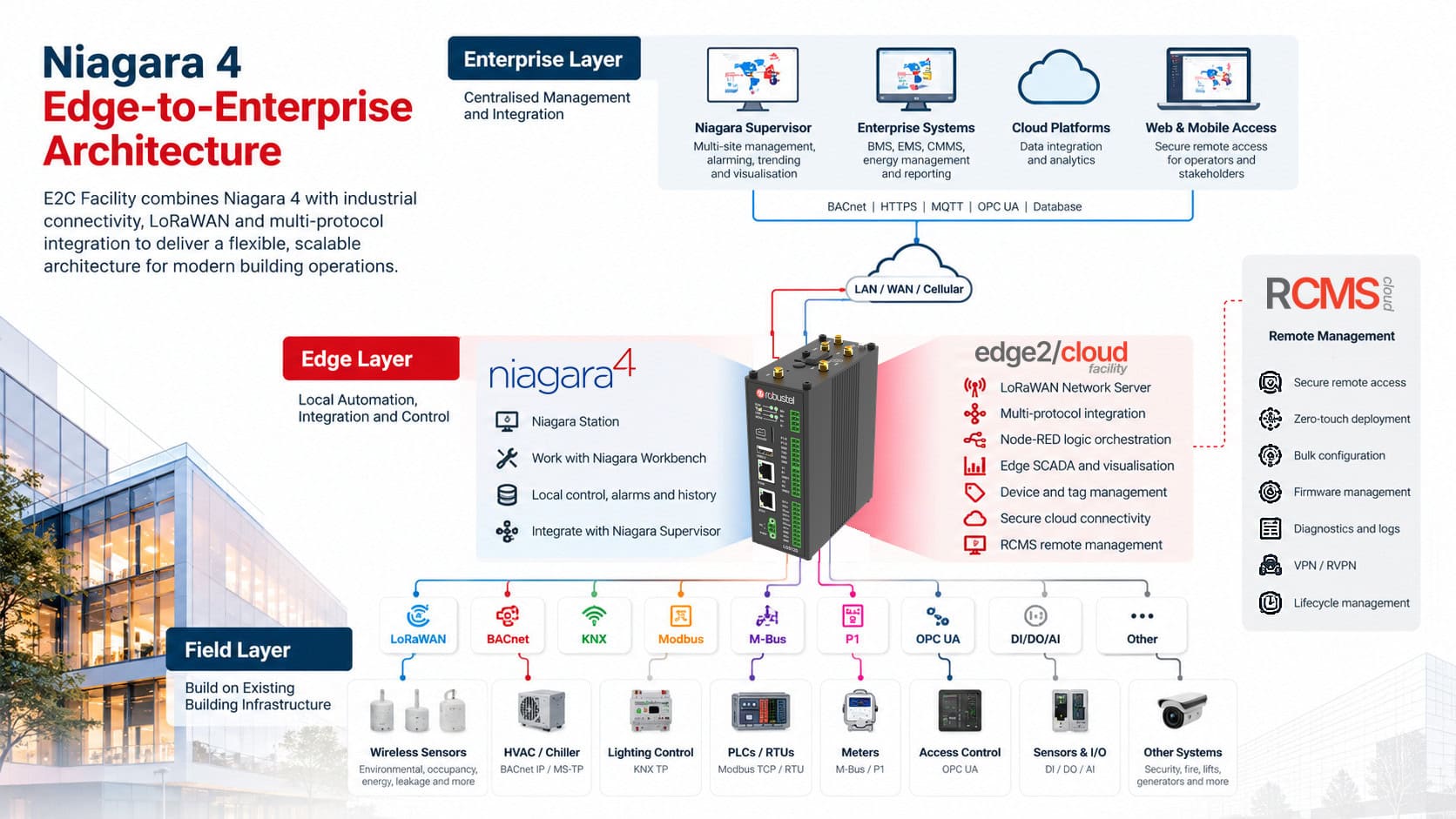
The LG5120 has completed Tridium’s portability review process and is licensed to carry the Powered by Niagara mark. Niagara 4 runs as a standalone application within RobustOS Pro, allowing the Niagara runtime to be maintained and upgraded independently while remaining tightly integrated with the wider E2C Facility environment.
For E2C Facility Control users, Niagara Station is accessible directly from the RobustOS Pro interface, providing a clear path from gateway configuration and device integration into the familiar Niagara engineering environment.

New to Niagara?
One Framework for Building Systems That Usually Live Apart
Niagara provides a common software environment for bringing different building technologies together. A local Niagara Station can integrate equipment, execute control logic, manage alarms, maintain historical data and provide building automation services, while Niagara Supervisor can aggregate multiple sites into a wider operational environment.
For building owners, that means HVAC, lighting, metering, sensors and other systems do not have to remain isolated simply because they come from different vendors or use different technologies.
Already Working with Niagara?
Workbench, Stations, Supervisor and the Ecosystem You Already Know
E2C Facility is designed to fit into established Niagara engineering practices rather than replace them. Niagara integrators can continue using Niagara Workbench, familiar Station architecture, existing drivers and Niagara Supervisor while introducing Robustel as the edge hardware and connectivity layer.
That means existing Niagara expertise, engineering workflows and third-party ecosystem investments remain valuable. E2C Facility simply gives integrators another way to deploy Niagara into distributed buildings, retrofit projects, OEM systems and sites where conventional building automation architectures may be unnecessarily complex.
Deep Integration Between E2C Facility and Niagara
Configure Once. Publish Directly to Niagara Station.
E2C Facility and Niagara Station do not operate as two disconnected services on the same gateway. They are integrated through bidirectional MQTT communication, allowing operational data and control commands to move between the E2C Facility data model and Niagara.
Devices and points can be created within E2C Facility and selected for publication to Niagara Station. Once published, the corresponding devices and points are automatically created within Niagara, reducing duplicate configuration and helping integrators move more quickly from device connectivity to building automation.
Communication is bidirectional, so Niagara can also issue control commands back through E2C Facility to supported devices. This allows data collected from LoRaWAN sensors, KNX systems, BACnet equipment, meters and other building assets to participate directly in Niagara automation workflows.
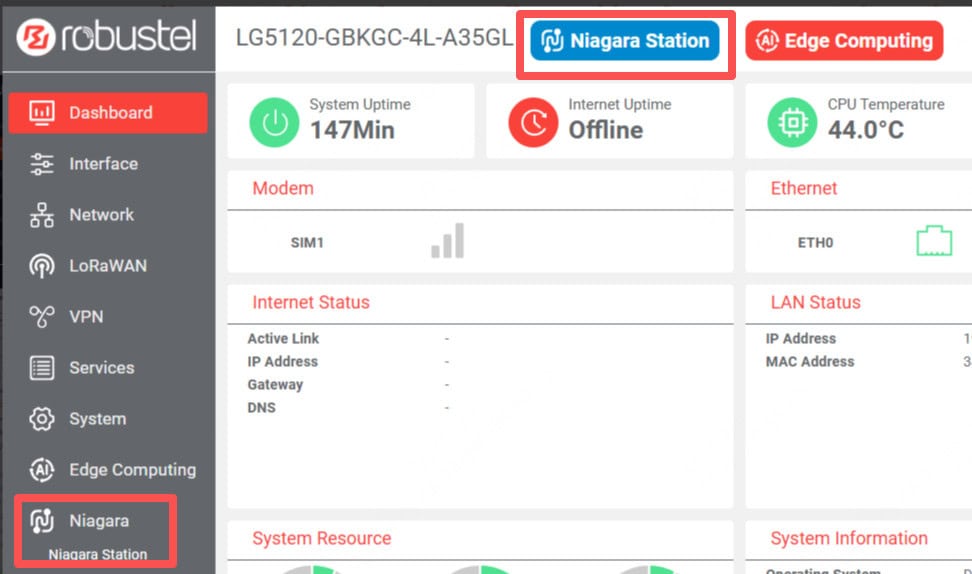
Configure in E2C Facility. Publish to Niagara. Control from either side.
Why E2C Facility + Niagara?
Extend the Niagara Edge with Robustel Connectivity and Integration
Niagara provides the building automation framework. E2C Facility expands what can be connected to it and gives integrators additional tools for deploying that intelligence at the edge.
E2C Facility on the LG5120 adds:
- Integrated LoRaWAN with local network server functionality and preloaded device codecs
- BACnet, KNX, Modbus, M-Bus, P1 and OPC UA integration alongside wireless sensing
- One-click ETS integration to simplify existing KNX project mapping
- Node-RED and E2C logic orchestration for additional edge workflows and custom integration
- Local data management, alarms and Edge SCADA alongside Niagara capabilities
- Bidirectional building integration for monitoring and control across heterogeneous systems
- RCMS remote management for secure access, deployment, diagnostics, firmware and lifecycle operations across distributed gateways
Niagara provides the building automation intelligence.
E2C Facility extends where it can be deployed, what it can connect to and how easily those deployments can be managed.
Southbound Building & Facility Data Acquisition
E2C Facility collects operational data from wireless sensors, building automation systems, energy infrastructure, facility equipment and local I/O, creating a common edge layer for processing, automation, visualisation and integration with existing BMS, Niagara and enterprise platforms.
Field Data
|
Representative
|
Supported
|
Typical
|
|---|---|---|---|
LoRaWAN
|
|
|
|
Building
|
|
|
|
Metering &
|
|
|
|
Facility &
|
|
|
|
Local I/O &
|
|
|
|
Looking for a specific building device or communication protocol?
Contact the Robustel team to discuss compatibility with your sensors, meters, HVAC equipment, building controllers or existing automation infrastructure.
Northbound Connectivity & System Integration
E2C Facility securely delivers building and operational data to BMS platforms, Niagara environments, cloud services and enterprise applications, enabling centralised monitoring, energy management, multi-site operations and building analytics. The supported northbound interfaces are shared across the E2C Trinity platform, while the integration workflows are tailored to smart building and facility environments.
Integration Function |
Representative
|
Supported
|
Typical
|
|---|---|---|---|
Secure Cloud Connectivity |
|
|
|
Operational Data Forwarding |
|
|
|
Looking for a specific BMS, cloud platform or building software integration?
E2C Facility is designed to work alongside the systems already used across your buildings. Contact the Robustel team to discuss compatibility with your BMS, Niagara environment, EMS, cloud platform or wider facility architecture
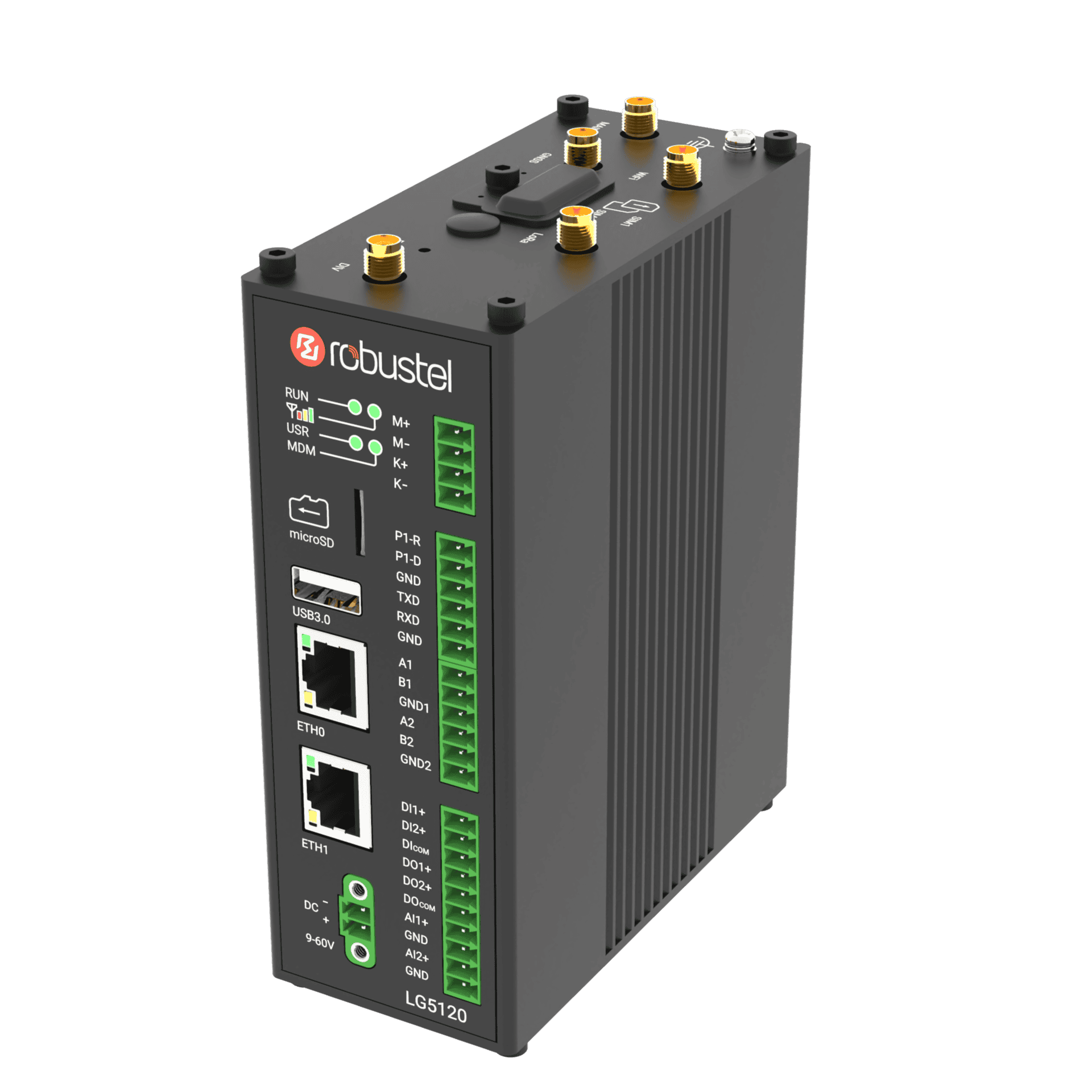
E2C Facility Compatible Robustel Edge Gateways
E2C Facility is compatible with the following Edge Gateways from Robustel
NOTE: E2C Facility requires a minimum of 8GB of RAM to run optimally
Choosing the Right E2C Facility Edition
One Platform. Four Editions. Built for Different Building Requirements.
E2C Facility is available in four editions designed to support everything from evaluation and smaller monitoring projects through to large-scale facility integration and Niagara-powered building automation. Each edition shares the same E2C Facility foundation, with licensing determined by data capacity, visualisation requirements and the level of building automation required.
All Editions Include
The following capabilities are included in every Edition of E2C Field:
- LoRaWAN Network Server Configuration
- Facility Data Collection & Protocol Conversion
- Scenario Management
- Secure Cloud Connectivity
- Data Forwarding
- Alarm Management
- Logic Orchestration
- Debug Logs & Diagnostics
- System Configuration & Management
- Complete Building & Facility Protocol Support:
- LoRaWAN
- BACnet/IP
- BACnet MS/TP
- KNX TP
- Modbus TCP
- Modbus RTU
- OPC UA
- M-Bus
- P1
- DI/DO
- AI
Free Edition
Evaluate & Prove the Concept
The Free Edition is designed for evaluation, proof-of-concept projects and smaller facility deployments. It includes the core E2C Facility capabilities and full supported protocol set, providing a practical way to test building integration, LoRaWAN sensing and operational workflows before moving into a commercial deployment.
Licence Includes
Protocolos
All E2C Facility Supported Protocols
Capacity
- Up to 100 Facility Data Tags
- Edge SCADA not included
Ideal For
- E2C Facility evaluation
- Proof-of-concept projects
- Small building monitoring
- LoRaWAN sensor pilots
- Testing building protocol integration
- Learning the platform
Core Edition
Deploy Smart Building Integration at Scale
The Core Edition is designed for the majority of commercial E2C Facility deployments. It combines significantly greater data capacity with integrated Edge SCADA, making it suitable for projects bringing together wireless sensors, building automation systems, metering and operational data within a common edge platform.
Licence Includes
Protocolos
All E2C Facility supported protocols
Capacity
- Up to 2,000 Facility Data Tags
- Integrated Edge SCADA
Ideal For
- Commercial smart buildings
- Multi-site facility monitoring
- Building retrofit projects
- Mixed wired and wireless integration
- Energy and environmental monitoring
- System integrator projects
Pro Edition
Scale Operational Visibility Across Complex Facilities
The Pro Edition extends E2C Facility for larger and more demanding deployments with maximum tag capacity and integrated visualisation. It is designed for organisations managing complex building environments, large numbers of devices or distributed estates where greater data capacity and consistent operational visibility are required.
Licence Includes
Protocolos
All E2C Facility Supported Protocols
Capacity
- Up to 5,000 Facility Data Tags
- Integrated Edge SCADA
Ideal For
- Small and mid-sized buildings
- Multi-building estates
- Campuses and distributed facilities
- High-density sensor deployments
- Complex building integration projects
- Enterprise facility monitoring
Control Edition
Niagara-Powered Building Automation at the Edge
The Control Edition extends E2C Facility with Niagara capability for projects requiring local building automation, control and familiar Niagara engineering workflows. It combines E2C Facility connectivity and integration with Niagara Station operation on the LG5120, creating a building edge controller for facilities, distributed sites & building systems.
Licence Includes
Protocolos
All E2C Facility Supported Protocols
Capacity
- Up to 2,000 E2C Facility Tags, including Niagara Tags
- Integrated Edge SCADA
- Niagara capability
Ideal For
- Small and mid-sized buildings
- Niagara-based building automation
- Chain and distributed facilities
- Factory auxiliary systems
- HVAC, refrigeration and plant applications
- Niagara system integrator projects
Need Help Choosing the Right Edition?
Whether you’re evaluating a small building retrofit, integrating wired and wireless facility systems, scaling across multiple sites or deploying Niagara-powered building automation, the Robustel team can help you choose the E2C Facility edition that best fits your project today while providing a clear path as your operational requirements grow.
Modernising Building Operations Starts at the Edge
Every building environment is different. HVAC, lighting, metering, building automation, wireless sensors and operational platforms often evolve over many years, creating environments that must balance interoperability, reliability, operational continuity and the practical realities of modernising existing infrastructure.
Whether you are retrofitting an existing building, introducing wireless sensing, integrating fragmented building systems, standardising operations across multiple sites or deploying Niagara-based automation, Robustel and its global partner ecosystem can help identify the right architecture for your facility requirements.
E2C Facility supports practical building modernisation through open protocol integration, wired and wireless connectivity, local edge intelligence and Niagara-enabled automation. It is designed to work alongside existing BMS, cloud platforms and building technologies, helping organisations improve their facilities without forcing unnecessary replacement of the systems they already rely on.