
eSIM 5G Router Fleet Provisioning Guide: Profiles, Carriers and Zero-Touch Rollout
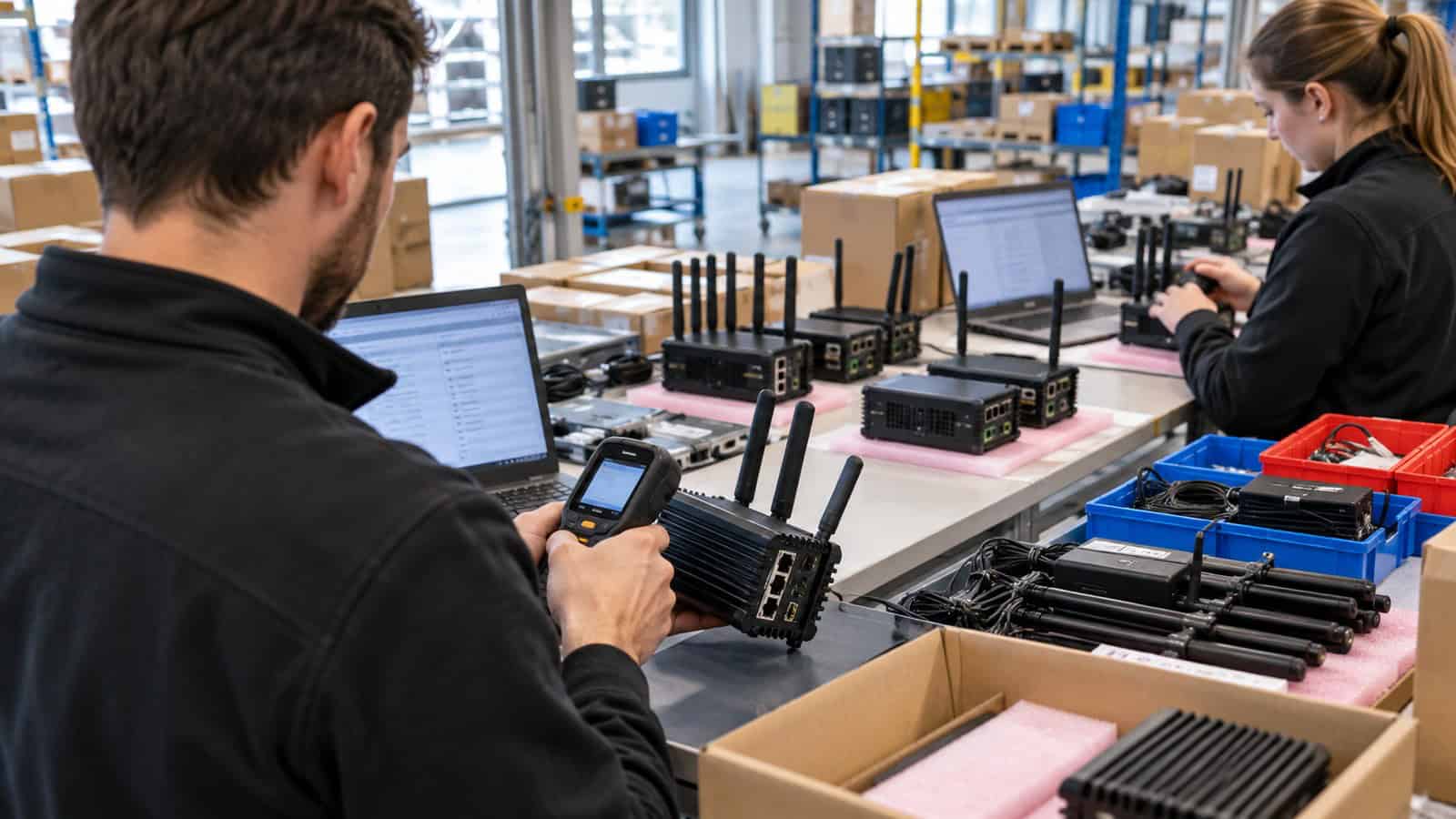
The Robustel R5020e Industrial 5G eSIM Router is designed for fleets that need SGP.22 eSIM profile operations alongside a physical SIM, but zero-touch rollout still requires a reachable bootstrap path, an eligible carrier profile and a recovery plan. eSIM removes some physical handling; it does not remove commercial activation, regional approval or commissioning.
Define the Profile Lifecycle Before Ordering Hardware
Treat a profile as an operational asset with an owner and a state. Decide who orders it, who authorises download, which profile is enabled at staging, how a failed change is recovered and what happens to the profile when the router is reassigned or retired.
| State | Required evidence | Common failure to catch |
|---|---|---|
| ordered | carrier, plan, region and device eligibility | profile exists commercially but cannot be downloaded to the target device |
| downloaded | profile identifier and timestamp | bootstrap connectivity ended before completion |
| enabled | registration, data session and intended APN | radio attaches but private routes are missing |
| changed | approval, old/new state and rollback path | remote site loses both management and production access |
| retired | profile removal/disable record and asset status | subscription remains active on a decommissioned asset |
This lifecycle belongs in procurement and operations, not only in the installer’s notes. A profile limit, roaming condition or carrier approval can change the deployment plan even when the router hardware is identical.
Separate Bootstrap Connectivity from Production Connectivity
A remote profile operation needs a working management path. That path may use a preloaded profile, a physical SIM or another approved connection, depending on the commercial service and deployment design. Write down what remains reachable if the intended production profile cannot register.
Robustel’s R5020 high-speed branch application example is a useful architecture reference for primary and backup broadband. In an R5020e fleet, add the profile state to that WAN model: the team must know not only which bearer is preferred, but which subscription is providing the access required to change another profile.
Stage One Router Through the Complete Commercial Path
Do not prove only that the eSIM menu opens. Use the intended carrier contract, regional order code, APN, VPN and application. Download or enable the profile through the approved workflow, restart the router, remove the preferred path and confirm that the service and management plane recover as designed.
Robustel’s selection video 5G Router, 5G RedCap, or 4G: How to Choose for Industrial IoT helps frame whether 5G is the right bearer for the workload. eSIM is a separate decision about subscription lifecycle; neither choice should be used as evidence for the other.
How the Robustel R5020e Industrial 5G eSIM Router Supports Controlled Rollout
Robustel R5020e Industrial 5G eSIM Router combines global 5G/4G/3G connectivity with one Mini SIM and one MFF2 eSIM/eUICC. The current product page describes SGP.22-compliant profile download and removal operations, four Gigabit Ethernet ports, RS-232, RS-485, DI/DO, Wi-Fi 5, optional GNSS, optional PoE-PD and RCMS management.
That combination supports a practical recovery pattern: retain a deliberately managed physical SIM where the risk justifies it, use eSIM for remote profile lifecycle, and keep network configuration and device management under a controlled fleet process. The physical SIM is not automatically a live backup; the configuration, carrier contracts and transition test determine its role.
| Rollout gate | R5020e contribution | Approval question |
|---|---|---|
| site integration | four Gigabit Ethernet plus serial and I/O | does the exact site need these interfaces? |
| subscription flexibility | physical SIM plus SGP.22 eSIM/eUICC | which path bootstraps and recovers profile changes? |
| remote operations | RCMS readiness | who may change configuration, firmware and profiles? |
| regional deployment | global cellular variants | is the exact order code accepted in the target country and carrier network? |
Scale in Waves and Watch the Exceptions
Roll out by carrier, region or site type rather than releasing every router at once. Record profile-download failures, registration delays, APN errors and post-change VPN behaviour separately. A single “provisioning failed” category hides whether the problem belongs to the subscription, radio network, device configuration or upstream service.
Robustel’s retail resilience case study shows the operational value of centrally visible distributed connectivity. For an eSIM estate, extend that visibility with profile ownership and change history so a support engineer can tell whether a site fault followed a commercial profile change or a network event.
Plan for Reassignment and Decommissioning
Fleet mobility is where eSIM can remove repeated physical work, but only if asset and subscription records stay aligned. When a router moves country, customer or service role, re-check profile eligibility, bands, certification and contractual use before enabling a new service.
At retirement, remove production credentials, close or reassign the mobile service, record the eSIM action and verify that the router no longer reaches managed systems. Decommissioning is complete when both the hardware identity and the subscription identity have left production.
Preguntas frecuentes
Q1. What is eSIM provisioning?
It is the controlled process of downloading, enabling, changing or removing a mobile network profile on an eSIM/eUICC. The device, profile service and carrier agreement must all support the intended operation.
Q2. Can an eSIM profile be changed remotely?
Yes, when the device and service support remote profile operations and the router still has an approved management path. Plan a recovery route before changing the profile that currently provides connectivity.
Q3. Does eSIM work without a physical SIM?
An eSIM can provide the mobile subscription without a removable SIM. Some industrial designs retain a physical SIM for a separate carrier or recovery role, but that role must be configured and tested.
Q4. What is zero-touch provisioning?
It is a deployment model in which a device can receive approved configuration or service information with little or no local configuration. It still depends on identity, bootstrap access, platform availability and a controlled exception process.
Q5. When is the Robustel R5020e Industrial 5G eSIM Router a good fleet fit?
It suits distributed sites that need 5G, remote eSIM profile operations and a physical-SIM option within one managed router. Confirm the target carrier profiles, regional order code and recovery workflow before committing the fleet.
Conclusión
The Robustel R5020e Industrial 5G eSIM Router can reduce physical SIM handling across a distributed estate, provided the profile lifecycle is treated as part of network operations. The decisive design questions are who owns the subscription, what connectivity bootstraps a change and how the site is recovered when a profile does not behave as expected.
Qualify one router through ordering, profile activation, application testing, a failed-change exercise, reassignment and retirement. Once those records are repeatable, rollout waves can scale without turning every profile exception into a field visit.
Explore More Articles About Robustel 5G Routers

Acerca del autor
Robustel Editorial Team
The Robustel Editorial Team publishes practical articles on industrial connectivity, edge computing, LoRaWAN and device management, focusing on deployment considerations, technical limitations and long-term operation.