
5G Router for Retail Stores: Primary and Backup WAN Decision Matrix
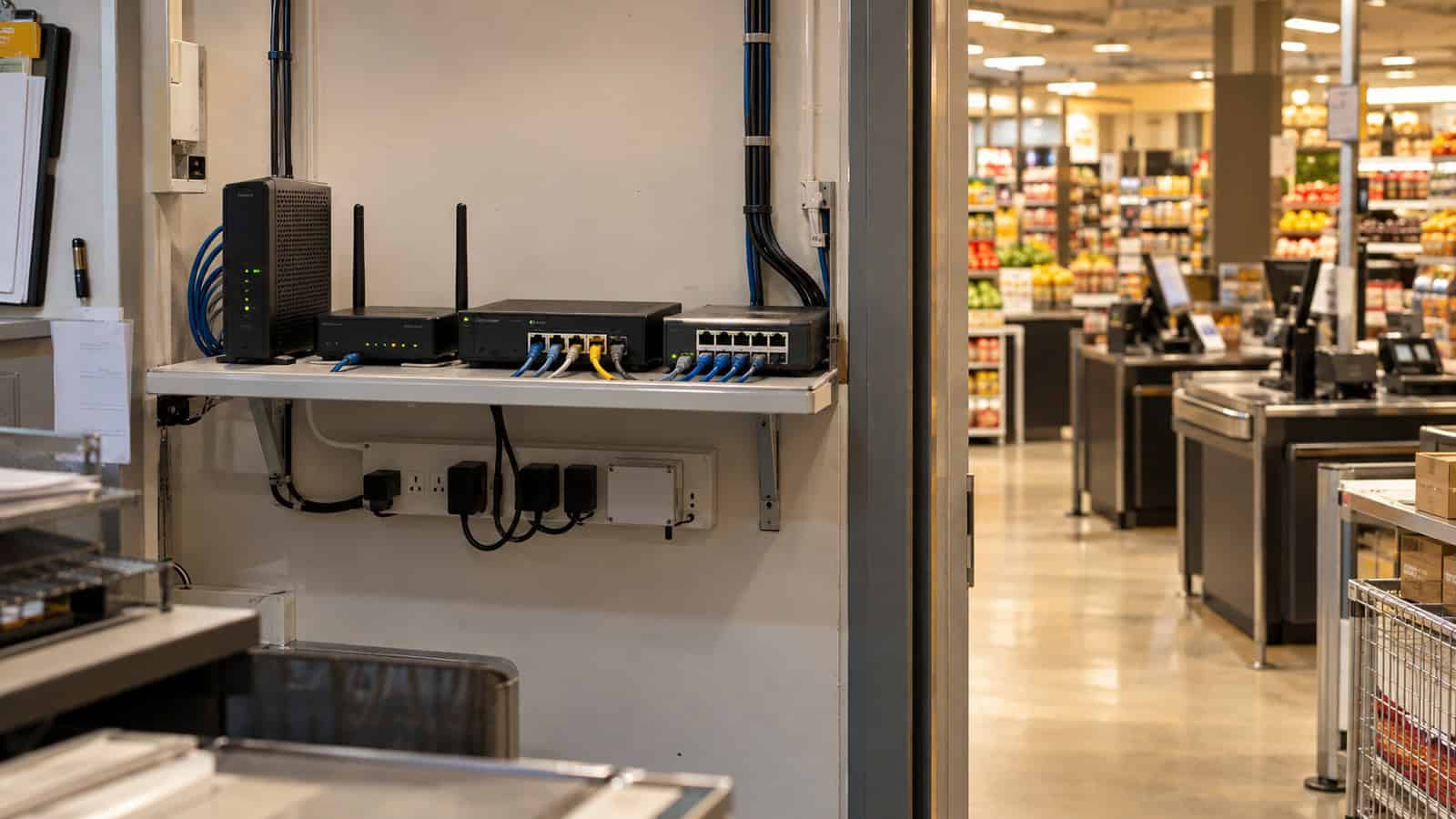
The Robustel R5010 Industrial 5G Router is best treated as a managed cellular handoff for retail estates that already have a firewall, SD-WAN appliance or store switch and need 5G either on opening day or when the fixed circuit fails. Primary and backup designs can use the same hardware, but their commercial controls, testing frequency and failure ownership are different.
Primary or Backup Is an Operating Decision
Primary 5G avoids waiting for a fixed circuit and can suit temporary or difficult premises. It also makes radio conditions and mobile-data policy part of everyday store service. Backup 5G usually carries little traffic until an incident, which creates a different risk: the path may be untested, the SIM may be suspended or critical applications may consume far more data than forecast once failover begins.
Use the store’s critical-service list before choosing either model. Payments, ordering, kitchen displays, inventory, staff access, guest Wi-Fi, CCTV and voice do not deserve identical priority. Decide what must continue, what can degrade and what should be blocked when the cellular link is active.
Run that decision with the people who operate the store, not only the WAN team. A payment terminal may reconnect quickly while cloud-managed Wi-Fi, CCTV upload or a kitchen workflow consumes the available path and delays the transaction that matters. Naming the traffic owner and failover priority before rollout is more reliable than adding emergency rules during an outage.
| Decision factor | 5G as primary WAN | 5G as backup WAN |
|---|---|---|
| Service proof | Busy-hour performance every day | Scheduled failover test |
| Data governance | Normal monthly application profile | Incident duration and traffic suppression |
| Failure trigger | Cellular degradation or loss | Fixed-line health threshold |
| Return path | Alternative WAN or second SIM | Stable return-to-primary policy |
| Main blind spot | RF changes after store refit | Dormant path that no longer works |
Cost the Outage Path, Not Just the SIM
Compare the monthly circuit and data plan with the operational cost of an unavailable store. Include delayed openings, failed payments, staff workarounds, managed-service time and site visits. For backup, model a short outage, a full trading day and a multi-day incident. Data caps and overage rules should be visible to the team deciding which traffic remains allowed.
The Robustel’s Jones Technology retail case study records R5010 routers supporting quick-service restaurant connectivity across varied RF conditions. It shows why repeatable placement and remote operations belong in the rollout standard, while each new store still needs its own carrier, tariff and RF acceptance result.
Put the Router Where the Radio Works
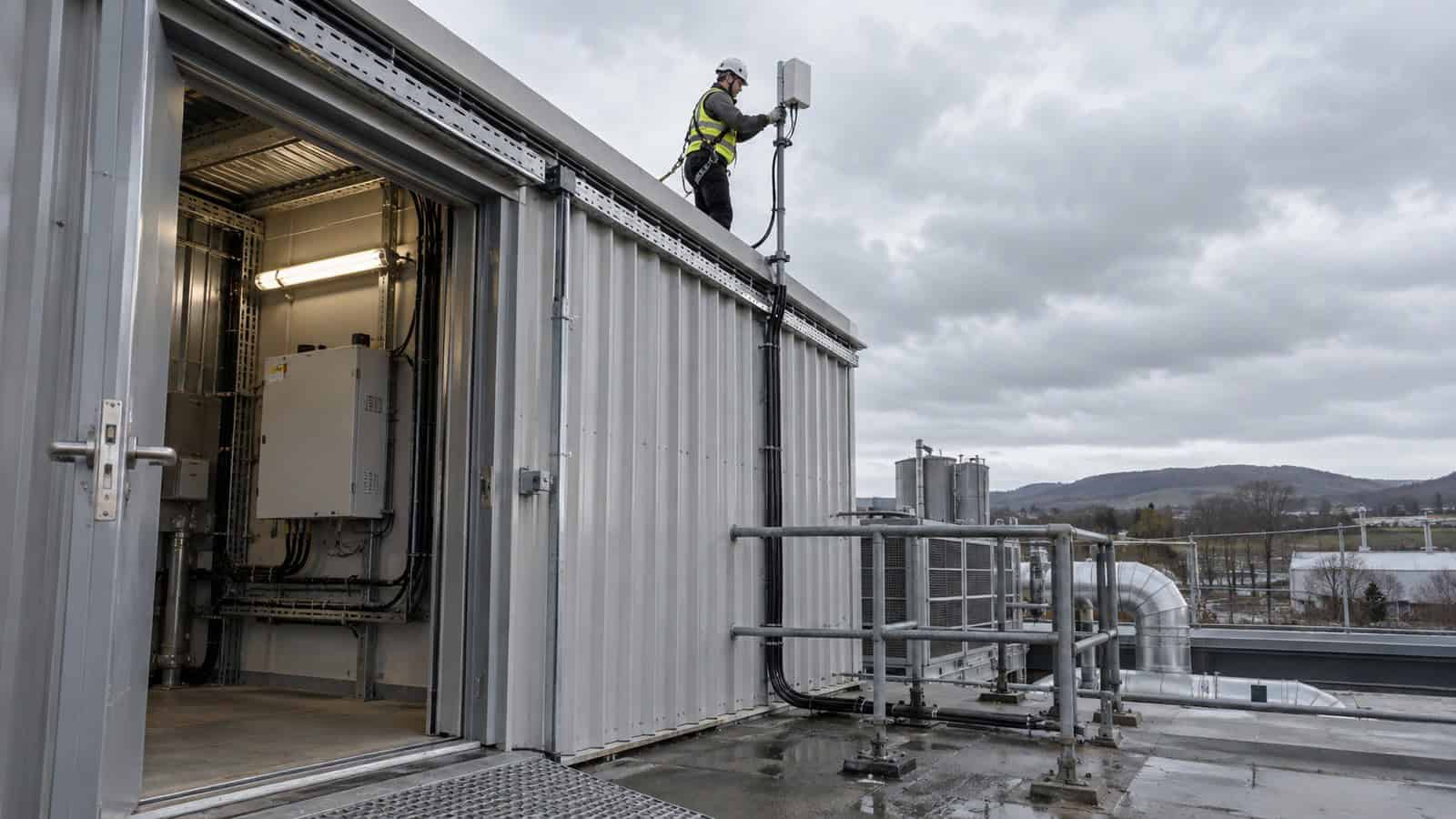
Back-of-house comms rooms are often convenient for Ethernet and poor for cellular. Steel cladding, refrigeration plant and later building work can change RF conditions. The R5010’s single 2.5GbE port and optional PoE-PD make it possible to position the cellular device away from the central rack and hand off to the existing security appliance.
Survey at the final location, with doors closed and normal store equipment operating. Record the exact regional order code, SIM service and antenna arrangement. Recheck after a major refit rather than assuming the original result still holds.
Store staff should not have to interpret radio metrics during an incident. Give support a simple location record, photographs, normal signal range and a test for distinguishing poor RF from a failed fixed circuit. That turns a vague “backup is slow” report into a ticket that can be routed to the carrier, cabling team or store network owner.
How the Robustel R5010 Industrial 5G Router Fits Retail WAN Resilience
The Robustel R5010 indurstrial 5G router provides 5G NR Release 16 connectivity, dual Mini SIM, a 2.5GbE LAN port, USB modem mode, optional 802.3at PoE-PD, VPN and firewall features, and Robustel RCMS platform management. That makes it a focused companion to an existing store edge rather than a replacement for the entire switching and Wi-Fi estate.
Our fixed-line backup application example shows the same-model architecture: monitor the preferred circuit, move approved traffic to 5G, retain secure remote access and return under controlled conditions. Use that sequence to design the store test, then measure the transition and application recovery on the production firewall and service.
For a shop requiring several direct Ethernet connections or integrated store Wi-Fi, a multi-port Robustel model may fit better. Do not add a switch and access point by accident after selecting a deliberately single-handoff device; decide that architecture in the tender.
Prove the Whole Store Fails Over
Run a supervised test during a representative operating period. Disconnect the primary circuit without warning the applications. Confirm payment authorisation, DNS, VPN, ordering, monitoring and support access. Watch data use and queue behaviour, then restore the fixed line and check that sessions recover cleanly.
Repeat the test from the management side. Can the service desk identify which WAN is active, distinguish poor RF from a failed SIM and reach the correct device without asking store staff to read LEDs? Robustel’s video of “Where Are Industrial 5G Routers Used in Real IoT Deployments?” gives non-specialists useful context for the retail and remote-site role, while the witnessed store test remains the acceptance evidence.
Preguntas frecuentes
Q1. Can 5G replace business broadband?
It can be the primary service where coverage, capacity, data policy and support meet the site’s needs. A survey and a sustained application test are more useful than a single peak-speed result.
Q2. How does cellular failover work?
The edge monitors the preferred WAN and changes route when defined health conditions fail. A good design also defines which traffic is allowed, how sessions recover and when service returns to the primary path.
Q3. Do retail stores need backup internet?
That depends on the cost and safety impact of losing payments, ordering, monitoring or communications. Stores that cannot trade during an outage usually need an independent and regularly tested alternative path.
Q4. Does dual SIM provide full redundancy?
No. It can provide carrier or subscription diversity, but both SIMs share the same router, antennas and power source. Those shared components remain part of the failure domain.
Q5. When is the Robustel R5010 Industrial 5G Router suitable for retail?
It fits stores that need a centrally managed 5G handoff to an existing firewall or SD-WAN platform, particularly where a 2.5GbE connection, flexible placement and dual-SIM policy are useful.
Conclusión
The Robustel R5010 Industrial 5G Router supports both primary and backup retail WAN designs, but the better option follows the store’s service priorities, RF evidence and incident economics. A backup path that is never exercised is an assumption; a primary path without traffic governance is an uncontrolled cost.
Write the decision matrix into the operating model, schedule witnessed failover tests and keep the application result with the network record. That is how a cellular link becomes retail resilience rather than spare hardware.
Explore More Articles About Robustel 5G Routers
Acerca del autor
Robustel Editorial Team
The Robustel Editorial Team publishes practical articles on industrial connectivity, edge computing, LoRaWAN and device management, focusing on deployment considerations, technical limitations and long-term operation.