
Industrial 5G Router Lifecycle Vendor Guide: Certifications, Updates and Long-Term Support
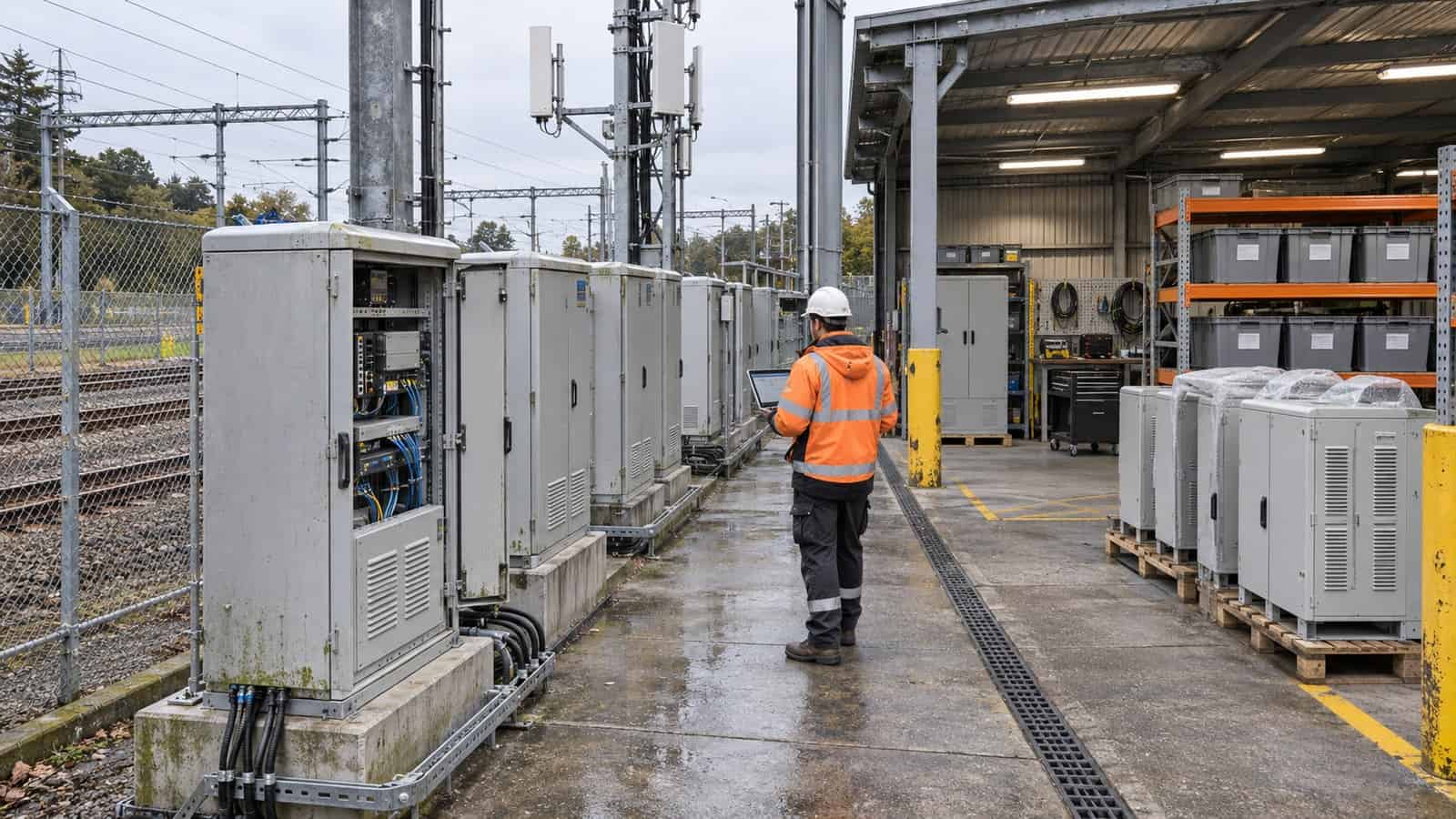
The Robustel R5020 Industrial 5G Router is a useful reference for lifecycle evaluation because its regional variants, certifications, RobustOS platform and RCMS management path can be checked separately; the purchasing decision should therefore be based on maintained evidence, not on the launch specification alone. A router that passes a pilot can still become expensive at fleet scale if firmware ownership, vulnerability response, regional approvals and replacement rules have no named owner.
The practical decision is whether a vendor can support the exact hardware, firmware and country configuration that will be deployed, with a process your operations team can audit. This guide turns that question into evidence requests, weighted gates and disqualifiers without assuming a fixed support term that the vendor has not formally stated.
Define the lifecycle before comparing routers
A useful lifecycle starts before purchase and ends after data, credentials and spares have been retired. The tender should cover qualification, controlled rollout, routine monitoring, security maintenance, incident recovery, hardware replacement and eventual migration. “Remote management available” is not enough: the buyer needs to know which party approves changes, which records are retained and how a failed update is recovered.
Regional variation deserves its own line item. Robustel R5020 product page lists different band sets, order codes and approvals for global and EMEA/APAC variants. A certificate for one order code should not be used as evidence for another. Record the exact proposed SKU beside the destination country, mobile operator and required approvals before commercial comparison begins.
The Robustel video “5G Router, 5G RedCap, or 4G: How to Choose for Industrial IoT” is helpful when a team is still deciding whether the workload justifies 5G. That radio-generation decision precedes lifecycle scoring; it does not replace model-specific certification or support evidence.
Use a weighted lifecycle decision matrix
Weights should reflect the consequence of failure at the intended sites. A retailer with rapid swap access may weight spares differently from a utility with locked remote cabinets. Score only evidence submitted for the exact model and region.
| Criterion | Suggested weight | Evidence to request | Disqualifying gap |
|---|---|---|---|
| Regional approval and carrier fit | 20% | order code, band set, approval certificate, carrier confirmation | proposed SKU cannot be matched to the deployment country |
| Firmware and security process | 20% | release notes, security-advisory route, update and recovery procedure | no accountable response or update path |
| Fleet operations | 15% | monitoring, configuration, audit and staged-update demonstration | changes cannot be traced to device and operator |
| Hardware availability and replacement | 15% | RMA route, spare policy, successor notification process | replacement responsibility is undefined |
| Configuration portability | 10% | export/import method, model and firmware compatibility notes | recovery depends on undocumented manual recreation |
| Documentation and escalation | 10% | current manuals, support portal, severity and escalation contacts | product-specific documentation is unavailable |
| Acceptance and exit planning | 10% | pilot plan, rollback criteria, credential/data retirement steps | no agreed way to reject or retire the service |
A numerical score is useful only after every row has an owner and a cited artefact. Do not compensate for a missing approval or unsafe update process with extra points for throughput.
Ask for an evidence pack, not a support adjective
“Long-term,” “secure” and “managed” are descriptions until they are tied to records. Ask the vendor to provide a dated evidence pack that procurement can preserve with the bill of materials. It should identify the model, order code, firmware branch, management-agent version, certificates, security contact, update method and replacement path.
For distributed estates, include an operating demonstration. Robustel’s high-speed branch-office R5020 application example illustrates why configuration consistency and backup connectivity matter at many sites. Convert that architecture into an acceptance task: deploy an approved template to a test group, verify the result on each device, then prove that a failed or incompatible change is contained.
| Evidence category | Robustel R5020 evidence boundary | Buyer acceptance record |
|---|---|---|
| Model and approvals | exact available model row on the product page | SKU-to-country matrix signed by procurement and engineering |
| Firmware operations | Robustel R5020 uses RobustOS; downloads and manuals are model-specific | approved version, change ticket, backup and rollback result |
| Fleet management | Robustel RCMS supports monitoring, configuration and update workflows | named roles, staged job result and audit record |
| Security response | current advisories and product-specific firmware path | notification contact, triage owner and remediation deadline |
How Robustel R5020 Industrial 5G Router supports lifecycle-controlled fleets
The Robustel R5020 Industrial 5G Router combines dual SIM, four Gigabit Ethernet ports, IPsec/OpenVPN/DMVPN options and model-specific regional variants with centralized RCMS operations. Those capabilities matter when the site requires a managed primary or backup WAN and the engineering team must distinguish connectivity, tunnel and device-management states. They do not remove the need to validate the selected carrier, antennas, APN, VPN design and regional order code.
Robustel RCMS platform provides fleet visibility, logs, configuration and firmware workflows. Architecturally, this moves repeatable work from individual site visits into controlled jobs. The acceptance test should still use a small pilot ring, record device and agent versions, preserve configuration backups, define the reboot window and confirm that application traffic returns after the router is online.
For mobile or public-safety fleets, Robustel’s R5020 emergency-services vehicle application example shows why lifecycle evidence must include antennas, power behaviour and vehicle installation, not only the radio module. A fixed cabinet and a moving vehicle place different demands on mounting, approvals and recovery, even when they use the same router family.
Treat these gaps as disqualifiers or contract actions
Reject a bid when the supplier cannot bind certifications to the offered SKU, cannot identify the current firmware source, or expects an unrecorded remote change process. A vague promise to “keep devices updated” is particularly risky because it hides who schedules reboots, who checks application recovery and who owns a failed rollout.
Other gaps may be contract actions rather than immediate rejection. A vendor may not publish a fixed support term, but the contract can still require advance product-change notice, a named escalation channel, spare-holding arrangements and an agreed migration review. Write these obligations as observable deliverables instead of marketing language.
Close the pilot with lifecycle acceptance evidence
The pilot should create the records that production will use. Capture the exact router SKU, modem and firmware versions, carrier profile, configuration checksum, certificate set, management enrollment, backup, update result, reboot duration, tunnel recovery and application recovery. Assign the next action to procurement, network operations, security or the vendor rather than leaving a generic “follow up” note.
Approve scale-out only when the team can repeat the build, detect drift, stage a change, restore service and replace a failed unit without relying on one engineer’s memory. Revisit the lifecycle file at least when the firmware branch, carrier, certification requirement, management platform or replacement model changes.
Preguntas frecuentes
Q1. What is the most important selection criterion for an industrial router?
The decisive criterion is fit to the complete operating requirement: region, environment, interfaces, security, recovery and maintainability. Throughput alone cannot compensate for a missing approval or an unmanaged update path.
Q2. How long should an industrial router remain in service?
There is no universal service life. Temperature, power quality, radio technology, component availability, firmware maintenance and the organisation’s replacement policy all affect the decision. Define inspection and migration triggers rather than assuming a number of years.
Q3. What evidence should a buyer request for router cybersecurity?
Request the supported firmware source, security-advisory process, access-control model, update and rollback procedure, audit records and a named incident contact for the exact model and deployed configuration.
Q4. How should firmware updates be tested across a router fleet?
Use a representative lab unit and a small production ring first. Record the starting version and configuration, verify the update and reboot, then check cellular registration, addressing, VPN recovery and application transactions before expanding the job.
Q5. Where does the Robustel R5020 Industrial 5G Router fit in a lifecycle-controlled design?
It fits primary or backup 5G WAN deployments that need multiple Ethernet connections, VPN options, regional SKU evidence and centralized fleet operations through RCMS. The project must still validate the exact order code, carrier, antennas, firmware and end-to-end recovery behaviour.
Conclusión
The Robustel R5020 Industrial 5G Router is best suited to lifecycle-controlled 5G deployments where the buyer can bind an exact regional SKU to approvals, firmware governance and managed operations. Its product and RCMS evidence provide useful evaluation inputs, but they do not create a contractual support period or prove recovery for a particular application.
Make the award conditional on the evidence matrix, a staged update demonstration, a complete recovery record and named ownership for advisories, replacements and retirement. That turns lifecycle support from an adjective into an operating agreement.
Explore More Articles About Robustel 5G Routers



Acerca del autor
Robustel Editorial Team
The Robustel Editorial Team publishes practical articles on industrial connectivity, edge computing, LoRaWAN and device management, focusing on deployment considerations, technical limitations and long-term operation.