
Industrial 5G Router for Utilities: SCADA Connectivity Buying Guide
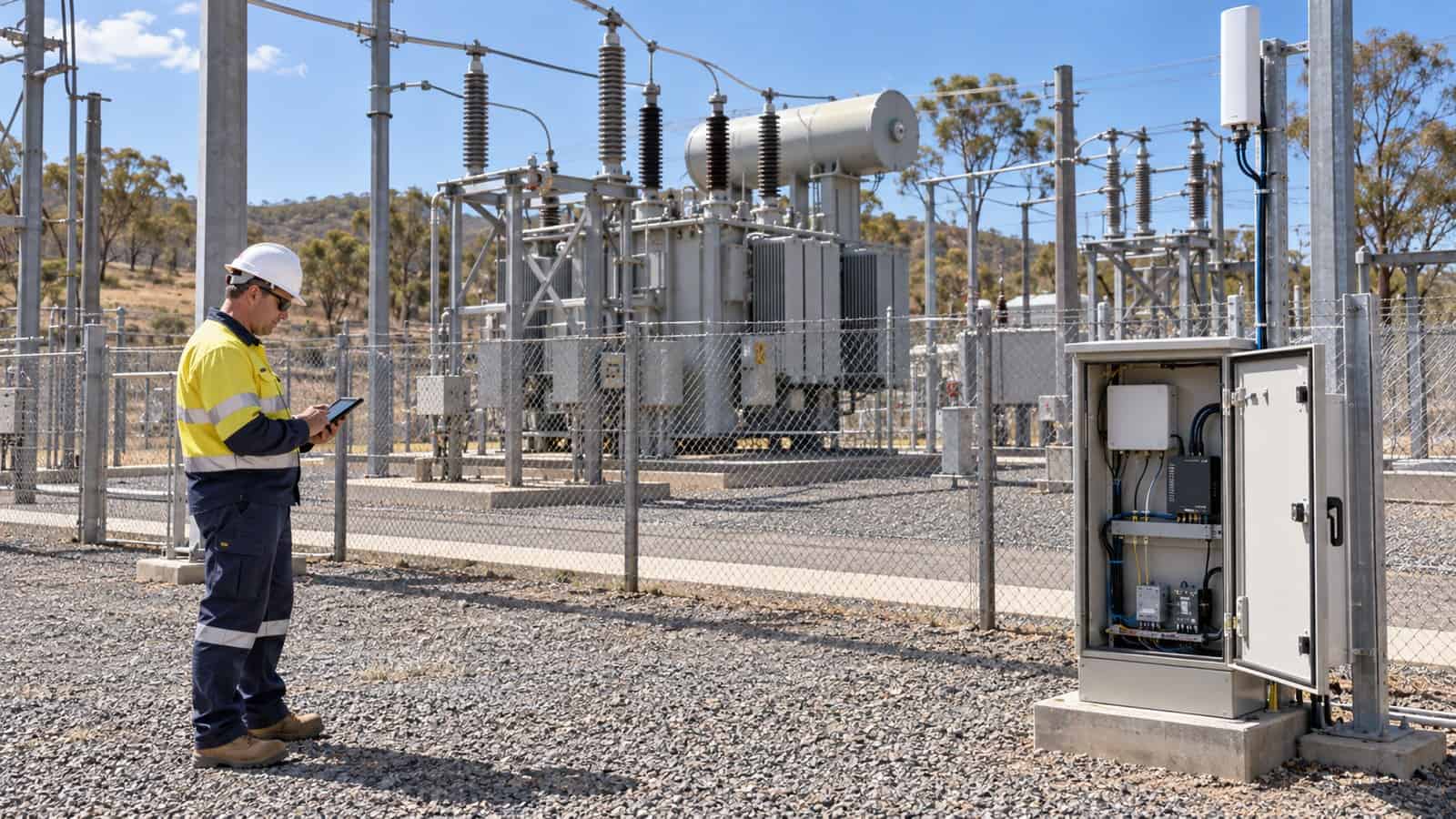
The Robustel R5020 Industrial 5G Router is a practical utility-site candidate when a cabinet needs dual-SIM cellular backhaul, several local Ethernet connections and both RS-232 and RS-485 for existing RTUs, meters or protection-related support equipment. The router should carry the approved SCADA path; it should not be described as the SCADA system or as a substitute for protection logic.
Draw the Control Boundary First
At a substation, pump station or distribution asset, separate three traffic classes before selecting hardware: operational telemetry and commands, engineering access, and router management. Note which controller owns local control when the WAN disappears. Critical interlocks and deterministic protection should remain in the approved control system; the cellular router provides transport and controlled reachability.
The most useful site drawing shows every serial or Ethernet endpoint, protocol owner, polling direction, expected message rate, address range and trust zone. Add the consequence of losing each path. “SCADA unavailable” is too broad: operators need to know whether local control continues, remote indication becomes stale, commands are blocked or maintenance access alone is affected.
Serial Migration Needs More Than a Connector
The Robustel R5020 industrial 5G router supplies one RS-232 and one RS-485 interface and supports transparent serial transport, TCP client/server, UDP and Modbus RTU-to-TCP functions. Those capabilities can bridge selected legacy traffic, but they do not automatically validate an end-to-end DNP3, IEC 60870-5-104 or vendor-specific application.
Bench-test the real RTU and master. Verify framing, baud rate, parity, timeouts, reconnect behaviour and what happens to queued or repeated commands after a cellular interruption. Capture both sides of the conversion. A link that passes steady polling may still fail when several devices recover together and the master sees a burst of delayed responses.
Commissioning evidence that survives handover
- a register of serial settings and device addresses;
- packet or event captures for normal polling, link loss and restoration;
- the owner and expiry of every remote-access credential;
- confirmed local behaviour while the WAN is absent; and
- an as-built antenna, power and earthing record.
Engineer the Mobile Path for the Cabinet
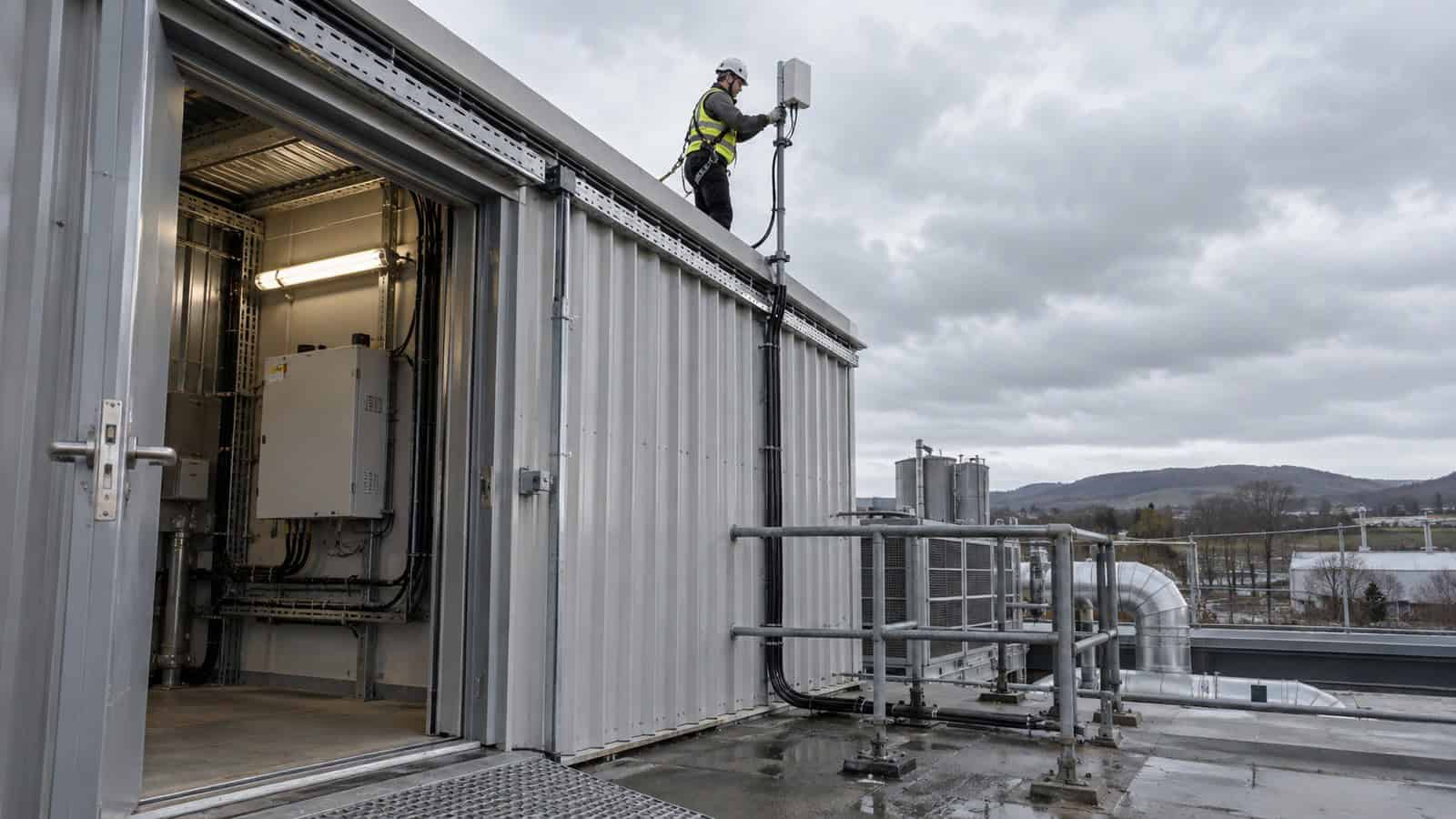
Confirm the exact regional R5020 order code, frequency bands, certification and operator acceptance. Survey signal at the final antenna position with the cabinet closed and representative site equipment active. A utility location can have good outdoor service and poor performance inside a metal kiosk or below-grade chamber.
Treat dual SIM as path diversity within one router, not as two complete systems. Record whether the SIMs use genuinely different networks, what triggers a change, which sessions restart and how the control room distinguishes a carrier problem from a router or power problem.
Robustel’s power-distribution application example shows the utility operating model clearly: remote RTUs, encrypted backhaul, controlled support access and fewer blind dispatches. Although the example uses another router family, the same workflow helps an R5020 project define ownership; the R5020 cabinet design then follows its actual Ethernet and serial map, traffic profile and recovery test.
Security Must Follow Roles and Failure Modes
Build allow-lists around named endpoints and services. Separate SCADA traffic from engineering access and router management with VLAN and firewall policy where the surrounding design supports it. Prefer outbound, authenticated management paths and time-bounded remote access over permanent inbound exposure.
Test loss of DNS, NTP, the VPN endpoint, primary SIM and management service independently. Each failure should have an observable symptom and an owner. If the site clock drifts, incident correlation becomes unreliable even while polling continues; if management is down but SCADA is healthy, an unnecessary reboot can create the outage the team was trying to diagnose.
How the Robustel R5020 Industrial 5G Router Supports Utility SCADA Backhaul
The Robustel R5020 industrial 5G router combines four Gigabit Ethernet ports, dual Mini SIM, 5G/4G/3G connectivity, Wi-Fi, RS-232, RS-485, one digital input and one digital output, optional GNSS and an optional PoE-PD function on ETH0. RobustOS provides VPN, firewall, routing and remote-management functions, while Robustel RCMS platform supports fleet visibility and controlled device maintenance.
That interface mix suits a cabinet where several IP endpoints and two serial roles must be brought into one managed WAN design. It does not prove the capacity of a particular SCADA polling plan. Measure traffic, failover and recovery with the production configuration.
The Robustel video “What Is an Industrial 5G Router and When Do You Need One?” can help utility, OT and telecom stakeholders agree on the router’s architectural role before they review the SCADA acceptance plan. The current R5020 datasheet and site evidence remain the basis for the selected interfaces and recovery behaviour.
A Utility Acceptance Test Is a Recovery Test
The Robustel’s autonomous systems application example using the R5020 shows the same model providing a managed cellular path and controlled remote diagnostics for distributed assets. A utility team can reuse that operating pattern when it assigns remote-access ownership and records the recovery sequence, while keeping SCADA polling, serial timing and protection behaviour inside the utility-specific acceptance plan.
Prove normal polling first, then remove the preferred WAN, interrupt the VPN and power-cycle the gateway while the local controller remains active. Confirm which alarms reach the control room, whether timestamps remain usable, how sessions re-establish and whether any command is duplicated or applied late.
Repeat the test at the coldest or hottest credible cabinet condition and during representative network load. The result should be a signed evidence pack, not a screenshot of one successful ping.
Preguntas frecuentes
Q1. What is SCADA communication?
It is the exchange of telemetry, status, alarms and authorised commands between field controllers and supervisory systems. The required timing, security and failure behaviour depend on the process, so the transport must be designed around the control contract.
Q2. Can SCADA use a cellular network?
Yes, when coverage, addressing, security, latency tolerance and recovery are validated for the application. Local control should have a defined safe behaviour when the cellular path is unavailable.
Q3. What is the difference between an RTU and a router?
An RTU interfaces with the process and executes telemetry or control functions. A router connects networks and enforces communication policy. Combining their responsibilities without a clear boundary makes testing and fault ownership difficult.
Q4. Why is time synchronisation important in SCADA?
Accurate time lets operators order alarms and compare events across sites. A clock fault may not stop communications, but it can make incident evidence misleading.
Q5. When should a utility use the Robustel R5020 Industrial 5G Router?
Use it when the cabinet needs a verified 5G/LTE backhaul, four Gigabit Ethernet ports and separate RS-232 and RS-485 interfaces under one managed security policy. Validate the exact protocol path and regional variant before rollout.
Conclusión
The Robustel R5020 Industrial 5G Router can form a capable communications boundary for utility SCADA when its interfaces, regional cellular variant and management functions match a documented site architecture. The quality of the deployment will be determined less by peak radio speed than by the behaviour observed when the primary path, clock or power source fails.
A buyer should therefore ask for the recovery capture, port map and responsibility matrix alongside the bill of materials. Those records are what allow a control-room alarm to become a targeted action instead of another trip to the cabinet.
The Robustel’s autonomous systems application example using the R5020 shows the same model providing a managed cellular path and controlled remote diagnostics for distributed assets. A utility team can reuse that operating pattern when it assigns remote-access ownership and records the recovery sequence, while keeping SCADA polling, serial timing and protection behaviour inside the utility-specific acceptance plan.
Explore More Articles About Robustel 5G Routers
Acerca del autor
Robustel Editorial Team
The Robustel Editorial Team publishes practical articles on industrial connectivity, edge computing, LoRaWAN and device management, focusing on deployment considerations, technical limitations and long-term operation.