
Choosing the Best Edge Gateway for Industrial IoT: A 2026 Buyer’s Guide
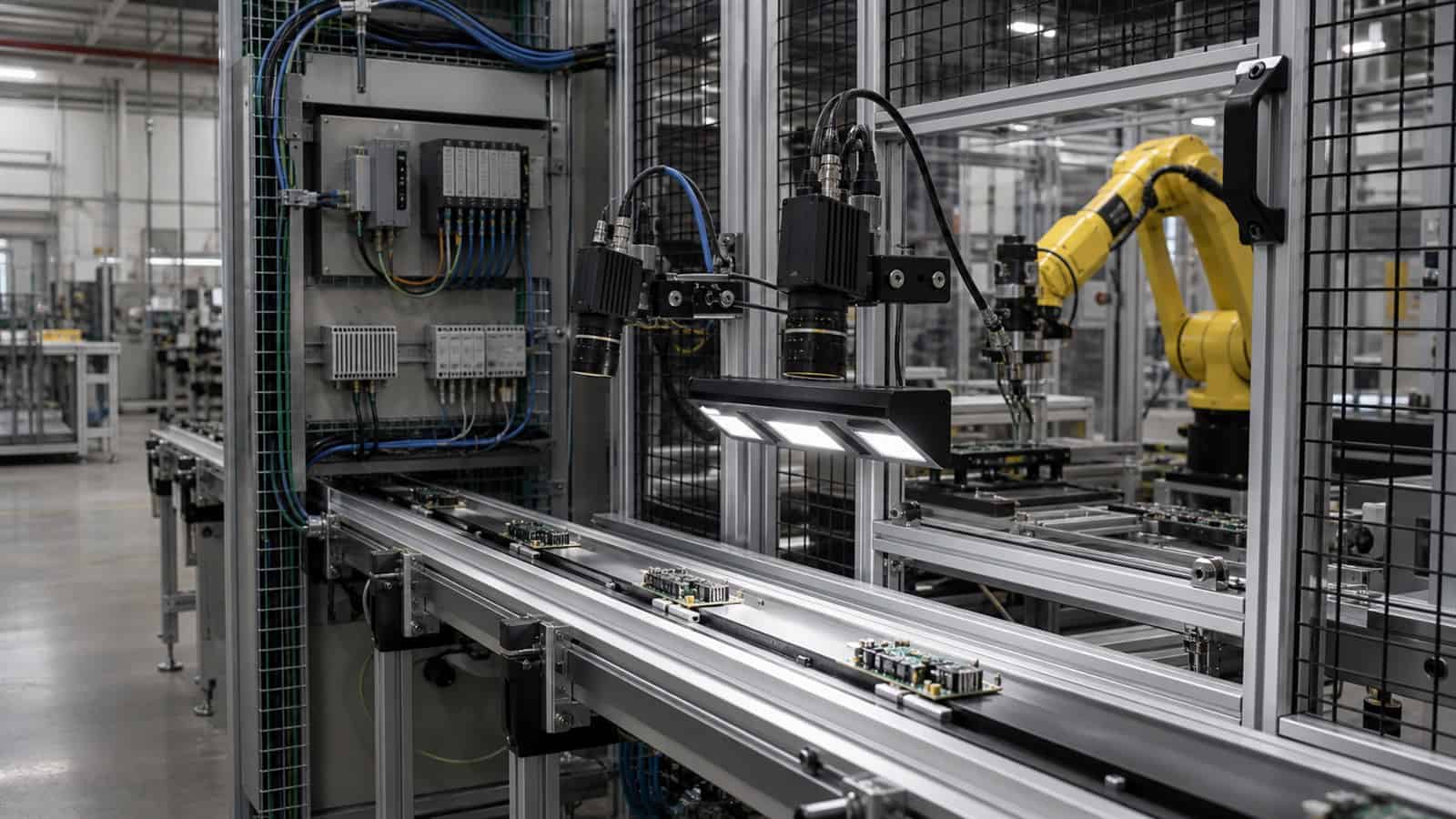
The Robustel EG5120 edge computing gateway is a strong fit for industrial projects that need local applications, containerized workloads, protocol integration and higher on-device processing, but choosing the best edge gateway should begin with the workload rather than a model name. A production shortlist needs to qualify compute, interfaces, software environment, security, connectivity and lifecycle together.
The difficulty for buyers is that “IoT gateway,” “industrial gateway” and “edge gateway” are often used for products with very different roles. Some mainly connect field devices to upstream systems. Others can host applications, buffer and normalize data, run local analytics and continue useful processing when cloud connectivity is interrupted.
A practical buyer’s guide should therefore work as a qualification funnel. A product should move forward only when it can support the workload, connect the installed equipment and remain manageable after deployment.
An Industrial Edge Gateway Should Qualify for the Workload Before It Competes on Specifications
Start by defining what must happen at the site.
If the gateway only needs to forward Modbus data to a cloud broker, a high-compute platform may add cost and operational complexity without creating much value. If the same project needs local protocol logic, data filtering, containerized software or machine-learning inference, processing capability and software architecture become much more important.
This distinction is also useful when comparing products across the Robustel Edge Computing Gateway portfolio. The portfolio spans different levels of cellular connectivity, Ethernet and serial density, compute resources and local application capability, while the shared edge-computing direction is built around RobustOS Pro and industrial OT/IT integration.
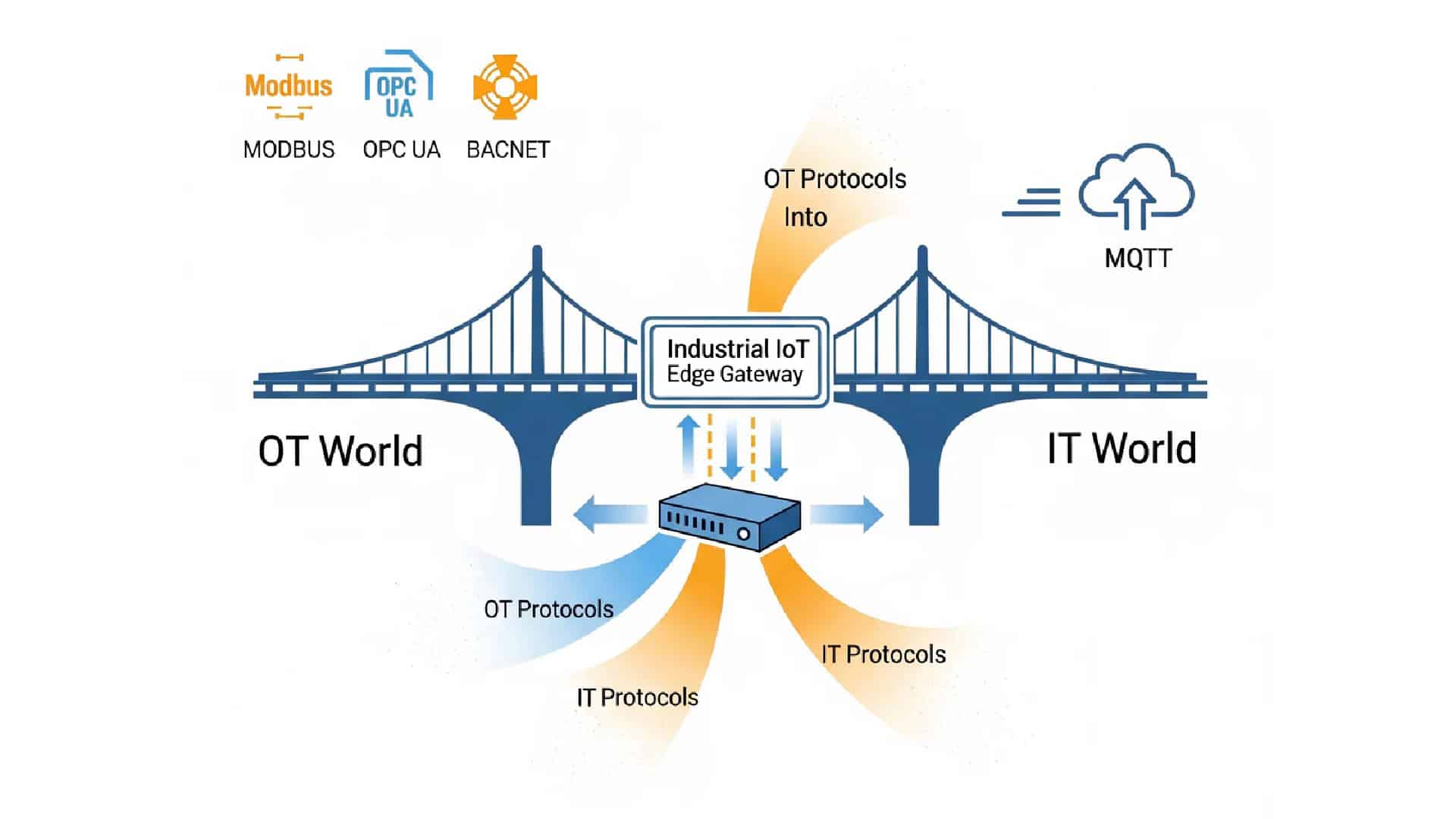
The architectural role behind these differences is covered in Robustel’s What Is an Edge Gateway? video. Once an edge gateway is understood as the point where field connectivity and local software meet, CPU specifications become only one part of the selection decision.
A useful first qualification question is therefore not “Which gateway is fastest?” but “Which workloads must remain on the gateway, and what would fail if those workloads were moved elsewhere?”
Filter for Compute, Containers and Application Ownership
A buyer should next establish what kind of software the project will run locally.
Simple preprocessing may require only modest resources. More demanding workloads can involve several protocol services, local databases, containerized connectors, analytics or AI inference running at the same time.
The RobustOS Pro industrial Linux platform gives Robustel edge gateways a full Debian environment for containers and native Linux applications. It also provides mechanisms for service persistence, application deployment, diagnostics and lifecycle management, which matters when the gateway is expected to host software rather than simply route traffic.
This creates several buyer questions that raw CPU frequency cannot answer. Teams should confirm how applications are packaged, how much RAM and storage they require, whether dependencies can be maintained over the project lifetime and what recovery process exists when an application update fails.
The Robustel smart-parking Application Example for cameras, ANPR, meters and sensors shows why this distinction can matter. The EG5120 is positioned specifically where local ANPR preprocessing is useful: partner applications can process and normalize results locally and forward compact information instead of sending every piece of raw data upstream.
That is a genuine edge-computing workload. The gateway is being selected because useful processing must occur at the site, not simply because a higher CPU specification is available.
Check Whether OT Interfaces Match the Installed Equipment
An edge gateway can have adequate compute and still be the wrong product if it cannot connect cleanly to the field equipment.
Industrial projects often contain a mixture of Ethernet devices, RS-232 or RS-485 equipment, digital signals and application protocols such as Modbus. The interface requirement should therefore be documented before the hardware shortlist is finalized.
For a Robustel deployment, this also helps distinguish different EG-series models. The EG5120, for example, provides two software-configurable RS-232/RS-485 interfaces, DI/DO and Gigabit Ethernet alongside its local compute environment. More interface-heavy or lighter workloads may justify a different EG-series configuration.
Physical connectivity and application protocols should be considered separately. An RS-485 port does not automatically mean that every field protocol is supported by the required application, and an Ethernet port does not define how the data will be modeled or published upstream.
The buyer should therefore map each field asset to three requirements: physical interface, protocol or data format, and the local application responsible for handling it. This keeps the hardware decision connected to the actual machine architecture.
Treat Security and Remote Operations as Production Requirements
A pilot gateway can often be managed manually. A production fleet cannot.
Security and operations should therefore enter the selection process before the pilot is approved. Buyers need to understand how administration is protected, how network boundaries are controlled, how applications and firmware are updated and how a remote support team can distinguish a gateway problem from a machine or WAN problem.
The Robustel EG5120 edge computing gateway includes firewall, VPN and remote-management capabilities in addition to its edge-computing resources. Those features become more meaningful when they are part of a defined site architecture rather than treated as isolated checklist items.
Robustel’s industrial robot remote-access Application Example illustrates this wider operating requirement. An EG5120 installed with the robot provides a controlled boundary between the local controller environment and remote support, while RCMS is used for fleet-level visibility. The edge gateway is therefore part of both the machine architecture and its support model.
That distinction matters when evaluating alternatives. The correct product is not simply one that can run the local application today; it should also fit the access, monitoring and change-control model that will exist after commissioning.
How the Robustel EG5120 Edge Computing Gateway Fits Higher-Compute Industrial Workloads
The Robustel EG5120 edge computing gateway represents the higher-compute end of many industrial edge requirements. Current specifications include a quad-core Cortex-A53 processor, 2 GB or 4 GB LPDDR4 options, 64 GB eMMC and a 2.3 TOPS NPU, together with Docker-capable RobustOS Pro and industrial interfaces.
Those resources become relevant when the project needs multiple local services, substantial application storage or inference workloads such as vision or anomaly detection. They are much less meaningful if the requirement is only periodic serial polling and simple forwarding.
The practical selection principle is to establish enough processing and storage margin for the validated workload without turning unused hardware capability into the main purchasing criterion.
The same applies to connectivity. EG5120 variants provide cellular and Ethernet options, but 5G should be selected because the application needs the corresponding backhaul capability, not because a higher-generation modem makes the gateway appear more advanced.
Lifecycle Support Can Eliminate an Otherwise Strong Candidate
Industrial gateways often remain in the field longer than the applications initially deployed on them.
The buyer should therefore evaluate what happens after year one. The operating system needs a credible update path, local applications need version control, security fixes need to be deployable and fleet configuration should remain understandable as the estate grows.
RobustOS Pro currently specifies a long software lifecycle and supports security maintenance, application deployment and recovery workflows. Robustel’s management ecosystem also allows EG-series gateways to be monitored and maintained centrally.
The operational importance is visible in Robustel’s Connected CNC Machines Application Example. The gateway is not introduced only to collect machine data; it also creates a managed path that allows support teams to inspect status and diagnose faults without relying on an engineer being physically present beside the CNC controller.
A gateway that fits the pilot technically but creates an unsustainable maintenance model should therefore leave the shortlist.
Build the Shortlist from Evidence, Not the Longest Datasheet
A practical qualification funnel can reduce a large product list quickly:
| Qualification gate | Buyer question | Typical reason to reject |
|---|---|---|
| Workload | What must run locally? | Insufficient or unnecessary compute model |
| OT integration | Which interfaces and protocols are required? | Missing machine-side connectivity |
| Software | How are applications deployed and maintained? | Unsuitable runtime or lifecycle |
| Conectividad | What WAN paths are required? | Cellular/Ethernet architecture mismatch |
| Seguridad | How are access and network boundaries controlled? | Inadequate controls for project policy |
| Operations | How will the fleet be monitored and updated? | Excessive manual maintenance |
| Lifecycle | Can the platform remain supported for the project life? | Unclear maintenance path |
This approach also makes comparisons within the Robustel EG series more useful. The models should be treated as different resource and interface envelopes for different workloads rather than as a simple ladder from “basic” to “best.”
The best industrial edge gateway is therefore the one that passes every requirement with appropriate margin and without introducing capability that the project has no operational reason to maintain.
Preguntas frecuentes
Q1. What is the most important specification when choosing an edge gateway?
There is no single specification that determines suitability. The workload should establish the required compute, memory, storage, interfaces and software environment. A gateway with more CPU performance can still be a poor fit if it lacks the required OT interfaces or creates unnecessary application and lifecycle complexity.
Q2. When is the Robustel EG5120 edge computing gateway a good fit?
The Robustel EG5120 edge computing gateway fits projects that need a Debian-based local application environment, Docker workloads, industrial interfaces and higher processing capability. Its NPU also makes it relevant to supported local inference workloads. Projects that only require basic protocol conversion may not need this level of compute.
Q3. Should an industrial edge gateway support containers?
Containers are useful when teams need repeatable application packaging, dependency separation and a familiar software deployment model. They are not mandatory for every project. If the gateway performs only fixed routing or protocol functions, a simpler software architecture may be sufficient.
Q4. Is 5G necessary for an industrial edge gateway?
No. Edge computing defines where processing occurs, while 5G defines one possible WAN connection. A gateway can perform meaningful edge processing over Ethernet or 4G. The WAN technology should be selected from data volume, site availability, mobility and resilience requirements.
Q5. How much compute margin should an edge gateway have?
Enough to accommodate the validated workload, expected concurrency and reasonable future changes without operating continually at its resource limit. The margin should be established through representative testing rather than a universal CPU or RAM percentage.
Conclusión
Choosing the best edge gateway for industrial IoT requires a qualification process rather than a market ranking.
The Robustel EG5120 edge computing gateway demonstrates the type of platform that becomes relevant when local applications, containerized software, industrial integration and higher compute all belong in the same field device. Other Robustel EG-series configurations can be more appropriate when the workload is lighter or the interface mix is different.
A reliable shortlist therefore follows a clear sequence: workload, OT interfaces, software environment, connectivity, security, operations and lifecycle.
The strongest candidate is not the gateway with the longest specification table. It is the one whose capabilities remain aligned with the industrial workload from commissioning through long-term operation.
Related Reading on Edge Computing in Industrial IoT:

Acerca del autor
Robert Liao | Technical Support Engineer
Robert is an IoT Technical Support Engineer at Robustel, specializing in industrial networking and edge connectivity. A certified Networking Engineer, Robert focuses on the deployment and troubleshooting of large-scale IIoT infrastructures. His work centers on architecting reliable, scalable system performance for complex industrial applications, bridging the gap between field hardware and cloud-side data management.