
Edge Computing vs Cloud Computing in IoT: Why Gateways Store, Filter, and Forward Data
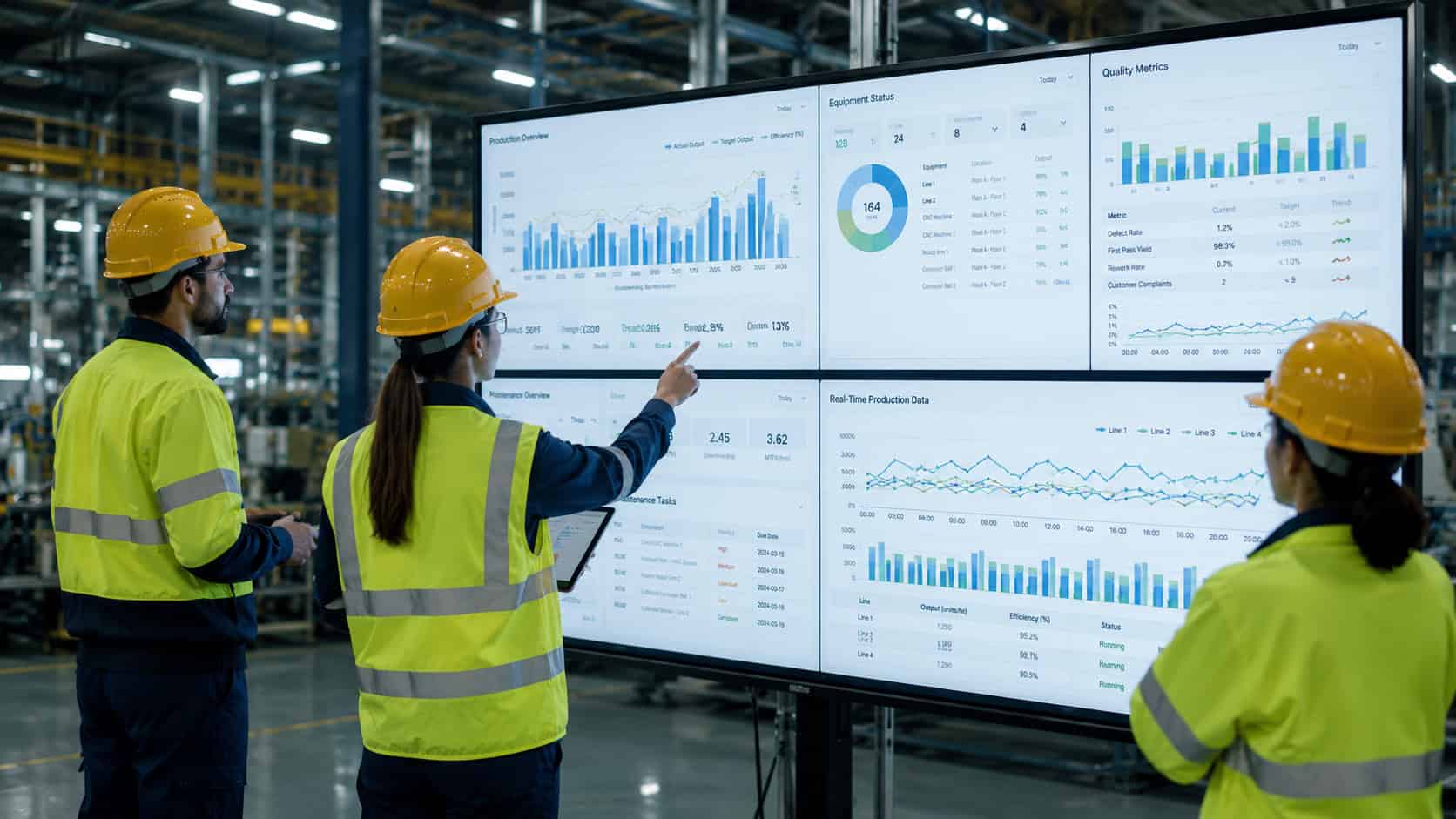
Edge computing vs cloud computing is often presented as a choice between two competing architectures. In industrial IoT, that is usually not the most useful way to look at it.
Most industrial projects do not need to decide whether edge computing is “better” than cloud computing. They need to decide which data should be handled locally, which data should be sent to the cloud, and what should happen inside the gateway before data leaves the site.
That question becomes more important when industrial assets are deployed across remote sites, cellular-connected locations, unstable network links, or bandwidth-limited environments. PLC data, meter readings, sensor values, machine status, energy site data, water station data, and EV charging site information may all be useful, but not every raw signal needs to travel directly to the cloud in real time.
This article uses Robustel EG5120 and RCMS as a practical reference for this type of edge-to-cloud workflow. EG5120 can support the site-side industrial edge gateway layer for data collection, local processing, buffering, and forwarding. RCMS can support remote visibility and management for Robustel devices. The main point is not that the edge replaces the cloud. The point is that industrial IoT data often needs to be stored, filtered, and forwarded carefully before it becomes useful in a cloud monitoring platform.
Edge and Cloud Usually Solve Different Parts of the Same Problem
A cloud platform is valuable because it can receive data from many sites, store historical information, support dashboards, run analytics, generate reports, integrate with business systems, and give teams a wider view of operations.
An edge gateway is valuable because it sits close to the equipment. It can collect data from field devices, handle selected local processing, reduce unnecessary traffic, buffer data during unstable connections, and forward useful information to the cloud when the link is available.
Those are not opposing roles. They are different layers of the same industrial IoT architecture.
| Layer | Better suited for |
| Edge gateway | Local data collection, filtering, buffering, protocol handling, selected processing, store-and-forward workflows |
| Cloud platform | Long-term storage, dashboards, remote monitoring, reporting, fleet-wide analysis, application workflows |
| Project team | Deciding what data should stay local, what should be forwarded, and how the data path should behave |
This is why “edge vs cloud IoT” is often less useful than “edge plus cloud IoT”. The real design decision is not where all data should live. It is how data should move.
Where the Edge Gateway Is Useful
The edge gateway is useful when the site-side data needs preparation before it reaches the cloud.
This may include reading PLC or meter data, filtering repeated sensor values, converting protocol data into a cloud-friendly format, buffering selected values during unstable network periods, or forwarding only the information that is useful for remote monitoring.
This matters in remote industrial sites, cellular-connected sites, distributed assets, water stations, energy sites, EV charging sites, utility cabinets, and other locations where network quality, bandwidth, or field access may not be ideal. In these environments, the gateway is not just a connection point. It becomes the place where field data starts to become usable cloud data.
Where the Cloud Platform Is Useful
The cloud platform is useful when the value depends on scale, history, visibility, or integration.
A cloud system can collect data from many gateways, compare sites, support dashboards, store historical records, generate reports, and make information available to remote teams. For distributed industrial assets, the cloud is often where the wider operational view becomes possible.
A single gateway may understand one site. A cloud platform may understand hundreds or thousands of sites. That distinction is important. The edge prepares the data. The cloud organizes and uses the data. The project team defines how those two layers work together.
Why Gateways Store, Filter, and Forward Data Before the Cloud
The title of this article is not only about comparing edge computing and cloud computing. It is about the workflow between them.
In industrial IoT, gateways often need to store, filter, and forward data because raw field data is not always ready for cloud use. It may be too frequent, too repetitive, too noisy, too dependent on local context, or too affected by unstable network links.
The Problem Is Not Only Data Volume
Bandwidth reduction is often one reason to use edge computing in IoT, especially in cellular-connected sites. But the issue is not only how much data is being sent. The more practical issue is whether the data being sent is useful.
A PLC may generate many values, but only some of them may matter for remote monitoring. A water station may report meter data regularly, but the cloud platform may only need periodic readings, status changes, or alarms. A machine may produce repeated operating values that are useful locally but not necessary for every remote dashboard update. A distributed energy asset may need local buffering because the cellular link is not always stable.
If every raw data point is sent directly upstream, the cloud platform may receive more data than the team can use. Dashboards become noisy. Data costs may rise. Troubleshooting becomes harder. Network interruptions may create gaps. The system may still be connected, but not well organized.
Edge computing helps when the gateway is used as a preparation layer. It can help decide what should be collected, cleaned, filtered, buffered, converted, or forwarded before the cloud receives the data.
Filtering Data Before It Becomes Cloud Traffic
IoT data filtering is not about hiding data. It is about making the data stream more useful. In industrial IoT, filtering can take different forms:
| Raw site data | Possible edge handling |
| Repeated sensor readings | Send periodic summaries or meaningful changes |
| Machine status values | Send operating state, alarms, or exceptions |
| Meter data | Forward scheduled readings or threshold-based events |
| PLC registers | Map selected values into a cloud-friendly format |
| High-frequency signals | Aggregate or reduce before cloud transmission |
| Local equipment events | Prioritize alarms and state changes |
This matters because the cloud should not always be treated as the first place where data becomes meaningful. In many projects, the gateway can make the data more usable before it travels.
For example, instead of forwarding every unchanged sensor reading, the gateway may forward a value only when it changes beyond a defined threshold. Instead of sending raw machine data continuously, the gateway may forward operating states or selected indicators. Instead of sending every field value as-is, the gateway may package selected data for the cloud platform or remote monitoring system.
The exact logic depends on the project. But the principle is clear: filtering at the edge can help reduce noise, lower unnecessary traffic, and make cloud-side data easier to act on.
Store-and-Forward for Unstable Network Links
Many industrial IoT sites do not have perfect connectivity. Remote industrial sites, water stations, energy assets, utility cabinets, outdoor equipment rooms, EV charging sites, and cellular-connected locations may experience unstable network links. The issue may come from weak signal, operator coverage, antenna placement, site power, cabinet location, environmental conditions, or temporary network interruption.
In these cases, a gateway data buffering or store-and-forward workflow can help.
Store-and-forward usually means the gateway temporarily stores selected data locally when the connection is unavailable, then forwards that data when the network returns. This can help reduce data gaps in remote monitoring applications.
But it should not be oversold. Store-and-forward does not automatically guarantee that no data will ever be lost. The final result depends on gateway configuration, available storage, application logic, data volume, retry behavior, network recovery time, timestamp handling, and how the receiving cloud platform accepts delayed data.
A mature project defines these details before deployment:
- Which data should be buffered?
- How long should it be stored?
- What happens if the buffer becomes full?
- Should old data be overwritten or protected?
- How should timestamps be preserved?
- How should delayed data be handled by the cloud platform?
- How should teams know that buffering has occurred?
These questions are more useful than simply asking whether the gateway supports store-and-forward. The workflow matters as much as the feature.
Robustel EG5120 and RCMS in an Edge-to-Cloud Data Workflow
Once the workflow is clear, the product role becomes easier to explain.
A project focused on edge computing vs cloud computing in IoT needs a gateway that can support field-side data access, local data handling, cellular connectivity, secure forwarding, and remote device management. This is where Robustel EG5120 and RCMS can be used as a practical reference.
- Site-side edge gateway layer: EG5120 can support the industrial edge gateway role between field equipment and remote platforms. This is relevant when PLC data, meter data, sensor data, machine data, or site-side signals need to be collected and prepared before being sent upstream.
- Local data processing before cloud forwarding: The gateway layer can help with selected local processing, filtering, protocol-related workflows, buffering, and data preparation. This supports the article’s core idea: not all industrial data should be sent to the cloud in raw form.
- Cellular-connected industrial sites: For remote industrial sites, distributed assets, outdoor cabinets, energy sites, water stations, EV charging sites, and other locations where wired connectivity may be limited, EG5120 can support cellular connectivity as part of the edge-to-cloud path.
- Store, filter, and forward workflows: In unstable network or bandwidth-limited environments, the gateway can help project teams design workflows where selected data is buffered, filtered, and forwarded according to the application requirements. The actual result still depends on configuration, storage limits, data volume, network recovery, and cloud-side handling.
- Remote visibility and device lifecycle management: RCMS can support remote visibility and management for Robustel routers and gateways. For distributed deployments, this helps teams monitor gateway status, connectivity, configuration, firmware, and maintenance workflows over time.
- Clear system boundaries: EG5120 and RCMS can support the gateway and device management layers, but they do not replace PLCs, SCADA, MES, cloud platforms, cybersecurity programs, or field maintenance teams. The final architecture still depends on project design, data ownership, access policy, and operational process.
In this architecture, EG5120 helps handle the site-side gateway workflow, while RCMS helps teams keep Robustel gateway deployments visible and manageable. Together, they support the part of the industrial IoT architecture where data moves from field equipment, through the edge, and toward cloud systems.
For teams moving from architecture planning to configuration work, Robustel also provides RCMS how-to guides covering common management tasks such as device onboarding, remote access, alert configuration, firmware updates, and deployment workflows.
These guides are best used as implementation references after the gateway security design has been defined. They do not replace a project-specific security review, but they can help deployment teams understand how RCMS-related workflows are configured in practice.
Planning an Edge-to-Cloud Workflow for Industrial IoT Data
A good edge-to-cloud workflow starts with a practical question: what should happen to the data before it travels? That question is more useful than deciding whether edge or cloud is more advanced. Industrial IoT systems usually need both, but each layer should have a defined role.
When Data Should Be Processed Locally
Local processing is useful when it solves a specific problem. It may be a good fit when data is too frequent, too noisy, too raw, too dependent on local context, or too affected by unstable connectivity. It may also be useful when the cloud platform only needs selected values, alarms, summaries, or state changes.
Examples include:
- Filtering repeated sensor readings before transmission.
- Converting PLC or meter data into a format the remote platform can use.
- Sending alarms or state changes instead of continuous raw values.
- Buffering selected data during cellular interruption.
- Aggregating values before forwarding them to a monitoring platform.
- Preparing data locally before sending it to a cloud dashboard.
However, local processing should not become a place where undocumented logic accumulates. Project teams should define what the gateway is expected to do, who owns that logic, how it is tested, how updates are managed, and what happens when local processing fails.
Edge processing should make the system clearer, not harder to understand.
When Data Should Be Sent to the Cloud
Cloud processing is useful when the value depends on scale, history, visibility, or integration. For example, a cloud platform may be the right place for:
- Long-term historical storage.
- Multi-site dashboards.
- Fleet-wide equipment comparison.
- Trend analysis across regions.
- Reporting and compliance views.
- Integration with maintenance, ERP, or business systems.
- Remote access for operations and management teams.
This is why edge computing should not be treated as a reason to avoid the cloud. In many industrial IoT systems, the cloud is still where the wider operational value appears.
The edge prepares the data. The cloud organizes the data. The project team defines how those two layers work together.
A Simple Edge-to-Cloud Workflow
A simple industrial IoT data workflow may look like this:
| Step | What happens |
| 1. Field data is generated | PLCs, meters, sensors, machines, or site devices produce raw data |
| 2. Gateway collects selected values | The edge gateway reads or receives the data that is relevant to the project |
| 3. Gateway filters or processes data | Repeated, noisy, or raw values may be cleaned, mapped, summarized, or converted |
| 4. Gateway buffers data where needed | Selected data may be temporarily stored during unstable links |
| 5. Gateway forwards data | Useful information is sent to the cloud or monitoring platform |
| 6. Cloud platform stores and visualizes data | Teams use dashboards, reports, alerts, and analysis tools |
| 7. Remote teams maintain the gateway layer | Device status, configuration, firmware, and connectivity are monitored over time |
This workflow is more practical than asking whether the edge or cloud is better. It shows how each layer contributes to a usable system.
Edge computing vs cloud computing becomes easier to understand when it is connected to real industrial data workflows. The same design questions appear when teams compare edge and cloud roles, decide which operational data should be handled closer to the field, or build a PLC-to-cloud data path through an industrial gateway. These related articles explore those topics from different practical angles.

Questions Before Sending Industrial Data to the Cloud
Before deciding how much data should go to the cloud, project teams should ask a few direct questions.
| Area | Question |
| Data value | Which values are actually needed by the cloud platform or remote team? |
| Data frequency | Does every data point need to be sent, or would summaries and changes be enough? |
| Network stability | What happens when the cellular or WAN link is interrupted? |
| Bandwidth | Is the site bandwidth-limited or cost-sensitive? |
| Buffering | Which data should be stored temporarily, and for how long? |
| Cloud handling | Can the cloud platform handle delayed, summarized, or filtered data correctly? |
| Ownership | Who owns the gateway logic, cloud integration, and maintenance process? |
These questions help keep the architecture grounded. They also prevent a common mistake: collecting too much data before anyone has defined how it will be used.
Boundaries: Edge Gateways Do Not Replace the Whole System
An edge gateway can support a stronger edge-to-cloud workflow, but it should not be expected to replace the entire system.
It does not replace PLCs or safety controllers. It does not replace SCADA or MES. It does not replace cloud applications. It does not remove the need for cybersecurity planning. It does not eliminate field maintenance. It does not automatically know which data is important.
The gateway provides capability. The project defines the result.
This distinction is important in edge computing vs cloud computing discussions. A gateway can collect, filter, buffer, and forward data, but the success of the architecture depends on data design, site conditions, network quality, storage limits, application logic, cloud platform behavior, and long-term maintenance. That is why a good comparison does not ask which layer wins. It asks which layer should do which job.
Closing Perspective
Edge computing vs cloud computing in IoT should not be treated as a winner-loser comparison.
In industrial IoT, edge computing is useful when data needs to be collected, filtered, processed, buffered, or prepared near the site. Cloud computing is useful when data needs to be stored, visualized, analyzed, shared, and connected to wider applications. Most mature deployments need both.
Robustel EG5120 and RCMS can support this kind of edge-to-cloud workflow when used within a clear architecture. EG5120 can provide the site-side industrial edge gateway layer for local data handling and cloud forwarding. RCMS can support remote visibility and management for Robustel gateway deployments.
The practical goal is not to keep all data at the edge or send all data to the cloud. The goal is to decide what should happen to industrial data before it travels, so project teams can build a system that is easier to manage, less noisy, more resilient, and more useful over time.
FAQs
Q1. What is the difference between edge computing and cloud computing in IoT?
Edge computing in IoT means handling selected data near the device, machine, gateway, or site where the data is generated. Cloud computing means sending data to a remote platform for storage, dashboards, analysis, reporting, and wider application workflows. In industrial IoT, edge and cloud are usually not competitors. Edge gateways can collect, filter, buffer, and forward selected data, while cloud platforms help teams store, visualize, analyze, and share that data across sites.
Q2. Why filter data at the edge before sending it to the cloud?
Filtering data at the edge can help reduce unnecessary traffic, lower noise in cloud dashboards, reduce bandwidth usage, and make remote monitoring data more useful. Industrial sites often generate repeated sensor readings, PLC values, meter data, machine status, or alarms. Not every raw value needs to be sent upstream. A gateway such as Robustel EG5120 can support the site-side edge layer where selected data is prepared before being forwarded to a cloud or monitoring platform.
Q3. What is store-and-forward in IoT gateways?
Store-and-forward in IoT gateways refers to a workflow where selected data is stored temporarily at the gateway when the network link is unavailable, then forwarded when connectivity returns. This can be useful for remote industrial sites, cellular-connected assets, water stations, energy sites, utility cabinets, and other locations with intermittent connectivity. However, store-and-forward does not automatically guarantee that no data will be lost. The outcome depends on gateway configuration, storage capacity, data volume, buffering rules, retry behavior, timestamps, and how the cloud platform handles delayed data.
Q4. When should IoT data be processed locally instead of in the cloud?
IoT data should be processed locally when it needs filtering, protocol conversion, buffering, aggregation, local event handling, or preparation before cloud transmission. Local processing is especially useful when data is high-frequency, noisy, repetitive, bandwidth-sensitive, or affected by unstable network links. Cloud processing remains useful for long-term storage, dashboards, reporting, multi-site analysis, and enterprise integration. The best architecture usually assigns different tasks to edge and cloud rather than forcing all processing into one layer.
Q5. How can edge gateways reduce bandwidth usage for industrial data?
Edge gateways can reduce bandwidth usage by sending selected data instead of every raw data point. For example, a gateway may forward only changed values, alarms, summaries, averaged readings, mapped protocol data, or scheduled updates. This can be useful in cellular-connected and bandwidth-limited industrial sites. With a gateway-and-management approach such as Robustel EG5120 and RCMS, project teams can support local data handling at the site and maintain visibility into Robustel gateway deployments over time. The actual bandwidth reduction depends on how data filtering, aggregation, buffering, and forwarding are configured.
Acerca del autor
Robert Liao | Technical Support Engineer
Robert is an IoT Technical Support Engineer at Robustel, specializing in industrial networking and edge connectivity. A certified Networking Engineer, Robert focuses on the deployment and troubleshooting of large-scale IIoT infrastructures. His work centers on architecting reliable, scalable system performance for complex industrial applications, bridging the gap between field hardware and cloud-side data management.