
Best Industrial IoT Gateway by Use Case: Factory, Energy, Retail and Transport
The Robustel EG5200 edge computing gateway fits industrial IoT sites that need substantial Ethernet connectivity, local applications and 5G or 4G backhaul, but it is not automatically the best gateway for every vertical. Factory, energy, retail and transport deployments create different constraints, so the useful comparison begins with the field problem rather than one universal gateway specification.
An industrial IoT gateway may sit beside a CNC controller, inside an energy cabinet, behind a retail analytics system or beside several cameras in roadside infrastructure. Those environments share the need to connect field assets, but the workload, interfaces and operational consequences can be very different. “Best by use case” therefore means identifying the dominant constraint in each deployment and selecting the gateway architecture around it.
There Is No Single Best Industrial IoT Gateway Across Four Different Sites
The Robustel Edge Computing Gateway portfolio illustrates why industrial gateway selection is difficult to reduce to one model. Different products vary in cellular connectivity, Ethernet density, serial interfaces and compute resources while sharing a Debian-based edge-computing foundation on RobustOS Pro.
A useful way to understand those differences is to start with the workload environment. Robustel’s Where Is Edge Computing Actually Used in Industrial IoT video places edge computing into practical industrial applications, which is the same perspective required when comparing gateways by use case.
The gateway should then be selected according to what constrains the project most: machine integration in a factory, distributed interfaces in energy, operational simplicity in retail or data density in transport infrastructure.
Factory: Integration and Downtime Define the Gateway
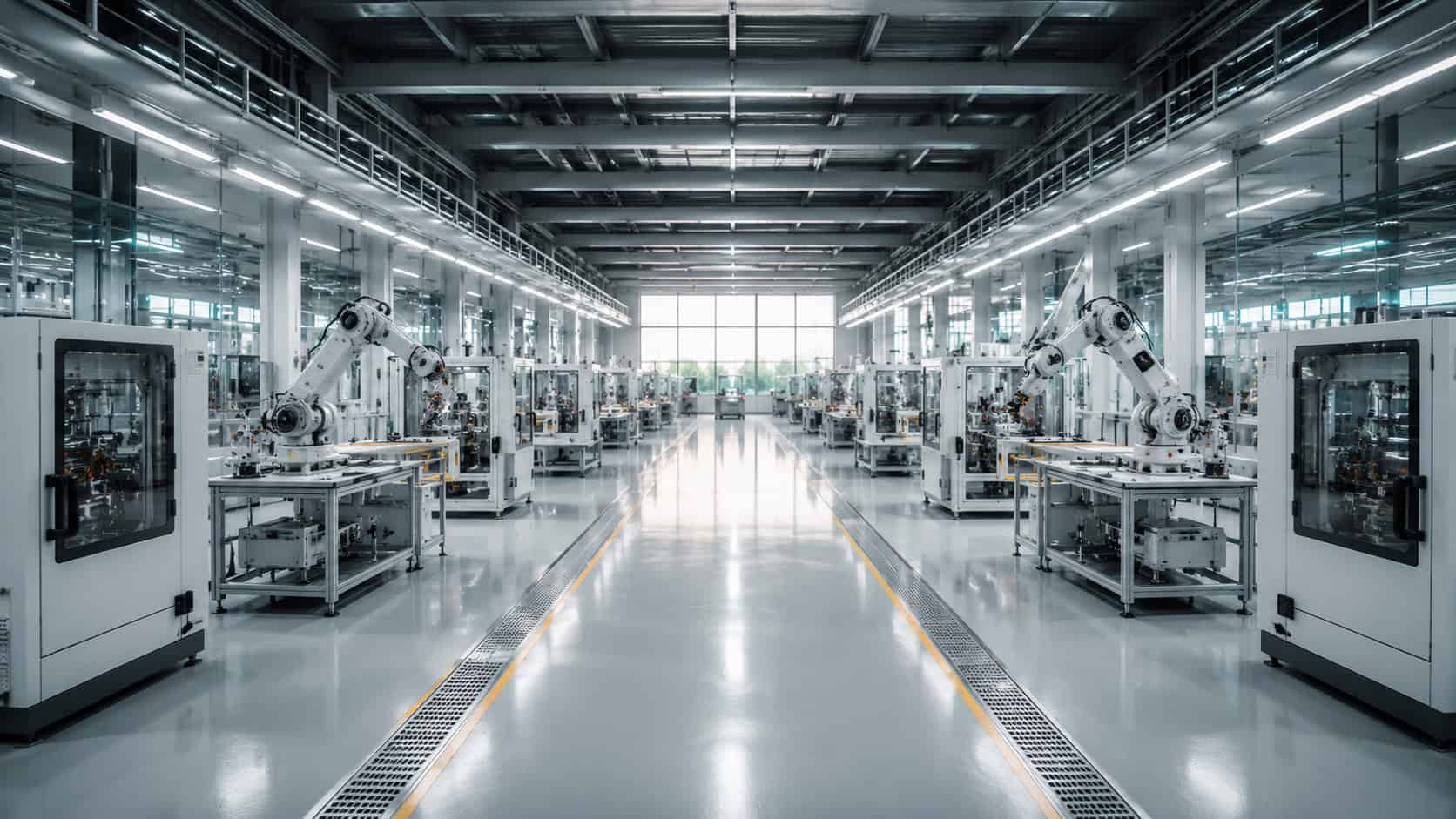
A factory edge project often begins with equipment that already exists.
PLCs, CNC machines, meters and controllers may expose serial or Ethernet interfaces and use protocols selected years before the current IoT initiative. Replacing that equipment is rarely the objective. The gateway has to integrate with it without disrupting the control architecture.
Robustel’s Connected CNC Machines Application Example captures this constraint well. The EG-series gateway connects directly to the CNC environment and creates a managed path for machine status and diagnostics, allowing remote support teams to obtain useful context without redesigning the CNC control system.
In this environment, interface fit and support workflow can be more important than maximum compute. A factory collecting serial alarms and buffering maintenance data may justify a relatively modest edge platform, while a vision or analytics workload may require substantially more local processing.
Robustel gateway selection for factories should therefore begin with the installed equipment and the local applications that must interact with it.
Energy: Distributed Assets Shift the Priority to Interfaces and Data Continuity
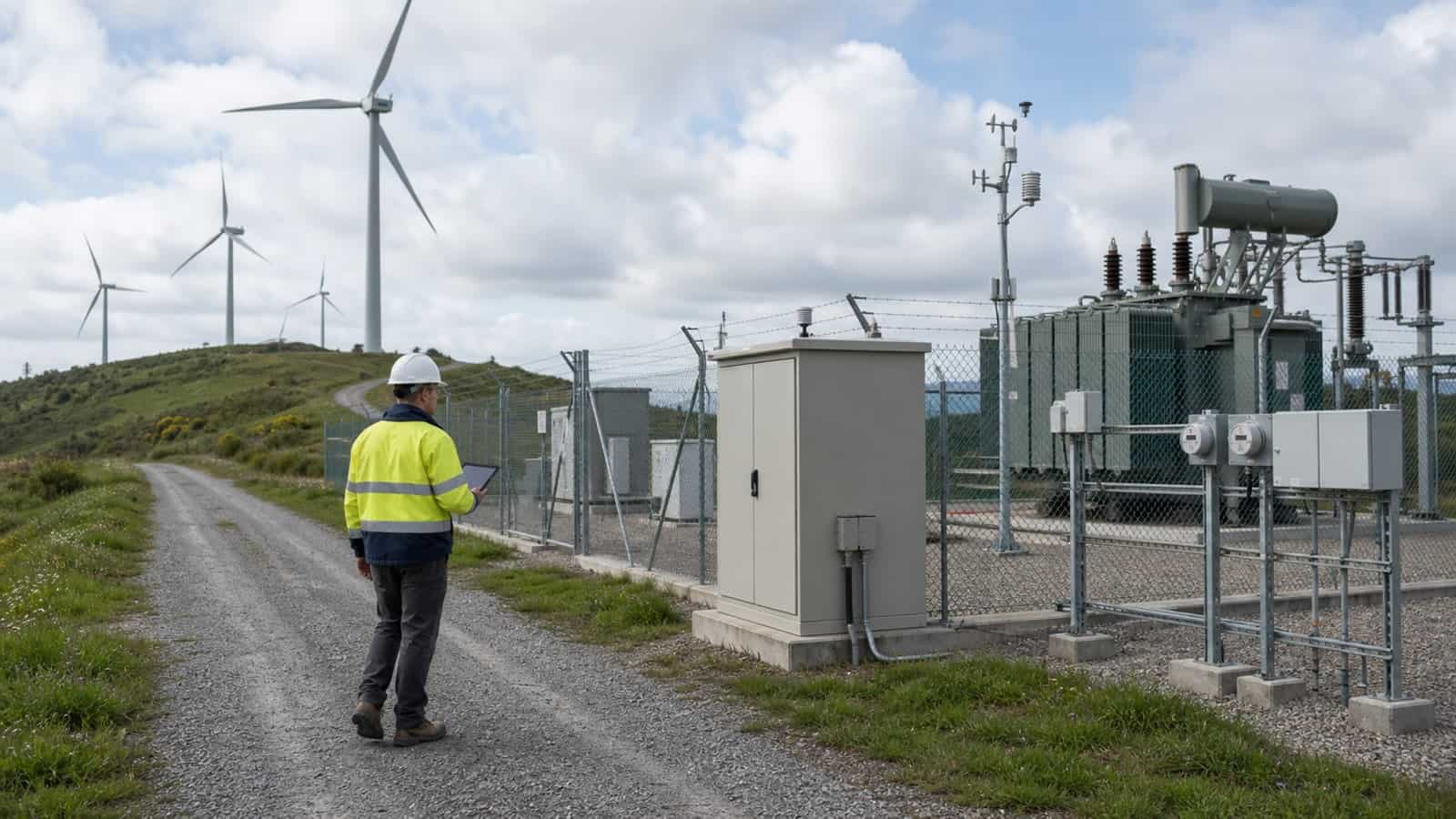
Energy and utility sites often create a different constraint. Equipment is geographically distributed, local IT support is limited and the gateway may need to aggregate several meters, protection devices or controllers before sending information to a central platform.
The Robustel EG5200 edge computing gateway is one relevant architecture where a site needs several Ethernet connections alongside serial integration and resilient cellular backhaul. The current product provides five Gigabit Ethernet ports, software-configurable serial interfaces and 5G or 4G variants, while its RobustOS Pro environment supports local buffering and processing.
A smaller remote meter site may not require this interface density. A site containing several protection devices, IP equipment and local applications may.
This illustrates the central use-case principle: the industry name does not define the gateway. The number and type of assets at the specific site do.
For energy projects, Robustel selection should also consider what happens when the WAN is unavailable. Local buffering, reconnection behaviour and the ability to diagnose a remote gateway can matter more than nominal cellular throughput.
Retail: Add Edge Compute Only When a Local Workload Justifies It
Retail is a useful counterexample because many stores do not need an edge computing gateway at all.
If the requirement is primarily POS connectivity, corporate WAN and backup internet, a cellular router may be the cleaner architecture. Adding a Linux edge platform creates more software and lifecycle responsibility without necessarily improving the business outcome.
The edge case becomes stronger when the site performs local analytics, combines several equipment types or needs to preprocess data before sending it upstream.
A Robustel EG-series gateway may therefore fit a retail site running local camera analytics or another application-specific workload, while a connectivity-only store can remain on a simpler router architecture.
This distinction prevents “industrial IoT gateway” from becoming a default answer to every connected-site problem.
The deciding question is whether the site needs local application execution, not whether the organization operates many locations.
Transport and Smart Infrastructure: Cameras and Mixed Assets Change the Architecture
Transport infrastructure often combines equipment that generates very different types of data.
A roadside or parking site may contain cameras, ANPR systems, meters, occupancy sensors and gates. Some traffic is high-bandwidth, some consists of small telemetry messages and some benefits from local processing before it leaves the site.
Robustel’s Smart Parking Application Example deliberately assigns different network roles to different device types. The EG5120 is used where ANPR preprocessing creates value, while other Robustel connectivity devices handle cameras, meters and sensors according to their specific needs.
That architecture provides an important lesson for an industrial IoT gateway buyer: one site does not necessarily require one oversized gateway to perform every task.
Where several Ethernet cameras, local display capability and edge processing do need to converge, the Robustel EG5200 represents a different fit. Its five Gigabit Ethernet ports, HDMI and local Linux environment make it more appropriate for peripheral-dense sites than gateway models intended for lighter serial workloads.
How the Robustel EG5200 Edge Computing Gateway Fits Higher-Connectivity Edge Sites
The Robustel EG5200 edge computing gateway is most relevant when the field architecture itself requires substantial connectivity.
Its current hardware combines five Gigabit Ethernet interfaces with serial connectivity, 5G or 4G options, HDMI, USB expansion and a quad-core Cortex-A53 platform with a 2.3 TOPS NPU. RobustOS Pro provides the local application environment, while the hardware can connect several IP and industrial devices directly.
Those capabilities make sense in a multi-camera site or a cabinet that aggregates several IP devices. They are less compelling at a single-meter location with modest data volume.
The correct product relationship is therefore:
| Deployment constraint | Gateway capability that becomes important |
|---|---|
| Several IP cameras or devices | Ethernet port density |
| Mixed legacy equipment | Serial and industrial interfaces |
| Local analytics | Compute, storage and application runtime |
| Remote/distributed site | Cellular WAN and recovery |
| Local operator display | HDMI where required |
| Large estate | Central management |
This is more useful than assigning the EG5200 to an entire industry category.
Remote Operations Become the Common Requirement Across Verticals
The four environments differ in field requirements, but they share one operational problem: gateways become expensive to support when every configuration change requires physical access.
The Robustel RCMS remote device management platform provides centralized monitoring, Zero-Touch provisioning, configuration control, alerts and update workflows for Robustel fleets. Those capabilities become increasingly relevant in energy, retail and transport because sites are geographically distributed, but they also matter when machine builders support gateways across many factories.
This means remote management should be evaluated as part of the deployment model rather than as a secondary software feature.
A factory may prioritize remote fault diagnosis. A transport operator may prioritize fleet-wide templates. A retailer may care most about standardized rollout. An energy operator may need visibility into inaccessible sites.
The same platform capability creates value for different operational reasons.
Map the Constraint Before Mapping the Product
A use-case map keeps the recommendation grounded:
| Environment | Dominant constraint | Typical gateway priority |
|---|---|---|
| Factory | Existing OT equipment and downtime | Serial integration local apps remote support |
| Energy | Distributed assets and limited access | Interfaces buffering resilient backhaul |
| Venta al por menor | Operational simplicity | Edge only where local workload justifies it |
| Transport | Cameras and mixed infrastructure | Ethernet density local processing cellular WAN |
The Robustel EG portfolio can then be mapped against these requirements rather than assigning a single model to every vertical.
A gateway with more interfaces or compute is not inherently better. It is better only when those resources solve a constraint that actually exists at the site.
Preguntas frecuentes
Q1. What is the best industrial IoT gateway for factories?
There is no universal factory model. Selection depends on PLC and machine interfaces, protocols, required local applications, data volume and remote-support needs. A factory running local analytics may need substantially more compute than one that only aggregates serial data.
Q2. When is the Robustel EG5200 edge computing gateway a good fit?
The Robustel EG5200 edge computing gateway is especially relevant where several Ethernet devices, local edge applications and 5G or 4G backhaul need to converge in one industrial gateway. Its five Gigabit Ethernet ports make it useful for peripheral-dense sites, but smaller deployments may not need that interface capacity.
Q3. Do retail sites normally need edge computing?
Not necessarily. Many stores primarily need reliable WAN connectivity, which can be handled by an industrial router. Edge computing becomes more relevant when the store must run local analytics, application logic or data preprocessing.
Q4. Why is local buffering important at energy sites?
Distributed energy sites may experience temporary WAN interruptions. Local buffering can preserve data until connectivity returns, although storage capacity and application behavior still need to be sized for the expected outage duration.
Q5. Should all sites in one industry use the same gateway?
Standardization is useful, but site requirements still vary. A common gateway model should be adopted only where it covers the real interface, processing and connectivity requirements without creating excessive cost or unnecessary software complexity.
Conclusión
The best industrial IoT gateway by use case is determined by the dominant site constraint rather than the industry label alone. The Robustel EG5200 edge computing gateway shows how higher Ethernet density, local applications and cellular connectivity can fit demanding edge sites, while other Robustel EG-series gateways provide different resource and interface combinations for lighter workloads.
Factories emphasize machine integration, energy sites emphasize distributed data continuity, retail requires a clear reason to add local compute, and transport infrastructure often combines cameras with heterogeneous field assets.
Define the constraint first. The appropriate gateway architecture becomes much easier to identify afterward.
Related Reading on Edge Computing in Industrial IoT:
Acerca del autor
Robert Liao | Technical Support Engineer
Robert is an IoT Technical Support Engineer at Robustel, specializing in industrial networking and edge connectivity. A certified Networking Engineer, Robert focuses on the deployment and troubleshooting of large-scale IIoT infrastructures. His work centers on architecting reliable, scalable system performance for complex industrial applications, bridging the gap between field hardware and cloud-side data management.