
Store-and-Forward Edge Gateway Design for Unreliable Cloud Connections
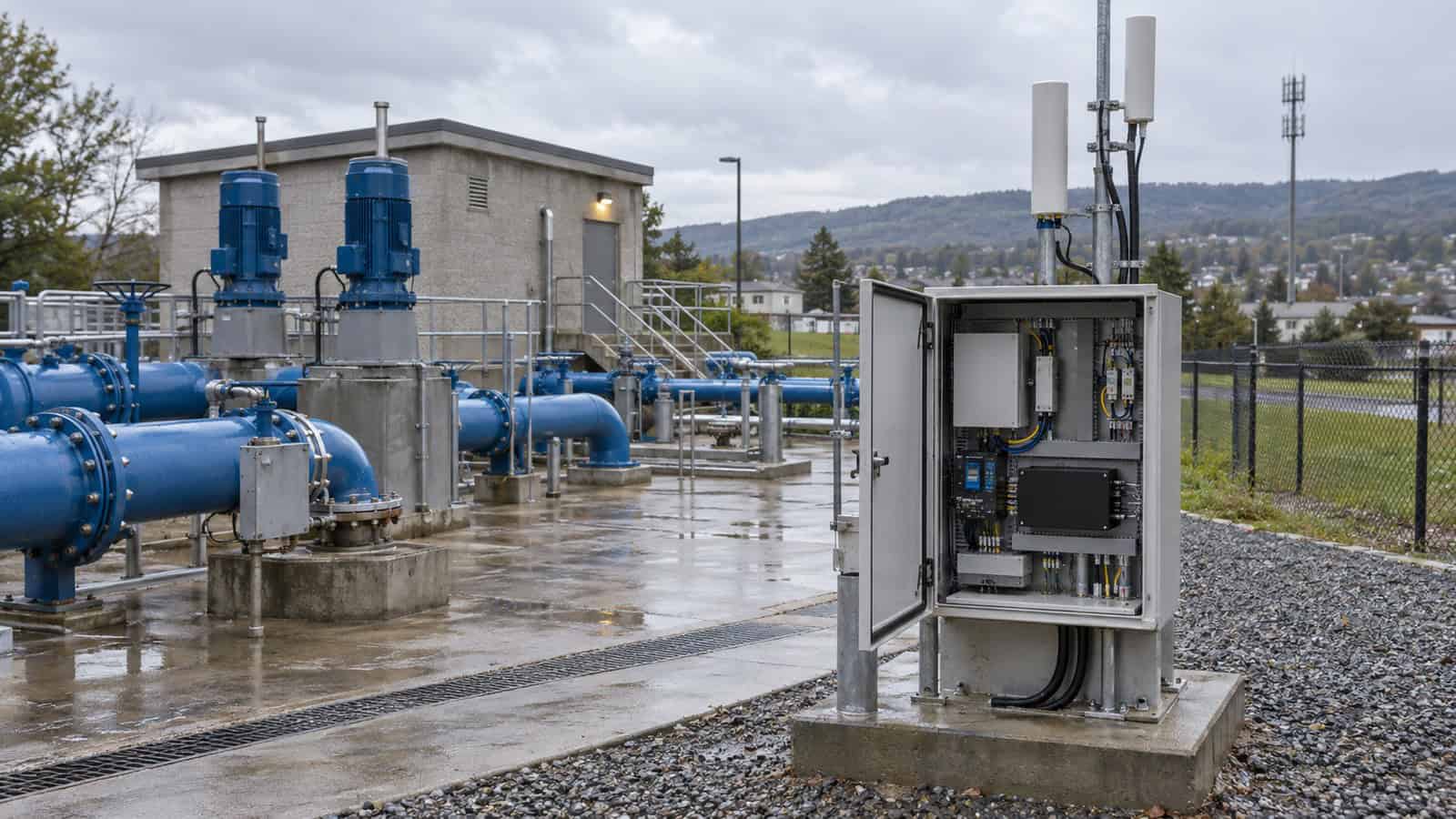
The Robustel EG5120 Edge Computing Gateway offers local compute, substantial eMMC storage options, Docker and cellular connectivity for store-and-forward applications. Those resources make buffering possible; they do not define the data policy. The project must specify what is retained, how capacity is protected, how replay interacts with live traffic and how consumers recognise duplicates.
Start with the States Data Can Occupy
For a large fleet, storage capacity is not the first governance question. I would first define who owns queued data, when it expires, what happens after an application change and how the receiver handles duplicates. Those decisions determine whether replay is a controlled operating process or an unpredictable traffic surge after every long outage.
Use an explicit state machine. “Offline” is not one condition: the WAN may be down, the broker may reject authentication, DNS may fail or the cloud application may be unavailable while the network is healthy.
| State | Edge behaviour | Required evidence |
|---|---|---|
| Connected | Send current records and confirm accepted progress | Normal latency and acknowledgement path |
| Disconnected | Persist eligible records with source time and identity | Write success and remaining capacity |
| Reconnecting | Re-establish identity and determine last accepted position | No blind restart from the beginning |
| Replaying | Send backlog under a controlled rate while live data continues | Ordering, duplicates and resource use |
| Capacity pressure | Apply declared retention or aggregation policy | Alarm before irreversible loss |
The state should be visible to operations. Silence from the cloud must not be the only indication that a remote site is filling its buffer.
The Robustel’s EG5120 quick-start video can orient deployment teams to the hardware and setup context before they install the application. The buffer design belongs to the application and its tested storage path.
The Longest Credible Outage Sets the Useful Baseline
Calculate record size after encoding, expected rate, metadata, index overhead and retention duration. Add headroom for bursts and database maintenance. Images, logs and high-frequency samples need separate budgets; one large diagnostic file should not evict all operational telemetry without an explicit policy.
Storage endurance also matters. Repeated small writes, compaction and log growth can create more activity than the payload estimate suggests. Measure the intended database and filesystem on the exact hardware under sustained load.
Robustel’s Smart Parking Application Example illustrates a distributed site with different data classes. It is useful for deciding which records deserve local retention and which can be regenerated; it does not prove EG5120 capacity or a loss-free outcome.
Replay Behaviour Belongs in the API Contract
Every buffered record should carry a stable identity, source timestamp and schema version. The cloud consumer needs an idempotency or deduplication rule. Preserve the difference between event time and arrival time so a delayed alarm is not displayed as current.
Replay should be rate-limited and interleaved with live data according to application priority. If a three-day backlog saturates the restored WAN, the site may immediately appear unhealthy again. Test the combined peak, not replay in an empty laboratory.
The Robustel EG5120 Edge Computing Gateway as a Store-and-Forward Platform
Robustel EG5120 edge computing gateway provides a quad-core Cortex-A53 CPU, 2 GB or 4 GB LPDDR4 variants, 64 GB eMMC, Docker on RobustOS Pro, two Gigabit Ethernet ports, two configurable RS-232/485 ports, digital I/O, dual SIM and 4G or 5G variants. RCMS supports fleet management.
The platform can host a local collector and persistence service close to industrial data while maintaining cellular and Ethernet paths. Validate the exact application image, write workload, memory use and thermal behaviour. Local buffering improves continuity for defined outages but does not protect against power loss, storage corruption or an application that never acknowledges replay.
For a store-and-forward design on Robustel EG5120, E2C Factory can add the matched Continuity layer alongside supported collection, local processing, visualisation, alarms, workflows and northbound integration. EG5120 supplies the compute and storage boundary; E2C Factory can make buffering and operational state easier to manage than a set of disconnected custom services. Capacity and recovery still require project testing.
| EG5120 release test | Pass condition |
|---|---|
| Sustained collection | No growing memory, storage or processing instability |
| WAN outage | Eligible data persists and state is visible |
| Buffer near capacity | Declared alarm and retention policy occur |
| Reconnect | Identity and security recover without manual data edits |
| Backlog plus live data | Priority, ordering and deduplication remain correct |
Recovery Includes the Storage Layer
Robustel’s Secure Remote Access to Industrial Robots Application Example separates local machine operation from remote service. That architecture is useful here: remote engineers need a controlled way to inspect buffer state without turning the gateway into an uncontrolled route to the equipment. The example does not establish store-and-forward performance.
Restart the application during an outage, power-cycle the gateway under a safe test condition and restore a replacement unit from controlled configuration. Verify how partial writes, database recovery and the last acknowledged sequence are handled. These tests reveal whether “store-and-forward” is an operational system or simply a disk directory.
Preguntas frecuentes
Q1. What is store-and-forward in edge computing?
It is a pattern in which the edge system stores eligible data locally when the destination is unavailable and forwards it after connectivity returns. A complete design defines capacity, ordering, replay and overflow.
Q2. How much edge storage is needed for buffering?
Multiply the encoded data rate by the worst credible outage, then add index, log, burst and maintenance headroom. Measure actual write amplification and keep different data classes under separate retention rules.
Q3. How do you prevent duplicate data after reconnection?
Use stable message identifiers or sequences and make the consumer idempotent. Retain source timestamps and track the last accepted position so replay can resume predictably.
Q4. Does edge buffering guarantee no data loss?
No. Storage capacity, power loss, corruption, software faults and retention policy can still create gaps. State the protected failure window and test what happens when it is exceeded.
Q5. Why use the Robustel EG5120 Edge Computing Gateway for edge data buffering?
It provides local compute, 64 GB eMMC, Docker, industrial interfaces and cellular options in one managed gateway. The actual retention and replay result depends on the selected application, write load and tested recovery policy.
Conclusión
The Robustel EG5120 Edge Computing Gateway is a practical platform for store-and-forward workloads that place local compute beside industrial interfaces and managed cellular connectivity. Its fit depends on the application defining retention and replay rather than treating storage capacity as the whole continuity design.
The decisive test combines the longest credible outage with the resulting replay peak, receiver behaviour and duplicate policy. At fleet scale, that evidence is more valuable than a nominal buffer figure.
Explore More Articles About Robustel Edge Computing Gateways

Acerca del autor
Robert Liao | Technical Support Engineer
Robert is an IoT Technical Support Engineer at Robustel, specializing in industrial networking and edge connectivity. A certified Networking Engineer, Robert focuses on the deployment and troubleshooting of large-scale IIoT infrastructures. His work centers on architecting reliable, scalable system performance for complex industrial applications, bridging the gap between field hardware and cloud-side data management.