
How to Evaluate a 5G Router Manufacturer for Global Industrial Deployments

A router can pass a pilot in Germany and still become the wrong choice for a rollout in the United States, Japan or the Middle East. The Robustel R5020-Lite Industrial 5G Router illustrates why buyers must evaluate the evidence around the hardware, not only its modem and interface list.
Hardware specifications show what a router may be able to do. They do not prove that the correct regional version is available, approved for the destination country, supported throughout the project lifecycle or manageable after hundreds of units have been installed.
This guide does not rank 5G router manufacturers. It provides an evidence-based framework for evaluating whether a supplier can support a global industrial deployment from pilot through long-term operation.
A Global Rollout Can Fail After the Pilot Succeeds
A pilot usually takes place under favourable conditions. The project team has direct access to the router, a known mobile operator, responsive engineering support and time to adjust the configuration.
A global rollout removes many of those advantages.
The same product family may require different regional variants. Carrier approval may matter in one country but not another. A distributor may hold stock in Europe but not in Southeast Asia. Firmware validated during the pilot may not be the same release installed on units shipped six months later.
The support structure also changes. The engineer who completed the pilot may not be responsible for the deployed fleet. Local installers, distributors, operations teams and customer support staff need documentation and escalation paths that do not depend on one original project contact.
This is why Robustel should be evaluated not only through the performance of one 5G router sample but through the evidence available across its wider product certification support management and supply processes. The same principle should be applied to any 5G router manufacturer under consideration.
A global evaluation should cover:
- Regional hardware availability
- Frequency-band compatibility
- Regulatory and carrier approvals
- Product and firmware lifecycle
- Central device management
- Documentation and troubleshooting resources
- Technical escalation
- Supply and replacement continuity
- Relevant deployment experience
A strong datasheet is one input. It is not evidence that the manufacturer can support the same architecture across several countries and several years.
Demand Country-Level Evidence Before Approving the Hardware
The phrase “global 5G router” can be misleading when it is treated as a universal order code.
A product family may contain several variants with different modems, frequency bands, certifications, power options or installation features. Project teams should therefore evaluate the exact part number intended for each market.
Match the Order Code to the Destination
For every country, request confirmation of:
- Exact router model and order code
- Supported 5G and LTE bands
- Standalone and non-standalone 5G support where relevant
- Local regulatory approval
- Carrier or operator certification
- Industry-specific approval
- Included antennas and power accessories
- Expected shipment source and lead time
Do not accept a general certification logo from a corporate brochure as proof that the selected model is approved.
The Robustel product certification database, for example, separates approvals by model and region and includes local type, carrier, industry and safety certifications. Robustel also notes when a model has not yet been certified for a listed market, allowing buyers to discuss scope, timing and cost before assuming availability.
That is a more useful approach than stating that the manufacturer is “globally certified” without linking each approval to a specific product.
Separate Regulatory Approval from Carrier Acceptance
Regulatory approval confirms that a product meets defined national or regional requirements. Carrier approval confirms acceptance by a particular mobile network operator. They are not the same.
A router may be legally marketable in a country while still lacking approval required by the intended carrier or customer procurement policy.
The evaluation should ask:
- Is carrier approval mandatory for this project?
- Does the approval apply to the exact modem and router variant?
- Has the required operator tested that model?
- Is a private APN or enterprise SIM involved?
- Will roaming be used instead of local subscriptions?
- Who owns operator escalation after deployment?
These questions should be resolved before the project standardises one router across all regions.
Robustel’s Application example: why operator validation becomes operationally important
Robustel’s emergency-services vehicle application example illustrates the type of operating condition behind these checks. Ambulances, fire vehicles and police fleets can move between different coverage zones while relying on dispatch, mapping, video and other connected applications. The example uses the Robustel R5020 5G Router with dual-SIM and central fleet management as an architecture for handling changing cellular conditions. It should be treated as an application example rather than carrier-certification evidence: a global project must still verify the intended operators, regional router variant, approvals and recovery behaviour in each deployment market.
Treat Certification as a Maintained Record
A certification list can change as products, regulations and modem platforms evolve. The manufacturer should provide a maintained source rather than a static sales attachment with no revision date or responsible owner.
For a global project, record the evidence used at approval:
| Approval item | Evidence to retain |
| Regional model | Product page datasheet or ordering guide |
| Frequency bands | Exact model specification |
| Regulatory approval | Certificate linked to model and country |
| Carrier approval | Operator or manufacturer confirmation |
| Industry approval | Certificate and applicable product variant |
| Approval status | Date reviewed and responsible approver |
This record helps procurement avoid substituting a superficially similar variant later in the rollout.
Examine the Manufacturer After the Hardware Ships
A 5G router may remain in service for many years. Vendor evaluation should therefore focus on what happens after delivery rather than only on the presales demonstration.
Review the Firmware Operating Model
Ask the manufacturer to explain:
- Where firmware is published
- How releases are identified
- Whether release notes are available
- How security fixes are communicated
- Whether previous versions remain accessible
- How compatibility between hardware revisions and firmware is controlled
- Whether upgrades can be staged
- How a failed update is recovered
- Who approves fleet-wide deployment
The answers should be supported by documentation and a practical demonstration.
Robustel’s support resources include product documentation, software manuals, firmware guidance, product change notices, cybersecurity information and vulnerability disclosures. Its published RCMS process also allows firmware to be selected and applied at device or group level, with the router remaining online and powered throughout the update process.
These public resources provide evidence of an update mechanism. Buyers should still test it with the selected product, firmware version and operational approval process.
Ask for Lifecycle Evidence Not General Promises
Statements such as “long lifecycle” or “continuous support” are not sufficiently specific for procurement.
Request written information covering:
- Current product lifecycle status
- Expected notice process for product changes
- End-of-sale and end-of-support communication
- Hardware revision control
- Replacement or migration options
- Warranty and RMA process
- Availability of compatible accessories
- Configuration portability to replacement units
A manufacturer may not be able to guarantee availability for the entire project duration. The useful distinction is whether it has a documented process for communicating change and helping customers plan around it.
Test Whether Fleet Operations Scale Beyond the Lab
The operational challenge changes when a project moves from five routers to five hundred.
Local web configuration may be acceptable for a pilot. It becomes difficult to control across several countries, distributors and support teams.
A manufacturer’s cloud management platform should therefore be evaluated through real workflows rather than screenshots.
Validate Device Onboarding and Configuration Control
The test should include:
- Registering one router
- Importing a batch of devices
- Assigning devices to groups
- Applying a standard configuration
- Preserving site-specific settings
- Controlling user permissions
- Identifying configuration differences
- Replacing a failed router
- Confirming successful changes
The Robustel RCMS remote device management platform supports account and permission management, device onboarding, group management, configuration and firmware operations for supported Robustel devices. Robustel also publishes procedures for connecting devices to RCMS through the router interface, CLI or SMS.
This provides an implementation path, but project teams still need to define who owns templates, approvals, regional settings and exception handling.
Robustel Real-world evidence: scaling 5G operations across a multi-site estate
Robustel’s case study with UK managed service provider Jones Technology provides a practical example of this transition from individual devices to fleet operations. Robustel R5010 5G Routers were deployed across a large QSR estate, with RCMS supporting zero-touch provisioning and centralised management while the routers integrated with an existing SD-WAN dual-WAN design. The relevance for vendor evaluation is not the retail application itself, but the evidence that onboarding, configuration and remote operations were applied through a repeatable multi-site deployment model.
Test Failure and Recovery at Fleet Scale
A cloud platform should not be approved merely because it shows that devices are online.
Run controlled tests for:
- One router going offline
- Several routers losing the same operator
- Incorrect configuration applied to a pilot group
- Firmware update interrupted
- Router returning with an unexpected configuration
- Administrator access being revoked
- Replacement device joining the correct group
- Failed rollout being stopped before the whole fleet is affected
The objective is to determine whether the platform supports controlled operations, not just remote access.
Use a Vendor Evidence Matrix Before Approval
The evaluation should produce a documented result rather than a general statement that the supplier appears capable.
| Evaluation area | Evidence required | Pass condition | Warning sign |
| Regional hardware | Exact model and order code | Approved variant identified for each market | One global product name used without SKU detail |
| Frequency support | Published band list | Bands match intended operators | Reliance on generic 5G support |
| Certificación | Model-specific certificates | Required approvals verified | Logos without product mapping |
| Firmware | Release and update process | Staged and recoverable update demonstrated | No clear version or rollback process |
| Fleet management | Practical workflow test | Onboarding configuration and updates controlled | Dashboard shown without operational testing |
| Technical support | Named escalation route | Regional and engineering support path confirmed | Support ownership remains unclear |
| Supply continuity | Forecast and replacement plan | Lead times and alternatives documented | Pilot stock available but rollout supply unknown |
| Lifecycle | Change and discontinuation process | Notices and migration responsibilities defined | Verbal long-life promise only |
| Deployment evidence | Relevant reference or pilot | Similar operating conditions demonstrated | Unrelated marketing case used as proof |
A vendor can receive:
- Pass when evidence meets the requirement
- Conditional when a defined action can close the gap
- Fail when the missing evidence creates unacceptable deployment risk
Procurement should record conditions with an owner and deadline. A conditional approval should not silently become full approval when the rollout schedule becomes busy.
Robuste’s Application example: “relevant deployment evidence” should match the operating environment
A mining-truck application illustrates why references should be compared by operating condition, not simply by industry label. Robustel’s application example considers heavy mobile equipment operating with changing cellular coverage, vibration, heat, dust and limited opportunities for local troubleshooting, using the Robustel R5020 5G Router and RCMS as the connectivity architecture. For a real mining procurement project, an application example like this should define the questions to validate—but the buyer should still request an actual reference or pilot that demonstrates performance under comparable installation, radio and support conditions.
How Robustel R5020-Lite Industrial 5G Router Demonstrates the Evaluation Dimensions
The Robustel R5020-Lite Industrial 5G Router provides a useful example of how a manufacturer can expose evidence for global evaluation. The current product information identifies supported cellular technologies, interfaces, physical limits, regional models, frequency bands, certifications and order codes rather than presenting the product as one undifferentiated global unit.
Regional Evidence Is Linked to the Product
The R5020-Lite product page lists a global variant and its supported frequency bands and certifications. Robustel also maintains a separate certification record that maps approvals to part numbers and countries or regions.
This allows a buyer to verify:
- Which variant is being ordered
- Which bands it supports
- Which approvals are already available
- Where further certification discussion may be required
The project should still obtain written confirmation for its destination countries, operators and intended order codes.
The Router Supports a Defined Global Deployment Role
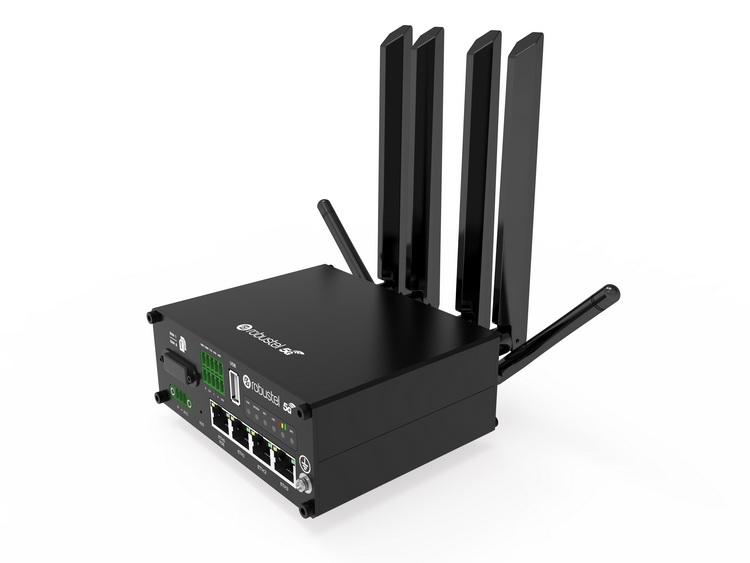
The R5020-Lite combines dual physical SIM support, two Gigabit Ethernet ports, WiFi 5 and one software-configurable RS-232 or RS-485 interface. It supports 5G with previous-generation cellular fallback and can be managed through RCMS.
This architecture fits branches, edge sites and distributed equipment where the project needs a compact 5G router without the larger interface set of a full multiport model.
The product should not be approved only because it has global bands. The team still needs to verify local certifications, operator access, antenna conditions, interface count and application recovery.
Public Support Resources Strengthen the Evidence Trail
Robustel publishes support material covering router documentation, software manuals, management-platform guidance, product change information and security disclosures. RCMS supports device onboarding, group operations, remote configuration and firmware management across supported devices.
These resources help buyers assess how the product may be operated after shipment rather than relying only on a presales presentation.
They do not by themselves guarantee a specific support response time, product lifespan or stock level. Those commercial and operational commitments still need to be confirmed for the project.
Global Presence Must Be Converted into a Project-Specific Plan
Robustel states that it supports customers across more than 100 countries and has operations and distribution coverage across several major regions.
For the buyer, the next step is to convert that general footprint into named responsibilities:
- Approved distributor for each country
- Technical support route
- Local stock and replacement plan
- Certification owner
- Firmware escalation path
- Operator coordination
- RMA procedure
Robustel can serve as an example of the evaluation dimensions, but approval should still depend on evidence for the customer’s own countries, volumes and operating model.
Preguntas frecuentes
Q1. What should buyers check when evaluating a 5G router manufacturer?
Buyers should examine exact regional models, frequency bands, regulatory and carrier approvals, firmware management, documentation, cloud-based fleet operations, technical escalation, product lifecycle and supply continuity. Each claim should be supported by model-specific evidence. A successful pilot proves that one configuration works under one set of conditions; it does not automatically prove global deployment readiness.
Q2. Why is the exact regional SKU important for a global 5G router rollout?
Different SKUs may use different modem platforms, frequency bands, certifications, power options or installation features. Ordering the wrong variant can create coverage, regulatory or support problems even when the product family name is correct. The project should record the exact part number approved for every country and prevent purchasing teams from substituting another variant without technical and compliance review.
Q3. How should firmware support be evaluated?
Ask where firmware and release notes are published, how security updates are communicated, whether updates can be staged and how failed upgrades are recovered. Then test the process using the intended management platform and operational roles. Firmware support is not only the availability of a download. It includes compatibility, change approval, rollout control, monitoring and recovery across the deployed fleet.
Q4. When is the Robustel R5020-Lite Industrial 5G Router suitable for a global deployment?
The Robustel R5020-Lite Industrial 5G Router fits distributed branches and edge sites that need dual-SIM 5G, two Gigabit Ethernet ports, WiFi, configurable serial connectivity and RCMS fleet management. Its published regional variants and certification information support global evaluation. Buyers must still confirm the exact SKU, operator compatibility, country approvals, local support and supply plan for each destination.
Q5. Does a global distributor network guarantee local technical support?
No. Distribution coverage may improve product availability and local communication, but it does not define who owns a complex firmware, carrier or fleet-management issue. Buyers should identify the first-line distributor, manufacturer escalation route, supported time zones, required diagnostic information and expected replacement process. These responsibilities should be tested during the pilot rather than discovered after a production outage.
Conclusión
The Robustel R5020-Lite Industrial 5G Router demonstrates how product-level regional information, certification records, RCMS management and public support documentation can contribute to a global vendor assessment. These resources help connect the router specification to the wider deployment and operating process.
A 5G router manufacturer should be approved only when the project has verified the exact regional hardware, required certifications, firmware workflow, support route, fleet-management process and supply plan. None of these areas can be replaced by a strong modem specification.
The final decision is not which manufacturer appears strongest in a general ranking. It is which supplier can provide the evidence, accountability and continuity required for the countries and operating conditions in the actual rollout.
Explore more articles about Robustel industrial 5G routers:


Acerca del autor
Robert Liao | Technical Support Engineer
Robert is an IoT Technical Support Engineer at Robustel, specializing in industrial networking and edge connectivity. A certified Networking Engineer, Robert focuses on the deployment and troubleshooting of large-scale IIoT infrastructures. His work centers on architecting reliable, scalable system performance for complex industrial applications, bridging the gap between field hardware and cloud-side data management.