
Edge Gateways for Industry 4.0: How Factory Data Moves from Machines and PLCs to Cloud Systems
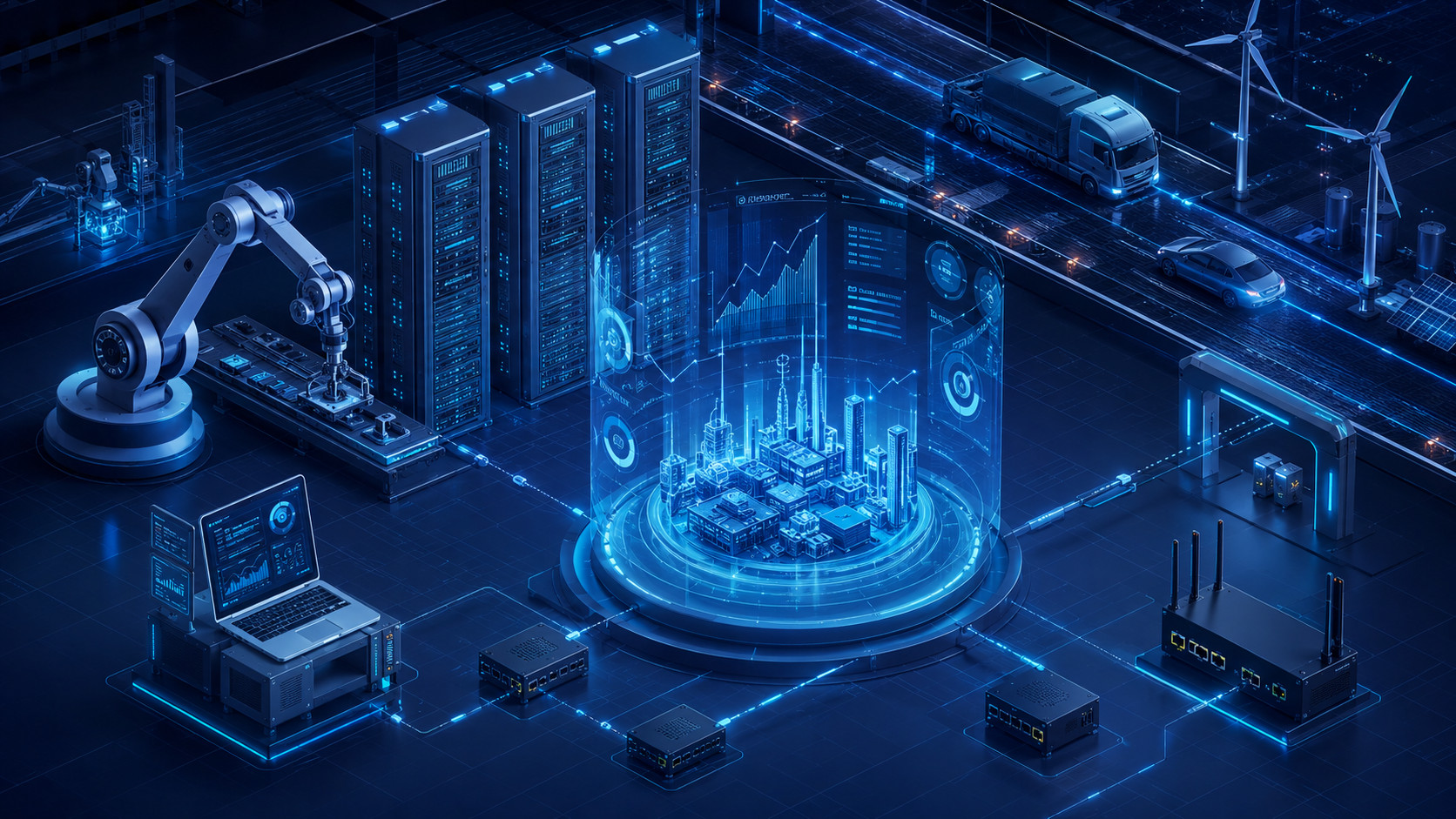
Industry 4.0 data collection is often described as a step toward connected factories and smarter manufacturing. In practice, however, factory data does not become cloud-ready simply because machines are connected to a network.
A modern factory may include PLCs, CNC machines, sensors, meters, inspection systems, production lines, and legacy equipment operating across different interfaces and communication methods. Some data is generated continuously. Some data is only useful when a machine status changes. Some data needs to remain close to local control systems, while other data becomes valuable when it is available for monitoring, reporting, maintenance planning, or cross-site analysis.
This is where industrial edge gateways become important. They do not replace PLCs, SCADA systems, MES platforms, or cloud applications. Instead, an edge gateway can provide a practical infrastructure layer between factory-floor equipment and upper-layer systems, helping selected operational data move from machines and PLCs toward cloud or enterprise platforms in a more secure and manageable way.
For factory teams planning Industry 4.0 data collection, the real question is not simply how to collect more data. It is how to move the right data from the shop floor to the right system, in the right format, under real industrial conditions. A gateway such as Robustel EG5120 can be used as a practical reference for this machine-to-cloud data path, especially where factory teams need industrial connectivity, local data handling, secure communication, and remote gateway management in one site-side layer.
Why Factory Data Collection Is Difficult in Real Industrial Environments
Factory-floor data collection sounds straightforward at first: collect data from machines, send it to a platform, and use it for analysis. Real industrial environments are rarely that simple.
Many factories operate with equipment from different generations. A production line may include modern Ethernet-connected devices alongside machines that still rely on serial communication. PLCs may manage local automation logic, while enterprise systems may require selected production or maintenance data for reporting and analytics. In some facilities, OT networks are segmented from IT networks for security and operational continuity reasons.
This creates several practical challenges.
First, factory data comes from different sources. PLCs, sensors, meters, drives, and machine controllers may not expose information in the same way. A gateway or integration layer often needs to collect data through supported interfaces and prepare it for further use.
Second, raw factory data is not always useful in its original form. A machine may generate repetitive status values under normal operating conditions. A meter may produce regular readings that only become meaningful when they pass a threshold or show an abnormal pattern.
Third, factory connectivity is not always uniform. Some systems may be wired into local networks, while others may need cellular connectivity for backup, remote access, or distributed deployment scenarios. Network quality, segmentation, security policies, and maintenance access all affect how factory data can be moved reliably.
In this context, Industry 4.0 data collection is not just a software problem. It is an infrastructure problem that depends on interfaces, protocols, network design, security requirements, and long-term manageability.
Where Factory Data Comes From on the Shop Floor
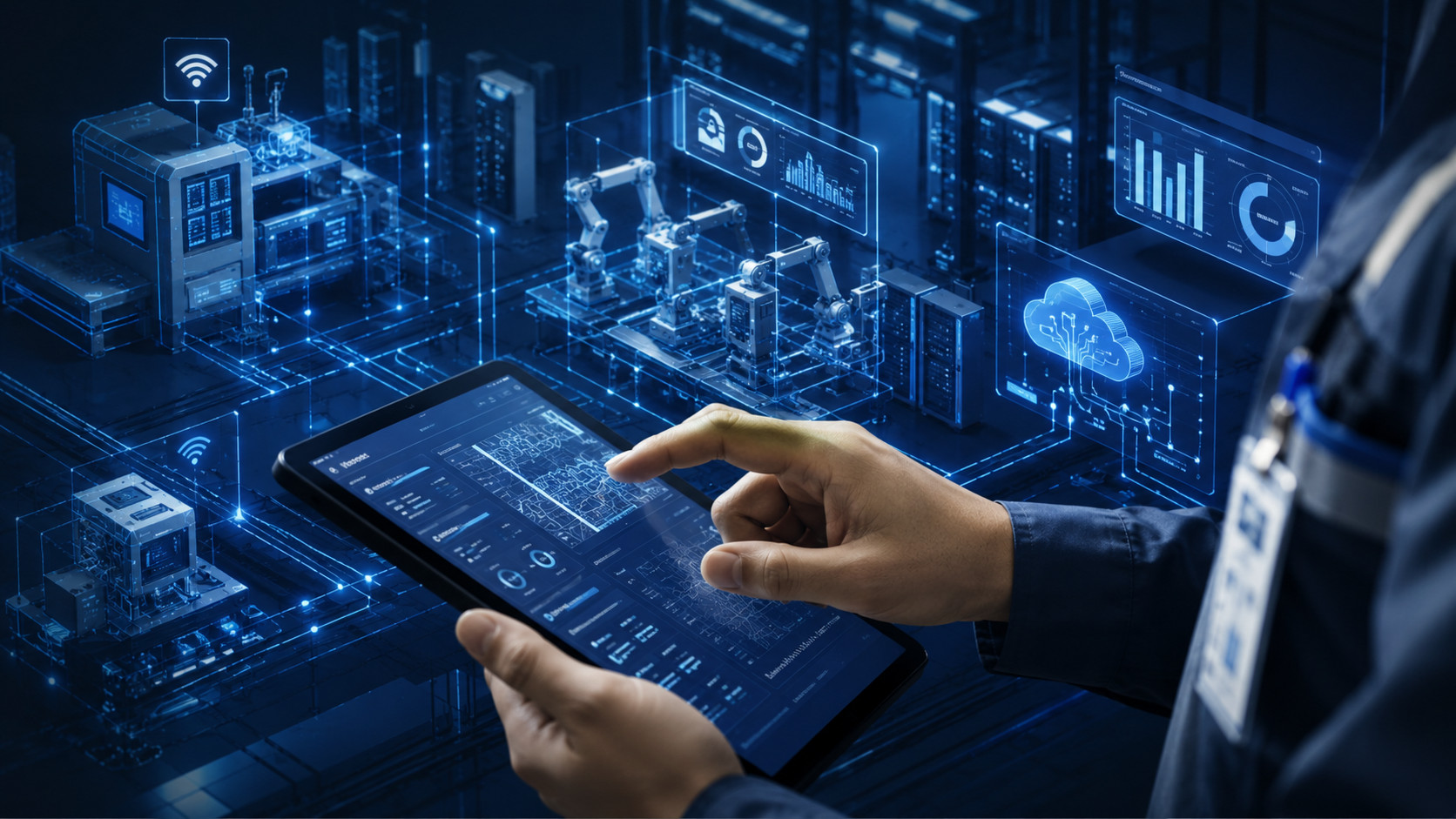
Before designing an edge-to-cloud architecture, it helps to understand that “factory data” is not a single category. Different sources create different data patterns and integration challenges.
| Factory Data Source | Common Data Type | Collection Challenge |
| PLCs | Equipment status, alarms, process values | Data may need to be collected through supported interfaces and forwarded securely |
| CNC machines | Machine status, cycle information, maintenance indicators | Legacy interfaces may limit direct cloud connectivity |
| Sensors and meters | Temperature, vibration, energy, environmental readings | Data may be repetitive or require filtering before transmission |
| Inspection systems | Event data, quality-related outputs, selected image or result data | Not all raw data is practical to upload continuously |
| Production lines | Line status, downtime events, throughput signals | Data may need context before it becomes useful for analysis |
This distinction matters because different data sources should not always be handled in the same way. A machine fault, an energy reading, a PLC alarm, and a quality inspection output each create different requirements for collection, transmission, and analysis.
A good factory data collection architecture starts by asking what each data source is used for, not only how it can be connected.
How Edge Gateways Help Move Machine and PLC Data Toward Cloud Systems
An industrial edge gateway often sits between factory-floor equipment and higher-level systems. Its role is to help move selected operational data across different layers of the industrial architecture.
Depending on the deployment, an edge gateway may connect to supported serial or Ethernet-based equipment, collect machine or PLC-side data, convert or forward supported protocols, apply local processing or filtering, and transmit selected information to SCADA, MES, cloud, or monitoring systems.
This position matters because factory systems rarely share data in one uniform format. PLCs and local automation systems continue to handle control tasks close to machines, while cloud or enterprise systems are often used for broader visibility, reporting, analytics, and maintenance planning. The edge gateway helps connect these layers without requiring every machine to connect directly to the cloud.
For readers who want a broader explanation of where edge gateways fit within industrial IoT architecture, our related article on IoT Edge Computing in Industrial Environments provides additional background on protocol interoperability, OT/IT integration, and distributed data flow.
A Practical Edge-to-Cloud Data Flow in Industry 4.0
A typical factory data flow from machines and PLCs to cloud systems can be understood in several steps.
1. Data is generated on the factory floor
Machines, PLCs, sensors, meters, and production systems generate operational data. This may include equipment status, alarms, cycle information, process values, environmental readings, or maintenance-related signals.
2. Data is collected through supported interfaces
An industrial edge gateway collects data through the interfaces available in the deployment. These may include serial ports, Ethernet connections, digital inputs and outputs, or other supported communication paths. The exact design depends on the equipment, protocols, and network layout of the factory.
3. Data is converted, filtered, or organized locally
Some data may require protocol conversion or serial-to-IP handling before it can be used by upper-layer systems. Other data may be filtered, buffered, or organized locally so that only relevant information is forwarded upstream.
4. Selected data is transmitted securely
Once data is prepared, it can be forwarded through wired or cellular networks using supported security and networking mechanisms. In industrial environments, VPN tunnels, firewall rules, access control, and network segmentation often matter as much as basic connectivity.
5. Cloud or enterprise systems use the data
Cloud platforms, MES, SCADA, or monitoring systems can then use selected factory data for visualization, analytics, reporting, maintenance planning, or cross-site visibility. These systems usually work best when the data they receive is structured, relevant, and reliable.
This workflow shows why factory data collection is not a single action. It is a chain of decisions about what to collect, where to process it, how to transmit it, and which system should use it.
For readers who want a broader explanation of why edge computing is still useful when cloud systems are already part of the architecture, this short IoT Essentials video provides helpful background before we look at local processing and upstream data decisions in factory environments.
Deciding Where Different Factory Data Workloads Should Be Handled
A practical Industry 4.0 architecture does not send every signal to the cloud by default. It also does not keep every workload local. Different types of data serve different operational purposes.
| Workload | Often Practical Closer to the Edge | Often Practical in Cloud or Central Systems |
| Repetitive machine telemetry | Filtering, threshold checks, buffering | Long-term trend analysis |
| PLC alarms | Event prioritization and secure forwarding | Cross-site reporting and historical review |
| Energy data | Local aggregation or periodic reporting | Benchmarking and efficiency analysis |
| Quality inspection outputs | Event metadata or selected result data | Batch analysis and reporting |
| Maintenance data | Local condition awareness | Fleet-wide maintenance planning |
The trade-off depends on the workload. A machine status change may need to be forwarded quickly. A slow-changing environmental reading may only need periodic reporting. A quality inspection system may produce large files, but not every raw output needs to be sent continuously.
This is why workload placement matters. Factory teams usually need both local awareness and centralized visibility, but different data types may require different handling methods.
For a broader discussion of how industrial teams balance edge-side processing with centralized analytics, see our related article on Edge Computing and Cloud Computing in Industrial Infrastructure.
Practical Considerations for Industry 4.0 Edge Gateway Deployments
Choosing an edge gateway for Industry 4.0 data collection involves more than asking whether it can connect to the cloud. A factory deployment should consider the available equipment interfaces, supported protocols, network architecture, security requirements, local processing needs, and the operational environment in which the gateway will run.
Several questions are worth asking early:
- Which machines, PLCs, meters, or production systems need to provide data?
- What data is needed for maintenance, reporting, quality, production visibility, or remote monitoring?
- Are the available interfaces serial, Ethernet, digital I/O, or a mix of several types?
- Does the deployment require protocol conversion, such as Modbus RTU to TCP?
- Which data should remain local, and which data should move upstream?
- Will the gateway use wired connectivity, cellular connectivity, or both?
- How will data transmission be secured between the factory floor and upper-layer systems?
- Does the gateway need to support local applications or edge-side data handling?
- Who will configure, monitor, update, and maintain the gateway over time?
- What environmental conditions will the gateway need to tolerate?
- How will the deployment scale if more machines, lines, or sites are added later?
These questions help prevent edge gateway selection from becoming a purely specification-driven decision. In real factory environments, long-term usability often depends on how well the gateway fits the surrounding industrial infrastructure.
Where Robustel EG5120 Fits in This Type of Factory Data Architecture
In this type of architecture, an industrial edge gateway such as the Robustel EG5120 can serve as a field-side infrastructure layer for connecting supported factory equipment, handling selected data locally, securing communication, and supporting remote management.
The EG5120 is designed around industrial edge connectivity and local application support. For factory data collection scenarios, several capabilities are especially relevant.
| Factory Data Collection Need | Relevant EG5120 Capability |
| Connecting serial-connected machines or PLC-side equipment | 2 x RS-232/RS-485 serial ports, software configurable |
| Moving Modbus serial data into IP-based systems | Modbus RTU to TCP support |
| Connecting factory networks or upper-layer systems | 2 x RJ45 Gigabit Ethernet ports, configurable as LAN or WAN |
| Supporting remote or backup connectivity | 5G, 4G/LTE, 3G, and 2G cellular support with dual Mini SIM |
| Securing remote communication | IPsec, OpenVPN, GRE, L2TP, PPTP, DMVPN, WireGuard, firewall, access control, and port mapping |
| Managing distributed gateway deployments | RCMS, Web, CLI, and SMS remote management |
| Running selected local applications | RobustOS Pro and SDK support for C, C++, Python, Java, Node.js, and other development options |
| Deploying in industrial environments | Metal housing, 9–60 VDC input, -40 to +70°C operating temperature, and DIN rail, wall, or desktop installation |
This does not mean every Industry 4.0 project requires the same gateway architecture. The right design depends on the machines, PLCs, data requirements, network conditions, and security policies involved.
However, when factory data needs to move from supported machines, serial equipment, PLC-side systems, or sensors toward upper-layer systems, a gateway such as the EG5120 can provide a practical bridge between the factory floor and digital applications.
Closing Perspective
Edge gateways play a practical role in Industry 4.0 because factory data rarely moves from machines to cloud systems in a simple, direct path.
The broader value of an edge gateway is not that it makes a factory “smart” by itself. Its value depends on how well it fits the factory’s data sources, interfaces, protocols, network conditions, workload requirements, and long-term maintenance needs.
For Industry 4.0 data collection, the goal is not to collect every signal available. A more practical goal is to understand which data matters, where it should be handled, and how it can move reliably from the factory floor to the systems that need it.
In this context, an industrial edge gateway such as Robustel EG5120 can support the site-side layer for collecting selected machine or PLC data, preparing it locally where configured, and forwarding useful information toward cloud or enterprise systems. It should still be used within a clear architecture, with PLCs, SCADA, MES, and cloud platforms keeping their appropriate roles.
Preguntas frecuentes
Q1: What role do edge gateways play in Industry 4.0 data collection?
Edge gateways help move selected data from machines, PLCs, sensors, and meters toward higher-level systems. In many factory environments, they act as a bridge between shop-floor equipment and cloud or enterprise platforms by supporting data collection, protocol handling, local filtering, secure forwarding, and remote management. They do not replace PLCs or control systems; they support the data path around them.
Q2: How does factory data move from machines and PLCs to the cloud?
Factory data usually moves through several steps. Machines, PLCs, sensors, or meters generate operational data. An edge gateway collects data through supported interfaces, may convert or organize it locally, and then forwards selected information through secure network connections. Cloud or enterprise systems can then use that data for monitoring, analytics, reporting, maintenance planning, or cross-site visibility.
Q3: Should PLCs be connected directly to the cloud?
In most industrial environments, connecting PLCs directly to the public internet is not recommended. PLCs usually perform local control tasks and should remain protected within the OT network. A more practical approach is to use a secure gateway or integration layer that collects selected PLC-side data, applies security controls, and forwards only the required information to cloud or enterprise systems.
Q4: Does Industry 4.0 data collection require sending all machine data upstream?
Not necessarily. Sending every raw signal upstream can increase bandwidth use, storage needs, and system complexity without always adding value. Many deployments focus on selected data, such as machine status changes, alarms, energy readings, production events, or maintenance indicators. Local filtering or aggregation can help make the data more useful before it reaches cloud or central systems.
Q5: What should teams consider when choosing an industrial edge gateway?
Teams should consider the available machine interfaces, supported serial or Ethernet connectivity, protocol requirements, security features, remote management options, local application support, and environmental conditions. The gateway should fit the factory’s data sources and network design. A product such as Robustel EG5120 can be considered where Industry 4.0 projects need a site-side industrial edge gateway for machine data collection, local processing, secure forwarding, and remote management. The gateway should also be manageable over time, especially when deployments expand across multiple machines, production lines, or remote sites.
Acerca del autor
Robert Liao | Technical Support Engineer
Robert is an IoT Technical Support Engineer at Robustel, specializing in industrial networking and edge connectivity. A certified Networking Engineer, Robert focuses on the deployment and troubleshooting of large-scale IIoT infrastructures. His work centers on architecting reliable, scalable system performance for complex industrial applications, bridging the gap between field hardware and cloud-side data management.