
Edge Computing and Cloud Computing in Industrial Infrastructure: Balancing Responsiveness and Visibility
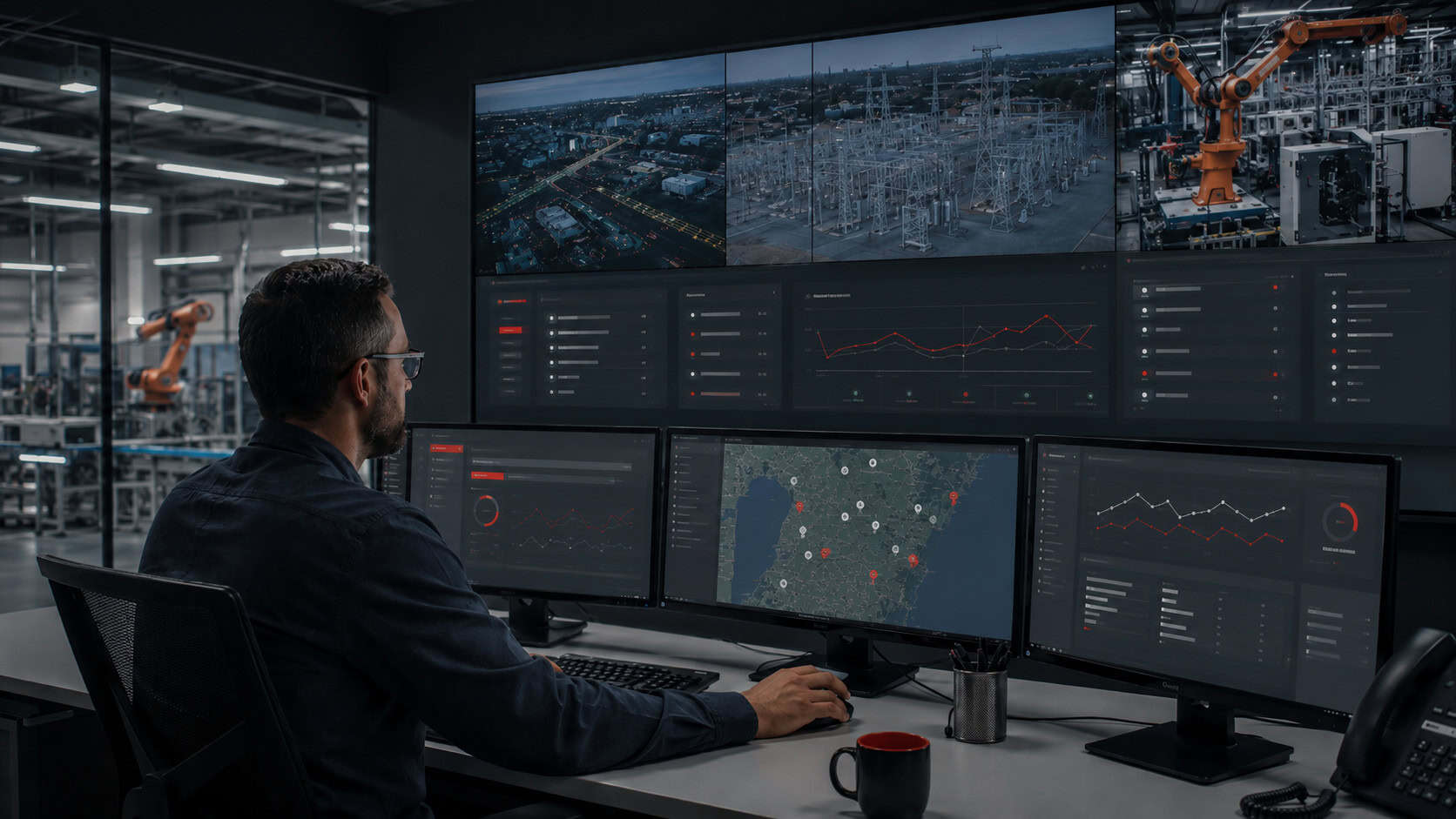
Industrial infrastructure rarely operates under a single set of operational requirements. Within the same environment, organizations may simultaneously manage real-time equipment alarms, environmental telemetry, historical reporting systems, surveillance infrastructure, remote maintenance workflows, and centralized operational coordination across multiple sites.
While these workloads often operate within the same industrial network, their operational priorities are not always the same. Some systems depend heavily on immediate responsiveness close to the field layer. Others rely more heavily on centralized visibility, long-term storage, or cross-site coordination.
As industrial environments become increasingly distributed, this distinction is becoming more important when deciding where operational workloads are most practical to process.
Rather than treating edge computing and cloud computing as competing architectures, many industrial environments now use them together to support different operational requirements across the infrastructure.
Why Industrial Workloads Rarely Operate Under the Same Requirements
Industrial workloads can behave very differently depending on the operational environment, infrastructure conditions, and monitoring objectives involved. Some workloads are primarily concerned with immediate operational awareness. Others are designed around long-term coordination and centralized visibility across distributed infrastructure.
For example, equipment alarms, machine status changes, and threshold-based monitoring events may require faster local responsiveness to help operational teams identify anomalies as conditions change.
At the same time, workloads such as historical reporting, compliance documentation, fleet-wide analytics, and infrastructure performance reviews are often better suited for centralized processing environments where larger volumes of operational information can be aggregated over time.
This distinction becomes increasingly visible across distributed industrial systems where workloads operate under different constraints related to:
- Latency sensitivity
- Connectivity reliability
- Telemetry volume
- Monitoring frequency
- Cross-site coordination
- Operational continuity requirements
As a result, industrial infrastructure rarely treats every workload identically. Different operational tasks often prioritize different infrastructure behaviors depending on what the workload is intended to support.
Where Local Responsiveness Becomes More Practical
Some industrial workloads become difficult to manage efficiently when every operational event depends entirely on continuous upstream transmission and centralized processing.
This is particularly relevant in environments where operational responsiveness matters more than long-term historical coordination.
Examples may include:
- Equipment alarm awareness
- Threshold-based environmental monitoring
- Machine anomaly detection
- Selected video event monitoring
- Operational status changes across remote assets
In these situations, organizations may evaluate whether selected workloads are more practical to process closer to the field layer before forwarding summarized information upstream.
This does not necessarily mean that all raw telemetry remains local. In many cases, local processing is used to help prioritize operationally relevant events while reducing unnecessary transmission of repetitive monitoring data.
In distributed industrial environments, this approach may also help reduce dependency on continuous upstream connectivity across sites relying on LTE, 5G, or wireless backhaul infrastructure.
The practical value of local responsiveness is often less about replacing centralized systems and more about improving awareness of operational events where timing and infrastructure conditions become important operational factors.
Where Centralized Visibility Still Plays an Important Role
While some workloads benefit from faster local responsiveness, centralized infrastructure continues to play an important role across industrial environments.
Many operational tasks still depend heavily on aggregated visibility across multiple assets, facilities, or remote sites.
This commonly includes:
- Historical operational reporting
- Fleet-wide infrastructure visibility
- Long-term telemetry analysis
- Cross-site performance comparisons
- Compliance and audit documentation
- Centralized operational coordination
Centralized environments also remain important for workloads that benefit from larger-scale storage, broader analytical context, or coordination across geographically distributed infrastructure.
In practice, centralized visibility often helps organizations identify longer-term operational patterns that may not be visible from isolated local events alone.
For this reason, industrial environments rarely treat local responsiveness and centralized visibility as mutually exclusive requirements. Both typically serve different operational purposes across the infrastructure.
Hybrid Infrastructure Across Distributed Industrial Environments
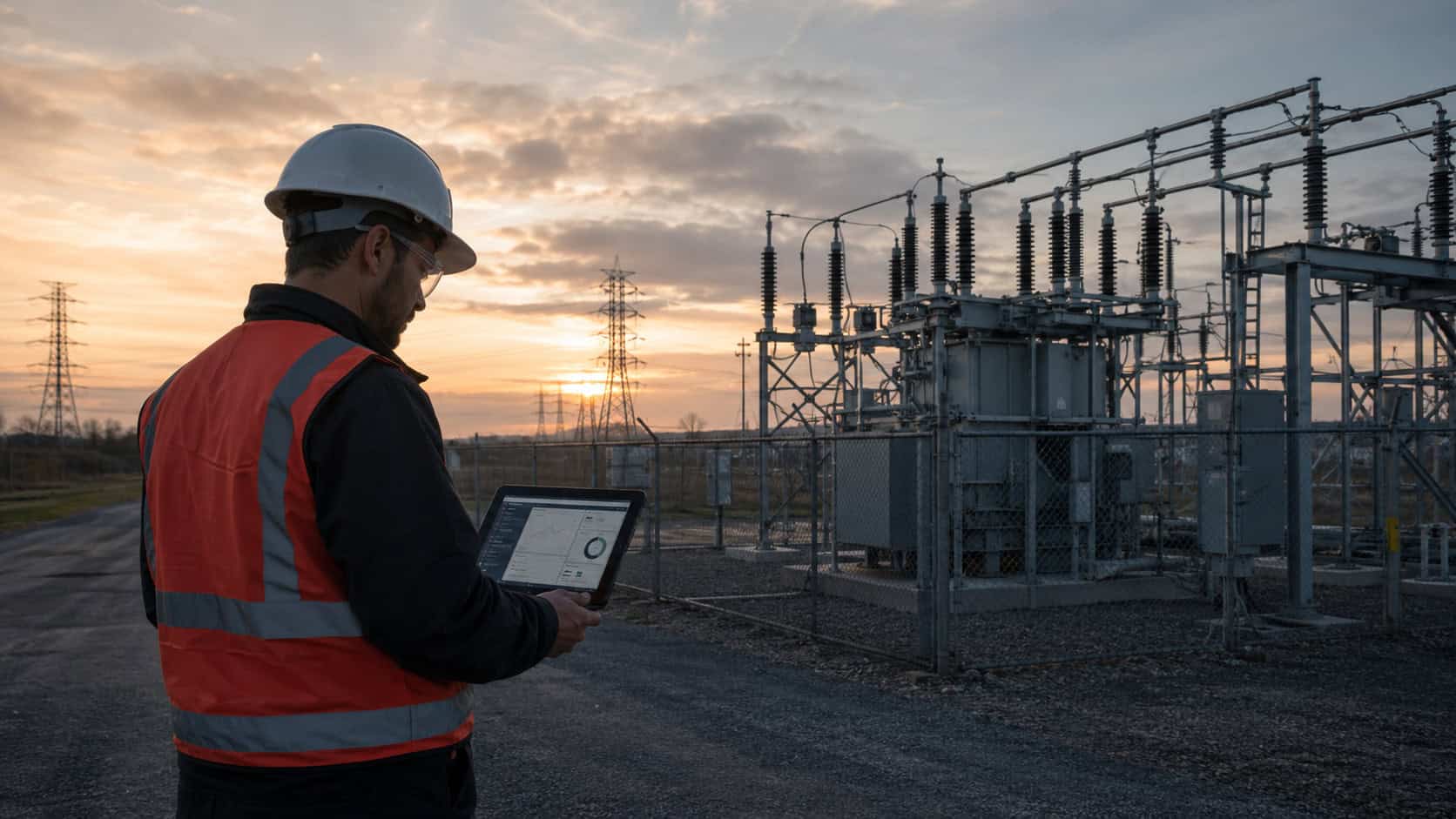
As industrial systems become more distributed, many organizations are adopting hybrid infrastructure models that combine local processing with centralized operational oversight.
This shift is often driven less by technology preference and more by operational practicality.
Distributed industrial infrastructure may involve:
- Remote substations
- Utility infrastructure
- Transportation systems
- Environmental monitoring stations
- Distributed manufacturing assets
- Multi-site operational environments
Within these deployments, infrastructure conditions can vary significantly across locations. Some sites may operate with stable high-bandwidth connectivity, while others rely on cellular or wireless infrastructure where latency, bandwidth availability, or connectivity consistency remain operational considerations.
As a result, workload placement decisions increasingly depend on where different operational tasks can be managed most practically rather than on whether infrastructure is categorized strictly as “edge” or “cloud.”
In many industrial environments, hybrid architectures help organizations balance:
| Industrial Workload | Operational Priority |
| Equipment alarms | Faster local responsiveness |
| Historical analytics | Long-term centralized visibility |
| Environmental telemetry | Selective transmission and monitoring |
| Fleet coordination | Cross-site operational visibility |
| Video event detection | Event prioritization closer to the field layer |
| Compliance reporting | Centralized storage and reporting |
This operational balance is becoming increasingly common as industrial infrastructure scales across geographically distributed environments.
Operational Factors That Influence Workload Placement Decisions
There is rarely a universal rule that determines where every industrial workload should operate.
In practice, organizations often evaluate several operational and infrastructure-related factors before deciding whether workloads are better suited for local processing, centralized systems, or a combination of both.
These considerations may include:
- Responsiveness requirements
- Telemetry volume
- Connectivity reliability
- Operational continuity expectations
- Remote maintenance practicality
- Infrastructure scalability
- Existing OT system integration
- Cross-site visibility requirements
Industrial infrastructure also frequently includes a mixture of legacy equipment, serial-connected systems, Ethernet-based devices, and cloud-connected applications operating simultaneously across the same environment.
As deployments expand, workload placement decisions often become closely tied to operational manageability rather than compute capability alone.
For many organizations, the objective is not to maximize local processing or centralized processing independently, but to support operational visibility and responsiveness in a way that remains practical across distributed industrial infrastructure.
Closing Perspective
Industrial environments are becoming increasingly connected, but they are also becoming increasingly operationally diverse. Different workloads often serve different purposes across industrial infrastructure, and those workloads may not always operate under the same responsiveness, connectivity, or visibility requirements.
As a result, edge computing and cloud computing are increasingly being used together rather than treated as competing approaches.
In many deployments, the practical challenge is no longer deciding between edge or cloud infrastructure alone, but determining where operational workloads can be managed most effectively across distributed industrial systems.
Preguntas frecuentes
Q1: Will edge computing replace cloud computing in industrial systems?
A1: In most industrial environments, edge computing and cloud computing are increasingly used together rather than as replacement architectures. Local processing may help support operational responsiveness closer to the field layer, while centralized systems still remain important for long-term analytics, reporting, and cross-site operational visibility.
Q2: Which industrial workloads are typically better suited for edge processing?
A2: Workloads involving operational alerts, machine anomaly awareness, threshold-based monitoring, and selected video event detection are often considered practical candidates for local responsiveness. These workloads may benefit from reduced dependency on continuous upstream transmission and faster awareness of operational events.
Q3: Why does latency matter differently across industrial workloads?
A3: Not all industrial workloads operate under the same timing requirements. Some environments prioritize immediate operational awareness, while others focus more heavily on historical reporting and centralized coordination. As a result, latency sensitivity often depends on the operational role of the workload itself rather than on infrastructure preference alone.
Q4: What is the difference between distributed cloud infrastructure and edge computing?
A4: Distributed cloud infrastructure still relies primarily on centralized cloud coordination, even when services are geographically distributed. Edge computing generally refers to processing workloads closer to where operational data is generated, particularly when local responsiveness or reduced upstream dependency becomes important.
Q5: Why are hybrid edge-and-cloud architectures becoming more common in industrial environments?
A5: Industrial infrastructure often includes distributed assets, varying connectivity conditions, and workloads operating under different operational priorities. Hybrid architectures allow organizations to balance centralized visibility with local responsiveness depending on telemetry volume, latency sensitivity, and infrastructure conditions across different environments.
Acerca del autor
Robert Liao | Technical Support Engineer
Robert is an IoT Technical Support Engineer at Robustel, specializing in industrial networking and edge connectivity. A certified Networking Engineer, Robert focuses on the deployment and troubleshooting of large-scale IIoT infrastructures. His work centers on architecting reliable, scalable system performance for complex industrial applications, bridging the gap between field hardware and cloud-side data management.