
Edge Gateway for Digital Twins: Semantic Data and Connectivity Checklist
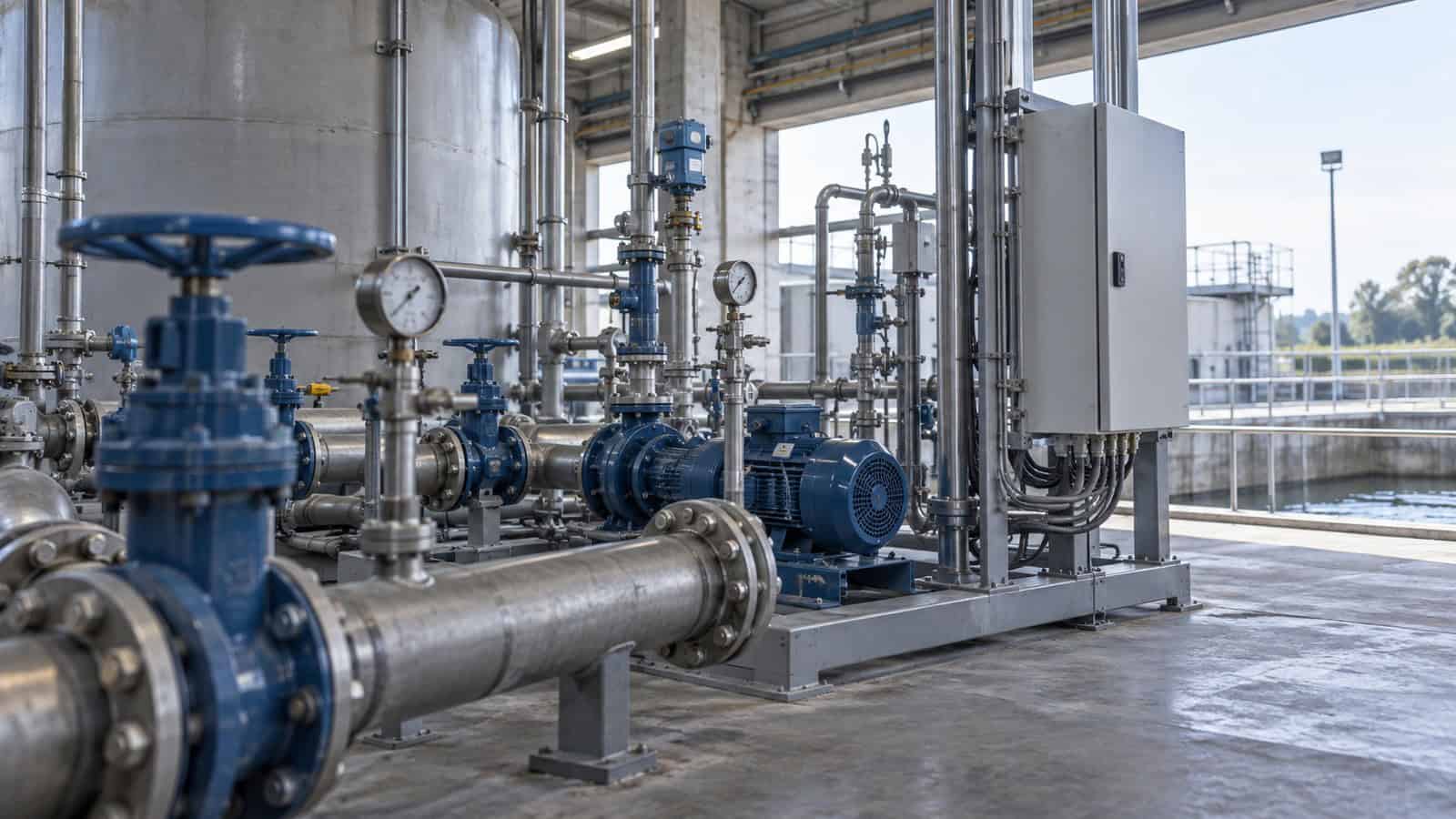
The Robustel EG5200 Edge Computing Gateway provides substantial local connectivity and compute resources for collecting and preparing industrial data that may feed a digital twin. It does not create a digital twin by itself. The hard work is the semantic contract: asset identity, relationships, units, state, quality and lifecycle rules that allow software to represent the physical system consistently.
This checklist treats the gateway as the boundary between changing field protocols and a governed digital representation.
Define What the Twin Is For
A maintenance twin needs condition and service context. An energy twin needs calibrated measurements, tariffs and operating states. A process twin may need high-rate values and production genealogy. Do not collect every available register in the hope that meaning will appear later.
Write the decisions, update interval and tolerated data gap. That establishes which transformations belong at the edge and which require central history or cross-site context.
Establish Stable Asset Identity
- assign a governed ID independent of IP address or PLC register;
- link the ID to site, line, machine and component hierarchy;
- record model, serial number and commissioning state where required;
- define how replacement equipment inherits or changes identity;
- keep source-system identifiers for traceability.
Without this layer, two identical sensors can be confused after maintenance even though the data stream remains technically valid.
Make Units, Quality and Time First-Class Fields
Normalise engineering units and preserve the original raw value where investigation may need it. Include a quality state that distinguishes good, stale, substituted, out-of-range and communication failure. Define whether the timestamp comes from the sensor, controller, gateway or receiving platform.
Time errors can make a realistic model wrong. Verify time synchronisation, timezone and behaviour after a long power loss. When backhaul returns, replay original event time rather than making old measurements appear current.
Decide Which Semantics Belong at the Edge
Simple, stable transformations—register scaling, enum mapping, equipment identity and data-quality checks—often belong near the source. Portfolio relationships, model training and cross-site optimisation usually belong centrally. The dividing line should reflect change ownership as much as compute.
The edge package needs versioning. A semantic change should carry a schema version so the receiving twin can accept, transform or reject it explicitly.
The Robustel’s Smart Parking application example uses EG5120, which is useful architecture evidence for turning diverse field inputs into compact, structured outputs at the edge.
How the Robustel EG5200 Edge Computing Gateway Supports Digital-Twin Data Preparation
The Robustel EG5200 Edge Computing Gateway documents 4 GB RAM, 32 GB eMMC, five Gigabit Ethernet ports, configurable RS-232/422/485, digital inputs and relay outputs, HDMI, USB and 4G or 5G variants. RobustOS Pro supports Docker containers and Debian packages, providing a platform for protocol bridges, buffering and local analytics.
That profile suits a site node that must connect several Ethernet assets and local interfaces while running a defined transformation pipeline. Port count is not a data model, and NPU or CPU specifications do not prove that a particular twin workload will fit. Benchmark input rate, container memory, storage growth and replay.
On the documented compatible EG5200, Robustel E2C Factory can reduce the gap between field connectivity and governed operational data. Its exact 6C functions—Collect, Compute, Continuity, Canvas, Connect and Control—provide a coherent route for acquisition, edge processing, buffering, visualisation, northbound integration and controlled actions. Used with the gateway, that can make deployment less fragmented and data behaviour more visible. It does not replace the enterprise twin model or extend compatibility to undocumented hardware.
Connectivity Checklist
| Question | Evidence required |
|---|---|
| What remains local during WAN loss? | tested local rules, storage and operator view |
| How much backlog is possible? | message rate × outage duration × record size plus margin |
| How is data replayed? | order, rate limit, deduplication and acknowledgement |
| Which path is primary? | cellular/Ethernet policy and health criteria |
| How are credentials managed? | provisioning, rotation, revocation and audit |
| How are device changes controlled? | versioned configuration and rollback record |
Treat cellular bandwidth as variable and avoid promising universal latency. A digital twin should expose stale or delayed state rather than presenting it as live.
Keep Control Handoffs Explicit
Some twins only observe; others recommend or initiate action. Put a hard boundary between analytics and authorised control. Validate command expiry, duplicate rejection, local interlocks and manual override. The gateway should not bypass PLC or safety logic.
The Robustel’s Secure Remote Access to Industrial Robots application example provides EG5120 evidence for a managed edge boundary around complex machinery. Its relevance is governance and serviceability. EG5200’s product documentation remains the capability source for this design.
Lifecycle Checklist
Version collectors, schemas, models and dashboards separately. Define who approves a field mapping change and how older gateway versions are supported. Monitor not only connectivity but data completeness, schema errors and storage health.
At portfolio scale, assign a product owner to the semantic contract rather than leaving it with the last integrator on site. That owner decides how replacement assets inherit identity, how long older schemas remain supported and who pays for remapping when equipment changes. Without that governance, each successful pilot creates another dialect that the central twin team must carry indefinitely.
Use Robustel RCMS platform for gateway fleet operations and the twin platform for semantic and application health. The EG5000 Series Quick Pitch video can introduce the hardware family without substituting for the project’s schema and workload evidence.
Preguntas frecuentes
Q1. What is the difference between a router and an edge gateway?
A router primarily moves traffic between networks. An edge gateway can also collect device data, translate protocols, buffer records and run local applications. Some industrial products perform both roles.
Q2. What is the main purpose of a digital twin?
It provides a managed digital representation of a physical asset or process so people and applications can understand state, analyse behaviour and support decisions across the lifecycle.
Q3. What does an edge gateway do?
It connects local equipment to upstream systems and may perform protocol conversion, filtering, buffering, analytics or local rules. The exact capability depends on the model and deployed software.
Q4. What are the four types of digital twins?
Common classifications describe component, asset, system and process twins. Terminology varies, so projects should define the scope and decisions their own twin supports rather than rely on a label alone.
Q5. When is the Robustel EG5200 Edge Computing Gateway a good digital-twin edge?
It is a strong candidate when a site needs several Gigabit Ethernet connections, industrial serial/I/O and containerised processing in one managed platform. Validate the semantic pipeline, workload and outage replay before deployment.
Conclusión
The Robustel EG5200 Edge Computing Gateway can provide a capable physical and software boundary for digital-twin data, especially at sites with several Ethernet assets and mixed industrial interfaces. Its real value appears when the project uses that boundary to stabilise meaning, quality and time.
Define the twin’s decision, govern identity and schema, and show stale data honestly. A digital twin becomes trustworthy when the same physical event produces the same understandable record through change, outage and equipment replacement—not when the gateway merely forwards more tags.
Before scaling, price semantic maintenance alongside gateway and platform costs. Schema review, asset onboarding, exception handling and legacy-version support are recurring services. A smaller, well-owned twin that answers a defined maintenance or energy question usually creates more durable value than a broad model whose relationships no team is funded to maintain.
Explore More Articles About Robustel Edge Computing Gateways


Acerca del autor
Robert Liao | Technical Support Engineer
Robert is an IoT Technical Support Engineer at Robustel, specializing in industrial networking and edge connectivity. A certified Networking Engineer, Robert focuses on the deployment and troubleshooting of large-scale IIoT infrastructures. His work centers on architecting reliable, scalable system performance for complex industrial applications, bridging the gap between field hardware and cloud-side data management.