
AI Inference at the Edge: When Local Intelligence Makes Practical Sense in Industrial IoT
AI inference at the edge is often discussed as if every industrial IoT project should move intelligence as close to the machine as possible. In practice, the decision is more specific.
Local AI inference makes sense when field-side data needs to be interpreted near the equipment before selected results are sent upstream. That may involve visual inspection results, anomaly signals, machine monitoring outputs, local alerts, or filtered events from remote industrial sites. It does not mean every AI workload belongs on a gateway, and it does not mean the cloud becomes unnecessary.
In industrial IoT, the real question is not simply “Can we run AI at the edge?” A better question is: “Which decision, classification, or event needs to happen locally, and what data is required to support it?”
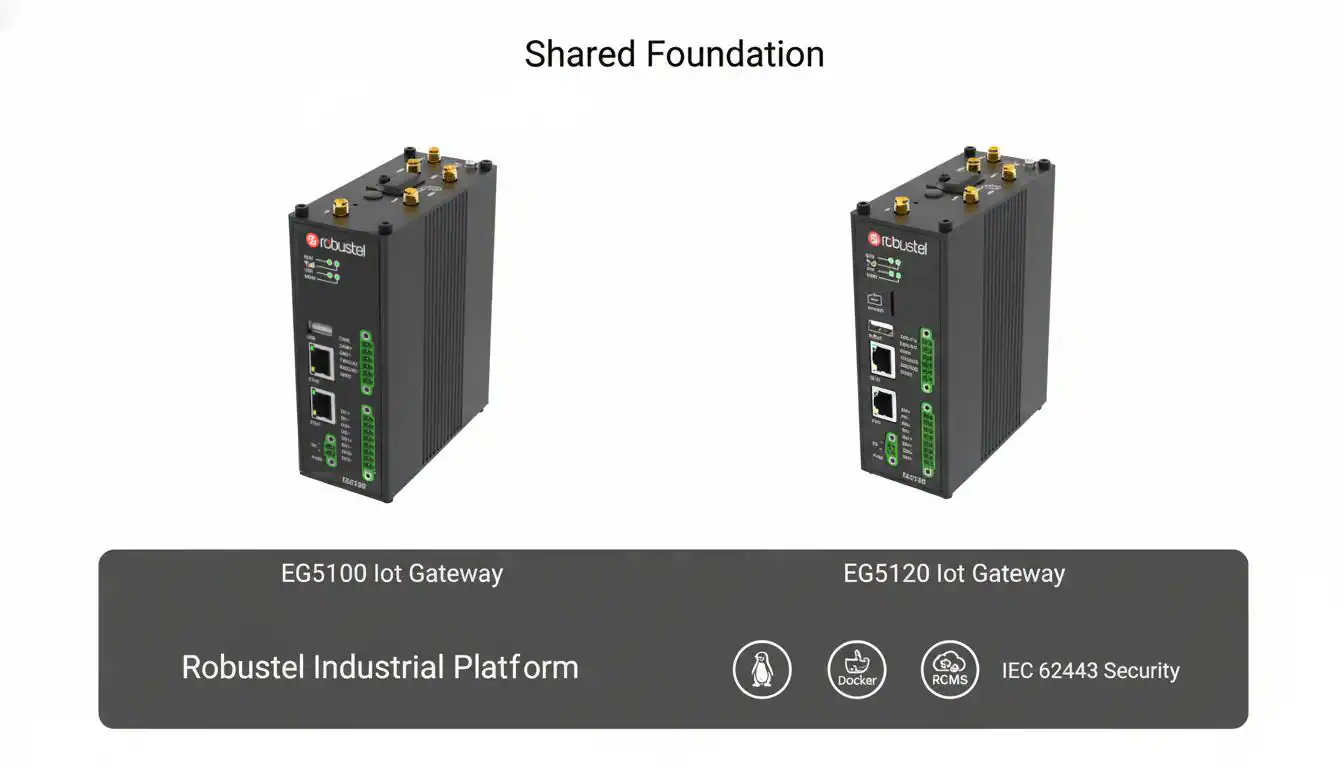
This article uses Robustel EG5120 and RCMS as a practical reference for that edge-side architecture. EG5120 can support local computing, industrial data access, cellular connectivity, and Docker-based edge applications, while RCMS can support remote visibility and management for Robustel gateway deployments. The value of edge AI still depends on the model, input data, deployment environment, and maintenance process.
Edge AI Should Start with the Site Problem, Not the Model
Many industrial AI discussions start with the model. In real projects, that is often the wrong starting point.
A factory team may want to detect visual defects. A maintenance team may want to identify abnormal machine behavior. A remote asset operator may want to know whether an event requires attention before sending raw data or images to the cloud. These are not the same problem, and they do not need the same edge AI architecture.
The better starting point is the site problem:
- What needs to be detected, classified, or flagged?
- Where is the input data generated?
- How quickly does the result need to be available?
- What should happen after an inference result is produced?
- Does the cloud need raw data, processed results, event images, or only alerts?
AI inference at the edge is useful when the gateway can turn raw field-side input into a more practical output. That output might be a pass/fail result, an anomaly flag, a machine status category, a quality event, or a maintenance-related signal. The goal is not to make the gateway “intelligent” in a vague way. The goal is to make selected industrial data more useful before it travels.
When Local AI Inference Makes Practical Sense
Local AI processing is not necessary for every industrial IoT project. For many deployments, simple data collection, protocol conversion, filtering, or cloud-side analytics may be enough. Edge AI becomes more relevant when the site conditions make cloud-only processing less practical.
Visual Inspection Where Raw Images Are Too Heavy to Send Continuously
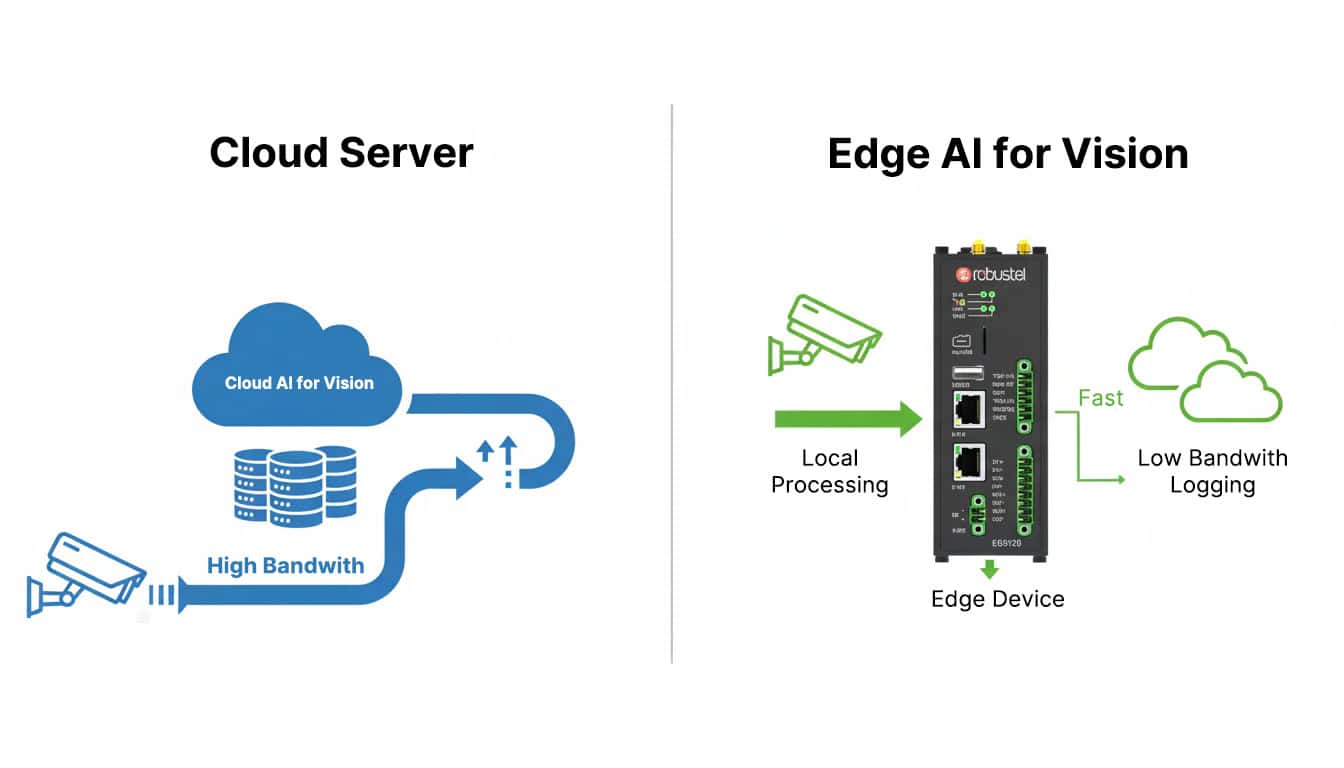
Visual inspection is one of the clearest examples. Cameras can generate large amounts of image or video data, and sending every frame to the cloud may not be efficient or affordable. In some projects, it is more practical to run inference near the camera or machine and send selected outputs upstream.
Those outputs might include defect categories, pass/fail results, event snapshots, counts, timestamps, or inspection summaries. The cloud may still store historical results, compare trends across lines, or support quality reporting. But the first interpretation can happen closer to the production process.
This does not mean every visual inspection model can run on every edge gateway. Camera resolution, model size, inference speed, lighting conditions, mounting position, and validation requirements all matter. Edge AI should be tested against the actual site conditions, not only against a lab demo.
Machine Monitoring Where Local Signals Matter
Machine monitoring is another area where AI inference at the edge can be useful. Equipment may generate vibration, temperature, current, runtime, alarm, or process data. Some values are meaningful only when interpreted together or compared against a learned pattern.
A local inference workflow may help classify abnormal behavior, identify early warning patterns, or generate maintenance-related indicators. This can be useful when teams need selected outputs quickly, or when sending all raw sensor data upstream would create too much traffic.
Still, local AI inference should not be confused with machine control. PLCs, controllers, and safety systems remain responsible for deterministic control and safety-related functions. Edge AI can support monitoring and decision support, but it should not silently take over responsibilities that belong to the automation layer.
Remote Industrial Sites with Limited Connectivity
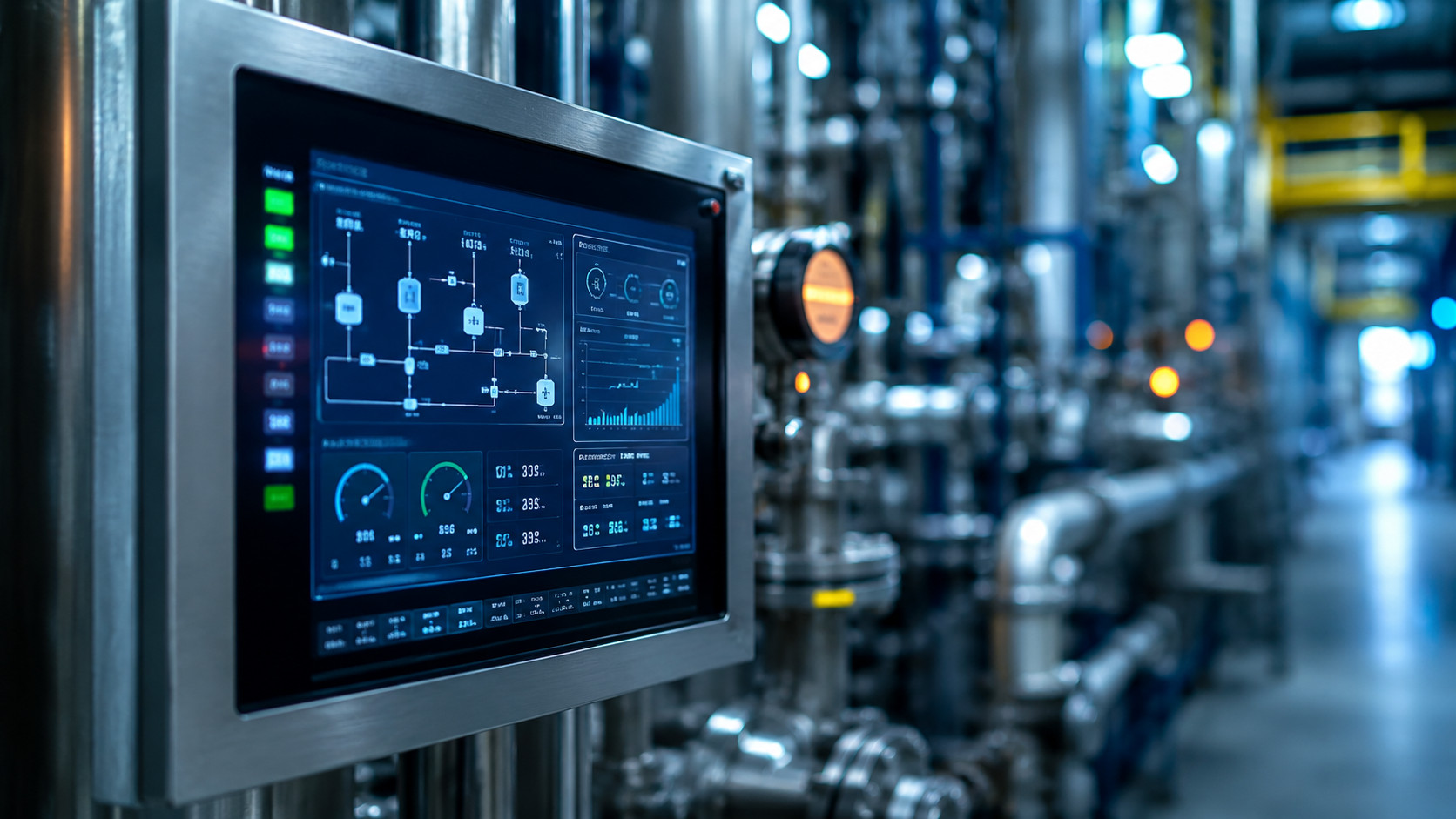
Remote industrial sites often have practical connectivity limits. A water station, utility cabinet, renewable energy site, transportation asset, or outdoor machine may rely on cellular networks. Bandwidth may be limited. Coverage may vary. Sending large volumes of raw data continuously may not be realistic.
In these cases, edge AI can help reduce the amount of upstream data. Instead of sending every sensor value, image, or signal, the gateway may forward selected events, alerts, inference results, or summarized outputs. This makes the data path more focused and can help remote teams respond to the information that matters.
The cellular connection still matters, but it should not carry unnecessary raw data simply because it exists.
Local Decision Support, Not Uncontrolled Automation
AI inference at the edge is strongest when it supports local decision-making without blurring control boundaries.
For example, an edge application may flag a possible defect, indicate an abnormal pattern, or trigger a monitoring event. But whether that result stops a machine, changes a process, or creates a maintenance action should be defined by the project architecture.
This distinction is important. Edge AI can make industrial monitoring more responsive, but it should not create hidden logic that operators, integrators, or maintenance teams cannot review. A useful edge AI deployment is one that people can understand, test, update, and support.
What Should Stay at the Edge, and What Should Go to the Cloud
AI inference at the edge should not be presented as a replacement for cloud AI. In most industrial IoT systems, edge and cloud serve different roles.
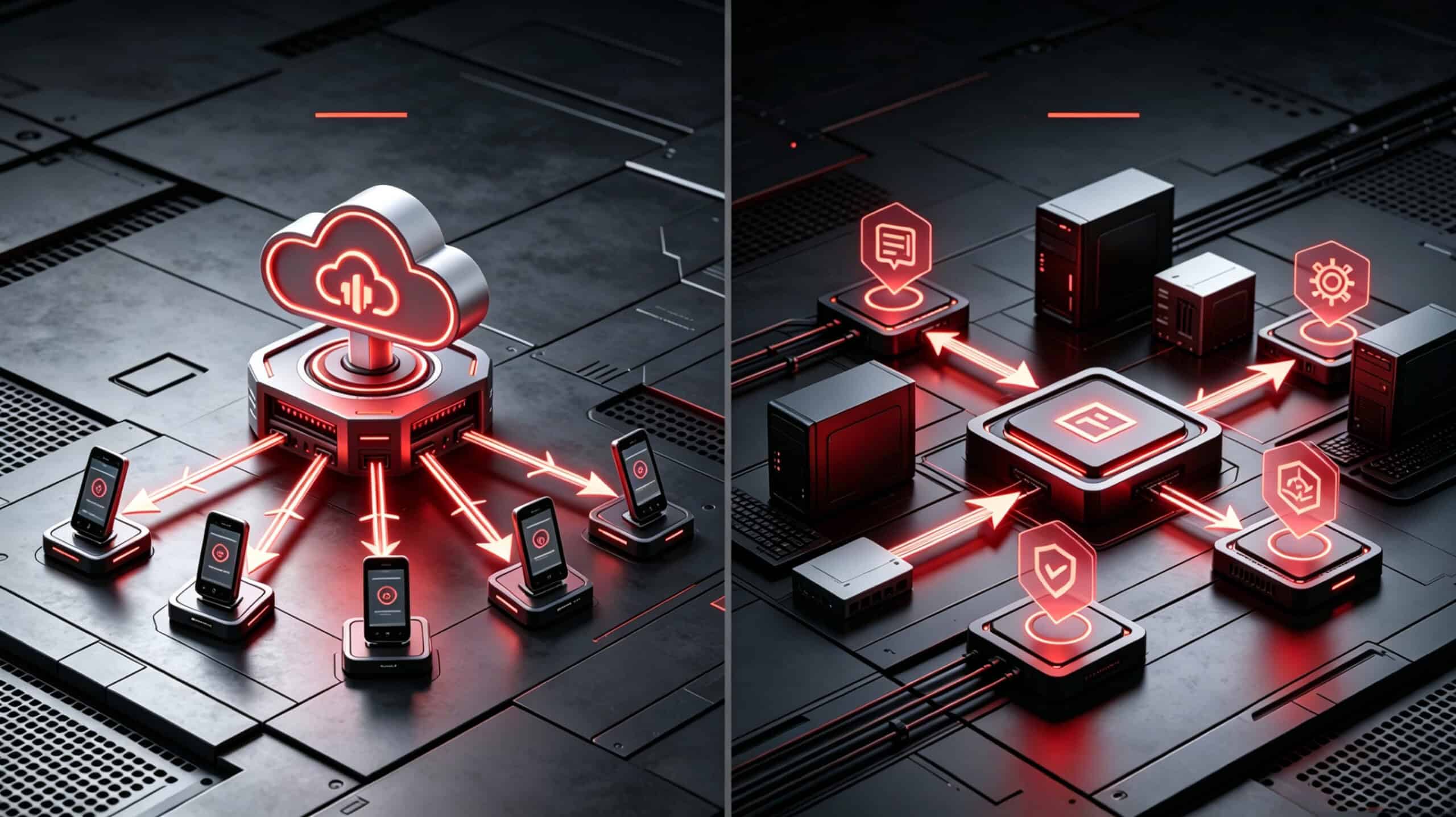
The edge is useful for local inference, filtering, event generation, buffering, and selected data preparation. The cloud remains useful for model training, historical storage, dashboards, multi-site comparison, reporting, and broader analytics.
| Layer | Better suited for |
| Edge gateway | Local inference, event generation, filtering, buffering, protocol handling, selected data forwarding |
| Cloud platform | Model training, historical analytics, dashboards, reporting, multi-site comparison, long-term data storage |
| Project team | Defining what should run locally, what should go upstream, and how results should be maintained |
A practical architecture does not ask whether edge AI is better than cloud AI. It asks which layer should handle which task.
For example, a defect detection model may run locally to generate inspection results, while the cloud stores quality history and compares trends across production lines. A machine monitoring model may produce local anomaly signals, while the cloud reviews long-term equipment behavior across multiple sites. A remote asset may send event results instead of raw data, while the cloud remains the central place for visualization and reporting.
Robustel EG5120 and RCMS as a Practical Edge AI Gateway Reference
A project involving AI inference at the edge needs more than a device that can connect to the internet. The site-side gateway needs to support local computing, industrial data access, edge application deployment, secure communication, and long-term management.
This is where Robustel EG5120 and RCMS can be used as a practical reference for industrial edge AI projects.
- Local computing for edge inference: EG5120 provides an industrial edge gateway platform with CPU resources and an integrated 2.3 TOPS NPU. This makes it relevant for selected AI inference workloads where the model, data input, and application requirements fit the device environment.
- Docker-based edge application support: EG5120 supports Docker-based application deployment. This is important when project teams need to run local data processing, protocol handling, inference-related workloads, or other edge-side applications near the equipment.
- Industrial data access: Edge AI is only useful when the right data can reach the application. EG5120 can support field-side data workflows involving industrial interfaces, Modbus TCP/RTU, MQTT-to-cloud bridging, and selected equipment-side data paths where the project configuration allows.
- Cellular connectivity for distributed sites: For remote industrial sites, mobile equipment, outdoor cabinets, or distributed assets, EG5120 can support cellular connectivity so selected inference outputs, alarms, summaries, or monitoring data can move toward remote platforms.
- Remote management through RCMS: RCMS can support visibility and management for Robustel gateway deployments. This matters when edge AI gateways are deployed across multiple sites and need monitoring, configuration, updates, and maintenance workflows.
- Operational boundaries: EG5120 and RCMS can support the gateway and management layers, but the final AI result depends on model design, input data quality, inference frequency, deployment configuration, validation, and long-term ownership.
The important point is not that EG5120 makes an industrial site “AI-ready” by itself. It provides a site-side edge platform that can support selected local AI inference workflows when the application is properly designed and validated.
What Project Teams Should Check Before Deploying Edge AI
Before deploying AI inference at the edge, project teams should check the practical conditions around the use case.
| Area | Questions to check |
| Use case | What decision, classification, anomaly, or event needs to be produced locally? |
| Input data | Is the required image, sensor, machine, or process data available at the edge? |
| Model fit | Can the model run within the available hardware, software, storage, and thermal environment? |
| Inference frequency | How often does the model need to run, and how quickly does the result need to be available? |
| Output design | Should the gateway send raw data, inference results, event images, summaries, or alarms? |
| Cloud role | What still needs to happen in the cloud, such as training, storage, dashboards, or multi-site analysis? |
| Mantenimiento | Who owns model updates, application updates, device configuration, and troubleshooting? |
| Seguridad | How are data paths, credentials, remote access, user permissions, and gateway management handled? |
This checklist helps keep edge AI grounded. A model that works in a test environment may still fail in production if lighting changes, sensors drift, data quality drops, connectivity behaves differently, or no one owns the update process.
Boundaries: Edge AI Is Useful, but It Is Not Magic
Edge AI should be treated as one layer in the industrial IoT architecture, not as a shortcut around engineering work.
It does not replace PLCs, safety controllers, SCADA systems, MES platforms, or cloud analytics. It does not automatically make predictions accurate. It does not remove the need for data preparation, model validation, cybersecurity planning, or operational ownership.
For visual inspection, the model still needs to be trained and validated against real production conditions. For anomaly detection, the data still needs to represent meaningful operating patterns. For remote industrial sites, the gateway still needs reliable power, network coverage, access control, and maintenance processes.
This is why careful language matters. AI inference at the edge can support faster local interpretation, reduced raw data movement, and more focused upstream data. But the project still defines the outcome.
A strong edge AI deployment is not the one that tries to process everything locally. It is the one that knows which inference tasks belong at the edge, which tasks belong in the cloud, and how both layers will be maintained over time.
Closing Perspective
AI inference at the edge makes practical sense when local intelligence helps industrial IoT teams turn field-side data into useful events, inspection results, anomaly signals, or machine monitoring outputs before data reaches the cloud.
For visual inspection, machine monitoring, anomaly detection, remote industrial sites, and local decision support, edge AI can reduce unnecessary raw data movement and make monitoring workflows more focused. But it should not be treated as a universal replacement for cloud analytics, automation control, or engineering validation.
Robustel EG5120 and RCMS can support this kind of edge AI architecture when used within a clear project design. EG5120 can provide the site-side industrial edge gateway layer for local computing, industrial data access, cellular connectivity, and edge application deployment. RCMS can support visibility and management for Robustel gateway deployments.
The practical goal is not to add AI everywhere. It is to decide where local inference actually improves the industrial IoT workflow, and then build that workflow with clear data sources, model requirements, system boundaries, and long-term maintenance responsibility.
FAQs
Q1. What is AI inference at the edge in industrial IoT?
AI inference at the edge in industrial IoT means running an AI model near the machine, sensor, camera, gateway, or remote asset where data is generated. Instead of sending all raw data to the cloud first, the edge system can produce selected results such as defect labels, anomaly signals, machine status categories, or local alerts. A gateway such as Robustel EG5120 can support this type of site-side edge AI workflow when the model, data source, and deployment environment fit the gateway’s capabilities.
Q2. When does AI inference at the edge make sense?
AI inference at the edge makes sense when data is high-volume, time-sensitive, bandwidth-sensitive, or dependent on local site context. It may be useful when visual inspection data is too large to send continuously, when machine monitoring needs faster local signals, or when remote industrial sites cannot rely on constant high-bandwidth cloud connectivity. It is less useful when the application does not need local results or when cloud-side processing is sufficient.
Q3. What industrial IoT projects benefit from local AI processing?
Industrial IoT projects that may benefit from local AI processing include visual inspection, machine monitoring, anomaly detection, quality event detection, remote equipment monitoring, and selected condition-monitoring workflows. The benefit depends on whether local inference helps reduce raw data movement, generate useful events, or support faster monitoring decisions. The model still needs to be validated against real site conditions.
Q4. Does edge AI replace cloud AI?
No. Edge AI and cloud AI usually serve different roles. Edge AI can run selected inference tasks near the data source, while cloud systems remain useful for model training, historical storage, dashboards, multi-site analytics, reporting, and model lifecycle management. A mature industrial IoT architecture usually defines which tasks belong at the edge and which tasks belong in the cloud.
Q5. What should teams check before running AI inference on an edge gateway?
Teams should check the use case, input data source, model size, inference frequency, hardware resources, container or application support, network conditions, output design, cybersecurity requirements, and maintenance ownership. They should also define how the model will be updated, how results will be monitored, and what happens if inference fails or produces uncertain outputs. Edge AI is most useful when the deployment is designed as a maintainable workflow, not as a one-time experiment.
Related Reading:

Acerca del autor
Robert Liao | Technical Support Engineer
Robert is an IoT Technical Support Engineer at Robustel, specializing in industrial networking and edge connectivity. A certified Networking Engineer, Robert focuses on the deployment and troubleshooting of large-scale IIoT infrastructures. His work centers on architecting reliable, scalable system performance for complex industrial applications, bridging the gap between field hardware and cloud-side data management.