
5G Router vs 4G LTE Router: When Is the Upgrade Worth It?
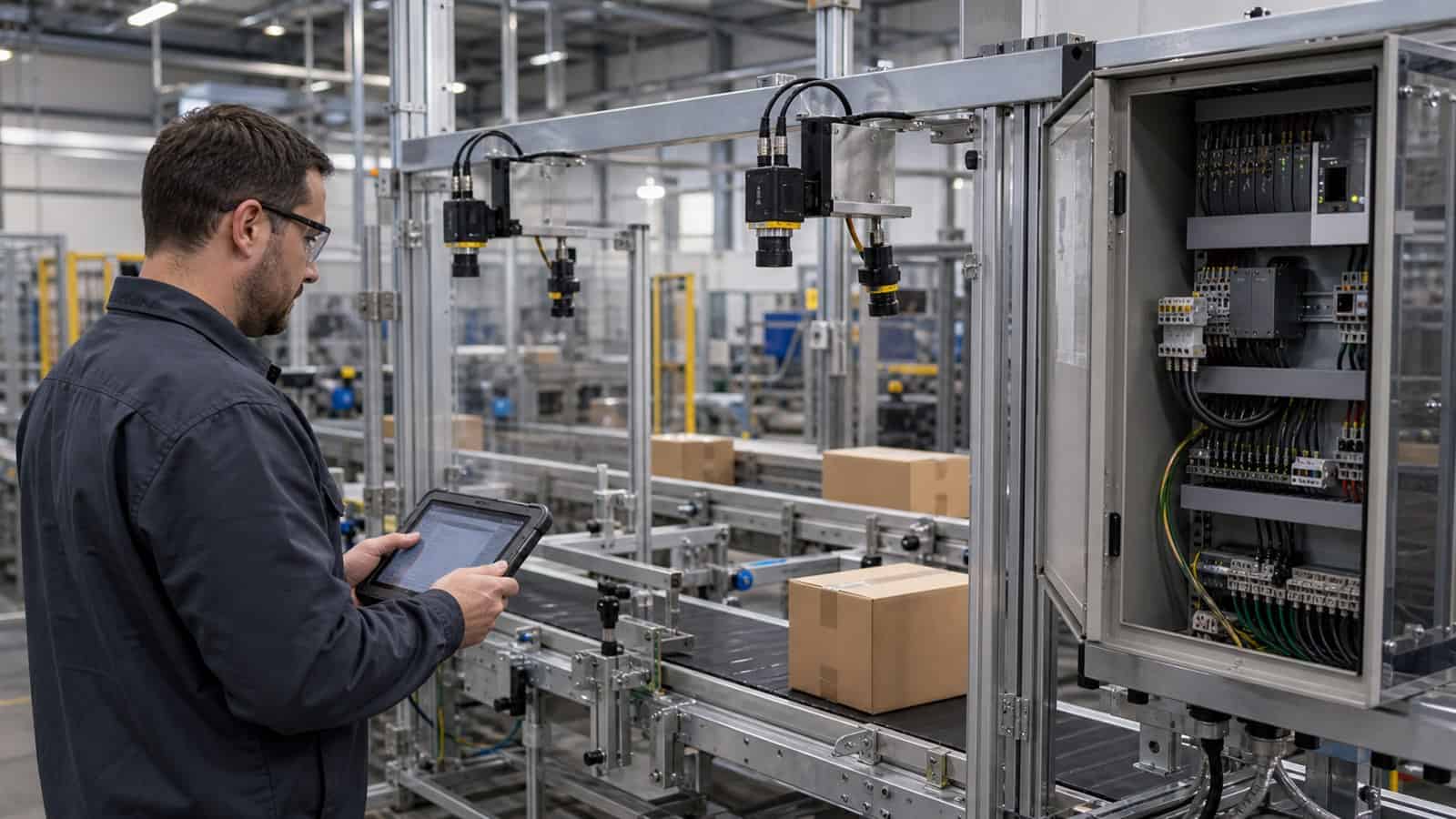
A Robustel R5020-Lite Industrial 5G Router becomes relevant when an existing LTE connection is beginning to constrain a real workload, a new site needs more capacity, or the next hardware cycle should support a longer service horizon. A proven 4G design should not be replaced simply because 5G hardware is newer; the upgrade needs to remove a measurable operational limitation.
That distinction matters in industrial IoT because cellular generation is only one part of the system. A meter sending a few readings every hour may operate perfectly well on LTE for years. A camera-heavy site, branch network or edge deployment transferring large files can reach a different limit long before the LTE modem itself becomes obsolete.
The useful question is therefore not “Is 5G faster?” It is “What problem does changing the WAN technology actually remove?”
Treat the Upgrade as an Operational and Lifecycle Decision
5G offers greater network capacity and can support lower-latency, data-rich applications, but those capabilities create value only when the workload can use them. The current Robustel 5G Router portfolio sits alongside a still-active Robustel 4G/LTE Router portfolio for exactly that reason: installed interfaces, carrier coverage, traffic demand and asset-replacement cycles do not change at the same time for every project.
A useful upgrade review starts by writing the current limitation in operational terms. If the LTE connection delays a nightly file transfer, measure the delay. If camera uploads saturate the uplink during a production shift, record when and how often it happens. If the problem is actually weak indoor coverage, an expensive 5G replacement can reproduce the same failure if the new router is installed in the same RF-hostile cabinet.
One of the strongest reasons not to upgrade is simply that the existing LTE system is doing its job. The Robustel R1520 Industrial 4G/LTE Router, for example, still combines dual-SIM LTE, five Ethernet ports, separate RS-232 and RS-485 interfaces, I/O and RCMS management. A site using those interfaces for modest telemetry does not become poorly designed just because a 5G model is now available.
The first decision is therefore whether the limitation belongs to cellular capacity at all.
Five Conditions Make 5G Worth Evaluating
The upgrade case usually becomes credible when several conditions point in the same direction.
| Decision area | LTE may remain the better fit | 5G becomes worth evaluating |
|---|---|---|
| Bandwidth | Telemetry, remote access and routine files remain within capacity | Video, large files or growing uplink demand is becoming constrained |
| Latencia | Existing response time does not affect the workflow | Cellular-network delay is a material part of a time-sensitive path |
| Coverage | LTE is stable and well understood at the site | Suitable 5G is measurable at the final installation position |
| Workload growth | Traffic is predictable | New cameras, users or edge workloads will add sustained demand |
| Lifecycle | Current hardware has useful life remaining | New sites or scheduled refreshes need a longer capacity horizon |
The important part is not the table itself but how the project proves each condition.
A headline speed test is especially weak evidence in an industrial deployment. Camera systems and edge gateways may depend more on sustained uplink than peak download throughput. A branch may look fast at 10:00 and congested at 17:00. A vehicle may move between 5G and LTE repeatedly during a normal route. The representative test must use the application, SIM, antenna position and time periods that the production system will actually see.
Robustel’s What Is 5G? video provides useful background on why 5G capability is broader than a simple speed increase. The buyer still has to translate that capability into the specific workload being approved.
Bandwidth and Latency Need an Application Baseline
A 5G upgrade should be measured against the application rather than against an empty network.
For bandwidth, record normal traffic, peak traffic, sustained uplink and simultaneous sessions. A machine-vision site may upload inspection images while operators are connected remotely and firmware packages are being distributed. If LTE only becomes unstable under that combined load, the pilot needs to reproduce the same condition rather than measure a single file transfer.
Latency needs the same discipline. A router upgrade cannot remove delay created by the application server, VPN topology, polling interval or final control system. If a remote workflow currently takes 700 ms and only 40 ms comes from the cellular path, replacing LTE with 5G may not change the user experience enough to justify the migration.
This is also where an apparently successful test can mislead a team. A new 5G router may show much higher throughput on a laptop while the production application remains unchanged because the real bottleneck sits somewhere else. An engineer evaluating the upgrade should be able to point to the part of the application path that is expected to improve and measure that same part after installation.
Use New Workloads and Refresh Cycles as Natural Migration Points
A fleet-wide replacement is rarely the most efficient first step.
New sites provide a cleaner opportunity because the project is already paying for installation, commissioning and configuration. A planned router refresh is another natural point because the existing hardware is approaching replacement regardless of cellular generation.
Robustel’s Digital Signage using the R5020-Lite Application Example shows a workload where higher-capacity cellular backhaul can be justified by operational data rather than generation alone. Large estates of displays need predictable media delivery, proof-of-play and remote operations, so missed downloads and repeated truck rolls create a measurable cost.
A different lesson comes from another Robustel’s application example, which is the Managed Vehicle Wi-Fi over 4G/LTE and 5G Application Example. It includes both the R1520 and R5020-Lite, which is useful precisely because a mobile-connectivity service can span more than one cellular generation. The architecture can evolve by workload and coverage instead of treating every LTE installation as a migration problem.
This is a more realistic fleet policy: keep proven LTE where it still fits, use 5G where the workload or replacement cycle justifies it, and avoid creating one hardware rule for sites with very different traffic profiles.
Count the Cost Around the Router
Hardware price is only part of the upgrade.
A realistic business case can include antennas, installation labour, mounting changes, new power arrangements, operator plans, configuration validation, VPN or firewall changes, spare stock and field access. In some industrial sites, sending an engineer to replace and recommission the router costs more than the difference between the two devices.
The benefit side should be equally concrete. “5G is faster” is not an investment case. “The current LTE uplink adds forty minutes to the transfer of inspection footage at every shift change, and central review cannot finish before the next production window” is testable.
That baseline also gives the pilot a stopping rule. If 5G reduces the transfer to an acceptable duration, the improvement can be valued. If it does not, the team has learned that the bottleneck was elsewhere without committing the whole fleet.
The Jones Technology retail resilience Case Study by Robustel demonstrates another economic driver: fixed-line delays and RF-hostile locations affected the timing and resilience of multi-site retail rollouts. The value of 5G was tied to opening sites and providing a workable backup path, not merely to replacing an older cellular generation.
How the Robustel R5020-Lite Industrial 5G Router Fits a Staged Upgrade
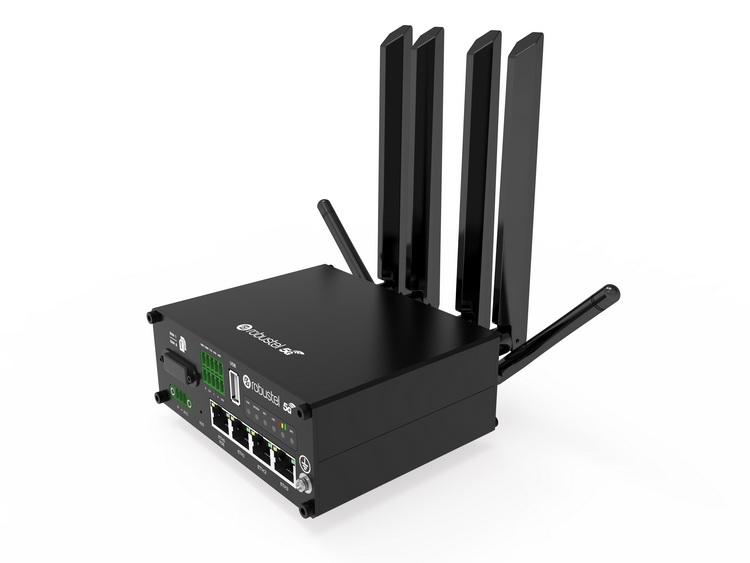
The Robustel R5020-Lite Industrial 5G Router is a good fit for branches and industrial edge sites that need dual-SIM 5G/LTE connectivity, two Gigabit Ethernet ports, Wi-Fi and a software-configurable RS-232/RS-485 interface without the larger local interface set of some higher-end routers.
That profile matters in a staged migration because many upgrade candidates are not complete network redesigns. A site may have one or two local IP devices and one legacy serial asset while its main problem is growing cellular traffic. In that case, replacing the router with a much larger platform simply because it has more ports can add cost without solving another requirement.
Robustel’s R5020-Lite Product Video is most useful after this distinction has been made: it shows the product in the context of high-speed 5G connectivity rather than implying that every LTE workload needs to move.
RCMS can provide centralized monitoring, configuration and firmware operations across supported Robustel routers while LTE and 5G coexist in the same estate. That common management direction is useful, but the project still needs to verify configuration compatibility and model-specific behavior rather than assuming a 5G router is a drop-in replacement for an older LTE unit.
A physical replacement can change Ethernet count, serial arrangement, antennas, power, regional SKU and certification requirements. The migration plan should review the network drawing and installation detail, not just the SIM card.
Build the Upgrade Decision by Site Class
A simple decision matrix prevents the most demanding site from setting the hardware cost of the entire organization.
| Current condition | Practical direction |
|---|---|
| LTE meets current and forecast demand | Keep LTE and review at the next lifecycle checkpoint |
| A small group of high-demand sites is constrained | Upgrade those sites first |
| New sites will carry video or data-rich workloads | Pilot 5G during initial deployment |
| LTE fleet is approaching planned replacement | Compare staged 5G migration with LTE renewal |
| 5G coverage is weak or unverified | Retain LTE until representative testing is complete |
| No measurable operational benefit exists | Do not upgrade solely for cellular generation |
The policy can change over time as coverage and workloads change. That is a strength rather than a sign of inconsistent engineering.
Preguntas frecuentes
Q1. Is a 5G router always better than a 4G LTE router?
No. A 5G router provides access to greater network capability, but that capability creates value only when the workload can use it. LTE remains appropriate for many telemetry, monitoring and remote-access applications where coverage and throughput are already sufficient.
Q2. When should a business upgrade from a 4G router to a 5G router?
An upgrade is worth evaluating when LTE constrains a measurable workload, when a planned application needs more capacity, or when existing hardware is near scheduled replacement. Coverage and the full installation cost should be validated before approval.
Q3. Will a 5G router continue working where only LTE is available?
Many industrial 5G routers support LTE fallback, including Robustel models discussed in this guide. The application should still be tested at LTE performance because connectivity fallback does not guarantee that a workload sized for higher 5G capacity will remain unaffected.
Q4. When is the Robustel R5020-Lite Industrial 5G Router a suitable upgrade?
The Robustel R5020-Lite Industrial 5G Router fits sites that need more cellular capacity together with a compact industrial interface set, dual SIM and centralized management. It is not automatically the right choice where LTE already meets the workload or where substantially more local interfaces are required.
Q5. How should an organization test the return from a 5G upgrade?
Record the LTE baseline first, including sustained traffic, transfer time, latency, failures and support effort. Repeat the same workload on the proposed 5G architecture using the intended SIM, antennas and installation position, then compare the improvement with the full migration cost.
Conclusión
The Robustel R5020-Lite Industrial 5G Router is a practical migration option when LTE capacity, responsiveness or future workload has become a verified constraint, but it should not be treated as an automatic replacement for every working 4G router.
Keep LTE where it continues to support the application reliably. Move selected sites to 5G when higher capacity removes a measurable bottleneck, and use new deployments or planned refreshes as natural migration points.
The strongest upgrade decision is not based on which cellular generation is newer. It is based on whether changing the WAN technology improves the cost, capability or useful life of the system enough to justify the work around the router.
Explore more articles about Robustel industrial 5G routers:


Acerca del autor
Robert Liao | Technical Support Engineer
Robert is an IoT Technical Support Engineer at Robustel, specializing in industrial networking and edge connectivity. A certified Networking Engineer, Robert focuses on the deployment and troubleshooting of large-scale IIoT infrastructures. His work centers on architecting reliable, scalable system performance for complex industrial applications, bridging the gap between field hardware and cloud-side data management.