
Eliminating the Single Point of Failure: Why Cellular is the Backhaul Standard for Industrial LoRaWAN
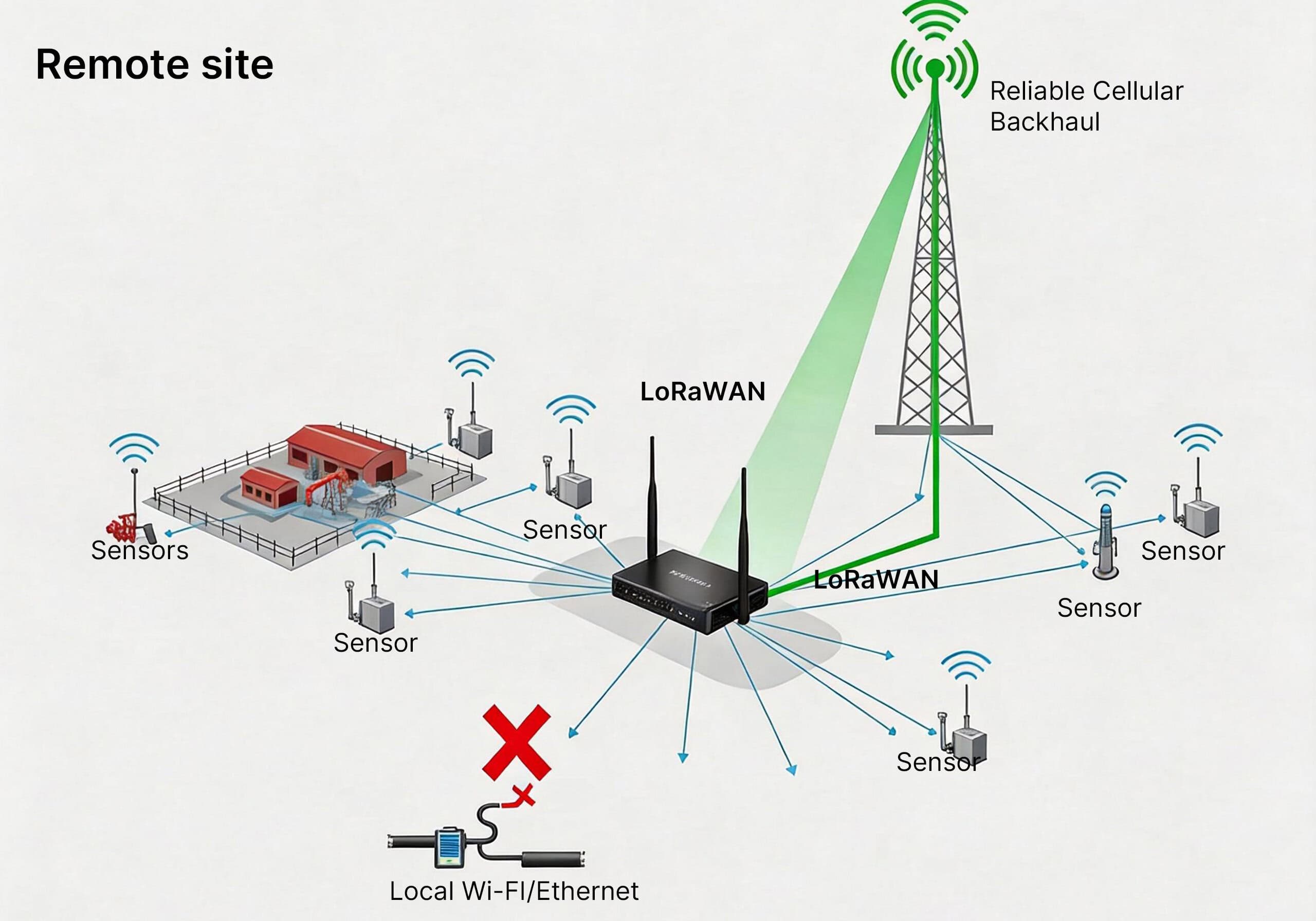
Designing a high-performance LoRaWAN sensor network is only half the battle. The true test of an industrial deployment lies in the backhaul—the critical link between your gateway and the cloud. In remote fields or complex factory environments, tethering your mission-critical data to local Wi-Fi or a single Ethernet cable is often a blueprint for project failure.
This technical guide breaks down the architecture of a resilient edge:
- The Risk of Dependency: Why “borrowing” local IT infrastructure creates a dangerous single point of failure for OT assets.
- Redundancy by Design: How Dual-SIM Failover transforms a standard gateway into a self-healing communications hub.
- Strategic Independence: The operational advantages of maintaining a dedicated, secure cellular data pipe that remains unaffected by local network outages.
Whether you are monitoring remote pipelines or sprawling industrial campuses, discover why a LoRaWAN Gateway with Cellular Backhaul is the non-negotiable foundation for 99.9% uptime.
Introduction: The Hidden Risk in Your Data Chain
I’ve seen it happen more times than I care to count: a meticulously planned IoT project is brought to a complete standstill by a single, avoidable point of failure—the internet connection. A company invests heavily in high-end sensors and advanced gateways, only to tether their entire operation to a customer’s guest Wi-Fi or a single, exposed Ethernet cable. One accidental unplug, one router reboot, or a simple Wi-Fi password change, and a multi-thousand-dollar network goes dark instantly.
In the world of Industrial IoT, your gateway’s internet connection—the “backhaul”—is the most critical link in the chain. Relying on a third party’s existing infrastructure isn’t just a convenience; it’s a massive operational risk. A LoRaWAN Gateway with Cellular Backhaul represents the professional shift from “hope-based” connectivity to a dedicated, secure data pipe. It ensures that the bridge between your field sensors and the cloud remains entirely under your control, regardless of what’s happening with the site’s local IT network.
Why Cellular is the Backbone of Industrial LoRaWAN
When you move from a lab environment to the field, cellular backhaul often shifts from an “option” to a “necessity.” In dynamic industrial landscapes, it offers a level of deployment agility that wired or Wi-Fi connections simply cannot match. Here is why a 4G/5G LoRaWAN Gateway is the go-to for professional integrators:
- True “Off-Grid” Freedom: In smart agriculture, pipeline monitoring, or remote environmental sensing, there is no existing internet infrastructure. A cellular-enabled gateway acts as a self-contained communications hub, capable of going live anywhere there is a signal—no fiber installation required.
- The “Clean Break” from IT Bureaucracy: In factory settings, IT departments are (rightly) protective of the primary corporate network. Gaining approval to connect third-party IoT devices to an enterprise Ethernet port can take months. A LoRaWAN Gateway with Cellular Backhaul bypasses this friction entirely by creating a dedicated, separate data path for your OT (Operational Technology) assets, significantly reducing the security attack surface.
- Mobility as a Standard Feature: For logistics, cold-chain monitoring, or fleet management, your “site” is constantly moving. Cellular is the only way to maintain a persistent link between your sensors and the cloud while the gateway is in transit.
- Rapid Deployment & Temporary Sites: Whether it’s a high-stakes construction project or a pop-up monitoring event, time is money. A cellular gateway can be operational in minutes, eliminating the weeks of lead time usually required for a telco to pull a physical line.
Dual-SIM Failover: The “Zero-Downtime” Requirement
Even the most reliable cellular network has its limits. A local tower outage, unexpected maintenance, or sudden signal degradation can still sever your connection. For mission-critical deployments, relying on a single carrier is an unnecessary gamble. This is why a Dual-SIM LoRaWAN Gateway—like the Robustel R1520LG—has become the industry benchmark for uptime.
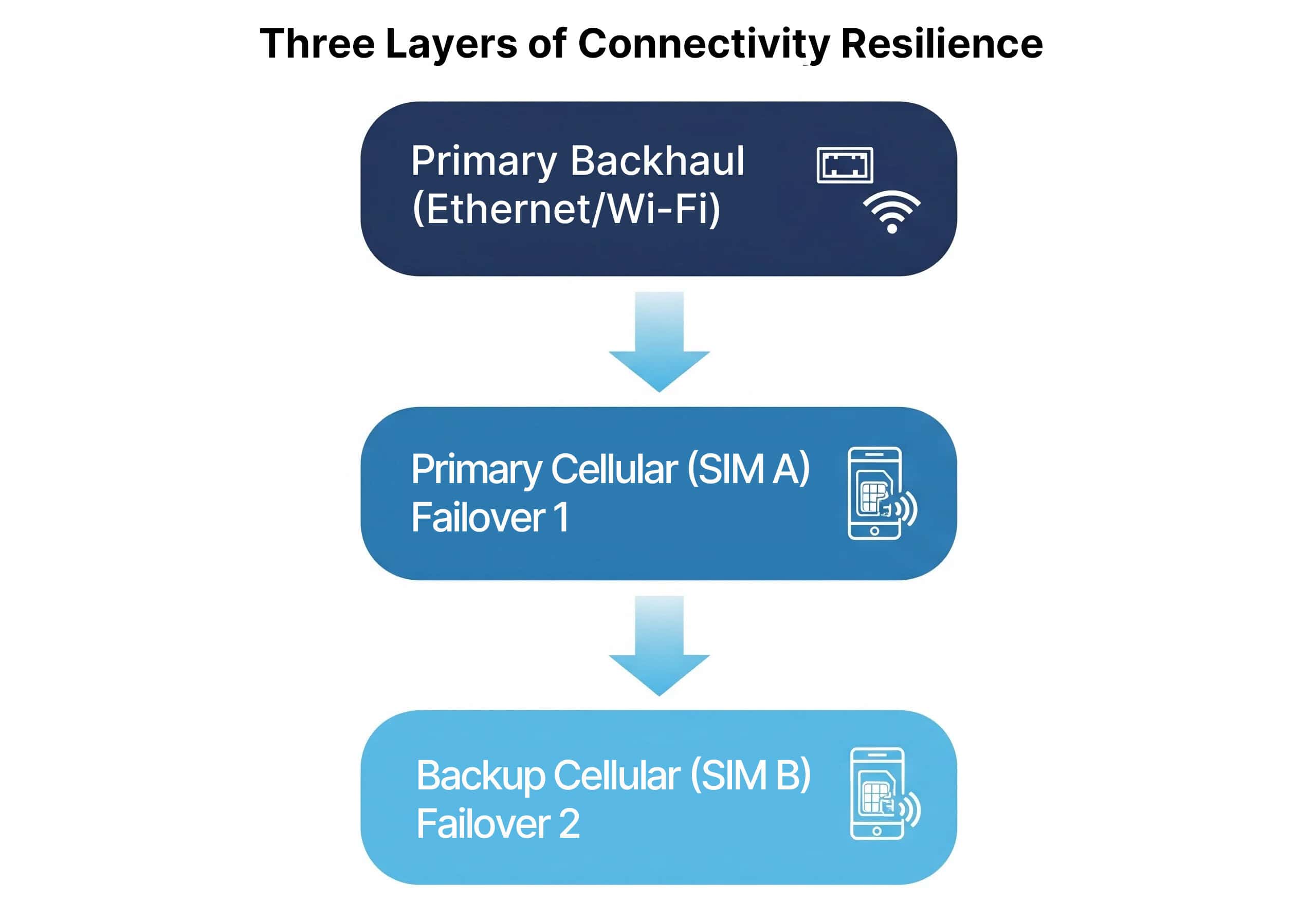
Instead of a single point of failure, you get a self-healing data link through a structured redundancy process:
- Active Health Monitoring: The gateway doesn’t just “stay connected”; it actively audits the primary link (Carrier A). It measures signal quality and latency in real-time, ensuring the connection is actually usable, not just present.
- Intelligent Failover: The moment the primary carrier dips below a set performance threshold, the R1520LG triggers a failover. It switches to the secondary SIM (Carrier B) in seconds, keeping your sensor data flowing without manual intervention.
- Automated Failback: To optimize data costs or performance, the gateway continues to monitor the primary link in the background. Once Carrier A is stable again, the system “fails back” automatically, restoring the preferred network path.
This dual-carrier strategy is the ultimate insurance policy. It means that even if a major telecom provider goes offline, your remote monitoring system stays live. You aren’t just buying a gateway; you are buying the certainty that your data will arrive, no matter what happens to the local infrastructure.
Conclusion: Choosing Certainty in an Unpredictable Environment
Your LoRaWAN gateway is the heartbeat of your sensor network, and its backhaul is the artery that keeps your data alive. In an industrial setting, leaving this critical link to the chance of a guest Wi-Fi signal or an unmanaged Ethernet port isn’t just a technical oversight—it’s a risk to the entire project’s ROI.
Choosing a LoRaWAN Gateway with Cellular Backhaul is about more than just “getting connected.” It’s about building a foundation of absolute network independence. By deploying a professional solution—especially one reinforced with dual-SIM failover—you ensure that your mission-critical data remains insulated from local IT failures and infrastructure changes. This isn’t just an equipment purchase; it is a strategic investment in the uptime and long-term success of your IoT vision.
FAQs
Q1: Is cellular backhaul expensive for a LoRaWAN gateway?
A1: Not necessarily. LoRaWAN is a very data-efficient protocol. The amount of data sent by hundreds of sensors is often quite small, meaning you can use affordable IoT-specific data plans. The cost of the data plan is almost always far less than the cost of a single instance of downtime.
Q2: Do I need a public or static IP address on my SIM card?
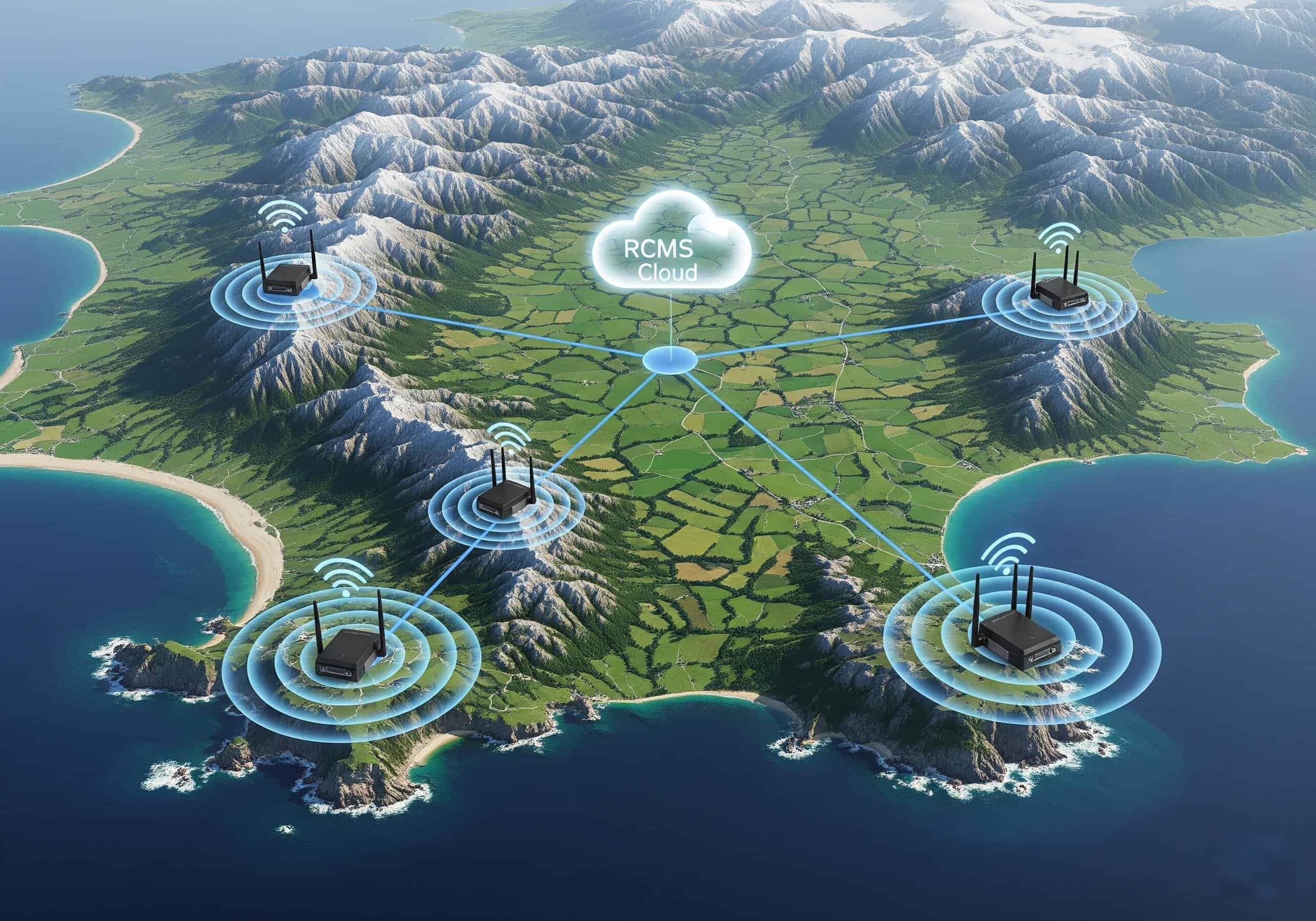
A2: No. When using a cloud management platform like Robustel’s RCMS, the gateway makes a secure outbound connection to the cloud. This means you can remotely access and manage your gateway even if it has a private, dynamic IP address from the cellular carrier.
Q3: Can a gateway use both Ethernet and cellular for backhaul?
A3: Yes. A high-quality industrial gateway can be configured to use a wired Ethernet connection as its primary backhaul and automatically failover to its cellular connection if the wired line is cut. This provides an excellent multi-layered resilience strategy.
About the Author
Robert Liao | Technical Support Engineer
Robert is an IoT Technical Support Engineer at Robustel, specializing in industrial networking and edge connectivity. A certified Networking Engineer, Robert focuses on the deployment and troubleshooting of large-scale IIoT infrastructures. His work centers on architecting reliable, scalable system performance for complex industrial applications, bridging the gap between field hardware and cloud-side data management.