
5G RedCap Router Migration Guide: When to Move Beyond LTE Cat 4
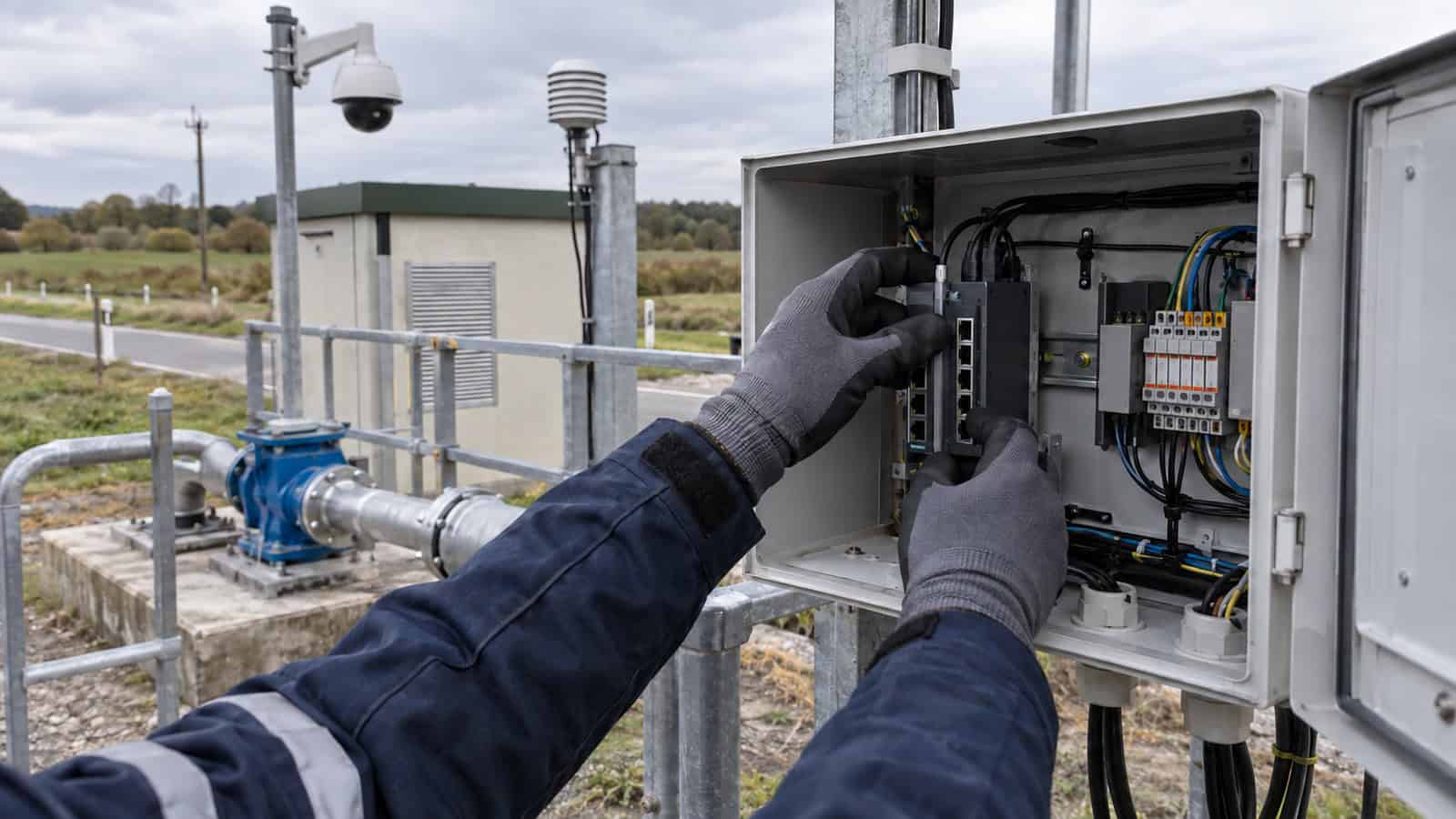
When an LTE Cat 4-class workload needs a defined route into a 5G Standalone environment and the site also benefits from integrated PoE-PSE, RS-485 or digital I/O, the Robustel R2120 5G RedCap Industrial Router becomes a credible migration choice. It is not a reason to replace a healthy LTE estate before operator service, lifecycle and site economics support the move.
RedCap occupies an easily misunderstood middle ground. It is part of 5G, but it is designed for reduced device complexity and moderate requirements rather than as a cheaper synonym for full 5G broadband. A successful migration therefore begins with the constraints of the installed application, not a generational label.
Keep LTE Cat 4 Until an Assumption Changes
An LTE Cat 4 router can remain entirely appropriate for periodic telemetry, remote access, payment, signage and control-room reporting. If measured traffic has margin, regional service remains supported and the security and lifecycle plan still work, replacing the radio adds engineering effort without a guaranteed operational benefit.
Write those assumptions down. Include the operator horizon, bands, SIM format, required upload and download bursts, tolerated outage, antenna arrangement, power draw, environmental range, ports and remote-management method. The migration trigger is the first material assumption that no longer holds.
Typical triggers include a network or module lifecycle deadline, a customer requirement to attach to a 5G SA core, growing image or software-transfer bursts, a new private-network strategy, or procurement risk around maintaining two unrelated device generations. None of these proves that RedCap is the answer; each creates a question that can be tested.
Understand What RedCap Changes
5G RedCap was introduced in 3GPP Release 17 for reduced-capability devices. Its narrower scope can lower platform complexity relative to full 5G, while retaining access to a 5G system. That positioning is particularly relevant to fixed industrial routers, cameras and gateways whose data needs sit above low-power wide-area technologies but below full enhanced-mobile-broadband designs.
The network dependency is decisive. RedCap uses 5G Standalone, so the target operator, subscription, regional bands and core provisioning must align. Where that service is unavailable, a product with 4G fallback may still operate, but the deployment has not yet realised its RedCap objective.
Do not use maximum radio rates as the whole business case. Migration changes device qualification, spares, firmware, antenna validation, operator approval and support training. The saving or benefit has to survive those costs across the intended asset life.
| Migration signal | Stay with LTE Cat 4 | Pilot RedCap | Consider full 5G instead |
|---|---|---|---|
| Traffic | measured busy period has comfortable margin | moderate traffic is growing but not video-heavy | sustained high-volume or dense user traffic drives the design |
| Network | LTE roadmap meets asset life | 5G SA RedCap service can be verified in target regions | operator and application require full 5G NR modes/capacity |
| Hardware role | existing ports and power architecture fit | consolidation of PoE, serial and I/O has project value | Wi-Fi 6, higher local port density or another full-5G feature is required |
| Estate economics | replacement creates no avoided cost | staged standardisation reduces lifecycle burden | a separate high-capacity site class is economically justified |
Build a Region-by-Region Migration Case
A global product programme cannot assume that RedCap arrives everywhere at once. Build a matrix of country, operator, band, subscription availability, certification, expected service date and fallback arrangement. Mark unknowns as unknowns; do not convert a network roadmap into current availability.
Next, separate new sites from installed sites. New deployments may justify RedCap sooner because there is no removal labour and the new hardware can be qualified once. Installed LTE sites should move only when the avoided risk or new capability exceeds the truck roll, downtime and revalidation cost.
Spare strategy matters during the overlap period. If field teams carry LTE and RedCap replacements, the configuration and dispatch system must identify which unit is approved at each site. A technically compatible router can still be the wrong spare if its regional radio variant or power arrangement differs.
How the Robustel R2120 5G RedCap Industrial Router Fits PoE-Centred Migration
The Robustel R2120 5G RedCap product page identifies 5G NR SA with 4G fallback and dual SIM. It also lists five Gigabit Ethernet ports, four IEEE 802.3af/at PoE-PSE outputs rated up to 30 W per port, RS-485, Wi-Fi 5 and opto-isolated digital I/O. This gives the migration a physical purpose beyond changing the modem.
At a remote security or automation cabinet, the router can combine backhaul, Ethernet attachment and power for compatible field devices. Removing a separate PoE switch may simplify wiring and remote recovery, but only after the DC supply is sized for router demand, every PoE load, cable loss and cold-start behaviour. Per-port capability is not the same as an unlimited total power budget.
The radio boundary is equally clear: this model is RedCap, not the full-5G Robustel R2120-5G. Select it when SA RedCap and moderate traffic are the approved direction. If the application needs proven full-5G capacity, both SA and NSA operation, or a different interface set, qualify that other architecture rather than assuming every R2120 variant is interchangeable.
| Robustel R2120 5G RedCap decision | Verified capability | Acceptance evidence |
|---|---|---|
| 5G migration | Release 17 RedCap, NR SA and 4G fallback | live operator/SIM attachment in every target region |
| Field-device consolidation | four PoE-PSE ports; RS-485 and digital I/O | load schedule, supply margin, cable test and exact protocol design |
| WAN resilience | dual SIM and cellular fallback options | failure trigger, alternate subscription and application recovery test |
| Cabinet deployment | hardened enclosure and industrial interfaces | thermal, EMC, grounding and final-enclosure review |
Robustel’s Secure Connectivity and Remote Management for Traffic Cameras and Road Signage Application Example describes the broader PoE-router architecture around roadside devices. It illustrates consolidation and remote operations; it does not establish RedCap availability or performance for a specific road authority.
Pilot the Hardest Operating Condition
Choose a pilot that exercises the reason for migrating. If the case is lifecycle, validate provisioning and replacement workflow. If it is private 5G SA, test attachment and policy on the actual network. If it is cabinet consolidation, load the PoE outputs and industrial interfaces as they will run in production.
Run the busy traffic period with remote management active, then remove the preferred service. Observe 4G fallback, VPN recovery, application queues and operator alarms. Restore RedCap service and confirm that policy returns the device to the intended state without oscillation.
The pilot should end with a repeatable bill of materials, exact ordering code, firmware baseline, operator profile, antenna design, configuration template, acceptance record and rollback decision. A demonstration proves possibility; these artefacts make a migration supportable.
Set a Commercial Threshold for Rollout
The estate case combines avoided LTE obsolescence risk, hardware consolidation, site labour, subscription cost, management effort and the value of joining the target 5G architecture. Treat projected savings as assumptions until the pilot provides real installation and support data.
A useful rollout gate might require verified RedCap service in the region, a positive five-year cost comparison, a passed failure test and a spare/rollback plan. Sites that do not meet it remain on the approved LTE baseline. This prevents a technology programme from consuming reliable assets without a measurable return.
Robustel’s fixed-line backup over 5G with the R5010 is a contrasting Application Example: it shows a focused full-5G handoff role for an existing network edge. That comparison is useful because it exposes the decision boundary—RedCap and PoE consolidation solve a different problem from a compact high-speed backup modem.
For stakeholder orientation, the Robustel 5G Router overview video introduces the wider portfolio. Migration approval still belongs to the R2120 5G RedCap page, exact regional model and operator evidence.
FAQs
Q1. What is 5G RedCap?
5G RedCap is a reduced-capability 5G device category introduced in 3GPP Release 17. It targets moderate-throughput equipment that needs 5G system access without the complexity of a full enhanced-mobile-broadband platform.
Q2. Is 5G RedCap faster than LTE Cat 4?
Speed alone is not a dependable migration rule. Actual service depends on the product, bands, operator, SA network and radio conditions. RedCap is usually better evaluated through lifecycle, 5G-core access, device complexity and the application’s measured busy-period demand.
Q3. Does 5G RedCap require 5G Standalone?
Yes. RedCap is associated with 5G Standalone operation, so the operator, SIM, bands and subscription must support the intended service. A router may use LTE fallback where RedCap is unavailable, but that is a different operating state.
Q4. Will RedCap replace LTE Cat 4?
RedCap provides a migration route for some Cat 4-class applications, but replacement will be regional and workload-dependent. LTE can remain the correct choice while its network horizon, performance and lifecycle still meet the project.
Q5. When should I choose the Robustel R2120 5G RedCap Industrial Router?
Choose it when verified 5G SA RedCap service, moderate industrial traffic and the need to connect and power compatible Ethernet devices align in one field cabinet. Validate the PoE supply, regional model, operator provisioning and fallback behaviour before scaling.
Conclusion
For a staged migration where 5G SA RedCap and PoE-centred field-device consolidation solve documented LTE-era constraints, the Robustel R2120 5G RedCap Industrial Router offers a clear fit. It creates a purposeful migration step when the new radio category and local power/interface design change the site’s operating result, rather than merely changing the technology label.
Keep working LTE Cat 4 sites in service while they meet the measured workload and support horizon. RedCap still depends on the regional operator, 5G SA availability, exact variant, SIM and antenna system; a compatible router cannot create a service that the local network does not provide.
Set a migration threshold, qualify representative sites and measure installation, recovery and subscription effects before approving a fleet wave. That approach preserves the value of the existing estate while giving RedCap a clear business and engineering reason to enter it.
Explore More Articles About Robustel 5G Routers



About the Author
Robert Liao | Technical Support Engineer
Robert is an IoT Technical Support Engineer at Robustel, specializing in industrial networking and edge connectivity. A certified Networking Engineer, Robert focuses on the deployment and troubleshooting of large-scale IIoT infrastructures. His work centers on architecting reliable, scalable system performance for complex industrial applications, bridging the gap between field hardware and cloud-side data management.