
5G Backup Router Selection Guide for Branches and Remote Sites
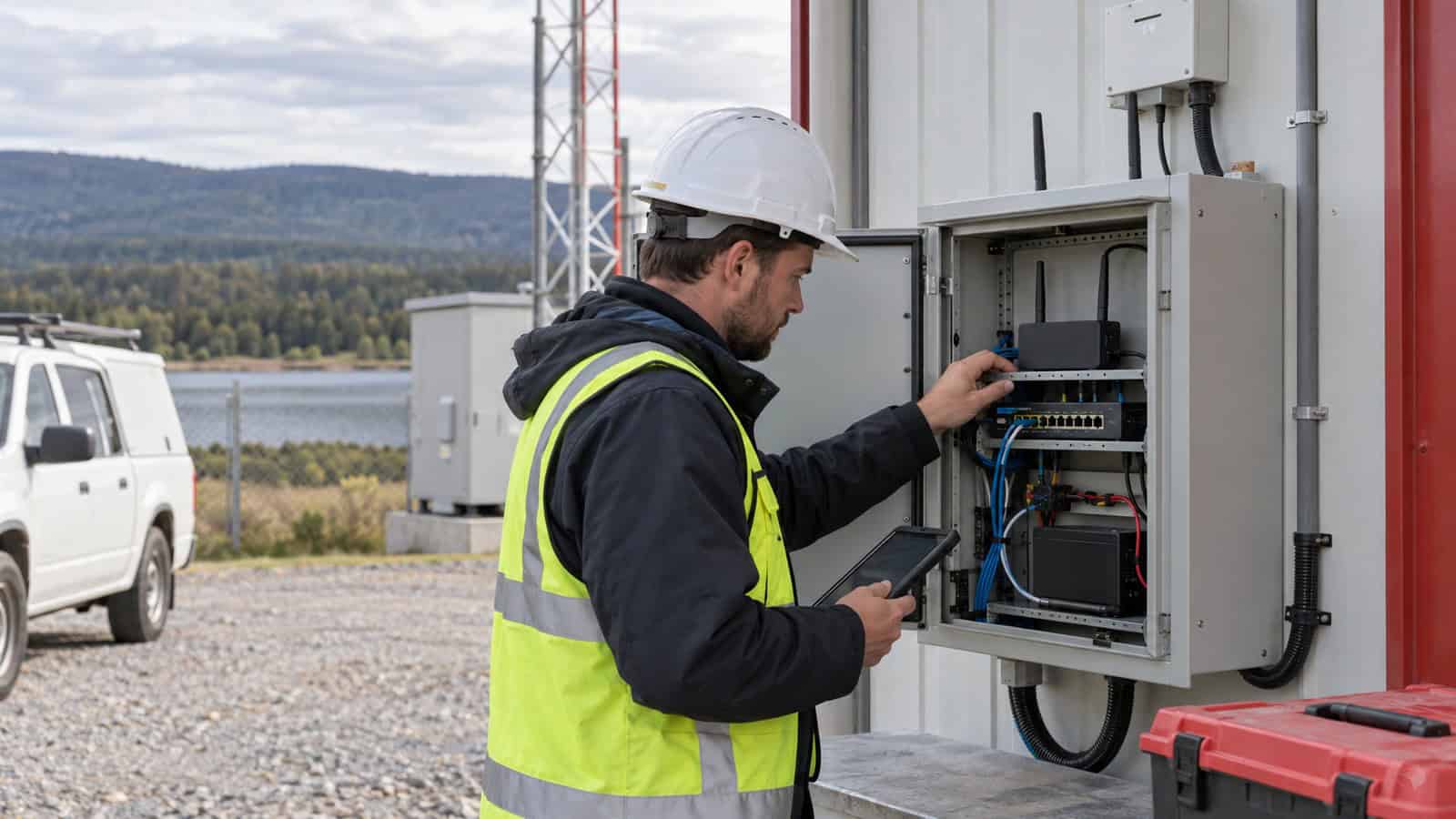
The Robustel R5010 Industrial 5G Router is a strong starting point when a branch firewall or SD-WAN appliance already owns security and routing policy and needs a separate cellular path. Choosing a 5G backup router, however, is not just a modem decision. The recovery sequence spans failure detection, network attachment, addressing, tunnels and the application itself.
A good selection process starts with the outage the organization is trying to survive. Fixed-line failure, operator congestion, damaged premises power and firewall failure are different events. Cellular backup addresses some of them and shares others.
Define the Failure Domain Before Choosing Hardware
Write the primary service and every shared dependency on one page. If the 5G router and primary WAN equipment use the same unprotected socket, a local power failure removes both paths. If two SIMs use services that depend on the same radio infrastructure, the subscription diversity may not provide the expected independence. If the firewall remains a single point of failure, a second WAN does not duplicate the branch edge.
| Failure | Can a cellular backup path help? | What remains shared? | Required evidence |
|---|---|---|---|
| Fixed-line circuit loss | Usually, if cellular is available | LAN, firewall, power | Forced circuit-loss test |
| One mobile subscription unavailable | A second SIM/operator may help | Router, antennas, local RF | SIM-switch test at the site |
| Router hardware failure | No | — | Separate hardware architecture if required |
| Premises power loss | Only with backed-up power | Power design and runtime | Load and autonomy test |
| VPN endpoint failure | Not by itself | Central security service | Tunnel and endpoint recovery plan |
| Application session failure | Connectivity may return first | Application retry logic | Transaction-level timing |
This matrix prevents “dual WAN” or “dual SIM” from being mistaken for complete resilience.
Decide Who Owns the Failover Policy
There are two common branch patterns. In the first, an existing firewall or SD-WAN appliance chooses between fixed and cellular WAN. The 5G router supplies an Ethernet handoff and leaves security policy with the existing edge. This keeps operational ownership clear and makes the R5010 a proportionate choice.
In the second, the cellular router itself terminates the fixed or Wi-Fi WAN, chooses the active path, provides VPN functions and connects local devices. A model such as the R5020 may fit better because it offers four Gigabit Ethernet ports, separate RS-232 and RS-485 connections and a broader local role.
Neither pattern is universally superior. The risk is allowing both devices to make overlapping routing or tunnel decisions without a documented owner. Troubleshooting then becomes a sequence of competing health checks, NAT changes and failback timers.
Measure Recovery at the Business Application
Router dashboards report network state, but users experience application state. After the primary circuit fails, the branch edge must detect the fault, move traffic, establish cellular service if it is not already active, rebuild required tunnels and let applications reconnect. IP addresses may change. Persistent TCP sessions may need to time out or be restarted.
Record four timestamps during a pilot: fault introduced, backup path active, VPN/application service reachable and business transaction successful. Repeat the same measurement when the preferred WAN returns. Uncontrolled failback can create a second outage immediately after service has stabilized.
Robustel’s Jones Technology retail resilience case study documents R5010 routers used with SD-WAN in a live multi-site quick-service restaurant rollout. External placement and site-specific SIM selection were part of the design, which is valuable deployment evidence: branch resilience depended on RF and system integration as well as the router. Its outcomes should not be converted into a universal failover time.
Another Robustel’s R5020 high-speed branch routing Application Example illustrates the router-owned alternative, with cellular and Ethernet WAN, segmentation and centralized operations combined at the site edge. It is a reference design rather than a customer result.
Size the Router for the Backup Workload
Backup traffic is rarely identical to normal traffic. Decide whether guest Wi-Fi, software downloads, video, backups or non-critical devices should continue during the incident. A smaller protected traffic set can reduce data use and make degraded service more predictable.
Do not specify throughput from a radio headline. Use a site survey and representative traffic at busy times. Where the branch requires a separate policy appliance, the R5010’s 2.5 GbE LAN can provide a high-speed handoff, but actual cellular performance remains dependent on network, spectrum, signal and operator conditions.
Robustel Industrial 5G Router Backup Architecture Fit
| Site requirement | Robustel starting point | Architecture note |
|---|---|---|
| Existing firewall/SD-WAN owns policy | Robustel R5010 | Focused cellular Ethernet handoff |
| Router owns WAN selection and several local links | Robustel R5020 | Four GbE and broader local interfaces |
| Compact branch with two Ethernet links | Robustel R5020-Lite | Smaller interface footprint |
| Backup router must power downstream Ethernet devices | Robustel R2120-5G | Four PoE-PSE ports; size supply budget |
| Backup plus local Wi-Fi 6 | Robustel R5030 | Validate client density and radio plan |
Power, Antennas and Mounting Decide Whether Backup Is Available
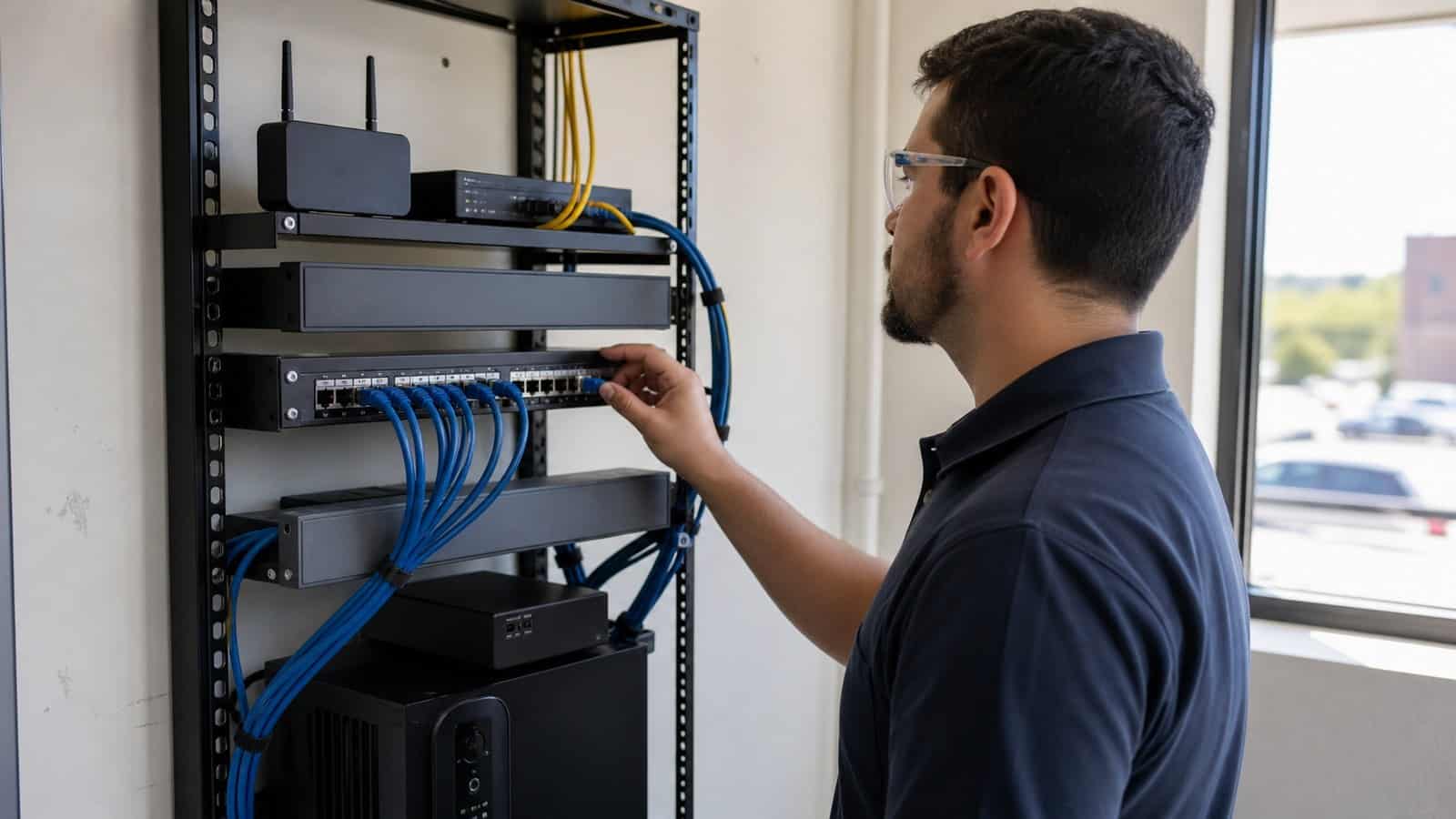
Place the backup equipment where the cellular signal is usable, not automatically beside the primary router. A steel plant room may be convenient for cabling and poor for RF. Moving the router or antennas can improve the radio path, but cable loss, enclosure temperature, surge protection and maintenance access must be reviewed together.
Power the backup architecture from the failure domain it is expected to survive. If outage coverage requires UPS operation, measure actual load and runtime. A PoE-PD option can simplify placement for some R5010 variants, while USB-C offers another documented power arrangement; the exact production configuration must be recorded.
Make Remote Operations Part of Acceptance
Robustel RCMS provides centralized visibility and supported configuration or update workflows across Robustel fleets. For backup routers, this helps teams see signal, connection and device state before dispatching a technician. It cannot reach equipment that has lost both power and communications.
Define alarm ownership before rollout. A backup path that activates silently can remain in use until data charges rise or a second fault occurs. Operations need to know when failover started, whether the primary path returned and whether failback completed.
Robustel’s R5020 5G IoT Router Quick Start Guide video is useful for orienting a bench setup. The acceptance plan must go further by forcing failures and verifying the real branch application.
Commissioning Checklist
- Confirm regional model, operators, bands and SIM activation.
- Survey the final antenna location under representative conditions.
- Connect production power and any UPS or PoE arrangement.
- Apply the approved routing, firewall and VPN ownership model.
- Restrict or prioritize traffic for degraded operation where required.
- Force primary-circuit loss and record application recovery.
- Test cellular or SIM loss where practicable.
- Restore the preferred WAN and observe stable failback.
- Confirm alerts, logs and remote-access permissions.
- Repeat after configuration or firmware changes that affect WAN behaviour.
FAQs
Q1. What is 5G backup internet?
It is a mobile WAN path kept available when the preferred fixed connection cannot carry traffic. In a branch design, the cellular router may make the failover decision itself or hand connectivity to an existing firewall or SD-WAN appliance.
Q2. Which 5G router is the best?
For backup service, the best fit is the model that matches the handoff architecture, regional bands, antennas, security policy and required recovery behaviour. Peak speed matters less if the branch cannot restore its VPN and business applications cleanly after a WAN change.
Q3. What is a backup router?
A backup router provides an alternative path when the primary WAN or primary routing equipment is unavailable. The term can describe several architectures, so define whether the project needs a second link, a second router, or both before specifying hardware.
Q4. Can I take my 5G router anywhere?
Not without checking the destination. Mobile bands, operator approval, SIM terms, antennas, power, environmental conditions and local certification can all vary, so a router that works at one branch is not automatically ready for another region or installation.
Q5. When is the Robustel R5010 Industrial 5G Router a good fit?
It suits branches where an existing firewall or SD-WAN device owns policy and needs a dedicated high-speed cellular Ethernet handoff. Commission it with the intended SIM, antenna system, VPN and application, and measure the complete outage-to-recovery sequence rather than only the modem reconnection time.
Conclusion
The Robustel R5010 Industrial 5G Router is well matched to branches where cellular backup should remain separate from an established firewall or SD-WAN policy layer. Other Robustel models fit when the router must own more local connectivity.
Select the failure domain first, then validate recovery at transaction level. That turns 5G backup from a second cable on a diagram into a service the operations team can actually support.
Explore more articles about Robustel’s 5G routers in industrial IoT:
About the Author
Robert Liao | Technical Support Engineer
Robert is an IoT Technical Support Engineer at Robustel, specializing in industrial networking and edge connectivity. A certified Networking Engineer, Robert focuses on the deployment and troubleshooting of large-scale IIoT infrastructures. His work centers on architecting reliable, scalable system performance for complex industrial applications, bridging the gap between field hardware and cloud-side data management.