
Remote Monitoring for Distributed Renewable Energy Assets: Where Industrial Edge Gateways Fit
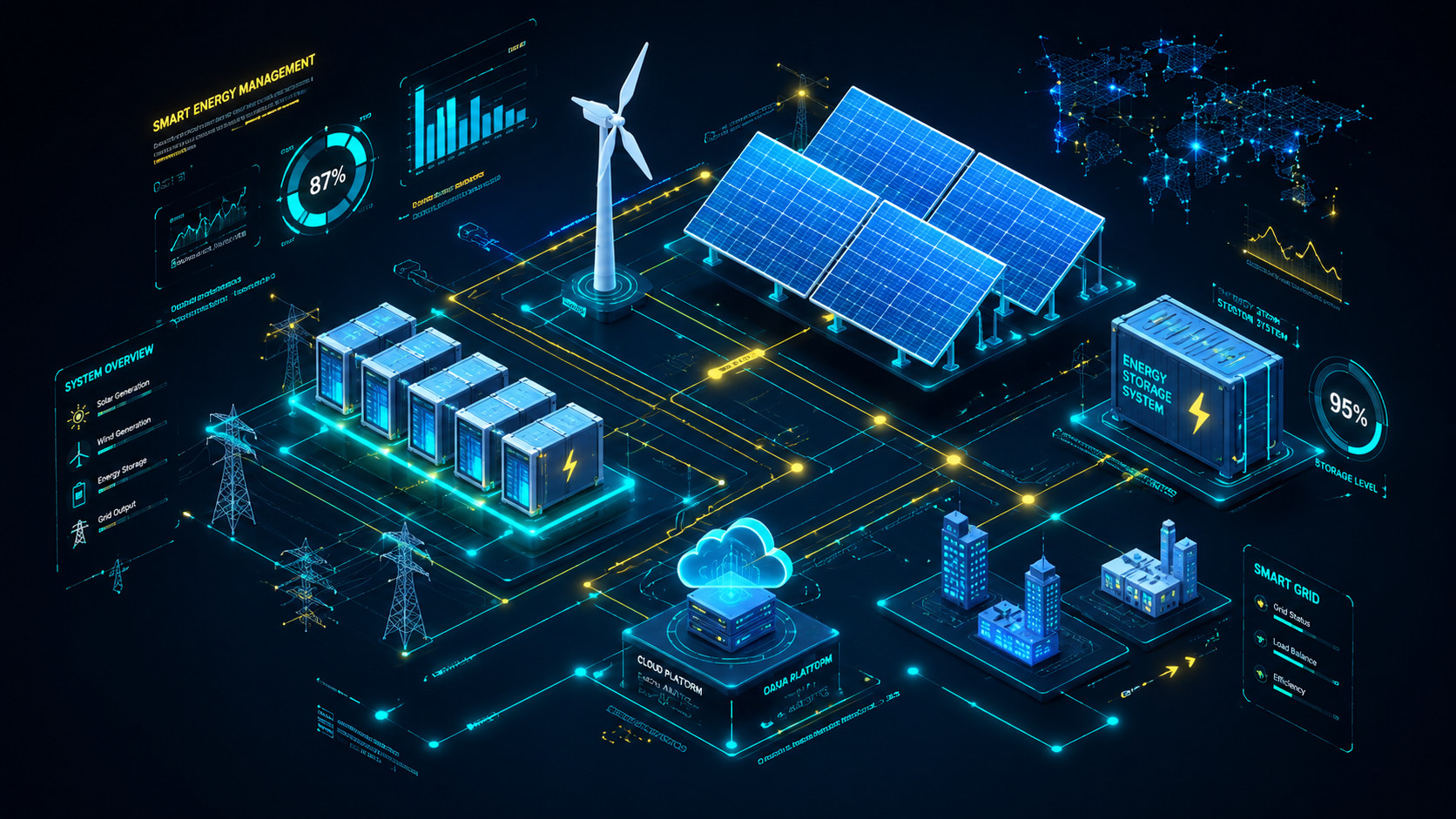
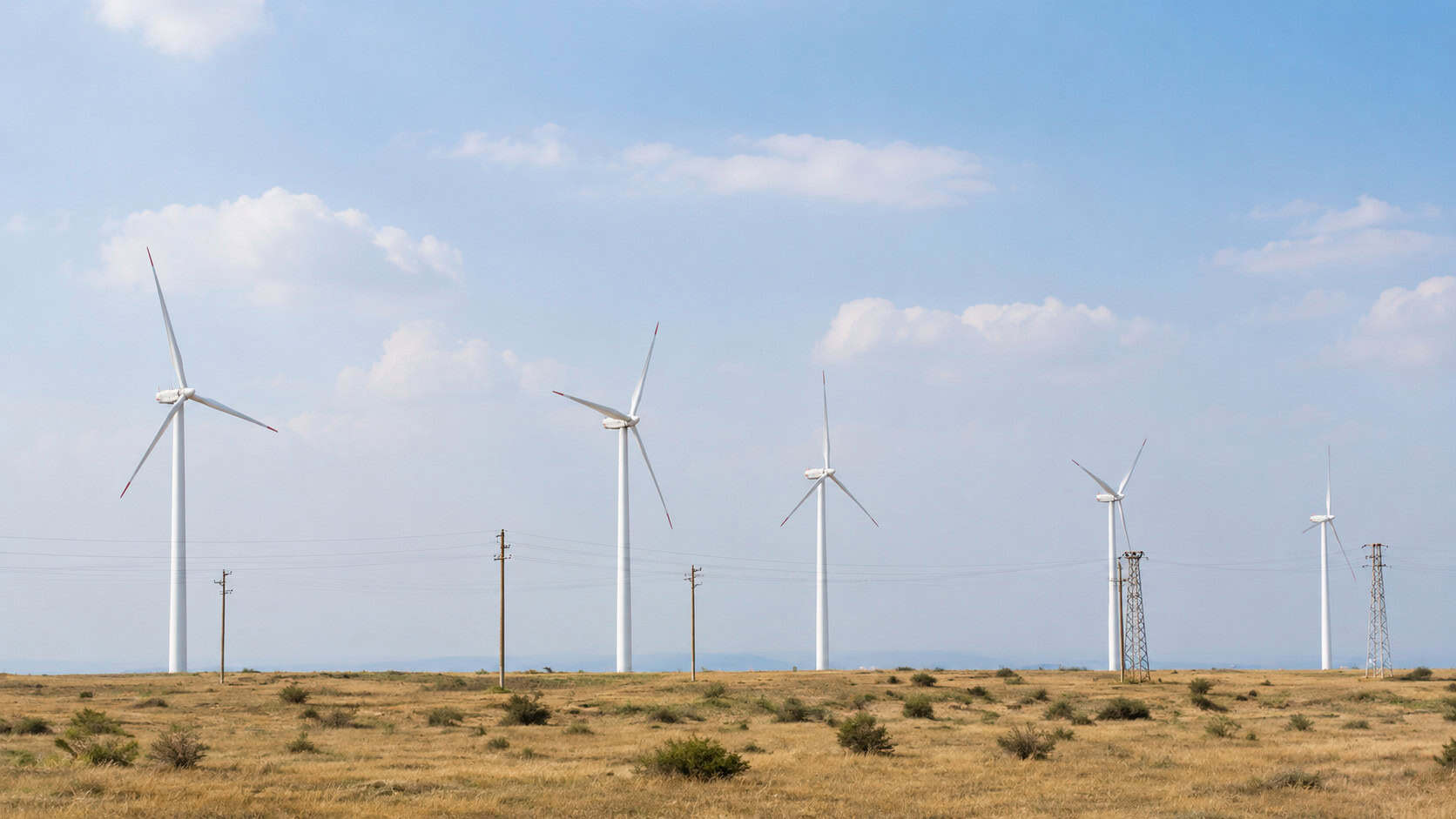
Renewable energy assets are often spread across many locations instead of being concentrated inside one controlled facility. A solar PV site, a remote inverter station, a hybrid solar-storage installation, or a distributed energy resource may operate far from the central operations team.
For asset owners and system integrators, this creates a practical monitoring challenge. Teams need to know whether each site is online, whether generation is normal, whether alarms have occurred, whether meters are reporting correctly, and whether field equipment needs attention. In many cases, sending a technician to site is expensive, slow, or unnecessary if the issue can be understood remotely.
This is where remote monitoring becomes important. In this context, a renewable energy remote monitoring gateway is not just a network connection point. It becomes part of a site-level architecture that helps collect selected data from field equipment, prepare useful information, maintain connectivity, secure access paths, and forward data to SCADA, EMS, cloud, or asset management platforms.
An industrial edge gateway fits into this architecture as the field-side layer between renewable energy site equipment and upper-layer monitoring systems. A product such as Robustel EG5120 can be used as a practical reference for this gateway layer, especially where distributed renewable energy assets need cellular connectivity, local data handling, and remote access support. It does not replace inverters, meters, BMS, PLCs, SCADA, or EMS platforms. Instead, it helps connect distributed assets to the systems that need operational visibility.
The Monitoring Challenge Across Distributed Renewable Energy Sites
Distributed renewable energy sites create a different monitoring problem from factory-floor automation projects. In a factory, machines often sit inside one plant network. Renewable energy assets may be installed across rooftops, fields, substations, remote cabinets, rural areas, or unmanned sites.
The first challenge is physical distribution. A team may need to monitor tens, hundreds, or thousands of small and medium-sized sites. Each individual site may not be highly complex, but the overall operation becomes harder to manage when assets are spread across regions.
The second challenge is device diversity. A solar PV site may include inverters, energy meters, weather sensors, protection devices, site controllers, communication equipment, and cabinet sensors. A hybrid renewable site may also include battery storage, BMS, PCS, or EMS equipment. Each system may expose different data through different interfaces or protocols.
The third challenge is network uncertainty. Some sites may have wired broadband. Others may rely on cellular connectivity. Remote sites may face weak signal, unstable power, antenna placement issues, data plan limitations, or carrier-specific configuration requirements.
The fourth challenge is operational context. Knowing that a gateway is online is useful, but it does not tell the full story. Teams usually need site-level visibility: generation status, inverter alarms, meter data, environmental conditions, communication health, and maintenance indicators.
For this reason, renewable energy remote monitoring should be treated as a site-level data collection and operations visibility problem, not only a connectivity problem.
Site Data Sources: From Inverters and Meters to Weather Sensors
The data required for renewable energy monitoring depends on the asset type, site design, monitoring platform, and operational goals. A small solar PV site may only require inverter status, meter data, and basic connectivity health. A larger or hybrid site may require additional data from storage systems, weather stations, protection devices, or site controllers.
The table below shows common data sources in renewable energy sites and how they may support remote monitoring.
| Site Data Source | Typical Data | Monitoring Value |
| Solar inverter | Power output, voltage, current, operating mode, fault status | PV performance monitoring and inverter fault review |
| Energy meter | Generation, consumption, export/import power, accumulated energy | Energy accounting and site-level visibility |
| Weather station | Irradiance, ambient temperature, module temperature, wind speed | PV performance analysis and abnormal output review |
| PLC or site controller | Site status, equipment coordination, interlock state, operating sequence | Local coordination context and site monitoring |
| Protection device | Breaker status, trip status, electrical fault event | Fault review and site safety event visibility |
| Battery system or BMS, where used | SOC, SOH, charge/discharge state, temperature, alarms | Storage monitoring and maintenance review |
| Environmental sensor | Cabinet temperature, humidity, door status, water leakage | Equipment room or cabinet condition monitoring |
| Network and gateway equipment | Signal strength, VPN status, link status, data usage | Connectivity health and remote operations monitoring |
Not every site will include all of these systems. Available data depends on the device interface, protocol support, site controller design, metering architecture, installed sensors, and access permissions.
This is why monitoring projects should start with data requirements rather than product assumptions. The first step is to define which site data is needed for operations, where that data is available, and how it should move toward the monitoring system.
A Layered Architecture for Renewable Energy Site Monitoring
A practical renewable energy monitoring architecture is usually layered. Each layer has a different role, and those roles should not be mixed.
Field Equipment Layer
The field equipment layer includes the devices that generate or measure site data. In renewable energy sites, this may include solar inverters, energy meters, weather sensors, battery systems, BMS, PCS, PLCs, site controllers, protection devices, environmental sensors, and network equipment.
These devices remain responsible for their own control, measurement, protection, or operating functions. For example, an inverter manages power conversion. A BMS manages battery-related safety and status functions. A protection device responds to electrical fault conditions. A site controller or PLC may coordinate local equipment behavior.
Remote monitoring should not be designed in a way that shifts these control responsibilities to the cloud.
Site-Level Gateway Layer
The site-level gateway layer helps collect selected data from field-side systems and forward useful information to upper-layer platforms. Depending on the site design, a gateway may connect to devices through Ethernet, serial ports, digital inputs, or supported protocol workflows.
In many renewable energy deployments, the gateway also provides the communication path from the remote site to the monitoring platform. This may use wired Ethernet, cellular connectivity, or a combination of primary and backup links.
The gateway may also support local data preparation. For example, it may collect selected values, organize them into a usable data structure, filter unnecessary data, buffer data during network interruptions, or forward data through a secure communication path.
Monitoring, SCADA, EMS, or Cloud Layer
The upper layer is where site data becomes operationally useful. This may include a SCADA system, EMS, cloud monitoring platform, asset management platform, or internal operations dashboard.
These platforms may use data for:
- Site status dashboards
- Alarm history review
- Generation trend monitoring
- Energy production reporting
- Fault response
- Maintenance planning
- Multi-site asset visibility
- Communication health monitoring
The industrial gateway supports the data path into these systems. It should not be described as replacing SCADA, EMS, inverter controllers, BMS, PLCs, or protection systems.
The Site-Level Gateway Layer in Renewable Energy Monitoring
Industrial edge gateways fit into renewable energy monitoring as a site-level data collection, connectivity, security, and remote management layer.
They are especially useful when renewable assets are distributed, unmanned, or located where direct wired connectivity is not always available. A gateway can help bring selected field-side data into a controlled path toward monitoring platforms.
The role of the gateway can be understood in several ways.
| Gateway Role | What It Means in Renewable Energy Sites |
| Data aggregation | Collect selected data from inverters, meters, sensors, PLC-side systems, BMS, or site controllers where supported |
| Interface adaptation | Connect to site equipment through available Ethernet, serial, or I/O interfaces depending on project design |
| Local data preparation | Organize, filter, format, or buffer selected values before forwarding |
| Connectivity backhaul | Use Ethernet, cellular, or backup connectivity to support remote data transmission |
| Security boundary | Support controlled remote access through VPN, firewall rules, and access control |
| Remote management | Help operations teams monitor gateway status, connectivity, and configuration across distributed sites |
| Site-level visibility | Provide the field-side data path needed for SCADA, EMS, cloud, or asset management platforms |
The most important word here is “selected.” A renewable energy remote monitoring gateway should not be expected to collect every possible value from every device. Project teams should define which data is useful, how frequently it is needed, which system will consume it, and whether the network can support the data flow.
For many sites, the most useful data includes operating status, alarms, meter readings, generation values, environmental conditions, and connectivity health. High-frequency or device-specific data may need to remain local, be filtered, or be collected only when it supports a clear monitoring or maintenance purpose.
Tips: For readers who want a broader view of where edge computing is used beyond a single renewable energy monitoring project, this short video provides additional context about common edge computing application scenarios, including remote energy sites, where local data handling and reliable site connectivity can support more practical remote operations.
Watch Video: Edge Computing Application Scenarios
Practical Monitoring Scenarios for Distributed Energy Assets
Remote monitoring becomes valuable when collected data supports practical operational decisions. For distributed renewable energy assets, common use cases often include performance visibility, fault response, maintenance planning, and communication health monitoring.
| Monitoring Scenario | Data Needed | Practical Value |
| Solar PV site monitoring | Inverter output, inverter status, meter data, irradiance | Track generation and identify abnormal performance |
| Distributed energy asset monitoring | Site status, device availability, meter readings, alarm status | Maintain visibility across scattered renewable assets |
| Hybrid solar-storage monitoring | PV, battery, meter, PCS, and site controller data where available | Understand site-level energy flow and equipment status |
| Remote fault response | Alarm codes, trip status, communication status, device status | Help teams decide whether a site visit is needed |
| Preventive maintenance planning | Fault history, runtime, cabinet temperature, communication health | Prioritize maintenance work across sites |
| Environmental monitoring | Cabinet temperature, humidity, door status, leakage detection | Detect site or cabinet conditions that may affect equipment reliability |
| Connectivity health monitoring | Signal strength, link status, VPN status, data usage | Identify communication issues before data visibility is lost |
These scenarios show why remote monitoring should be designed around site-level visibility. The goal is not simply to move raw data to the cloud. The goal is to make useful information available to operations, maintenance, and asset management teams.
For example, a low-generation event at a solar PV site may be related to weather, inverter status, meter readings, a communication fault, or an equipment alarm. Without context, the monitoring platform may only show that output is lower than expected. With selected site data, the operations team can review possible causes more efficiently.
Deployment Factors That Decide Monitoring Reliability
Distributed renewable energy projects usually involve practical deployment constraints. A gateway may be technically capable, but the monitoring design still depends on site conditions, data requirements, network availability, and security rules.
Connectivity and Site Location
Remote renewable energy sites may not have reliable wired broadband. Cellular connectivity is often used as a primary or backup communication path, especially for smaller sites, distributed assets, temporary installations, or remote cabinets.
However, cellular connectivity should not be treated as automatic. Signal strength, antenna placement, carrier coverage, SIM card, APN settings, data plan, site cabinet layout, and local interference can all affect performance.
For remote monitoring projects, teams should plan the communication path early. They should also define how the gateway can be accessed if the primary remote connection becomes unavailable.
Data Frequency and Bandwidth
Not all renewable energy data needs to be collected or uploaded at the same frequency.
Alarm events may need to be sent quickly. Meter data may be collected at fixed intervals. Environmental data may be less frequent. Connectivity health may be reported periodically. Some high-frequency values may be useful locally but unnecessary for routine cloud monitoring.
A practical design should define:
- Which values need near-real-time visibility
- Which values can be sent periodically
- Which data should be buffered during network interruptions
- Which data can remain local
- Which data is only needed during troubleshooting
This helps avoid unnecessary bandwidth use and reduces the burden on remote communication links.
Security and Remote Access
Renewable energy monitoring connects field-side OT equipment with remote systems. This should be handled carefully.
A secure design may include VPN, firewall rules, access control, network segmentation, controlled port mapping, and clear user permissions. Remote access should be planned rather than opened broadly.
Inverters, BMS equipment, PLCs, protection devices, and site controllers should not be exposed directly to public networks. The gateway can help provide a controlled communication path, but security still depends on the full project design, configuration, and maintenance practices.
Maintenance at Scale
A single remote site may be manageable with manual configuration. A distributed renewable energy portfolio is different.
When many gateways are deployed across sites, teams need a way to monitor communication status, firmware versions, configuration changes, signal strength, data usage, and device health. They also need procedures for credential management, troubleshooting, backup configuration, and application updates.
Remote monitoring projects should therefore include long-term gateway management, not only initial installation.
For readers who want to explore this principle beyond renewable energy sites, our related article on managing operational data closer to the edge explains why different data types should not always be transmitted upstream in the same way, especially in remote or bandwidth-constrained industrial environments.
EG5120 as a Renewable Energy Remote Monitoring Gateway
For distributed renewable energy monitoring, an industrial edge gateway such as Robustel EG5120 can serve as a site-level platform for connecting selected field devices, preparing useful data, and forwarding information to SCADA, EMS, cloud, or asset management systems.
The EG5120 is best understood as an industrial edge computing gateway for site data collection, connectivity, and remote management. It should not be described as a universal renewable energy controller, a replacement for SCADA or EMS, or a device that automatically reads every inverter, BMS, or meter.
Its role depends on the field equipment, available interfaces, supported protocols, network design, and application configuration.
| Renewable Energy Monitoring Requirement | Relevant EG5120 Capability | How It Supports the Scenario |
| Connecting field-side equipment | Ethernet and RS-232/RS-485 interfaces | Supports connection to selected site devices, PLC-side equipment, meters, or controllers where interfaces and protocols match |
| Collecting simple event signals | DI/DO interfaces | Can support selected status or event workflows, depending on wiring and project design |
| Running edge-side applications | RobustOS Pro, Debian-based environment, Docker support, SDK support | Supports configured applications for data handling, filtering, or protocol bridging |
| Supporting remote connectivity | 5G/4G/3G/2G cellular support, dual SIM, and Ethernet connectivity | Supports upstream communication where coverage, SIM, APN, antenna, and network design are correct |
| Securing communication paths | VPN options, firewall functions, access control, and port mapping | Helps create controlled communication paths between remote sites and upper-layer systems |
| Managing distributed deployments | RCMS, Web, CLI, and SMS remote management | Supports configuration, monitoring, and maintenance of deployed gateways |
| Industrial site deployment | Metal housing, wide DC power input, DIN rail or wall mounting, and industrial operating temperature range | Supports installation in renewable energy cabinets, remote site enclosures, or industrial environments |
For distributed solar PV sites, remote energy cabinets, and other renewable energy assets, EG5120 can provide a practical gateway layer when the project requires a combination of industrial interfaces, cellular backhaul, edge-side processing, secure remote access, and centralized gateway management.
For larger or more complex renewable energy sites with more networked systems or higher interface requirements, project teams may also evaluate a higher-capacity edge gateway model. The right choice depends on the number of devices, interface needs, edge workload, network architecture, and long-term maintenance plan.
Closing Perspective
Remote monitoring for distributed renewable energy assets is not only about connecting devices to a cloud platform. It is about building a reliable site-level data path between field equipment and the systems that need operational visibility.
Industrial edge gateways fit into this architecture as the field-side layer for collecting selected data, supporting remote connectivity, securing communication paths, and managing distributed deployments. They help renewable energy operators and system integrators connect solar PV sites, distributed energy resources, hybrid energy sites, and remote energy assets to monitoring systems without replacing the equipment that controls or protects the site.
The most practical approach is to start with the asset, not the gateway. Identify which site data matters, where it is available, how often it needs to be collected, and which system should use it. From there, a gateway such as Robustel EG5120 can be selected and configured to support the renewable energy monitoring architecture in a controlled and scalable way.
FAQs
Q1. How can renewable energy assets be monitored remotely?
Renewable energy assets can be monitored remotely by collecting selected data from field equipment such as inverters, meters, weather sensors, BMS, PLCs, site controllers, or protection devices, then forwarding useful information to a SCADA, EMS, cloud, or asset management platform. An industrial edge gateway can support this process by connecting site-side equipment, maintaining communication through Ethernet or cellular networks, and providing a controlled data path for remote monitoring.
Q2. What data should be collected from a solar PV site?
A solar PV site may need inverter output, operating mode, fault status, voltage, current, meter readings, irradiance, temperature, cabinet conditions, and communication health data. The exact data depends on the monitoring goal. Performance teams may focus on generation and weather-related data, while maintenance teams may care more about alarms, device status, communication loss, and environmental conditions that may affect site reliability.
Q3. Where does an industrial edge gateway fit in renewable energy monitoring?
An industrial edge gateway usually fits at the site level, between field equipment and upper-layer monitoring systems. It can collect selected data from inverters, meters, sensors, PLC-side systems, or BMS equipment where supported, then prepare and forward that data to SCADA, EMS, cloud, or asset platforms. For example, Robustel EG5120 can support the field-side gateway layer in distributed renewable energy monitoring projects where site equipment needs to be connected, data needs to be prepared locally, and remote systems need operational visibility. The gateway does not replace inverters, BMS, PLCs, SCADA, or EMS systems. Its role is to support data collection, connectivity, security, and remote management.
Q4. Can renewable energy sites be monitored without relying only on an OEM cloud platform?
In some projects, yes. If the inverter, meter, battery system, or site controller exposes usable data through supported interfaces or protocols, a local gateway can help collect selected data and forward it to a chosen monitoring platform. This may be useful when operators need cross-site visibility, local data access, or integration with third-party systems. However, the feasibility depends on device access, protocol support, permissions, data ownership, and the monitoring platform design.
Q5. What should teams consider when using cellular connectivity for remote energy sites?
Teams should consider signal strength, antenna placement, carrier coverage, SIM card type, APN settings, data plan, cabinet layout, power stability, and backup access. Cellular connectivity can be valuable for remote or distributed renewable energy sites, but it should not be treated as automatic. Monitoring reliability depends on both the gateway and the site conditions. Security also matters, so remote access should be controlled through proper VPN, firewall, and access management practices.
About the Author
Robert Liao | Technical Support Engineer
Robert is an IoT Technical Support Engineer at Robustel, specializing in industrial networking and edge connectivity. A certified Networking Engineer, Robert focuses on the deployment and troubleshooting of large-scale IIoT infrastructures. His work centers on architecting reliable, scalable system performance for complex industrial applications, bridging the gap between field hardware and cloud-side data management.