
IoT Gateway vs Edge Gateway: When Is Edge Computing Worth the Upgrade?
The Robustel EG5101 edge computing gateway demonstrates that moving from an IoT gateway to edge computing does not have to mean adopting the highest available compute platform. The upgrade becomes worthwhile when the workload needs local processing, application hosting, buffering or greater independence from the cloud; simple connectivity and protocol forwarding can still be better served by a conventional gateway.
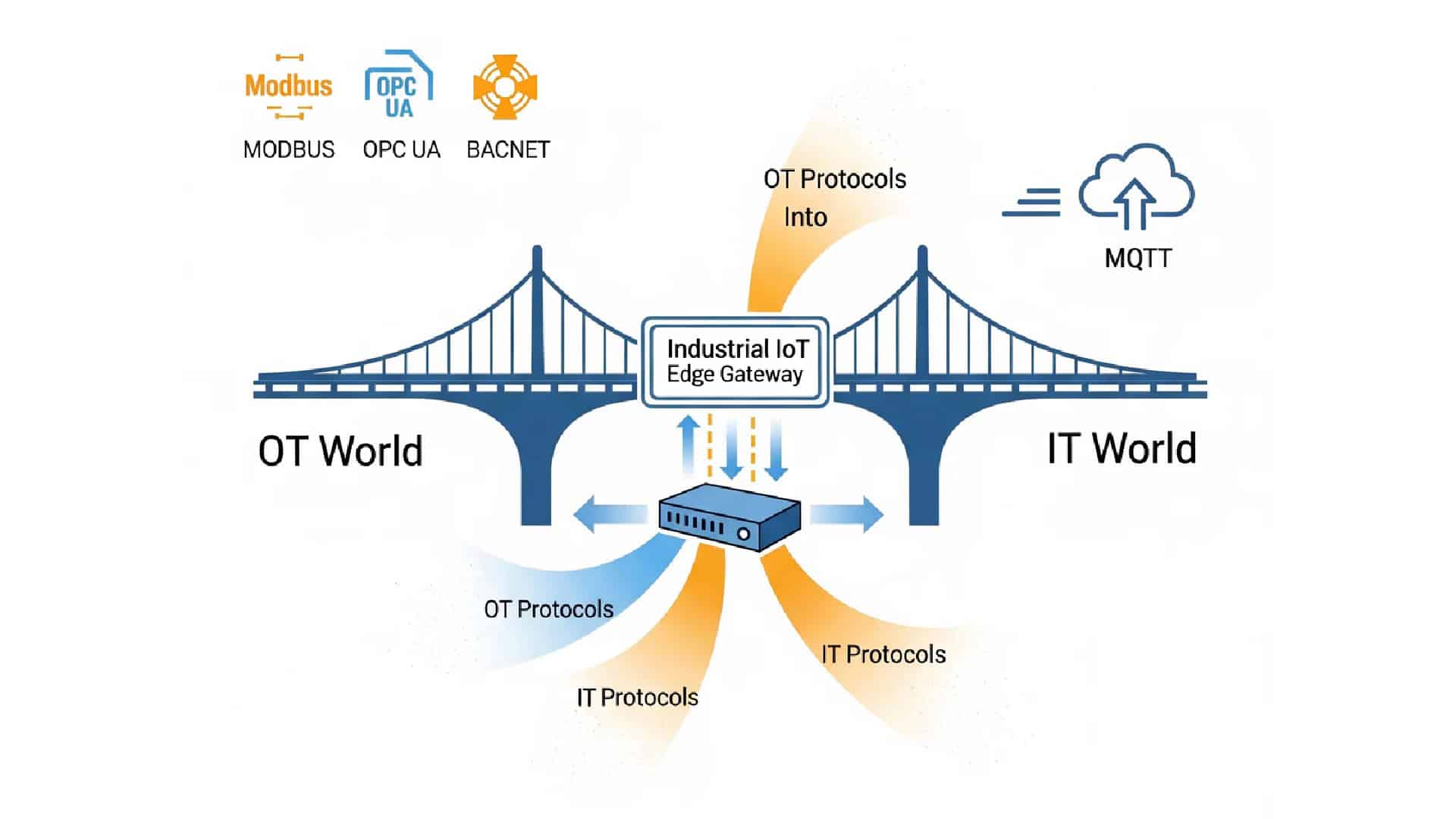
The distinction matters because “edge” is often treated as a product tier rather than an architectural decision. A gateway that forwards a small amount of sensor data to a reliable cloud service may already solve the project well. Adding local applications creates more capability, but it also creates software, resource and lifecycle responsibilities that need a clear operational reason.
The useful question is therefore not whether an edge gateway is more advanced. It is whether the workload has crossed a threshold where local compute creates enough value to justify the added complexity.
A Conventional IoT Gateway Is Still Enough for Many Jobs
Many industrial connectivity requirements remain straightforward.
A serial meter needs to reach a remote platform. A controller exposes data that must be converted into an IP-based protocol. A small site sends periodic telemetry to the cloud and can tolerate temporary interruptions.
In these cases, connectivity, protocol conversion and secure WAN access may be the primary requirements.
The Robustel Edge Computing Gateway portfolio adds a Debian-based local application environment when projects need more than this, but the presence of that capability does not make it necessary for every deployment.
Avoiding unnecessary edge compute can reduce application maintenance, resource planning and update responsibilities. The conventional IoT gateway remains the better choice when the cloud can perform the required processing and the local device only needs to move data reliably.
The First Upgrade Trigger Is Local Data Handling
The edge case begins to strengthen when forwarding raw data becomes inefficient or operationally inconvenient.
Suppose a site generates hundreds of repetitive readings but the upstream application only needs exceptions, summaries or normalized values. Processing those records locally can reduce WAN traffic and make upstream systems easier to integrate.
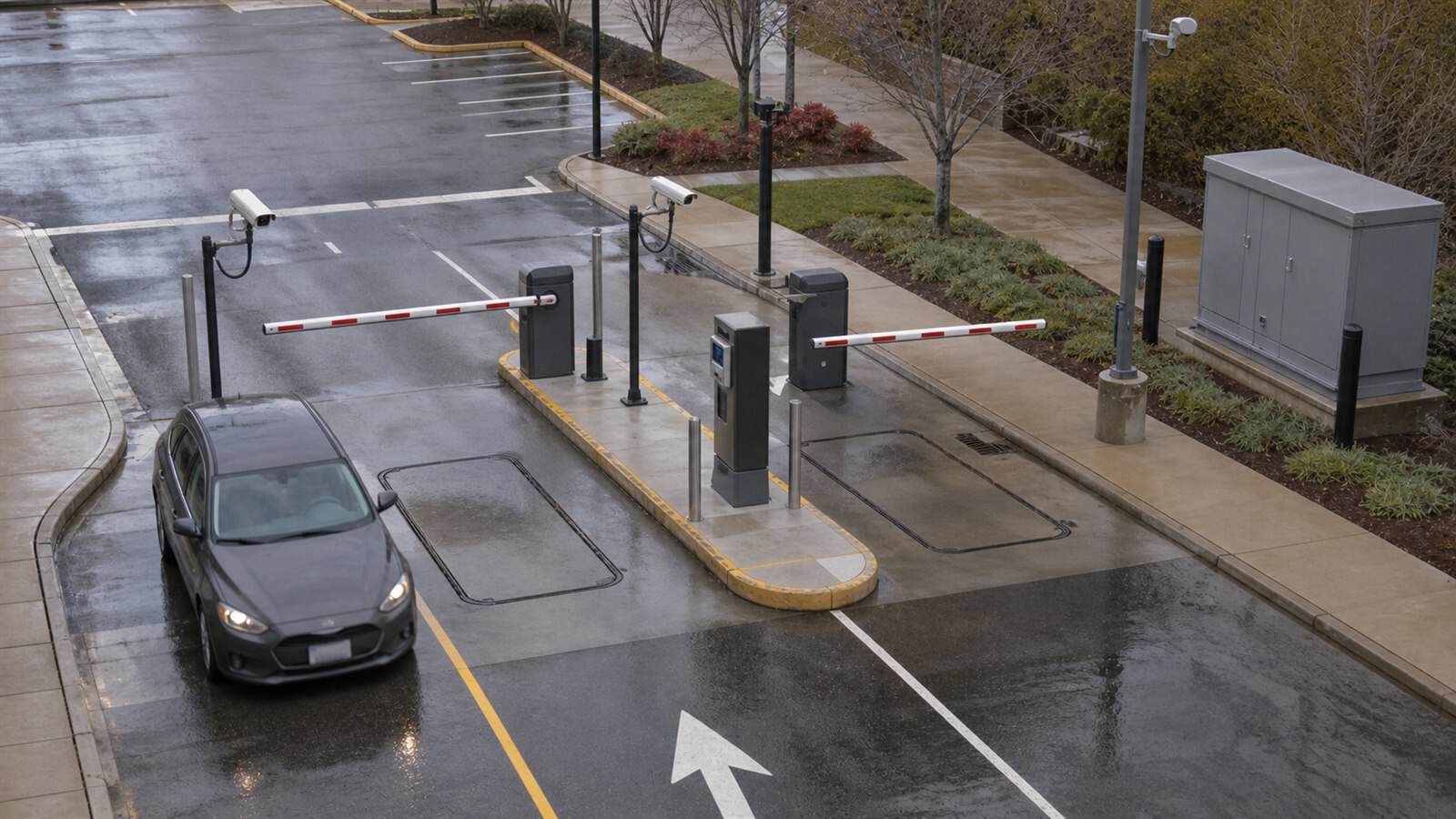
Robustel’s Smart Parking Application Example provides a clear example. The Robustel EG5120 edge computing is used for ANPR preprocessing so results can be filtered, timestamped and reduced before compact data is forwarded to the parking platform.
The significant change is not that the gateway has become faster. Its role has changed from transporting information to transforming information before transport. That is often the first meaningful upgrade threshold.
Application Hosting Changes the Gateway’s Role
A stronger threshold appears when the project needs its own software running beside the equipment.
A local protocol connector, rules engine, database or customer application requires more than fixed gateway functions. The team now needs an application environment, resource allocation, logs, persistence and a maintenance process.
The RobustOS Pro edge computing operating system provides Robustel EG gateways with a full Debian environment for containers and native Linux applications. It supports local data collection, protocol bridging, APIs, data reduction and event handling in addition to router-grade networking.
Robustel’s Connected CNC Machines Application Example shows how the gateway role can broaden around an existing industrial asset. The Robustel edge computing gateway connects into the CNC environment and creates a managed data and support path without requiring the machine itself to become a cloud-native device.
Once an application must live at the site, the operating system and software lifecycle become genuine purchasing criteria.
Latency and Cloud Dependency Create a Stronger Edge Case
Local processing becomes more valuable when every useful decision cannot wait for a cloud round trip.
That may be because the application needs a faster response, WAN quality is variable, data volumes are high or the site must continue performing useful logic while backhaul is temporarily unavailable.
The division of work between local infrastructure and cloud platforms is explored in Robustel’s Why Do We Need Edge Computing If We Have the Cloud video. The important architectural point is that edge and cloud are complementary: moving selected workloads closer to the process does not require the cloud platform to disappear.
For a Robustel edge deployment, the decision can therefore be made workload by workload. Immediate filtering, protocol logic or local response may remain on the gateway, while fleet analytics, long-term storage and enterprise applications remain upstream.
This is a more useful boundary than treating edge computing as a replacement for cloud computing.
Local AI Is a Higher Threshold, Not the Definition of Edge
AI inference can justify more substantial local compute, particularly where image or sensor data would otherwise be expensive or slow to send upstream.
It should not, however, become the definition of an edge gateway.
The Robustel portfolio includes higher-compute platforms such as EG5120 and EG5200 with NPU capability, but many valuable edge workloads consist of protocol conversion, buffering, local rules and modest application logic rather than AI.
This is an important selection boundary because teams sometimes jump directly from a connectivity gateway to an AI-capable platform when the actual requirement is only a small Linux application.
Edge computing should scale with the workload.
How the Robustel EG5101 Edge Computing Gateway Fits Lightweight Local Workloads
The Robustel EG5101 edge computing gateway is useful precisely because it represents a relatively lightweight step into local compute.
It combines LTE Cat-1, Ethernet, RS-232 and RS-485 with a 792 MHz Cortex-A7 platform, 1 GB RAM, 8 GB eMMC and RobustOS Pro with Docker support. Robustel positions it for applications such as protocol bridging, local buffering, preprocessing, smart metering and distributed monitoring.
This configuration can make sense when a conventional connectivity gateway no longer provides enough application flexibility, but an AI accelerator or high-bandwidth 5G platform would be unnecessary.
The upgrade path is therefore not: IoT gateway → maximum edge compute.
It is a gradual change in responsibility. Once the site needs local software, the buyer should select the smallest edge platform that can run that software with appropriate operational margin.
Use the Upgrade Threshold, Not the Product Category, to Decide
A practical comparison looks more like a threshold ladder than a specification battle:
| Requirement | Connectivity-focused IoT gateway may be enough | Edge capability becomes more valuable |
|---|---|---|
| Secure WAN connectivity | Usually | Not the reason to upgrade alone |
| Basic protocol conversion | Often | When custom logic becomes complex |
| Short buffering | Sometimes | When outages/data volumes increase |
| Data filtering | Limited or fixed | When local rules must be customized |
| Custom application | Depends on platform | Clear edge requirement |
| Local API/database | Less common | Strong edge case |
| Low-latency local action | Cloud-dependent architecture may struggle | Strong edge case |
| Local AI inference | Generally not required | Higher-compute edge platform |
The Robustel EG-series selection can then follow the threshold actually crossed by the workload.
If the project only needs connectivity, keep the architecture simple. If local software becomes operationally necessary, introduce edge computing. If the application later adds heavy analytics or vision, move to a higher-compute configuration only when that requirement is proven.
FAQs
Q1. What is the main difference between an IoT gateway and an edge gateway?
The boundary is not universally defined, but an edge gateway typically takes on more local processing and application responsibility. A connectivity-focused IoT gateway may primarily route, convert or forward data, while an edge gateway can host local software, process data and continue selected functions closer to the equipment.
Q2. When is the Robustel EG5101 edge computing gateway a good upgrade?
The Robustel EG5101 edge computing gateway fits projects that have moved beyond basic connectivity and need lightweight Linux applications, Docker-based protocol handling, buffering or local preprocessing. It is not intended as a substitute for higher-compute platforms when the workload requires substantial AI or video processing.
Q3. Does edge computing replace the cloud?
No. Edge and cloud commonly divide workloads. Time-sensitive processing, local filtering or short-term buffering may stay at the site, while large-scale analytics, long-term storage and enterprise applications remain in the cloud or data centre.
Q4. Is lower latency enough reason to buy an edge gateway?
Only if latency materially affects the application. A monitoring system that reports every few minutes may gain little from local decision-making, while a process requiring fast response can justify moving selected logic closer to the equipment.
Q5. Does every custom application require a high-performance edge gateway?
No. Application requirements vary widely. A lightweight protocol connector can run on much more modest hardware than computer vision or complex analytics. Resource sizing should follow the actual software rather than the presence of a custom application alone.
Conclusion
The decision between an IoT gateway and an edge gateway should be based on the workload threshold at which local compute begins to solve a real operational problem.
The Robustel EG5101 edge computing gateway demonstrates that this transition can begin with relatively lightweight applications such as protocol bridging, buffering and preprocessing. Higher-compute Robustel platforms become relevant only as the local workload grows.
Connectivity alone does not require edge computing. Local data transformation creates the first stronger case, application hosting raises the requirement further, and latency, autonomy or AI can justify progressively more compute.
The right upgrade point is where local processing creates measurable architectural value—not where a product category simply offers more features.
Related Reading on Edge Computing in Industrial IoT:
About the Author
Robert Liao | Technical Support Engineer
Robert is an IoT Technical Support Engineer at Robustel, specializing in industrial networking and edge connectivity. A certified Networking Engineer, Robert focuses on the deployment and troubleshooting of large-scale IIoT infrastructures. His work centers on architecting reliable, scalable system performance for complex industrial applications, bridging the gap between field hardware and cloud-side data management.