
Substation Gateway for RTU and Meter Data: Protocol, Security and Uplink Checklist
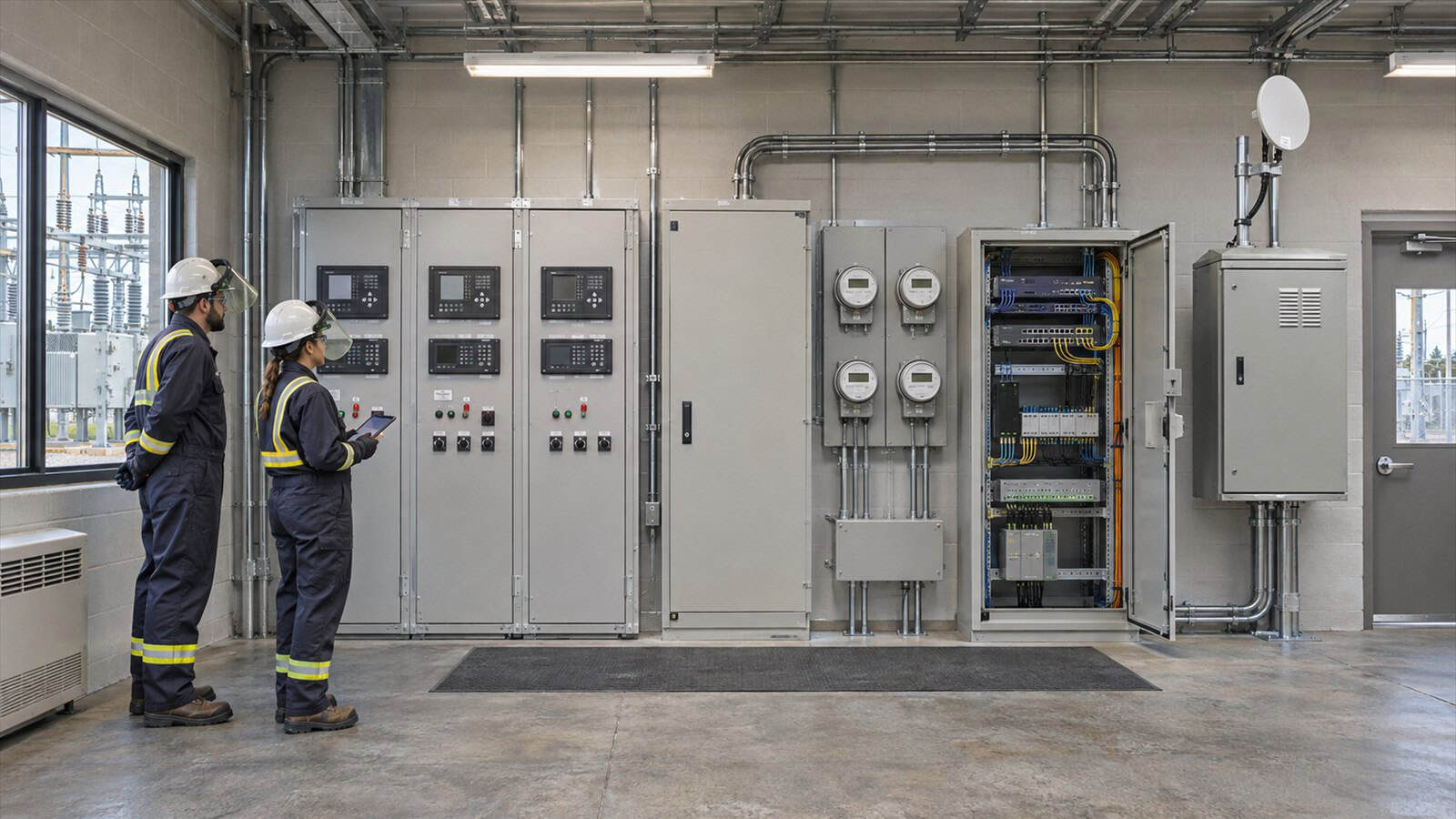
The Robustel EG3120e Edge Computing Gateway provides multiple RS-485 ports, serial and I/O interfaces, CAN and cellular connectivity for collecting RTU and meter data at the substation edge. In this environment, however, getting data online is only part of the job: teams also need to keep monitoring traffic separate from protection and control functions, confirm protocol and timestamp semantics, and define exactly what the gateway is allowed to read.
For utilities, integrators and equipment vendors, a substation gateway should therefore be evaluated across the full data path—from field interface and register meaning to security boundaries, uplink behaviour and failure recovery. This guide uses the Robustel EG3120e to show how read-oriented acquisition can be structured without turning a monitoring gateway into an undeclared control path, while Robustel E2C Factory can support a more managed collection and data-handling workflow where compatible.
Keep Protection, Control and Monitoring Separate
Classify every source and destination. Protection relays and control paths have timing and certification duties that a general edge gateway must not inherit through an ambiguous network connection.
Use read-only credentials and register maps where possible. Document any write-capable interface even when the application intends only to read; intent is not an enforcement mechanism.
| Boundary | Required proof | Owner |
|---|---|---|
| protocol | exact package/register map | protection/SCADA engineer |
| permission | enforced read-only access | cybersecurity |
| time | source and tolerance | data owner |
| uplink | encrypted route and recovery | telecoms |
Validate Protocol and Time Semantics
RS-485 is an electrical interface, not proof of Modbus, DNP3, IEC 60870 or another protocol. Confirm the exact driver, addressing, polling interval and exception handling.
Meters and RTUs may provide different clocks and quality flags. Preserve source time where required and prevent WAN replay from making old measurements look current.
- approved point/register list
- poll-rate and bus-load limit
- time-source hierarchy
- quality and stale-state mapping
How the Robustel EG3120e Edge Computing Gateway and E2C Factory Fit Read-Oriented Acquisition
| Substation pain | Verified EG3120e capability | Bounded solution role | Acceptance evidence |
|---|---|---|---|
| several RTU/meter buses | up to four RS-485 plus RS-232 and Ethernet | keep field buses separated while collecting read-oriented data | remove one bus and prove the others continue |
| normalization and outage handling | quad-core compute, 8 GB eMMC and compatible E2C Factory | normalize approved points and buffer northbound records locally | verify stale flags, original time and controlled replay |
| uplink resilience | cellular/eSIM variants plus Ethernet | provide an alternate data path without becoming a protection relay | interrupt each uplink under representative polling load |
Robustel EG3120e Edge Computing Gateway offers up to four RS-485 ports plus RS-232, Ethernet, I/O, CAN and cellular/eSIM variants. These interfaces allow separation of several field buses when electrical and protocol ownership is clear.
Robustel E2C Factory on compatible EG3120e can make collection, normalization, alarms and northbound forwarding more operationally consistent, reducing bespoke scripts across sites.
The pair is not a protection relay or certified substation controller. Utility cybersecurity, protocol support, write permissions and timing requirements still govern acceptance.
Prove the Failure Boundary
Remove one RTU, one field bus and the WAN separately. Confirm other buses continue, stale points are marked, buffers remain bounded and recovery does not overwhelm the uplink.
Review logs and data with protection, SCADA, telecoms and cybersecurity owners. Multi-disciplinary acceptance prevents a useful monitoring feature from crossing an unauthorized boundary.
Evidence from Related Deployments
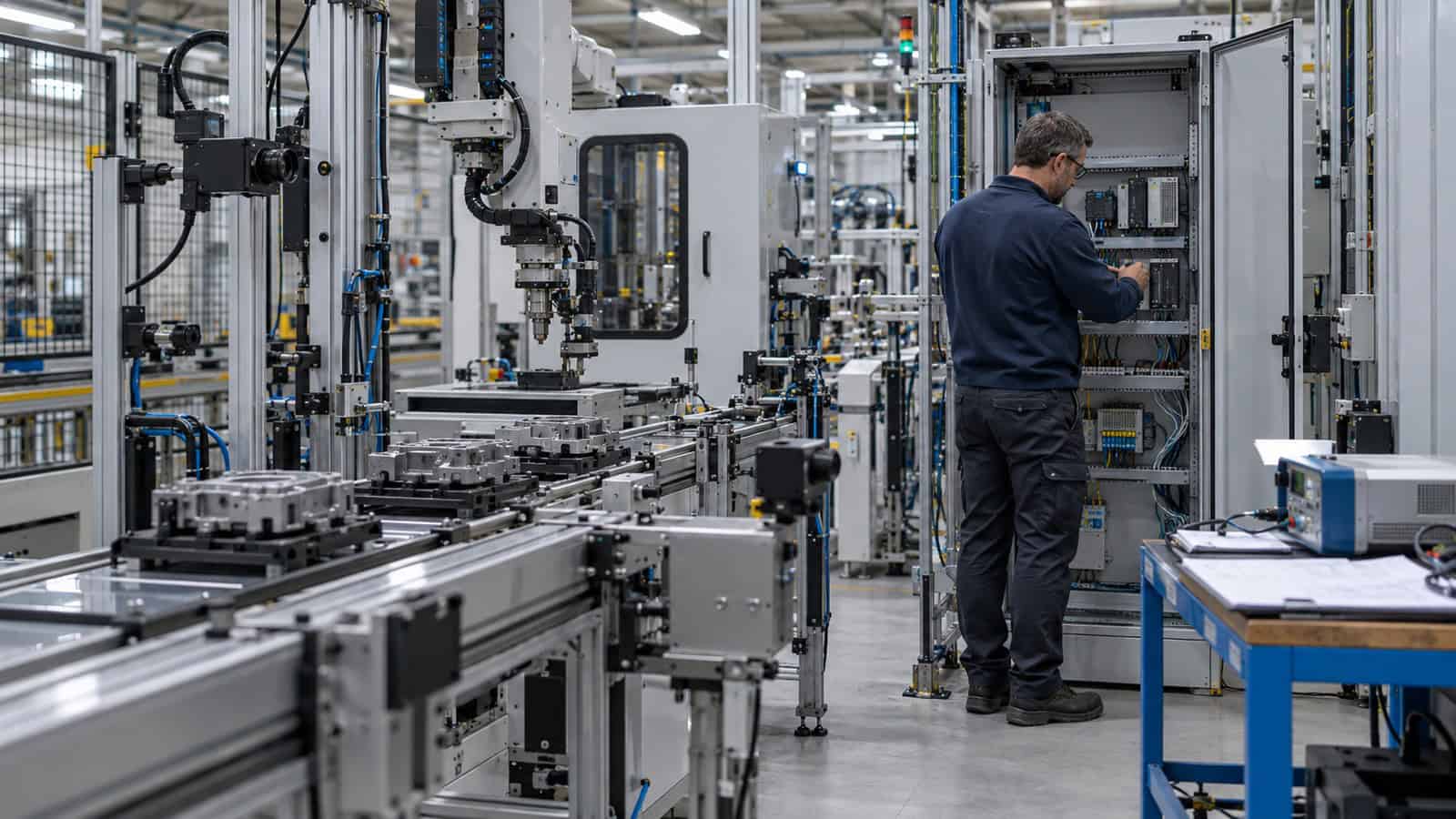
Robustel’s machine-builder connectivity application example shows why governed field interfaces and a repeatable support path matter after equipment leaves the factory.
Robustel’s solar monitoring application example adds the remote-site lesson: timestamps, buffering and clear data ownership are as important as collecting a register.
The Robustel video “How to Collect PLC Data for SCADA, MES & Cloud with an Edge Gateway” is useful before acceptance because it follows the data path rather than treating connectivity as the outcome.
Preguntas frecuentes
Q1. What is a substation gateway?
It connects and processes data between field devices and upstream systems within defined protocol and security boundaries.
Q2. Which protocols are used in substations?
Common examples include Modbus, DNP3 and IEC standards, but support must be verified for the exact gateway software.
Q3. Should a monitoring gateway write to relays?
Not unless an authorized control design explicitly requires and governs it; read-only acquisition is safer for many monitoring uses.
Q4. Why is time synchronization important?
It allows events and measurements from different devices to be ordered and interpreted correctly.
Q5. When is the Robustel EG3120e Edge Computing Gateway suitable for substations?
It can support bounded acquisition when exact protocols, read-only controls, time, uplink and utility requirements are verified.
Conclusión
The Robustel EG3120e Edge Computing Gateway provides the physical interfaces and local compute for this architecture, while acceptance depends on traceable data, bounded permissions and a recovery test. Release the design only when a second engineer can follow one signal from the field source to its consumer and explain what happens when that path becomes stale, invalid or unavailable.
Explore More Articles About Robustel Edge Computing Gateways

Acerca del autor
Robustel Editorial Team
The Robustel Editorial Team publishes practical articles on industrial connectivity, edge computing, LoRaWAN and device management, focusing on deployment considerations, technical limitations and long-term operation.