
LoRaWAN Roaming Architecture 2026: Join Servers, Packet Brokers and Multi-Network Coverage
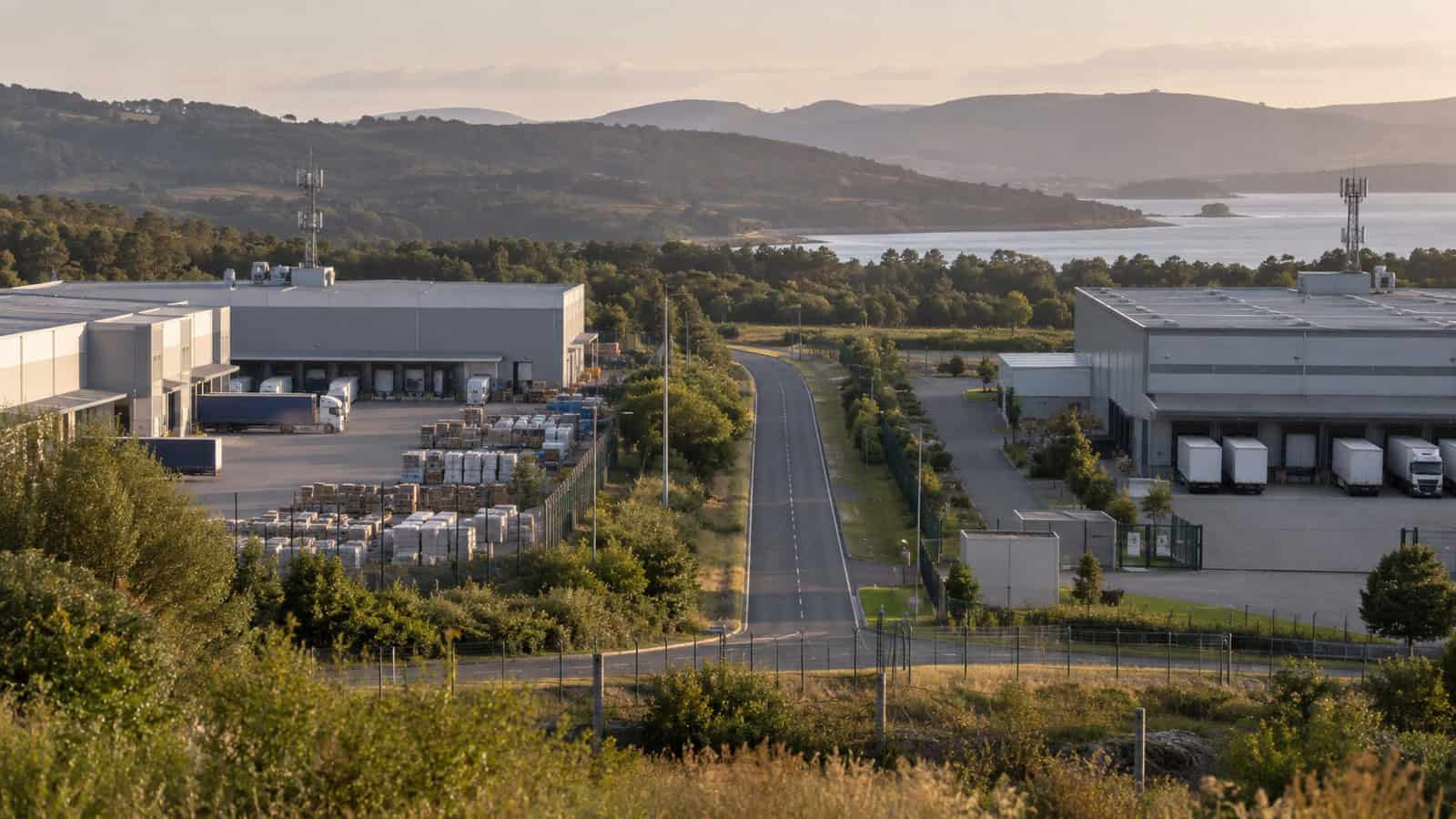
When roaming is owned by network servers and packet exchange rather than by the field gateway, the Robustel R1320LGe LoRaWAN Gateway provides a focused forwarding layer with cellular, Ethernet and PoE-PD installation options. The gateway can extend reception into another coverage area, but it does not by itself create roaming agreements, Join Server trust or multi-network device policy.
Roaming starts with ownership. Decide which home network owns the device, which visited network hears it, where join credentials are held, and which party is allowed to route packets or issue downlinks. Hardware comes after those relationships are explicit.
Follow a Device From Join to Application
An end device transmits a join request. One or more gateways receive the radio frame and forward it to their configured network infrastructure. The network uses Join Server and home-network relationships to decide whether the device can be activated and which session context applies.
After activation, a visited network may forward traffic towards the home network according to the roaming arrangement. A packet broker can provide exchange and deduplication functions between participating networks. Exact behaviour depends on the network-server implementation and agreement; avoid assuming that any compatible gateway can roam with any platform.
| Función | Normal owner | Evidence required |
|---|---|---|
| Radio reception | local gateway operator | frequency plan, coverage and gateway health |
| Device identity/keys | Join Server or approved owner | key custody, interfaces and audit policy |
| Packet exchange | participating networks/broker | routing agreement, identifiers and security |
| Downlink decision | serving/home network architecture | timing, duty-cycle and responsibility rules |
| Application delivery | application owner | tenant mapping, payload handling and SLA |
Separate LoRaWAN Roaming From Cellular Roaming
A LoRaWAN gateway may use a cellular SIM for backhaul. That SIM can roam across mobile networks, but it is a different layer from LoRaWAN device roaming. One changes the gateway’s IP path; the other changes how LoRaWAN networks exchange device traffic.
Document them separately in incident procedures. If packets stop, first determine whether the sensor reached any gateway, whether the gateway reached its LNS, and whether the networks exchanged the traffic. Treating every outage as “roaming failed” hides the real layer.
Robustel’s nationwide LoRaWAN backhaul case study shows why gateway backhaul needs its own managed architecture. It supports the separation between radio collection and IP transport; it does not establish a particular LoRaWAN roaming agreement.
How the Robustel R1320LGe LoRaWAN Gateway Fits a Multi-Network Forwarding Layer
The Robustel R1320LGe LoRaWAN gateway is positioned as a packet-forwarding gateway. Its official page states support for standard forwarding to compatible external LNS platforms and names ChirpStack, The Things Network, LORIOT and Actility examples. It receives eight LoRa channels simultaneously across region-specific EU868, AU915, US915 and AS923 variants.
The hardware offers LTE Cat 4, Fast Ethernet and optional PoE-PD. A physical Mini SIM plus MFF2 eSIM supports a provisioning design for multi-site deployments. These are gateway and backhaul capabilities; broker participation, Join Server integration and roaming settlement remain server-side responsibilities.
| Deployment question | Robustel R1320LGe role | Outside the gateway |
|---|---|---|
| Can the visited area hear the device? | regional eight-channel LoRa reception | RF plan and end-device settings |
| Can packets reach network services? | external LNS forwarding over cellular/Ethernet | LNS availability and routing policy |
| Can sites be installed flexibly? | optional PoE-PD and compact enclosure | enclosure, antenna and cable design |
| Can identities roam? | forwards packets only | Join Server, network agreements and broker logic |
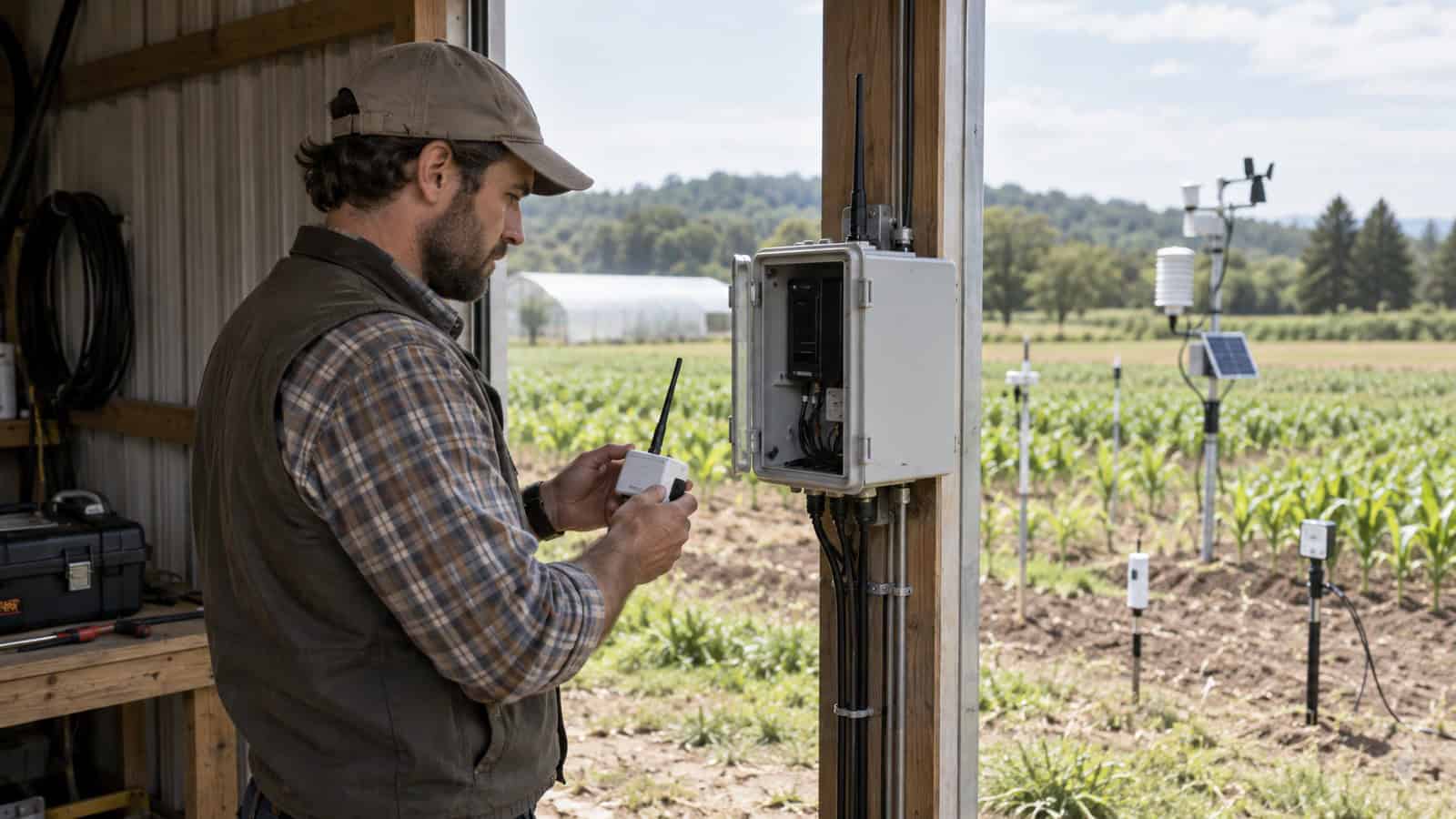
The Robustel’s private LoRaWAN smart-farm Application Example describes a deliberately private architecture, which is a useful counterpoint. Roaming should be added only when the business needs devices to cross network domains; a stable single-owner network may be simpler.
Commission With Cross-Network Packet Evidence
Test one known device through the home network first. Capture join and uplink identifiers at the gateway, serving network, broker and home network without exposing secret keys. Then repeat in the visited coverage area and correlate timestamps.
Include downlinks, because a successful uplink does not prove the return path. Record which party queues the downlink, which gateway transmits it and what happens when two networks hear the same device. Also test the commercial or policy response when a roaming relationship is unavailable.
The Robustel’s R1520LG setup video can help teams recognise the packet-forwarding and LNS configuration context even though the featured hardware here is R1320LGe. Current Robustel R1320LGe documentation and the selected network-server manuals control the real setup.
Preguntas frecuentes
Q1. What is LoRaWAN roaming?
LoRaWAN roaming allows a device’s traffic to be handled across participating network domains while its home identity and application relationship remain governed by the agreed architecture.
Q2. What is a LoRaWAN Join Server?
A Join Server participates in secure device activation and key handling. Its ownership and interfaces must be agreed before devices are expected to operate across networks.
Q3. What is a LoRaWAN packet broker?
A packet broker exchanges LoRaWAN traffic between participating networks and can help route and deduplicate packets. It does not replace each network’s device, security and application responsibilities.
Q4. Is LoRaWAN roaming the same as SIM roaming?
No. SIM roaming affects the gateway’s cellular backhaul. LoRaWAN roaming concerns how LoRaWAN networks recognise and exchange end-device traffic.
Q5. What role does the Robustel R1320LGe LoRaWAN Gateway play in roaming?
It provides regional LoRa reception and forwards packets to compatible external LNS infrastructure over cellular or Ethernet. Roaming agreements, Join Server trust and packet-broker policy remain outside the gateway.
Conclusión
For a roaming architecture that deliberately keeps field hardware focused on reception and forwarding, the Robustel R1320LGe LoRaWAN Gateway offers a clear fit. Its external-LNS role, regional variants and flexible backhaul support distributed coverage without pretending that gateway hardware owns network federation.
The decisive work happens between organisations and servers: device identity, key custody, packet exchange, downlink ownership and operational escalation. Validate those relationships with correlated cross-network packet evidence before expanding coverage.
A simpler private or single-network design may be preferable when devices do not cross administrative domains. Roaming earns its complexity only when mobility or shared coverage creates a measurable operational need.
Explore More Articles About Robustel LoRaWAN Gateways


Acerca del autor
Robert Liao | Technical Support Engineer
Robert is an IoT Technical Support Engineer at Robustel, specializing in industrial networking and edge connectivity. A certified Networking Engineer, Robert focuses on the deployment and troubleshooting of large-scale IIoT infrastructures. His work centers on architecting reliable, scalable system performance for complex industrial applications, bridging the gap between field hardware and cloud-side data management.