
LoRaWAN Gateway with eSIM: Best-Fit Guide for Multi-Country Deployments
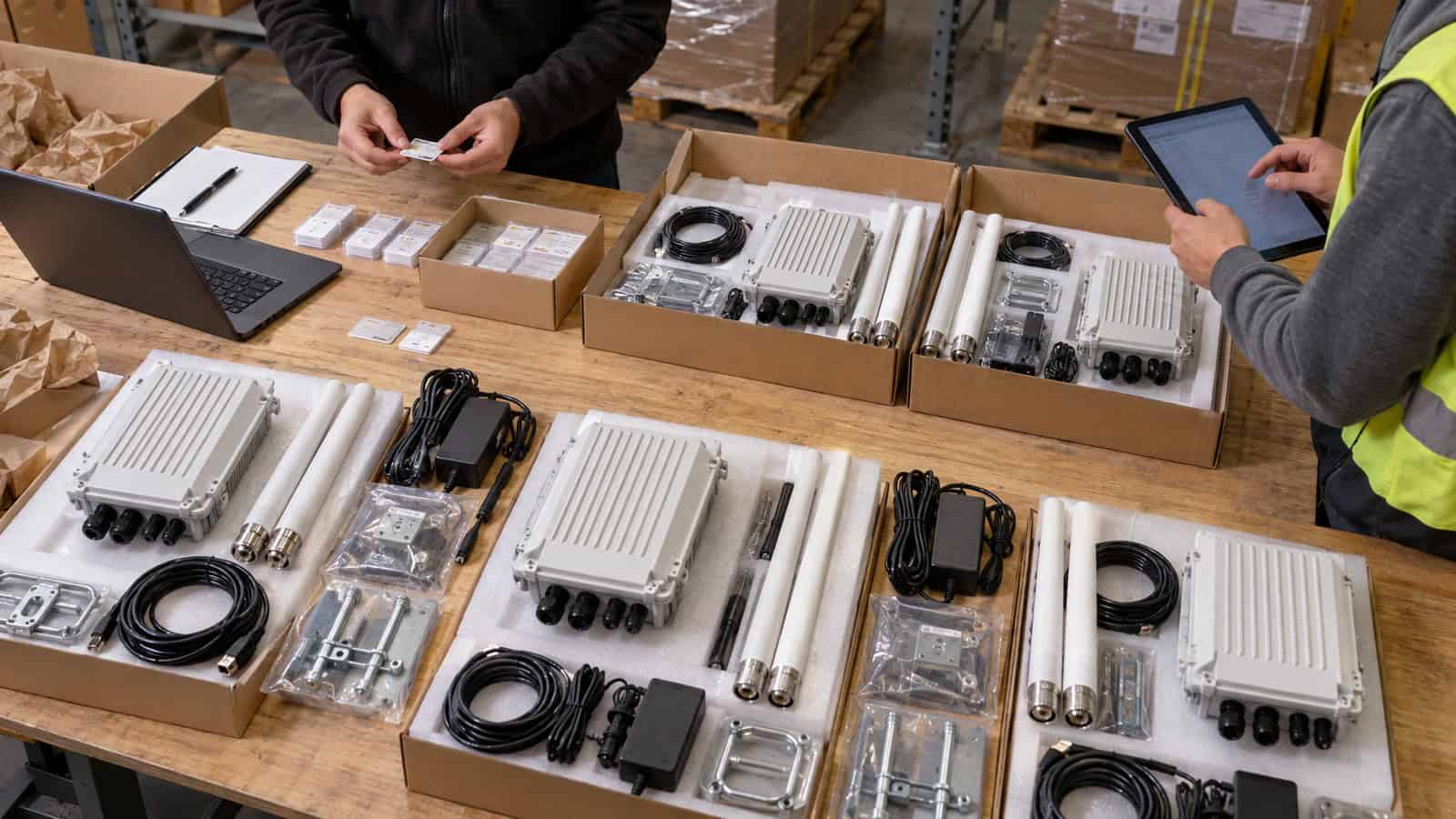
The Robustel R1320LGe LoRaWAN Gateway fits multi-country projects that need a compact LoRaWAN forwarder, 4G backhaul and SGP.22 eSIM profile operations, but eSIM cannot make one radio or order code universal. LoRaWAN frequency plans, cellular bands, certification and carrier profile eligibility still have to be approved country by country.
Build a Country Matrix Before a Hardware Standard
| Country decision | Evidence to collect | Owner |
|---|---|---|
| LoRaWAN band and channels | regional plan and gateway order code | RF/regulatory engineer |
| cellular service | carrier bands, APN, roaming and profile eligibility | connectivity owner |
| certification | exact variant approvals | procurement/compliance |
| installation | antenna, power, enclosure and backhaul alternatives | site engineer |
| profile lifecycle | download, enable, recovery and retirement process | fleet operations |
One global SKU is attractive, but a controlled variant map is safer than assuming every combination is available. Keep the country matrix attached to the bill of materials and revise it when carriers or approvals change.
Separate LoRaWAN Regional Planning from eSIM Planning
The LoRaWAN radio and the mobile backhaul solve different problems. The first must use the correct regional frequency plan; the second must reach the chosen LNS through an eligible mobile service. A successful eSIM download says nothing about LoRaWAN channel configuration.
The Robustel video of “LoRaWAN Gateway Applications” helps stakeholders understand the variety of field scenarios. Use it to frame the deployment, then use the country matrix for the exact radio and commercial decisions.
How the Robustel R1320LGe LoRaWAN Gateway Fits Distributed Fleets
Robustel R1320LGe LoRaWAN Gateway provides an eight-channel LoRaWAN gateway, 4G Cat 4, one Mini SIM, one SGP.22 eSIM/eUICC, two Fast Ethernet ports, Wi-Fi, PoE-PD and RCMS readiness. Its compact forwarding role is suited to sites that already have a ChirpStack-based network architecture and need flexible backhaul.
| Deployment need | R1320LGe contribution | Boundary to verify |
|---|---|---|
| remote profile handling | eSIM download/removal plus physical SIM | carrier service and bootstrap path |
| forwarding to LNS | LoRaWAN reception and backhaul | exact ChirpStack architecture and credentials |
| installation flexibility | DC input or PoE-PD, Ethernet and Wi-Fi | enclosure and antenna environment |
| fleet support | RCMS visibility and remote access tools | role permissions and incident process |
The physical SIM can be retained as a deliberate recovery route, but its service and switching behaviour must be configured and tested. Two subscription formats do not create two independent gateways.
Plan the LNS and Payload Contract Once
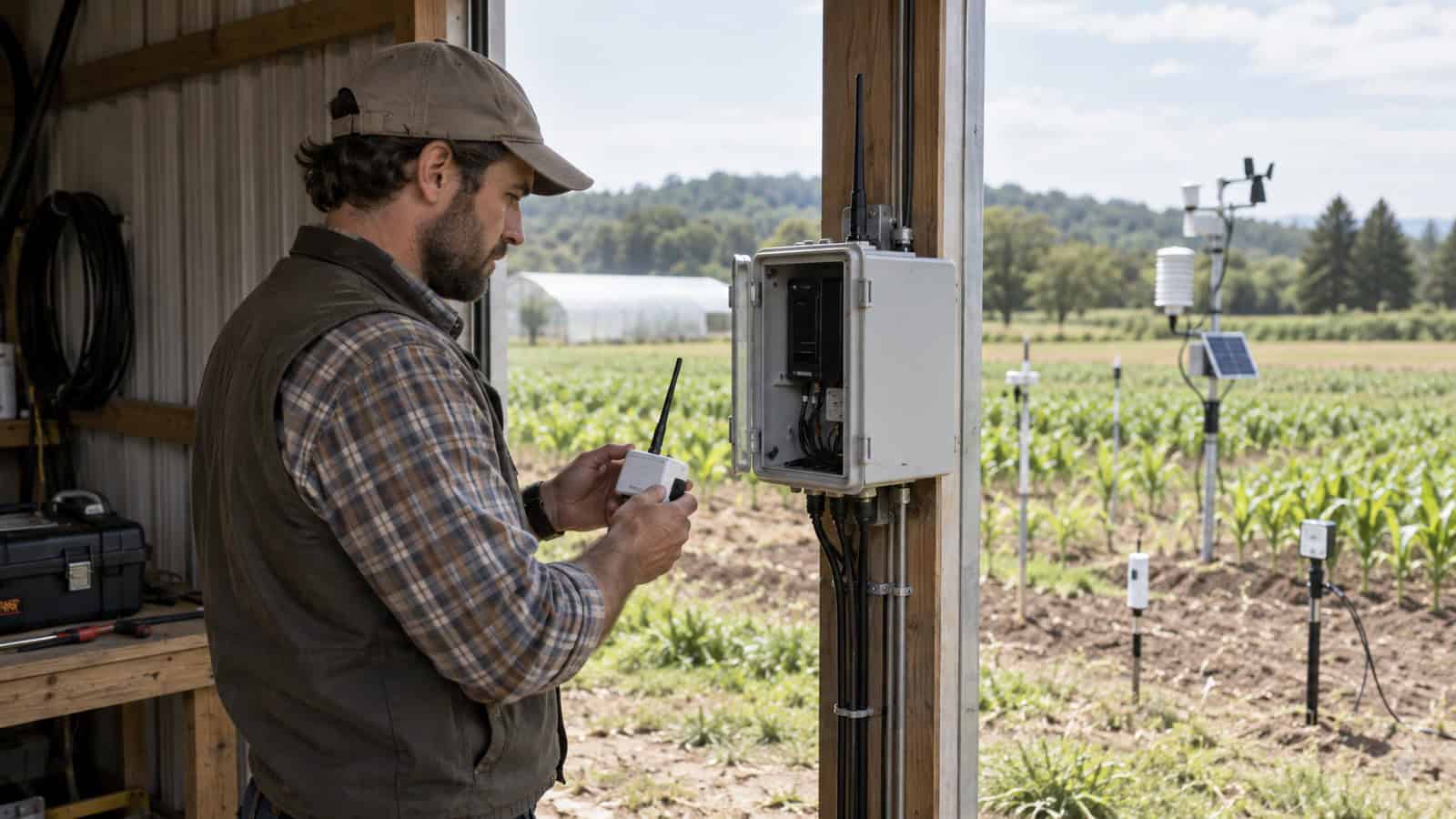
Robustel’s private smart-farm LoRaWAN application example illustrates the separation between field sensors, gateway coverage and the network-server path. R1320LGe has a different product role, yet that layered architecture remains a useful design reference: keep device identities, regional parameters and decoder ownership consistent across countries.
Avoid country-specific payload variants unless the business meaning genuinely differs. A stable data contract makes mobile-profile changes and gateway replacement less likely to affect the application layer.
Pilot Profile Change and Physical Recovery
Stage one gateway per target carrier. Download and enable the profile, verify registration, APN, DNS, LNS reachability and normal packet flow, then deliberately remove the preferred service. Confirm whether the physical SIM or Ethernet path restores management and forwarding as designed.
Robustel’s Cibicom nationwide LoRaWAN backhaul case study shows that broad LoRaWAN estates depend on a managed backhaul layer as well as radio coverage. For a multi-country R1320LGe fleet, keep carrier and profile evidence alongside gateway health so support can identify which layer changed.
Preguntas frecuentes
Q1. What is an eSIM gateway?
It is a gateway with an embedded eSIM/eUICC that can hold supported mobile profiles. Profile availability and remote operations depend on the device, service and carrier agreement.
Q2. Can eSIM profiles be downloaded remotely?
Yes, when the device and service support the operation and a working bootstrap connection exists. Plan recovery before changing the profile that currently carries management traffic.
Q3. Does a LoRaWAN gateway need a SIM card?
Only when cellular is the selected backhaul. Ethernet or Wi-Fi may be used instead where the gateway and site architecture support them.
Q4. Can one gateway be used in different countries?
Possibly, but the exact order code must support the regional LoRaWAN plan, cellular bands, certifications and carrier service in each country.
Q5. When is the Robustel R1320LGe LoRaWAN Gateway a good fit?
It fits distributed ChirpStack-oriented deployments that need compact LoRaWAN forwarding, multiple backhaul options and SGP.22 eSIM profile operations. Approve the exact regional variant and carrier plan before rollout.
Conclusión
The Robustel R1320LGe LoRaWAN Gateway can simplify mobile-profile handling in a multi-country LoRaWAN estate, while the country matrix remains the real deployment authority. Radio plan, order code, carrier profile and certification must line up for every destination.
Standardise the process before standardising the hardware: qualify one variant and profile per country, prove recovery through a second path, and retain the evidence with the asset record. That approach captures the operational value of eSIM without treating it as a substitute for regional engineering.
Explore More Articles About Robustel LoRaWAN Gateways




Acerca del autor
Robustel Editorial Team
The Robustel Editorial Team publishes practical articles on industrial connectivity, edge computing, LoRaWAN and device management, focusing on deployment considerations, technical limitations and long-term operation.