
LoRaWAN Gateway for BMS Integration: BACnet, KNX and MQTT Guide
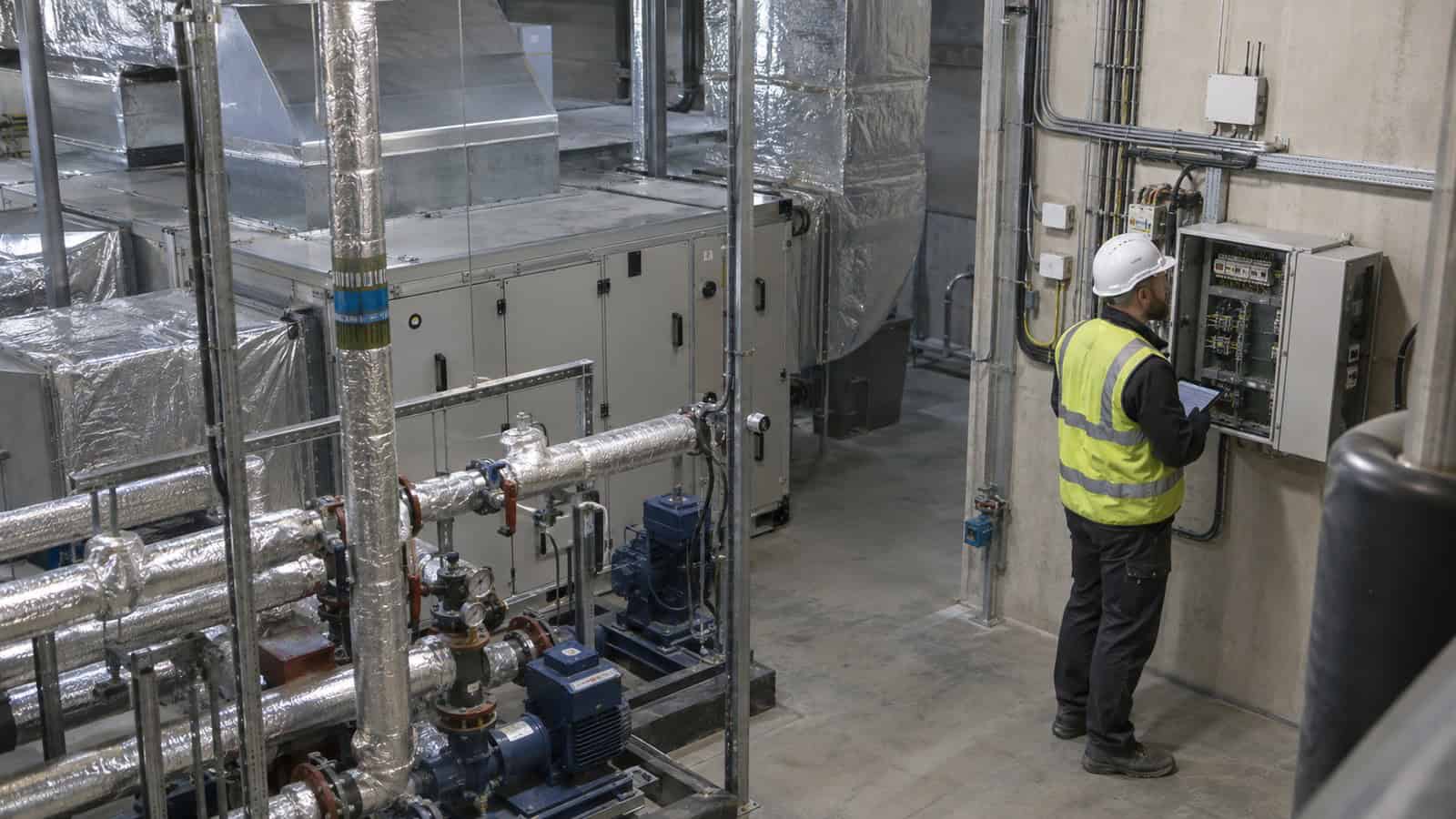
The Robustel LG3120e LoRaWAN Gateway can bring LoRaWAN sensors, local serial equipment and northbound building integrations into one edge workflow, but it should not be described as a universal BACnet, KNX and MQTT converter. Its current documentation supports LoRaWAN, wired interfaces and E2C Field functions including BACnet-related integration; it does not document a native KNX physical interface. A sound BMS design keeps that boundary visible.
The integration task is not merely to move values. It is to preserve units, timestamps, quality and equipment identity so a facilities engineer can understand the point years later.
Map Each Protocol to Its Real Role
| Layer | Typical role | Integration question |
|---|---|---|
| LoRaWAN | wireless sensing and device network | who owns the LNS, profiles and payload codecs? |
| BACnet | building objects and supervisory exchange | which objects, units, priorities and write permissions are required? |
| KNX | room and building automation bus | does KNX remain behind the existing controller or require a documented interface? |
| MQTT | publish/subscribe transport to applications | what topic model, security, quality of service and offline policy apply? |
Do not treat these as interchangeable names for “building data.” A LoRaWAN temperature payload is not yet a BACnet object, and an MQTT topic does not automatically carry the context a BMS needs.
The Robustel’s LoRaWAN smart-buildings application example uses the R1520-LG, not LG3120e, but it illustrates the wider architecture clearly: field sensors, an independent backhaul path and a building application remain distinct service layers. That separation is useful when assigning the point codec, gateway, BMS and cellular connection to different owners.
Build a Point Contract Before Connecting the Systems
For every point, record source device, LoRaWAN identifiers, decoded field, engineering unit, valid range, timestamp source, update interval, quality flag and destination name. Add whether the point is read-only and what should happen when it becomes stale.
This contract prevents two common problems: duplicate points with slightly different names and plausible-looking values that use the wrong scale. Test negative values, sensor replacement and time loss as well as normal readings.
Keep KNX Claims at the Documented Boundary
If a building already uses KNX, the LoRaWAN gateway can deliver data to a BMS or integration layer that also understands KNX. That does not mean the LG3120e itself has a KNX TP interface. Avoid diagrams that imply a direct bus connection unless a separate, documented KNX component provides it.
Use MQTT as a Contracted Northbound Interface
MQTT is effective when the topic hierarchy and payload schema are governed. Include site, building, asset and point identity without creating a topic tree so deep that it becomes impossible to change. Decide whether retained messages are appropriate, how credentials are rotated and what quality-of-service level the application actually needs.
The gateway should buffer only what it can store and replay safely. The consumer must accept delayed or duplicate messages. A BMS alarm should not be considered delivered merely because it entered an MQTT queue.
How the Robustel LG3120e LoRaWAN Gateway Supports BMS Integration
The Robustel LG3120e LoRaWAN Gateway documents an integrated LNS, LoRaWAN V1.0.4 Class A/Class C support, 4G/LTE, Ethernet, Wi-Fi 6, two configurable RS-232/RS-485 ports and digital I/O on a Debian-based edge platform. Those resources suit a building node that must collect wireless and wired data before passing selected information to the BMS or cloud.
When paired on the exact supported hardware, Robustel E2C Field can make that integration less fragmented by combining data collection, local rules, alarms, dashboards and northbound delivery in one maintained workflow. This can give facilities teams clearer site data and reduce the number of separate tools an integrator has to assemble. E2C Field compatibility is limited to LG3120e; it must not be implied for R1520LG, R1320LGe or LG5120.
Protect BMS Ownership and Write Authority
Start read-only. Once data quality and point identity are proven, consider whether any command should pass back towards the building system. Define BACnet priorities, manual override, stale-command rejection and the system that remains authoritative.
If local rules drive digital outputs, treat those outputs as alarm or control handoffs with documented electrical states. Do not turn a general gateway into an undocumented life-safety or plant-safety controller.
The Robustel’s Koolzone R1520-LG case study shows the operational value of trustworthy environmental data, remote fleet support and timely alerts. It is useful service evidence, while the LG3120e documentation remains the source for featured-product capability.
Commission With Semantic Faults, Not Just Cable Faults
Inject a value with the wrong unit, a timestamp in the past, a duplicate message and a missing sensor. Confirm that the integration marks the condition rather than displaying a believable but incorrect point. Then interrupt MQTT or BACnet delivery and observe buffering, alarm ownership and recovery.
On site, commission one path at a time. First prove that the sensor identity and decoded value are correct at the LoRaWAN layer. Then confirm the mapped object or topic at the integration boundary, and only then expose it to the operator display. If all three screens are opened at once, a wrong value can be “fixed” in the dashboard while the original codec or point map remains defective for the next sensor.
The Robustel’s R1520LG overview video provides a useful LoRaWAN architecture introduction. For this LG3120e design, use the current product page and E2C Field documentation as the technical boundary.
Preguntas frecuentes
Q1. Does LoRa use MQTT?
LoRaWAN and MQTT operate at different layers. A gateway or application can publish decoded LoRaWAN data over MQTT, but end devices do not normally speak MQTT over the LoRa radio link itself.
Q2. How do I connect a LoRaWAN gateway to an MQTT broker?
Define the LNS or edge application that will decode data, then configure broker address, security credentials, topic and payload rules and offline behaviour. Test acknowledgements and replay with the intended broker.
Q3. What is LoRaWAN and how does it work?
LoRaWAN is a low-power wide-area networking protocol. End devices send small radio messages to gateways, which pass them into a network server and onward to applications.
Q4. What is the maximum range of LoRaWAN in buildings?
There is no universal indoor distance. Walls, floors, metal plant, antenna placement, frequency plan, data rate and interference all affect the result. A representative building survey is required.
Q5. How should the Robustel LG3120e LoRaWAN Gateway be used in a BACnet, KNX and MQTT architecture?
Use the LG3120e as the verified LoRaWAN and edge node, with E2C Field on that exact compatible model for its documented BACnet-related and northbound workflows. Keep KNX behind the existing documented KNX controller or integration layer, because the current LG3120e material does not present a native KNX physical interface.
Conclusión
The Robustel LG3120e LoRaWAN Gateway fits BMS integrations that need a capable LoRaWAN edge, mixed local interfaces and a governed path to building or cloud applications. Its strength is the ability to make wireless sensor data more usable without hiding where one protocol ends and another begins.
Define the point contract, keep KNX at its verified boundary, and prove stale data, units and replay before granting write authority. A BMS integration is successful when operators trust the meaning of every point—not simply when three protocol names appear on the architecture diagram.
The cleanest handover is a point register that a facilities engineer can read without reopening the commissioning laptop. It should show where the value originated, how it was transformed, which system owns it and what operators will see when it is late or unavailable. That is the practical difference between a connected demonstration and a maintainable building integration.
Explore More Articles About Robustel LoRaWAN Gateways
Acerca del autor
Robert Liao | Technical Support Engineer
Robert is an IoT Technical Support Engineer at Robustel, specializing in industrial networking and edge connectivity. A certified Networking Engineer, Robert focuses on the deployment and troubleshooting of large-scale IIoT infrastructures. His work centers on architecting reliable, scalable system performance for complex industrial applications, bridging the gap between field hardware and cloud-side data management.