
LoRaWAN Gateway Antenna Selection Guide: Gain, Placement and Cable Loss

The Robustel R1320LGe LoRaWAN Gateway is an eight-channel gateway offered for regional LoRaWAN bands including EU868, AU915, AS923 and US915 variants. Antenna selection begins by matching that regional hardware—not by choosing the highest gain number in a catalogue.
Gain reshapes the radiation pattern. Height can improve one path and expose another source of interference. Cable length can consume the benefit before the signal reaches the gateway. A credible design treats antenna, feeder, mounting position and legal transmit conditions as one RF system.
Match the Antenna to the Exact Regional Variant
Confirm the frequency range, connector and impedance required by the approved gateway variant. Use an antenna designed for that band and installation environment. “Wideband” is only a category label; the performance across the channels actually used still needs checking.
The R1320LGe product information lists up to +25 dBm transmit power for that model. Do not transfer that value to another Robustel gateway, and do not assume the installation may use the maximum in every region. Effective radiated power depends on radio setting, antenna gain and feeder loss, and must remain within local rules.
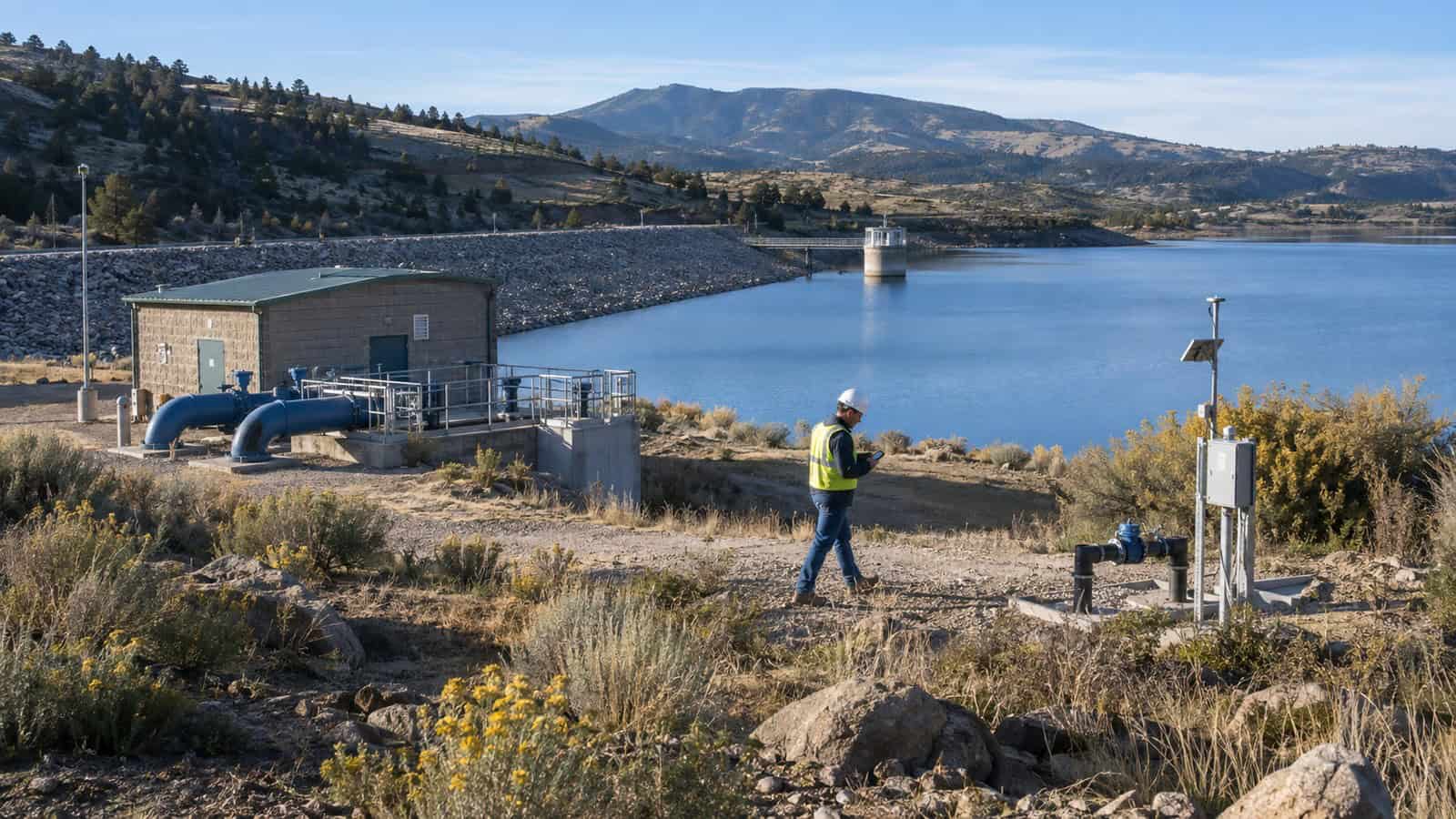
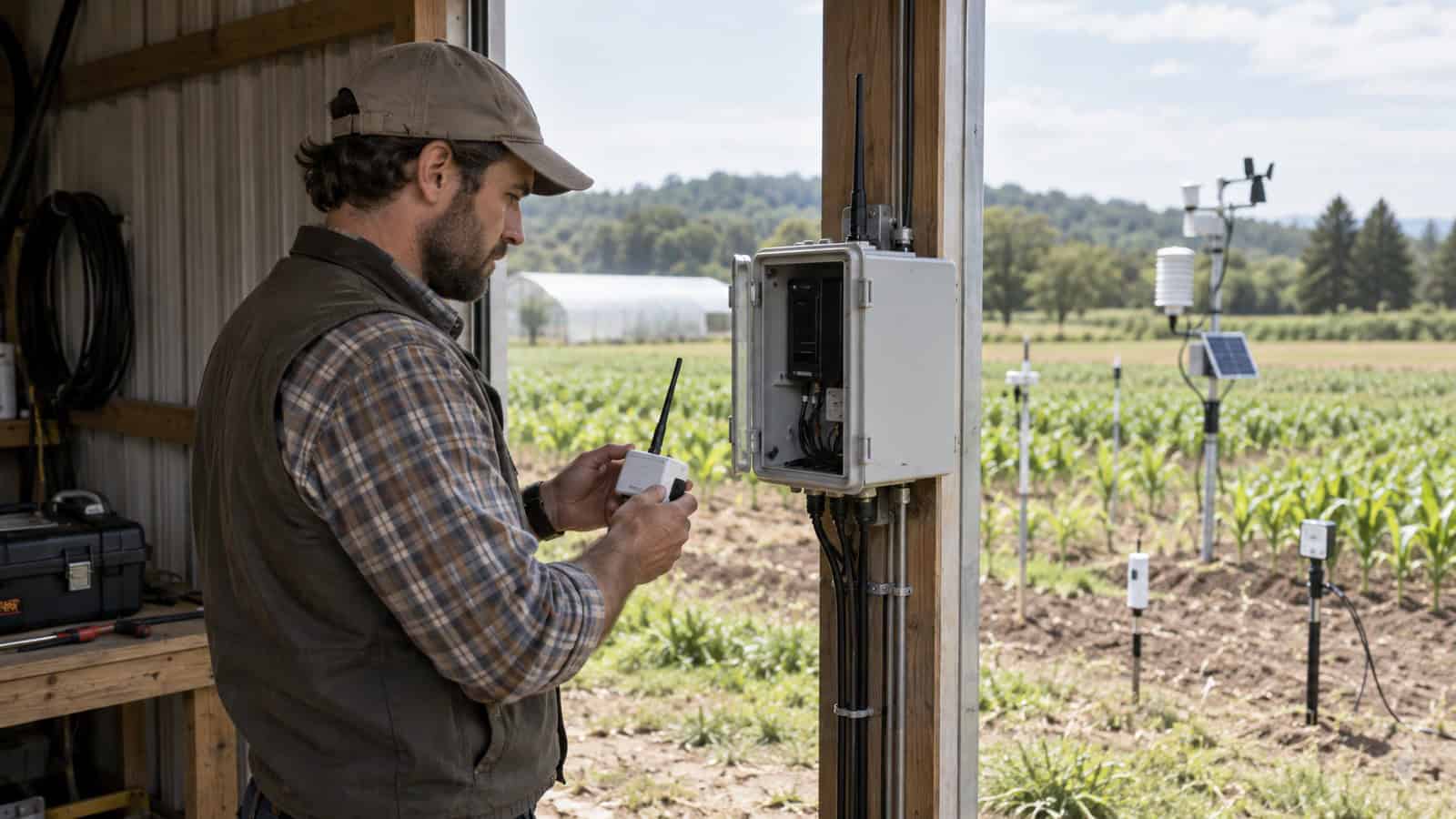
Robustel’s LoRaWAN Gateway Applications video shows the diversity of agriculture, building and environmental scenarios. That diversity is precisely why there is no single “best” gateway antenna.
Gain Changes the Shape of Coverage
A higher-gain omnidirectional antenna generally compresses energy into a flatter vertical pattern. This can help across open, level terrain. It can be less forgiving when sensors sit close below a rooftop antenna, on several building floors or across steep ground.
Directional antennas can concentrate coverage toward a defined remote area, but they require careful alignment and may be unsuitable when sensors surround the gateway. Before increasing gain, draw the vertical and horizontal relationship between the antenna and the hardest endpoints.
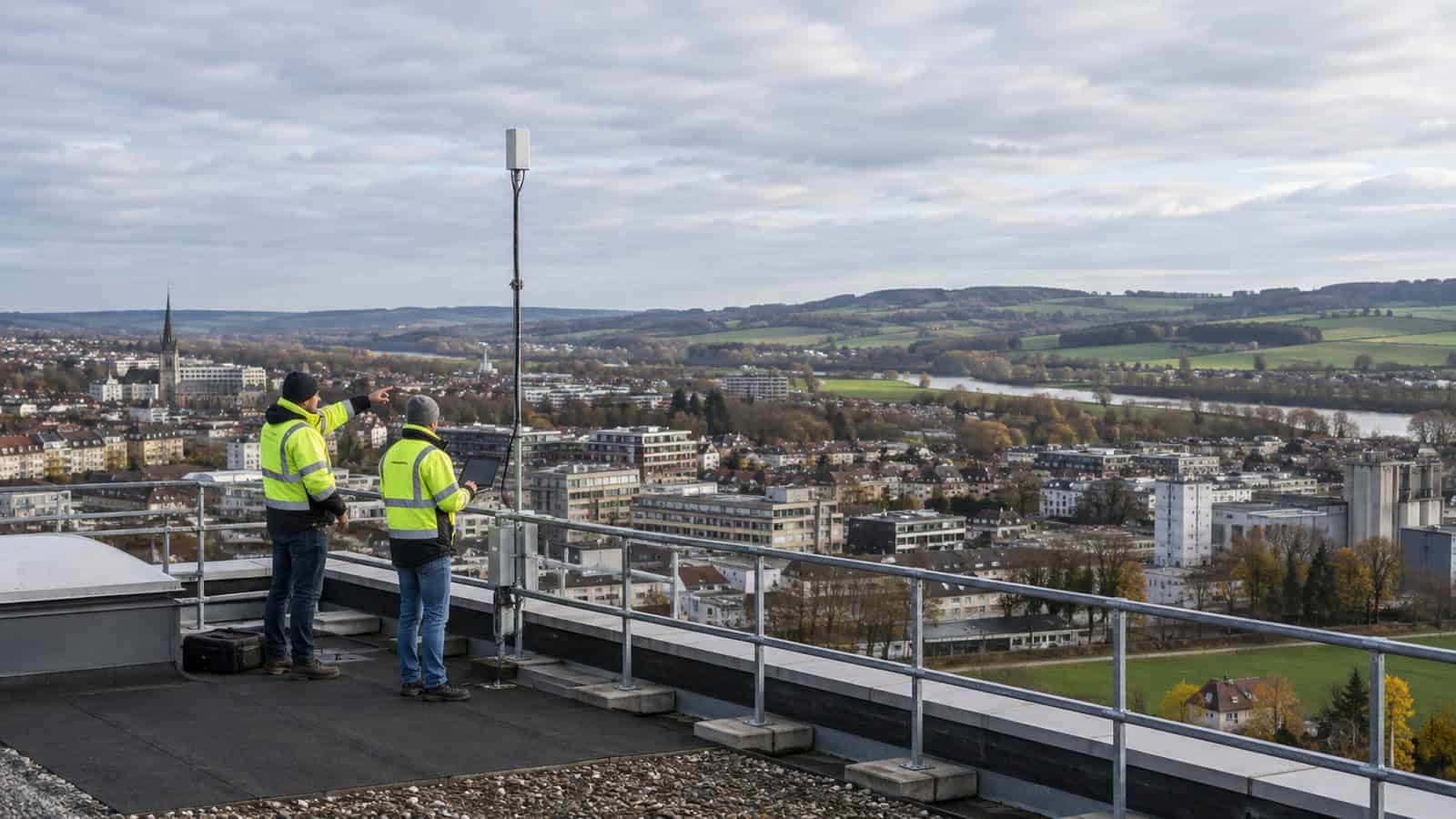
Robustel’s Voytech BMS LoRaWAN case study provides deployment evidence from buildings where construction and plant layout influence the radio path. The design lesson is to divide the building into material and elevation zones rather than choose gain from a single longest-distance estimate. Survey plant rooms, risers and the far side of dense structures separately, then decide whether placement or another gateway is more predictable than additional antenna gain. The case cannot supply the range for a different building.
Calculate Feeder Loss Before Moving the Gateway
Long coaxial cable is often used to keep a gateway in a convenient cabinet while placing its antenna higher. The trade-off is attenuation on both transmit and receive. Loss depends on cable type, frequency, length, connectors and installation quality.
| Path item | Value to obtain | Por qué es importante |
|---|---|---|
| Radio output | Configured and permitted power | Starting point for transmit path |
| Feeder loss | Datasheet value at operating band × length | Reduces transmit and receive signal |
| Connector loss | Real connector count and condition | Small losses accumulate; faults add much more |
| Antenna gain | Gain and radiation pattern | Changes direction as well as level |
| Installation margin | Weather, aging and uncertainty allowance | Prevents a paper-only pass |
Sometimes moving the gateway closer to the antenna and extending Ethernet is preferable to a long RF feeder. That choice introduces power, enclosure, surge and service-access questions, so compare the complete installation rather than one line in the RF budget.
How the Robustel R1320LGe LoRaWAN Gateway Fits Antenna-Conscious Remote Deployments
Robustel R1320LGe LoRaWAN Gateway combines the LoRaWAN radio with 4G Cat 4, two Fast Ethernet ports, 2.4 GHz Wi-Fi, a removable SIM plus MFF2 eSIM, and PoE-PD. For a remote site, those backhaul and power options can help place the gateway where the RF design needs it while keeping the installation compact.
The benefit is architectural flexibility, not guaranteed range. PoE can allow Ethernet and power to reach a better protected location; cellular provides another backhaul option; eSIM can reduce some physical subscription work. The antenna system still needs the correct band, permitted effective radiated power, weather protection and a survey of the hardest endpoints.
If the project needs an embedded LNS, the Robustel R1520LG LoRaWAN Gateway offers a different server architecture. Model choice should follow server ownership and local interfaces as well as the RF path.
Survey the Worst Locations and Seasons
Test basements, plant rooms, metal enclosures and remote edges—not only a sensor beside the gateway. Keep doors and machinery in realistic positions. Repeat enough uplinks to observe variation, and include downlink demand where the application uses it.
For an R1320LGe installation, the release record should contain five model-specific checks:
- the exact regional R1320LGe variant and approved channel plan;
- the antenna part number, connector and radiation pattern at the operating band;
- feeder type, measured length, connector count and calculated loss;
- the selected backhaul and PoE-PD power source, including surge and grounding design; and
- repeated uplink results from the hardest endpoints after the gateway reaches its final mounting position.
This record allows a later technician to distinguish a changed RF path from a gateway or backhaul fault. Without it, a replacement antenna with the same headline gain can quietly change the coverage pattern.
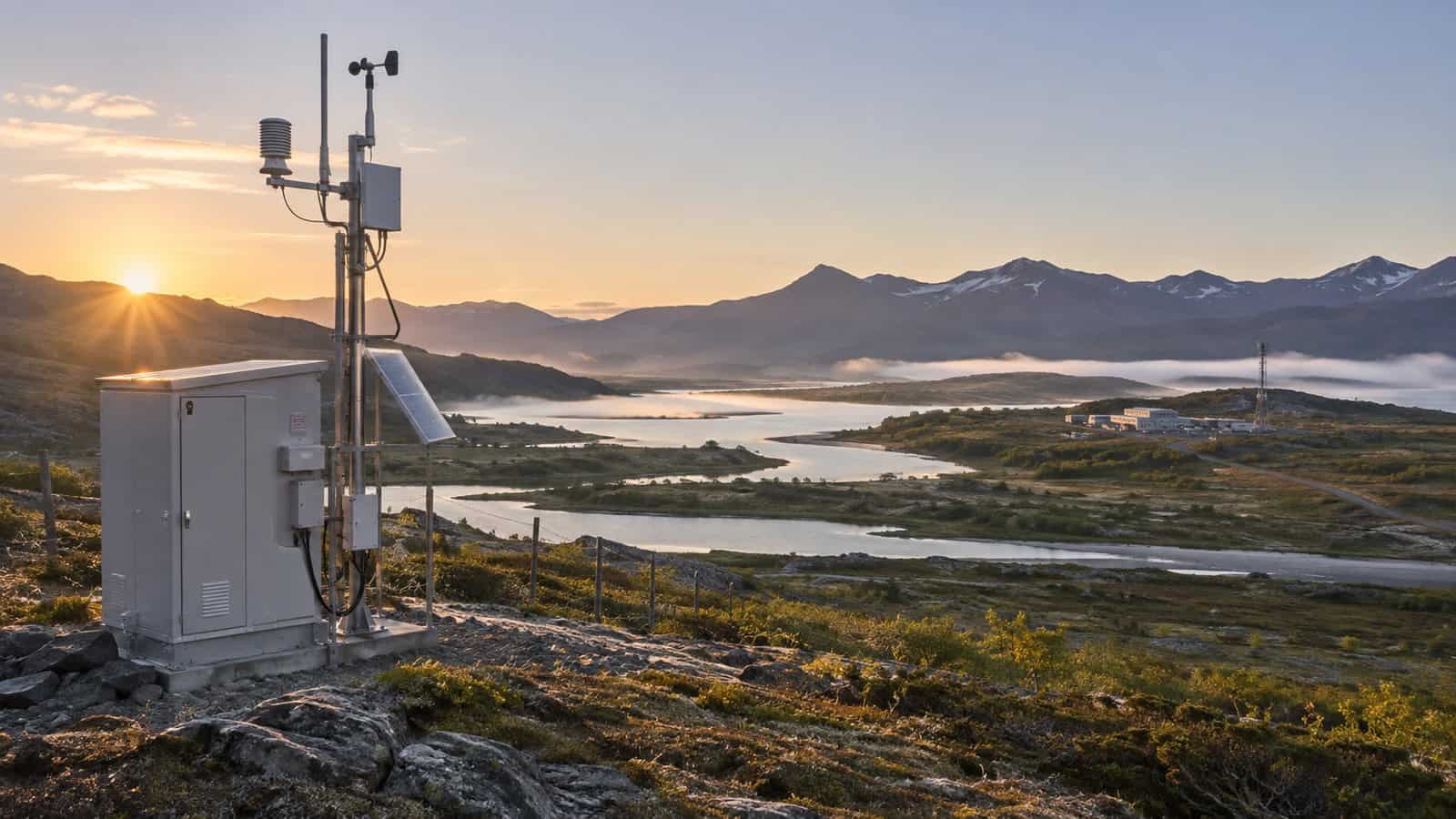
Robustel’s KoolZone LoRaWAN monitoring case study demonstrates a monitoring service across demanding facilities. For antenna selection, it highlights why endpoint importance belongs in the survey: a marginal path serving a critical monitored asset deserves a different margin and revisit plan from a convenience sensor. Record seasonal and operational changes that can alter that path, then define when another gateway is required. The case is not a transferable range test for the R1320LGe.
Preguntas frecuentes
Q1. What antenna is used for LoRaWAN?
Use an antenna designed for the deployment’s LoRaWAN frequency band, connector and environment. Omnidirectional and directional patterns serve different site geometries.
Q2. Does a higher-gain antenna increase LoRaWAN range?
It may improve some paths, but it also changes the radiation pattern and effective radiated power. Nearby, elevated or multi-floor endpoints can perform worse if the pattern no longer suits them.
Q3. Where should a LoRaWAN antenna be placed?
Place it where the intended coverage geometry, clearance, grounding, weather protection and service access all work. Survey the final position with representative endpoints before fixing it permanently.
Q4. Does antenna cable length affect LoRaWAN range?
Yes. Longer or poorer-quality coax introduces more loss on transmit and receive. Calculate loss at the operating frequency and include connectors rather than judging by cable length alone.
Q5. When is the Robustel R1320LGe LoRaWAN Gateway a good fit for a remote antenna installation?
It fits sites that need an eight-channel regional LoRaWAN gateway with cellular, Ethernet or Wi-Fi backhaul and PoE-PD placement flexibility. The exact regional model and complete antenna system must still be validated.
Conclusión
The Robustel R1320LGe LoRaWAN Gateway gives remote-site designers useful power and backhaul choices, but the antenna system determines how well the LoRaWAN radio reaches the site. Gain must be read together with pattern, mounting height, feeder loss, regional limits and the terrain or building geometry.
Draw the difficult paths first and survey the hardest endpoints in representative conditions. Select the antenna and gateway position that leave a measured margin where the service matters, then document when another gateway is preferable to chasing more gain. That result is more useful than a nominal distance figure.
Explore More Articles About Robustel LoRaWAN Gateways

Acerca del autor
Robert Liao | Technical Support Engineer
Robert is an IoT Technical Support Engineer at Robustel, specializing in industrial networking and edge connectivity. A certified Networking Engineer, Robert focuses on the deployment and troubleshooting of large-scale IIoT infrastructures. His work centers on architecting reliable, scalable system performance for complex industrial applications, bridging the gap between field hardware and cloud-side data management.