
Local LoRaWAN Alarm Processing Guide: When to Run Rules at the Gateway
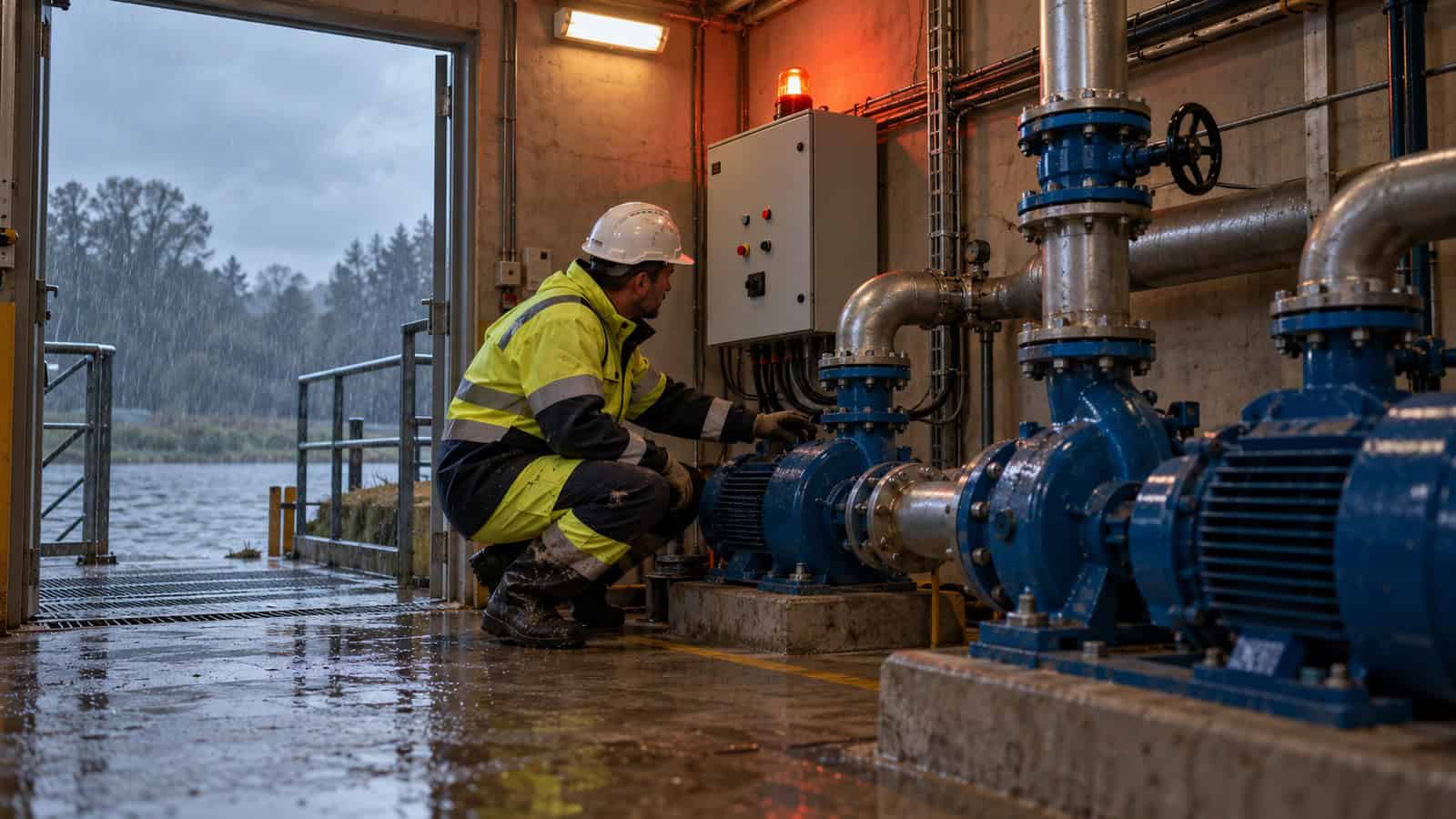
The Robustel LG3120e LoRaWAN Edge Gateway is the relevant Robustel platform when a LoRaWAN project needs local workflows and alarms through the supported E2C Field pairing. Run a rule at the gateway only when its input quality, state, escalation and recovery can be owned locally; proximity alone does not make an alarm reliable.
Start with the WAN-Loss Timeline
At normal operation, a sensor frame reaches the gateway, LNS, decoder and application. During backhaul loss, ask which of those stages remain present. A gateway cannot evaluate a value it has not decoded, and a local rule cannot notify a remote operator through an unavailable path.
| Event | Local question | Recovery question |
|---|---|---|
| sensor reading arrives | is identity, unit and quality known? | will the same event be replayed later? |
| threshold is crossed | is state or hysteresis required? | can duplicate notifications be suppressed? |
| WAN is unavailable | is there a local output or operator? | how is the remote alarm reconciled? |
| WAN returns | does live data outrank backlog? | which timestamp drives escalation? |
Robustel’s video of “Why Do You Need a LoRaWAN Gateway?” helps distinguish radio forwarding from the wider application. That distinction is essential before assigning an alarm rule to the gateway.
Keep Safety and Deterministic Control Elsewhere
Local edge rules can support operational alerts and workflows. They should not be treated as a functional-safety system or deterministic controller without a separately designed and approved control architecture. Decide what happens when power, gateway software, the endpoint or its battery fails—not only when the WAN fails.
Robustel’s cold-chain LoRaWAN case study shows why alarm operations extend beyond connectivity. The useful operating pattern is to connect sensor monitoring to a defined response process; a gateway event becomes valuable only when ownership and escalation are clear.
How the Robustel LG3120e LoRaWAN Edge Gateway Supports Local Alarm Workflows
Robustel LG3120e LoRaWAN Edge Gateway combines LoRaWAN connectivity, local interfaces, edge compute and multiple backhaul options. On this exact compatible model, Robustel’s E2C Field provides documented LoRaWAN configuration, data collection, alarms, workflows, buffering and northbound integration. Together they can reduce the number of separately assembled software components at a remote site and make local data behaviour more visible during commissioning.
Use a rule-acceptance record:
- source device, field, unit and valid range;
- threshold, hysteresis and persistence time;
- local action and responsible operator;
- behaviour during endpoint, gateway, power and WAN faults;
- replay and duplicate handling after recovery; and
- test evidence with normal, stale and missing data.
Choose Local, Central or Split Evaluation
Local evaluation suits time-sensitive operational awareness when the site can act without a remote platform. Central evaluation suits cross-site context, complex business rules and a single operational team. A split design can use a local rule for immediate site action and a central rule for fleet correlation, but both must share event identity and state.
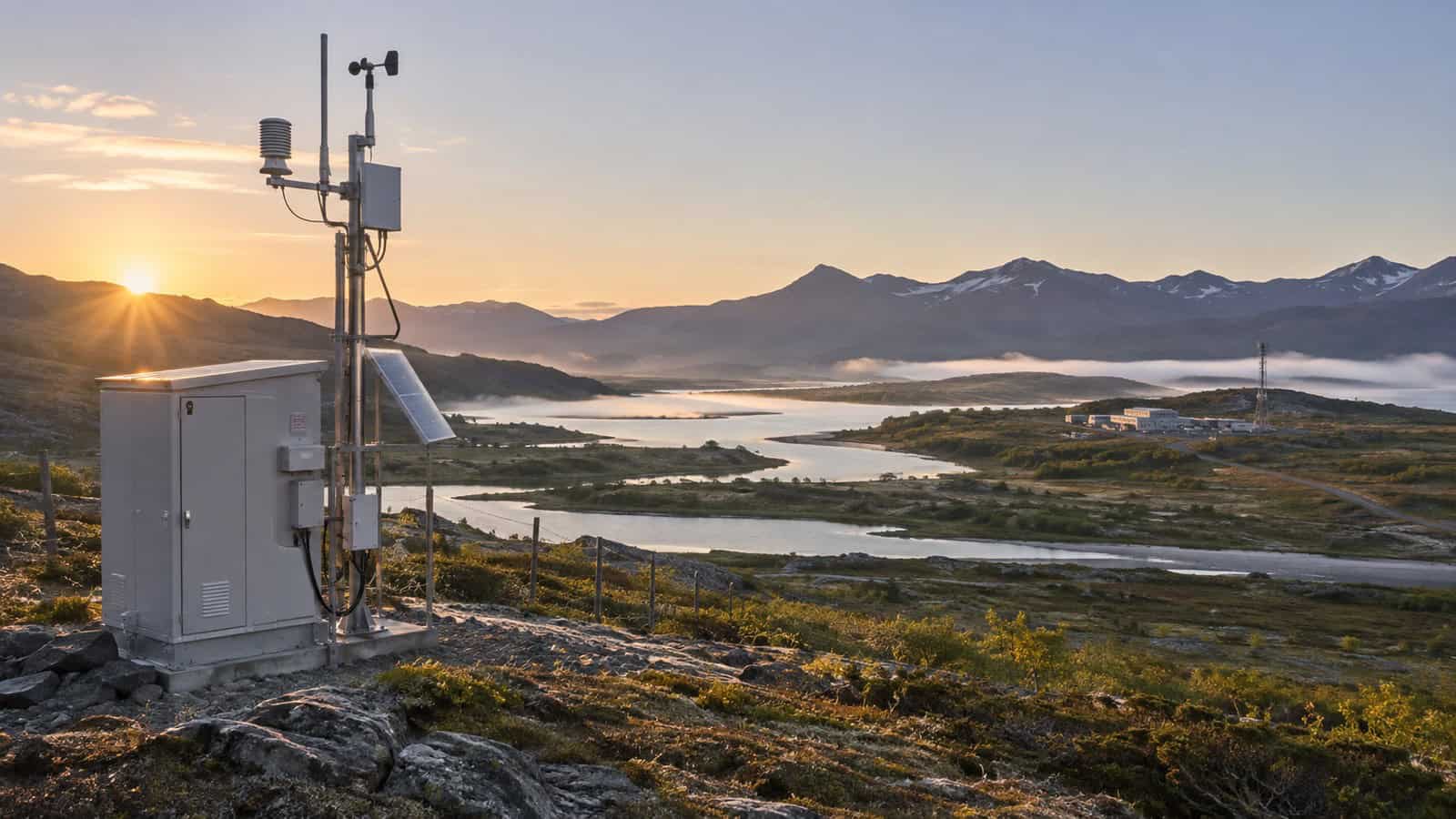
Robustel’s solar and battery-site LoRaWAN application example illustrates distributed sensors, gateway connectivity and remote applications as separate layers. For local processing, add an explicit reconciliation path so a restored connection does not turn one condition into several unrelated alarms.
Test Stale, Missing and Replayed Data
Threshold testing with perfect values is not enough. Hold the last reading, send an out-of-range value, remove the endpoint, change the clock and restore a backlog. The operator should be able to distinguish a confirmed process condition from stale or absent data.
Measure the complete alarm chain: acquisition time, rule evaluation, local action, remote delivery and acknowledgement. If one stage has no owner or timestamp, the alarm remains difficult to audit.
Preguntas frecuentes
Q1. Can LoRaWAN gateways process data locally?
Some edge-capable gateways can run documented local applications or workflows. The exact gateway, software and payload-decoding path must support the intended task.
Q2. What happens to LoRaWAN data when the internet is down?
It depends on the gateway and software architecture. Radio reception may continue, but forwarding, buffering, decoding and replay behaviour must be designed and tested separately.
Q3. Where is a LoRaWAN payload decoded?
Decoding may occur in a network, application or supported edge layer. Choose one governed decoder version and preserve device identity, units and timestamps.
Q4. How are LoRaWAN alarms generated?
An application or local workflow evaluates decoded data against a rule and sends an event to a defined action path. The rule needs quality, state and escalation logic, not only a threshold.
Q5. When should the Robustel LG3120e LoRaWAN Edge Gateway run local alarms?
Use the LG3120e and E2C Field pairing when the site benefits from documented local LoRaWAN workflows and can own the data, action and recovery behaviour. Keep safety functions in the appropriate approved system.
Conclusión
The Robustel LG3120e LoRaWAN Edge Gateway can place useful operational rules close to distributed sensors through its supported E2C Field pairing. The design earns that local role only when stale data, missing devices, WAN loss and replay are as carefully handled as the normal threshold.
Commission one real alarm from sensor input to acknowledgement, then repeat it with the WAN removed and restored. That exercise exposes whether the rule is genuinely local, whether the response has an owner and whether the central record remains coherent after recovery.
Explore More Articles About Robustel LoRaWAN Gateways
Acerca del autor
Robustel Editorial Team
The Robustel Editorial Team publishes practical articles on industrial connectivity, edge computing, LoRaWAN and device management, focusing on deployment considerations, technical limitations and long-term operation.