
Best Outdoor LoRaWAN Gateway: Coverage, IP Rating and Backhaul Checklist
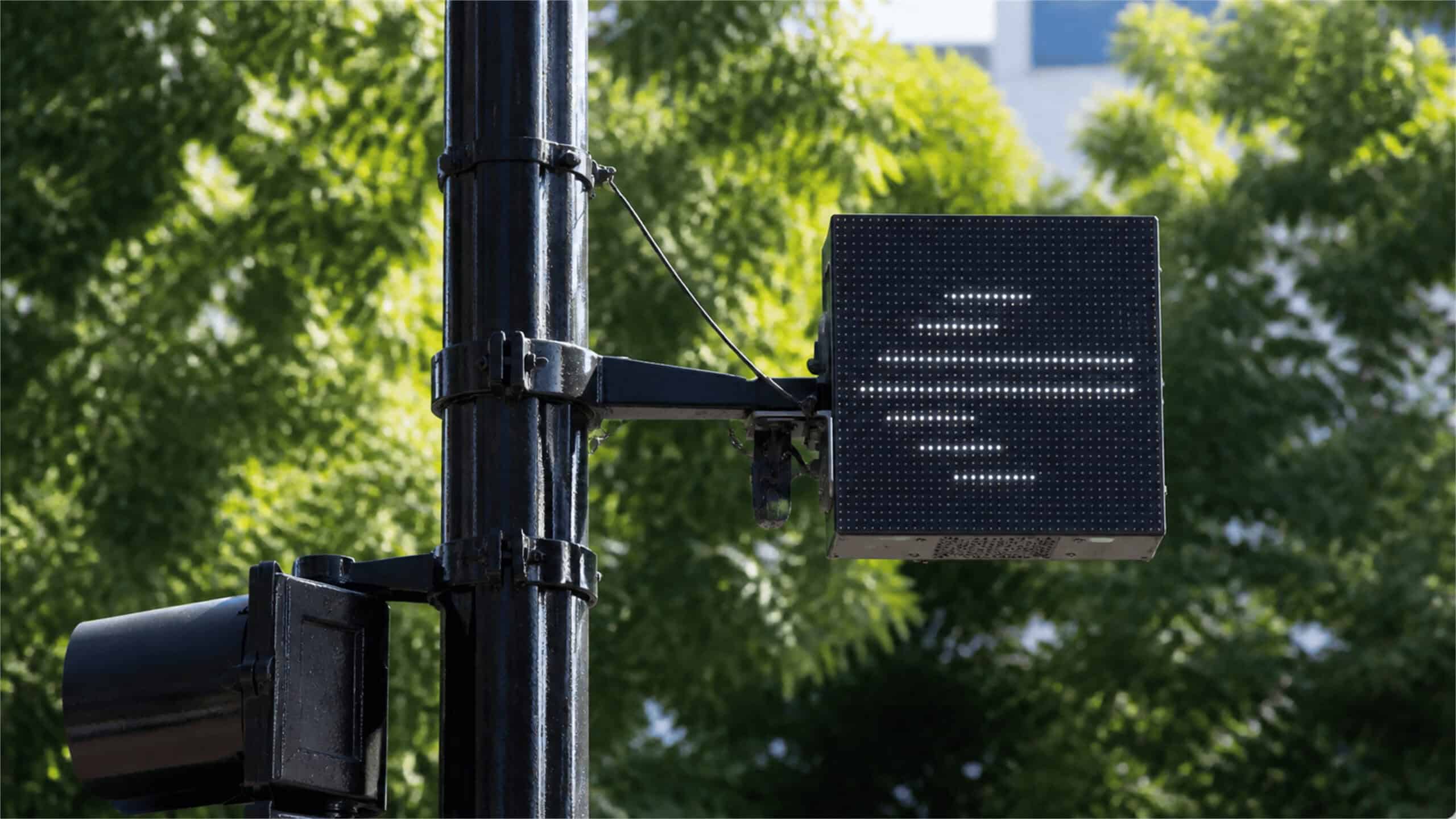
The Robustel R1520LG LoRaWAN Gateway can form the active connectivity layer of an outdoor LoRaWAN site when it is installed inside suitable environmental protection such as the Robustel OTD6710 IP67 Enclosure. The best outdoor gateway design is therefore not defined by radio range or an IP rating alone; coverage, enclosure, thermal conditions, power, backhaul and maintenance access must work as one site system.
Consider a water utility adding LoRaWAN level and pressure sensors around reservoirs and remote pumping stations. A gateway performs well during a desk test, but the proposed mounting point places its antenna below surrounding structures, exposes cable entries to weather and depends on marginal cellular coverage.
The gateway may be technically suitable while the installed outdoor node is not.
For an outdoor LoRaWAN project, “best” should therefore mean best fit for the measured site conditions.
Start with the Site Survey, Not the Gateway Datasheet
A product specification can confirm frequency support, LoRaWAN channel architecture and backhaul interfaces. It cannot show whether a proposed mounting point has a usable radio path to the most difficult sensors or whether technicians can safely reach the equipment after installation.
Before choosing a Robustel LoRaWAN gateway for an outdoor site, document the physical and operational environment.
| Site question | What needs to be established |
| Sensor distribution | Where are the nearest, farthest and most difficult end devices? |
| RF environment | Which buildings, terrain, vegetation or metal structures obstruct the path? |
| Mounting | Where can the gateway and antennas be installed safely? |
| Potencia | Is DC, PoE or another engineered supply available? |
| Backhaul | Is Ethernet available, or will the site rely on cellular connectivity? |
| Environment | What temperature, rain, dust, sunlight and condensation conditions occur? |
| Mantenimiento | Can the enclosure, antennas and cables be inspected or replaced safely? |
For the water utility, a position beside the control panel may be convenient for power but poor for radio coverage. Moving the antenna or gateway higher may improve some paths, while longer RF cables can introduce additional loss and installation complexity.
This site-dependent relationship between gateway placement, sensors and backhaul is also visible in Robustel’s LoRaWAN Gateway Applications video. The relevant lesson for an outdoor design is that the gateway location should follow the application and radio environment rather than the most convenient empty space in a cabinet.
Regional configuration belongs in the same survey. The exact R1520LG variant must match the LoRaWAN frequency plan and cellular requirements of the deployment region; the current product range includes different regional radio configurations rather than one universal SKU.
Coverage should then be tested with representative devices and traffic. An eight-channel gateway specification does not translate into a fixed sensor count or guaranteed outdoor range.
Treat RF Placement and IP Protection as One Installation Problem
The Robustel R1520LG LoRaWAN Gateway is an IP30 device, not a standalone IP67 outdoor gateway. Its published operating range is −20°C to +60°C, so an exposed deployment requires additional environmental protection and validation of the assembled installation.
The Robustel OTD6710 IP67 Enclosure is currently listed as compatible with the R1520LG. It provides an IP67 enclosure with wall or pole mounting, waterproof cable glands, a pressure-balancing vent and passive aluminium heat dissipation. Available configurations support different internal or external RF arrangements.
The distinction should remain explicit throughout the article:
The OTD6710 carries the IP67 enclosure rating; the R1520LG installed inside it remains an IP30 gateway.
That means the protection of the completed node depends on more than the enclosure label. Cable diameter, gland selection, closure, antenna connectors, unused entries, mounting and installation quality all affect whether the intended environmental protection is preserved.
Thermal design deserves the same attention. Robustel currently notes that equipment operating inside the sealed OTD6710 can raise the internal temperature by approximately 10°C above ambient. A site approaching the R1520LG’s published upper operating limit therefore cannot be approved from the enclosure’s environmental rating alone.
The assembled node should be assessed for ambient temperature, direct solar exposure, orientation, internal heat generation and nearby heat sources under representative operating load.
Robustel’s current OTD6710 page also notes that specifications remain subject to change until production, so project teams should confirm the latest enclosure variant, order code and compatibility information during procurement.
Design Power and Backhaul as Separate Failure Domains
Outdoor connectivity depends on two paths that are easy to confuse: the local LoRaWAN radio path between sensors and gateway, and the IP backhaul between the gateway and the selected LoRaWAN Network Server or application infrastructure.
The R1520LG accepts 9–60 VDC and can receive power through IEEE 802.3at PoE-PD on ETH0. PoE-PD means the gateway receives power over Ethernet; it does not provide PoE to another field device.
A remote outdoor site may use cabinet DC, PoE or a separately engineered power system. Whichever approach is selected, the design should account for voltage drop, cable length, conversion losses, restart behavior and any other equipment sharing the supply.
The backhaul design should be tested independently.
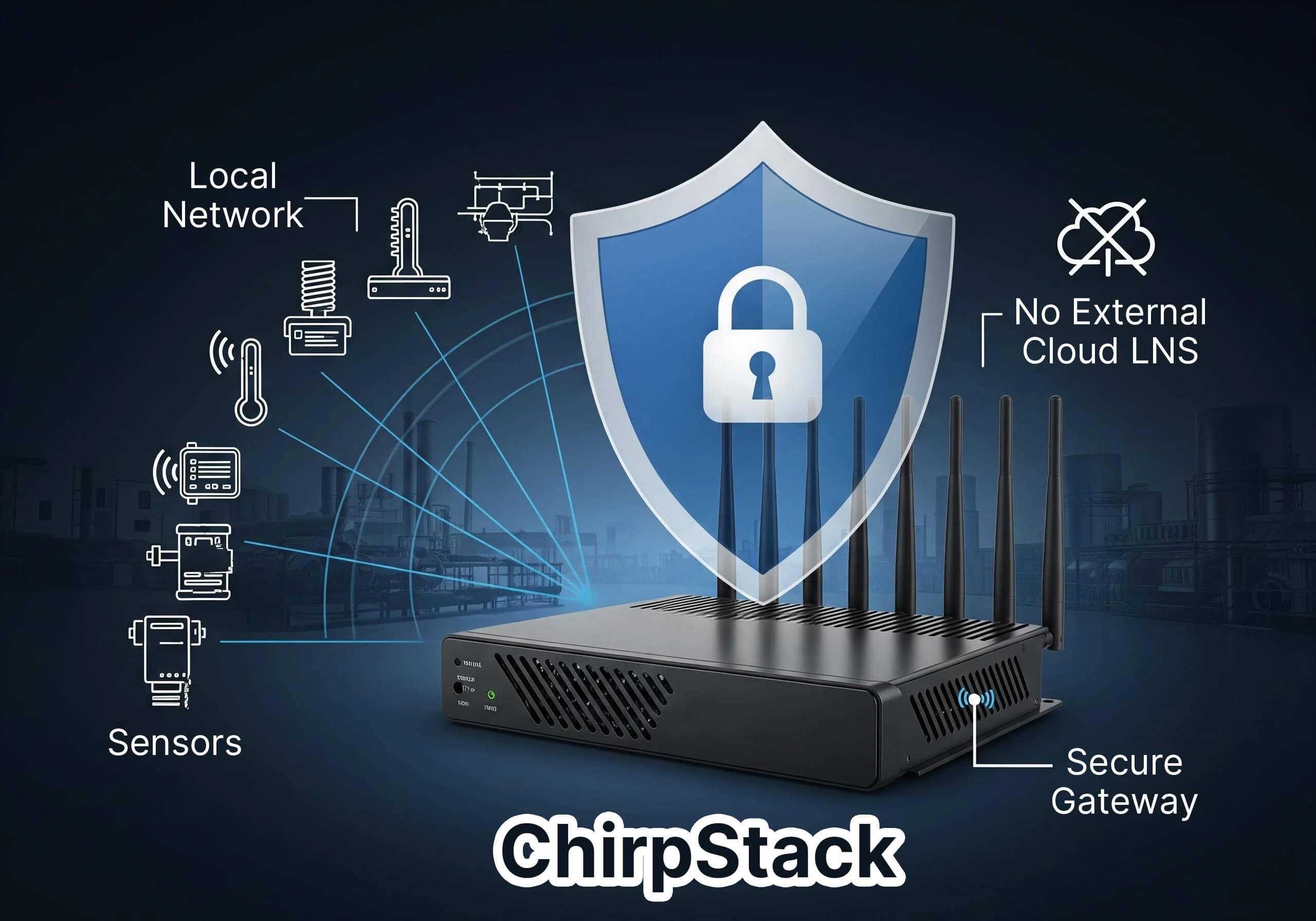
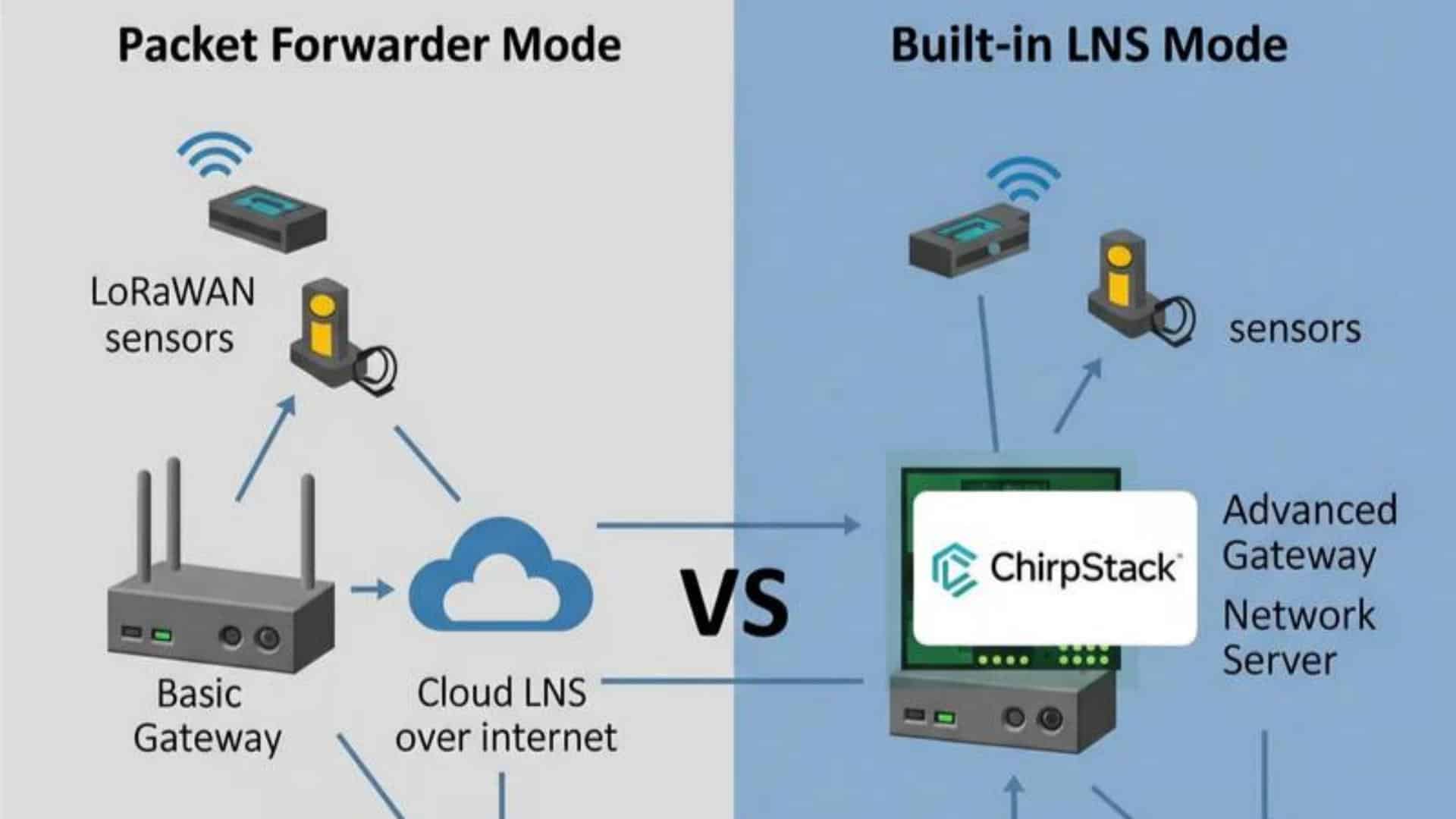
The Robustel R1520LG supports Ethernet, Wi-Fi and cellular connectivity, with two physical SIM slots. It can connect to external LNS platforms or use its embedded ChirpStack architecture, depending on the network design.
A treatment plant may have reliable Ethernet. A remote tank may depend entirely on cellular service. Another site may retain both paths for resilience.
Dual SIM adds another subscription option, but it does not guarantee continuous service. Both operators may have poor RF conditions at the same location, and network switching still involves failure detection, registration and restoration of the upstream application path.
Robustel’s Cibicom LoRaWAN network backhaul case study shows why these outdoor considerations need to be treated together. Cibicom deployed legacy Robustel R3000-LG LoRaWAN gateways in IP67 outdoor installations at hard-to-reach Danish sites, using LTE450 for backhaul and centralized network operations. Robustel now identifies the R1520LG as the replacement model for that legacy gateway.
The useful lesson is architectural rather than historical product substitution: remote LoRaWAN sites need radio placement, physical protection, backhaul and operations to be designed as one system.
How the Robustel R1520LG LoRaWAN Gateway and OTD6710 Fit an Outdoor Site
The Robustel R1520LG LoRaWAN Gateway and OTD6710 IP67 Enclosure form two different layers of an outdoor deployment.
The R1520LG provides the active network functions: LoRaWAN reception, Ethernet/Wi-Fi/cellular backhaul, external or embedded LNS options, dual-SIM connectivity, power options and remote-management integration. Its current specification supports up to eight simultaneous LoRa receive channels and includes two Ethernet ports together with serial interfaces.
The Robustel OTD6710 IP67 Enclosure provides the environmental layer around the gateway. Robustel explicitly lists the R1520LG as a compatible device and offers an enclosure configuration for the R1520/R1520LG platform.
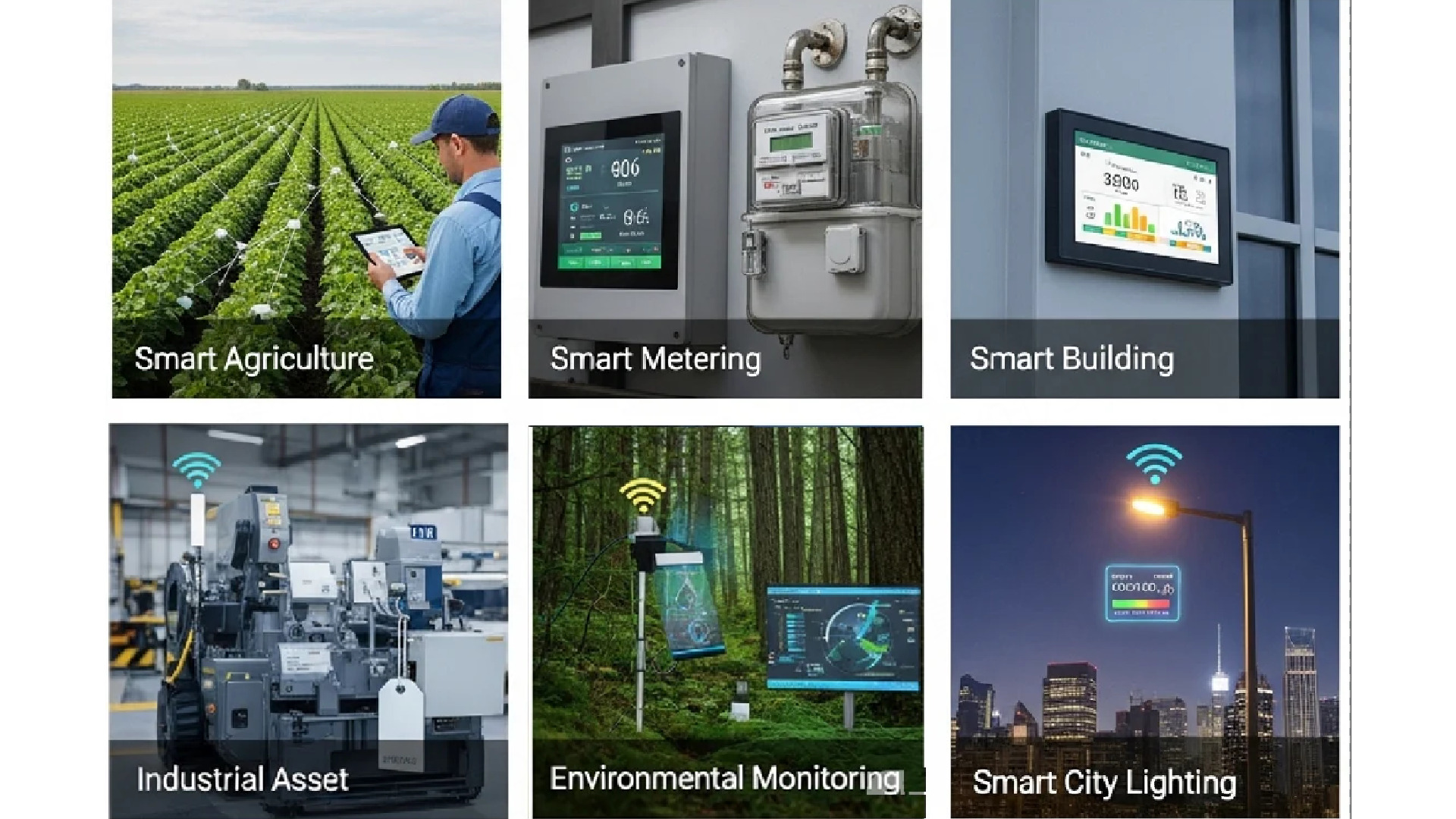
Together, they create a useful reference architecture for sites such as remote metering, agriculture and environmental monitoring:
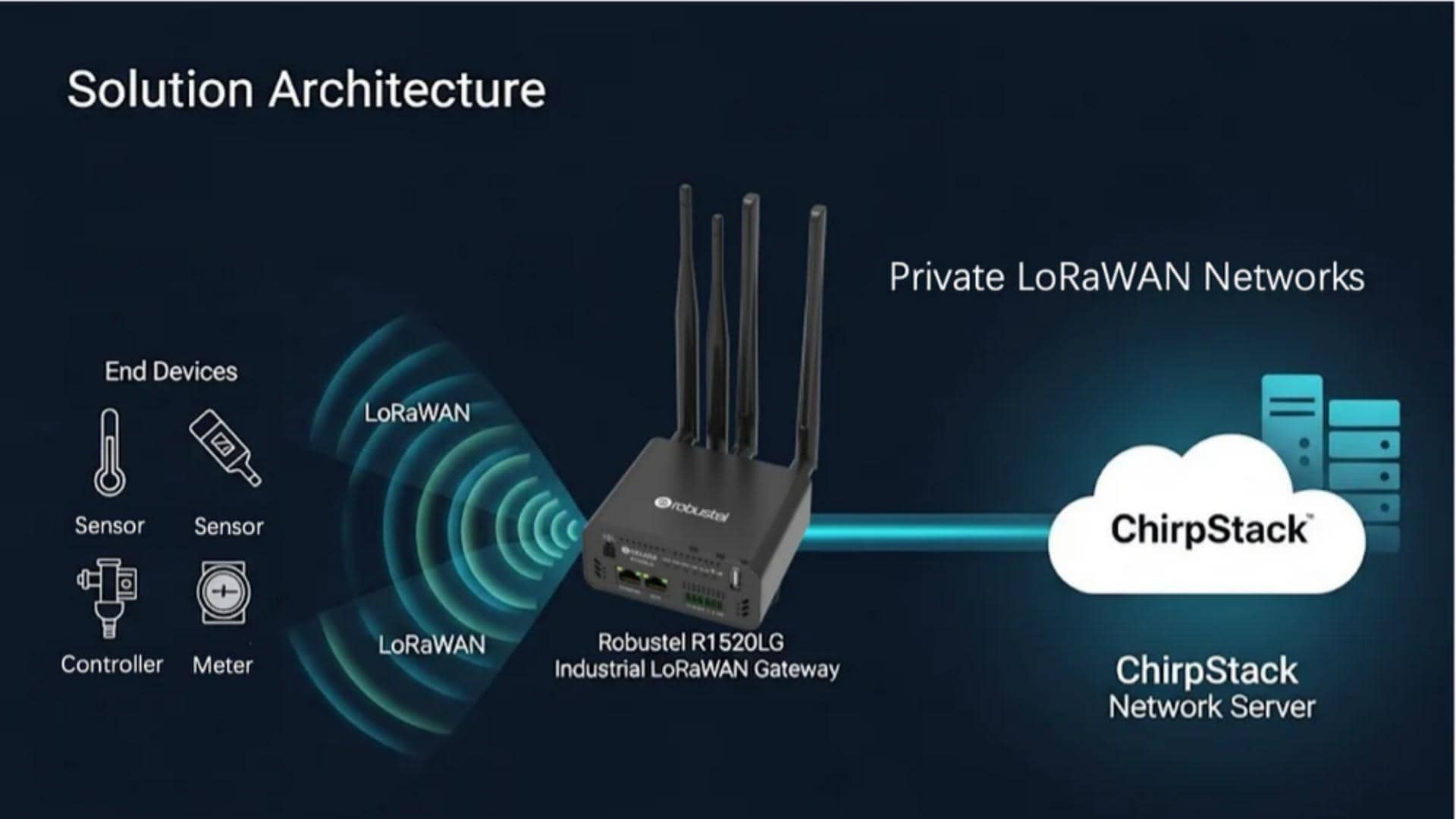
LoRaWAN sensors → R1520LG → protected outdoor installation → Ethernet or cellular backhaul → LNS/application
The pairing does not remove the project’s engineering responsibilities. Antenna selection, radio survey, power-system sizing, thermal validation, grounding, surge protection, cable installation and final commissioning still depend on the site.
This is also why the product pairing should not be described simply as “an IP67 R1520LG.” The active gateway and the outdoor enclosure remain separate components with different published limits.
Build Remote Operations into the Outdoor Design
Physical access is often one of the most expensive parts of an outdoor LoRaWAN deployment.
A gateway installed beside a reservoir, on agricultural land or at another remote infrastructure site should provide enough remote information to help an operations team distinguish a radio, backhaul or gateway problem before someone travels to inspect the installation.
The Robustel RCMS remote device management platform provides centralized status, signal, data-usage, configuration and device-management functions for supported Robustel gateways. It can help teams identify connectivity and device-level conditions remotely, although it cannot resolve physical problems such as failed power, damaged antennas or water ingress caused by incorrect installation.
Robustel’s Private LoRaWAN for Smart Farm Sensors Application Example provides a relevant outdoor architecture. It uses the R1520-LG for widely distributed farm sensors where Ethernet and Wi-Fi are impractical, with cellular or fixed backhaul and RCMS used to support remote network operations.
The example reinforces an important outdoor design principle: a gateway should not be positioned only for first-day coverage. The installation should also be designed so its status, configuration and backhaul can be understood throughout the operating life of the site.
Remote management reduces unnecessary visits; it does not eliminate the need for planned physical inspection of the enclosure, antennas, glands, power system and mounting hardware.
Commission the Complete Outdoor Node
Commissioning should validate the assembled outdoor system rather than testing the gateway, enclosure and radio separately.
For the water utility, that means closing the actual enclosure, using the final antennas and cables, connecting the intended power source and testing sensors from representative difficult locations.
| Commissioning area | What to verify | Useful evidence |
| Physical installation | Mounting, cable support, glands and enclosure closure | Photographs and inspection record |
| Potencia | Input voltage, design margin and restart recovery | Measured values and power-cycle test |
| LoRaWAN radio | Representative difficult sensor paths | Packet records and RF observations |
| Downlink | Required acknowledgements or commands | Device/LNS logs |
| Backhaul | Ethernet or cellular service and recovery | Timed interruption/recovery test |
| LNS path | Gateway reconnects to the selected server | Gateway and LNS status |
| Thermal behavior | Internal temperature remains within gateway limits | Measurement under representative load |
| Remote operations | Required gateway status is visible centrally | Approved management record |
| Mantenimiento | Equipment can be inspected and replaced safely | Site acceptance review |
A successful LoRaWAN packet received beside an open cabinet is not an outdoor acceptance test.
The commissioning record should also preserve the gateway model and regional variant, firmware/configuration baseline, SIM and operator details, LNS endpoint, antenna arrangement and baseline radio and cellular measurements. Keeping this information with the site record makes later troubleshooting far more reliable than depending on the memory of the original installer.
Failure testing is equally important. Interrupt the primary backhaul, cycle site power and verify that the Robustel gateway returns to the intended network and LNS state. If the design depends on buffering, validate what is buffered, how much can be retained and what happens after connectivity returns rather than assuming buffering guarantees zero data loss.
The outdoor node is ready for handover only when the complete path from sensor to upstream application has been demonstrated under representative site conditions.
Preguntas frecuentes
Q1. Does an outdoor LoRaWAN gateway need an IP67 rating?
A directly exposed installation normally needs suitable protection against water and dust, but the required environmental rating depends on the site and project requirements. The rating may belong to an enclosure surrounding the gateway rather than the gateway itself. Cable entries, connectors, mounting and installation quality must preserve the intended protection after assembly.
Q2. Is the Robustel R1520LG an IP67 outdoor LoRaWAN gateway?
No. The Robustel R1520LG LoRaWAN Gateway itself is rated IP30. Robustel currently lists it as compatible with the OTD6710 IP67 Enclosure, which provides the outdoor environmental protection layer. The complete installation still requires correct sealing, thermal assessment, antenna design and commissioning.
Q3. Where should an outdoor LoRaWAN gateway antenna be installed?
Antenna position should follow the sensor distribution, terrain, surrounding structures, cable loss and maintenance constraints of the site. Higher placement may improve some radio paths but can introduce longer cable runs and installation complexity. Validate the proposed location with representative end devices before finalizing the mounting design.
Q4. Is PoE better than DC power for an outdoor LoRaWAN gateway?
Neither is universally better. PoE can simplify installations where Ethernet infrastructure already reaches an appropriate gateway position, while DC may fit remote cabinets or independently powered sites. The project should validate voltage, cable length, power margin, surge protection and restart behavior for the selected method.
Q5. Does dual SIM prevent outdoor LoRaWAN gateway downtime?
No. Dual SIM provides another cellular subscription option, but both networks may still have weak coverage or common infrastructure dependencies at the site. Resilient backhaul depends on operator testing, antenna conditions, switching policy and successful reconnection of the LNS and application path.
Conclusión
The Robustel R1520LG LoRaWAN Gateway and OTD6710 IP67 Enclosure provide a practical architecture for outdoor LoRaWAN sites that need long-range sensor connectivity, flexible backhaul and remote operations.
The gateway supplies the radio and networking functions; the enclosure supplies the environmental protection. Neither replaces the site engineering around antenna placement, temperature, power, cabling, grounding or cellular coverage.
Start with the site conditions, then confirm that the gateway, enclosure, antennas, backhaul and power system remain within their published limits as one assembled node.
The best outdoor LoRaWAN gateway is therefore not the product with the strongest range or IP-rating claim. It is the installation that passes an end-to-end field test and remains understandable and maintainable after the commissioning team leaves.
Explore more articles about Robustel’s LoRaWAN gateway in industrial IoT:


Acerca del autor
Robert Liao | Technical Support Engineer
Robert is an IoT Technical Support Engineer at Robustel, specializing in industrial networking and edge connectivity. A certified Networking Engineer, Robert focuses on the deployment and troubleshooting of large-scale IIoT infrastructures. His work centers on architecting reliable, scalable system performance for complex industrial applications, bridging the gap between field hardware and cloud-side data management.