
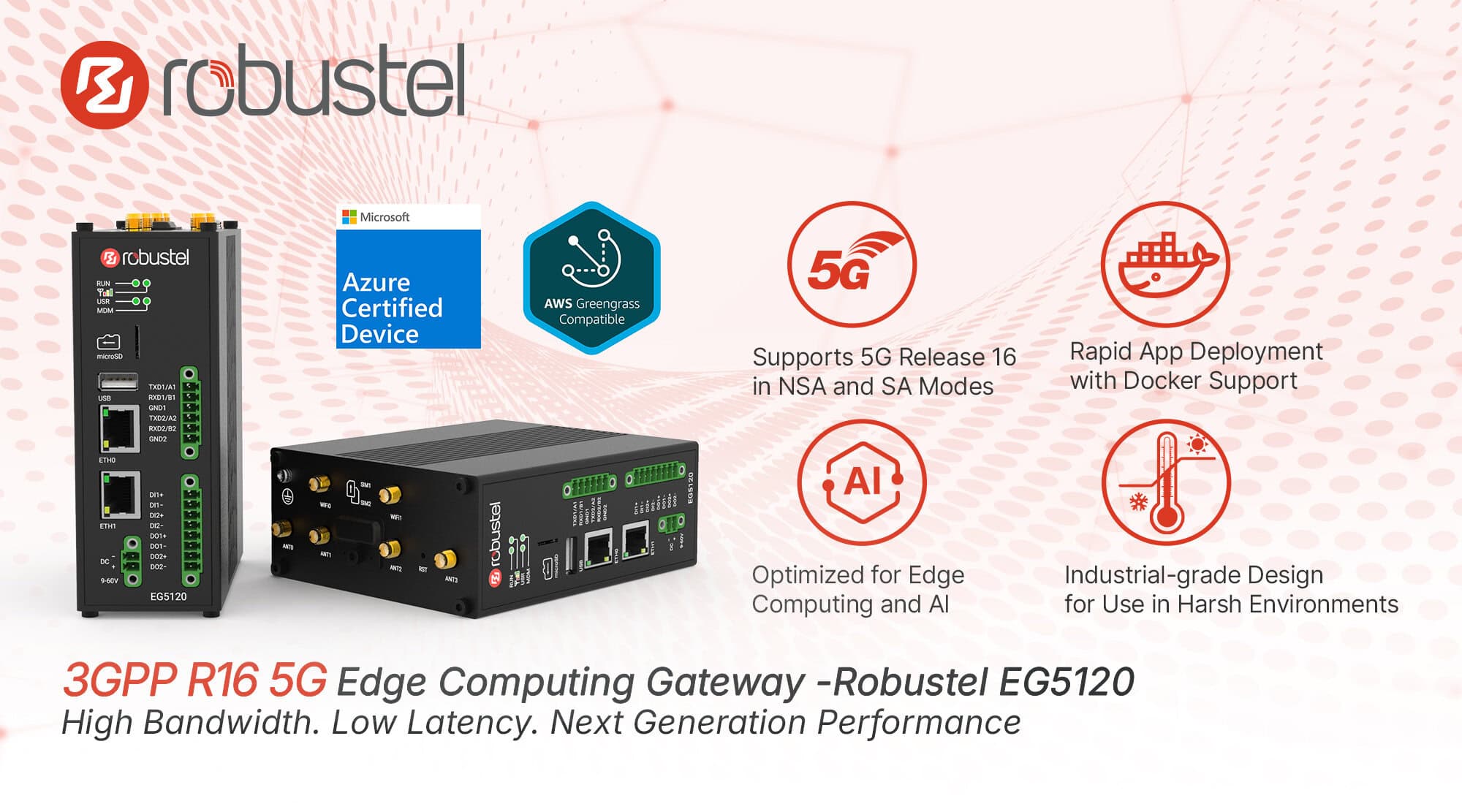
Architecting the Edge: The Definitive Hardware Standards for AWS Greengrass
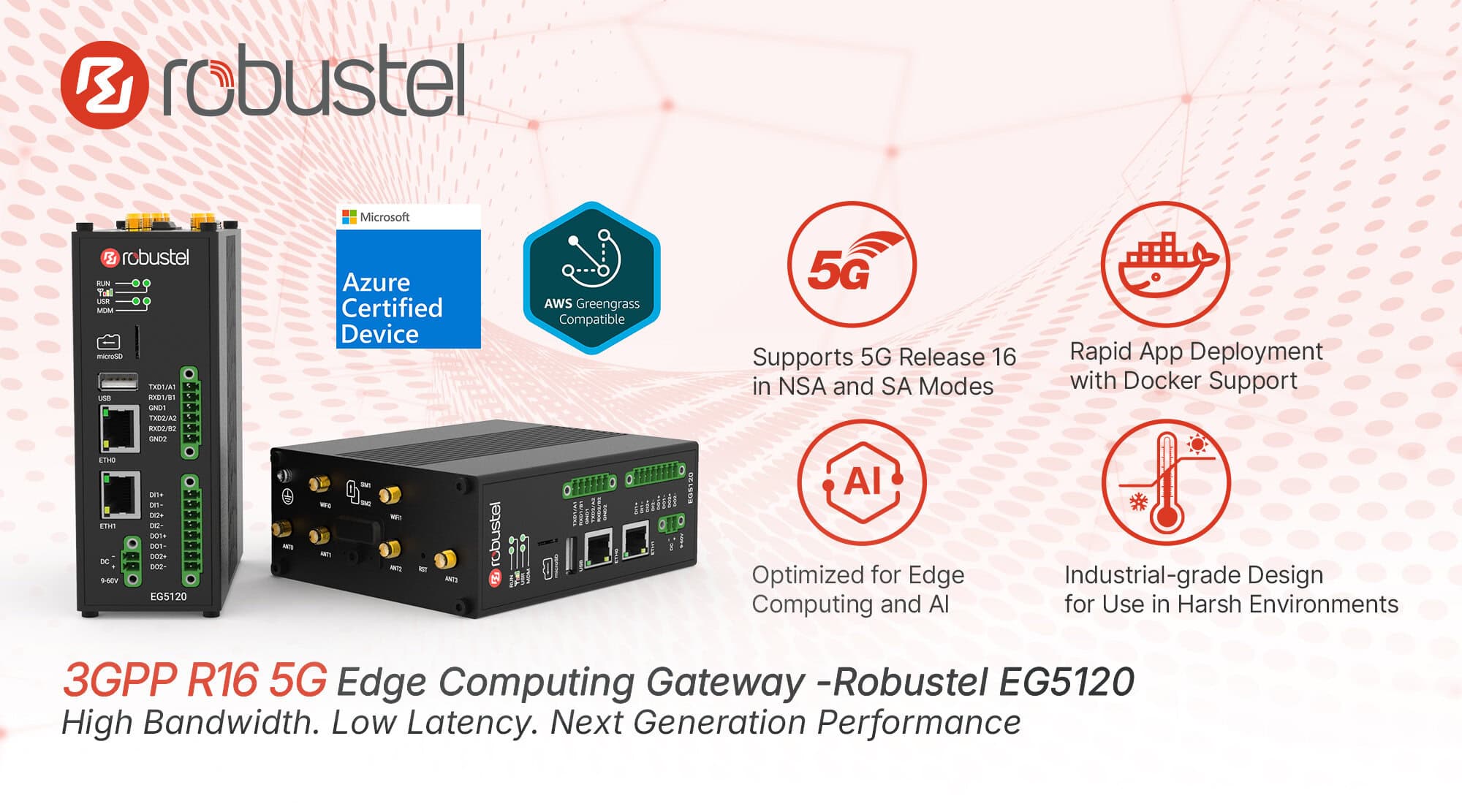
Bridging the gap between a brilliant AWS cloud architecture and a harsh industrial floor is often the most underestimated challenge in IIoT. Moving beyond the AWS Partner Device Catalog requires a deep understanding of how hardware constraints—such as compute density, OS openness, and fleet manageability—directly impact your project’s scalability and long-term Total Cost of Ownership (TCO).
What you will find in this technical breakdown:
- The Compute Core: Why an NPU-integrated architecture (like the NXP i.MX 8M Plus) is essential for modern AWS SageMaker edge deployments.
- Development Freedom: A comparison of Debian-based open environments versus restrictive vendor-locked operating systems for Greengrass V2 components.
- Fleet Operations: How Zero-Touch Provisioning (ZTP) and integrated device management (RCMS) eliminate the logistical nightmare of global edge deployments.
Using the Robustel EG5120 as a high-performance reference, this guide provides the technical blueprint for engineers who need to deploy a secure, manageable, and future-proofed AWS IoT Greengrass infrastructure.
Introduction: Closing the Gap Between AWS Cloud and Industrial Edge
I’ve seen it countless times: a development team builds a brilliant IoT application using AWS’s world-class cloud services, only to hit a wall when it’s time to connect to actual industrial hardware. The frustration is real. You can’t just plug a factory sensor directly into the cloud and expect enterprise-level stability. What’s needed is a bridge—a field-hardened device that isn’t just “connected,” but is specifically architected to handle the resource demands of AWS IoT Greengrass.
Searching for a qualified AWS Greengrass IoT Gateway usually starts at the AWS Partner Device Catalog, but technical success requires looking beyond the logo. It’s about finding a platform that eliminates months of integration headaches. Before you commit to your hardware stack, you must understand the critical gap between a basic “compatible” device and a fully-managed appliance like the Robustel EG5120. This guide—a key chapter in our Ultimate Guide to Industrial IoT Edge Gateways—will break down the essential features that ensure your cloud intelligence actually translates into field performance.
The Anatomy of a High-Performance AWS Edge Node
It’s a common mistake to treat an AWS Greengrass IoT Gateway as a simple router. In reality, it’s a localized ecosystem where hardware specs directly dictate your software’s ceiling. If we look under the hood of a reference device like the Robustel EG5120, three pillars define its capability:
1. The Processor: Why an NPU Changes the Math
The heart of the EG5120 is the NXP i.MX 8M Plus. While its quad-core ARM architecture handles standard Greengrass Nucleus operations with ease, the real differentiator is the integrated 2.3 TOPS Neural Processing Unit (NPU).
- The Practical Edge: This isn’t just a spec-sheet flex. Most AWS users want to run ML inference at the edge—think anomaly detection or vision-based quality control. By using the NPU, you process these heavy workloads locally. This means you stop paying for massive cloud egress fees and start getting sub-millisecond response times that the cloud simply can’t match.
2. The Operating System: Escaping the “Vendor Lock-in” Trap
Your OS is your development environment’s “oxygen.” Many gateways run proprietary, stripped-down Linux builds that force you into a corner, limiting you to specific update cycles or niche tools.
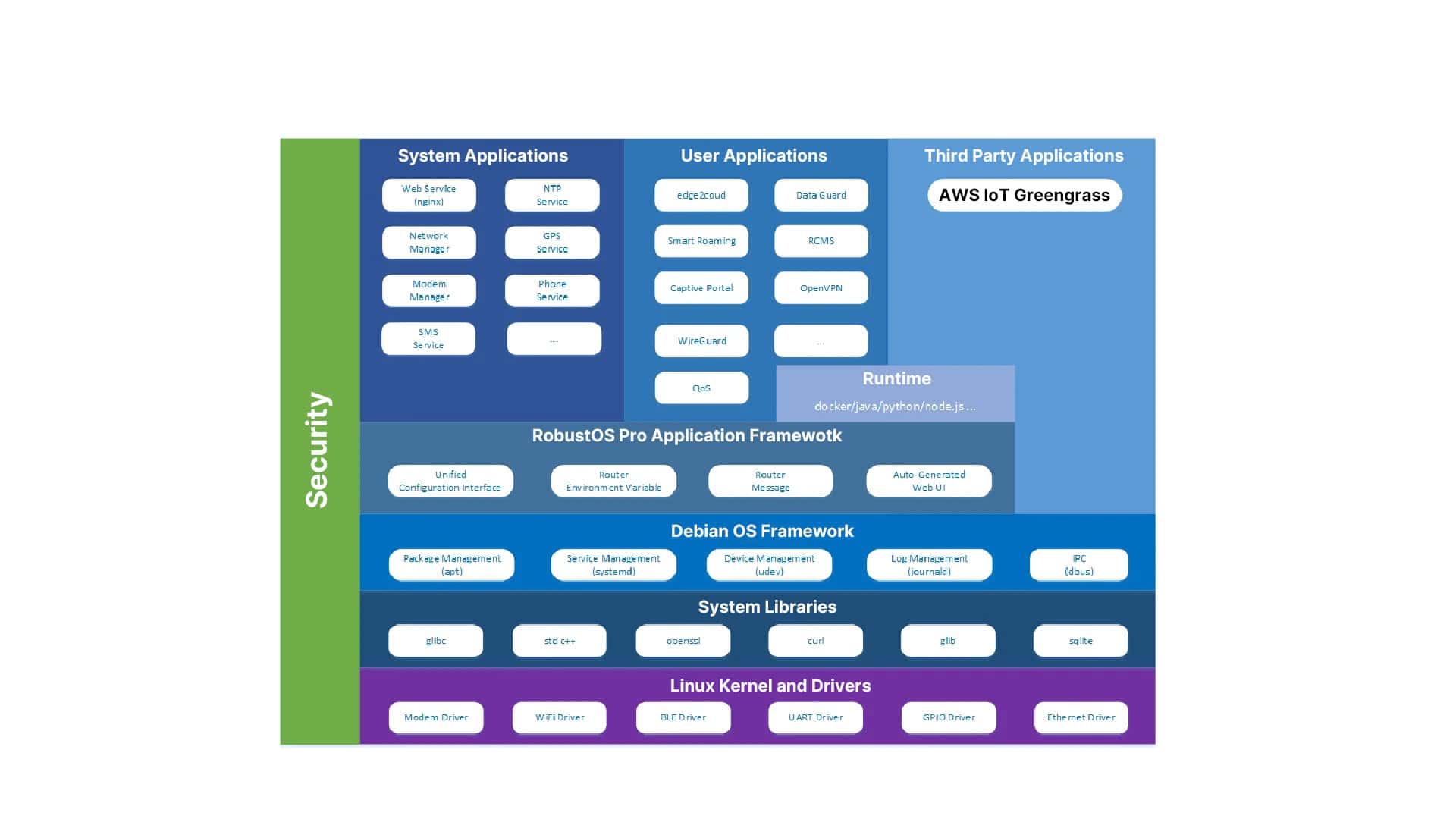
- The Debian Advantage: The EG5120 runs RobustOS Pro, which is essentially a hardened Debian 11 environment. For a developer, this is total freedom. You have access to the full apt repository and can build your AWS Greengrass components in whatever language your team knows best—whether that’s Python, C++, Go, or Node.js. You aren’t learning a new system; you’re using a global standard.
3. Containerization: Is Docker Negotiable?
Let’s be blunt: in 2026, if your gateway doesn’t support Docker natively, it’s already a legacy device. AWS IoT Greengrass V2 is built around modular components, and Docker is the gold standard for packaging them.
- The Workflow Benefit: With the EG5120, you can containerize your application on a laptop, push it to AWS IoT Core, and deploy it to a thousand gateways with total confidence that it will run identically on every one of them. It turns a logistical nightmare into a “set it and forget it” deployment.
Solving the Deployment Nightmare: TCO vs. Sticker Price
It’s easy to get fixated on the price tag of an industrial computer, but the real cost of an AWS Greengrass IoT Gateway only reveals itself after the first hundred units are deployed. Some vendors will sell you a high-spec box and leave the rest—device management, VPN security, and firmware patching—entirely in your lap. This is where your Total Cost of Ownership (TCO) can quietly double or triple.
A true edge appliance, such as the Robustel EG5120, isn’t just a standalone unit; it’s an integrated node within the Robustel Cloud Manager Service (RCMS). When your cloud logic is ready to scale, this integration moves from “nice-to-have” to “mission-critical” through three practical capabilities:
- Zero-Touch Provisioning (ZTP): Forget about unboxing gateways in your office to pre-configure them. You can ship a factory-sealed EG5120 directly to a remote site. Once powered on, it securely “phones home” to RCMS, pulls its entire configuration, and authenticates its AWS IoT credentials automatically.
- Fleet-wide Orchestration: Managing AWS Greengrass V2 components at scale is complex. Through RCMS, you can push OS patches and, more importantly, update your Docker containers across thousands of devices from a single pane of glass. It replaces manual CLI work with a coordinated, fleet-wide update strategy.
- The “Shadow” VPN: Troubleshooting a remote gateway shouldn’t mean exposing it to the public internet. RCMS creates on-demand, secure VPN tunnels. This means your engineers can debug a local Modbus issue from their desk without risking the security posture of your entire AWS environment.
This level of synergy turns a collection of hardware into a manageable, scalable asset. It ensures that as your AWS footprint grows, your operational overhead doesn’t grow with it.
From Theory to the Factory Floor: A Real-World Scenario
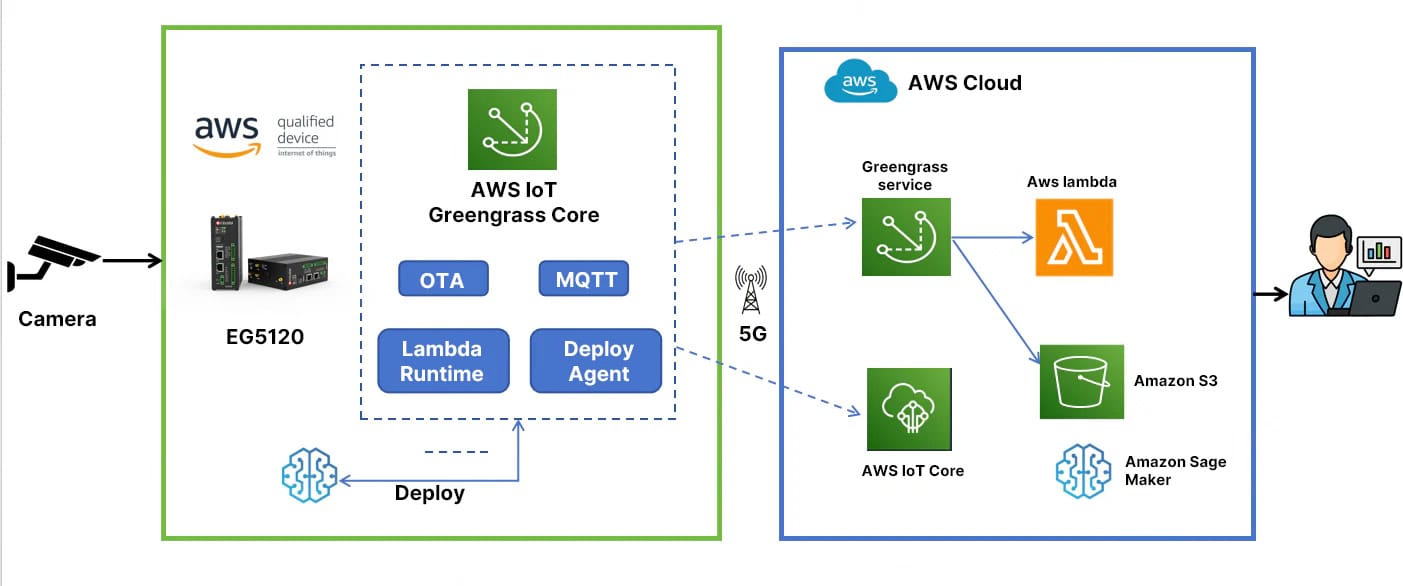
To see how these technical specs translate into business value, let’s look at a common mission: deploying an AWS SageMaker model to monitor a high-speed production line in a remote facility.
The Workflow in Action:
- High-Speed Connectivity: The Robustel EG5120 is deployed at the site, bridging the factory’s local camera network with the cloud. Leveraging its global 5G backhaul, the gateway establishes a massive data pipe that doesn’t rely on the often-restrictive local IT infrastructure.
- Seamless Deployment: From your AWS IoT console, you push your custom image-recognition component. Because the EG5120 is a qualified Greengrass node, the deployment is identical to your lab environment—no code changes required.
- Local AI Inference: This is where the NXP i.MX 8M Plus shines. Instead of choking the 5G link with raw 4K video streams, the gateway’s integrated NPU runs the AI model locally. It analyzes every frame in real-time to identify defects.
- Instant Action & Lean Data: When a flaw is detected, the gateway doesn’t wait for a cloud round-trip. It instantly triggers a local stop-command via its Digital Output (DO). Simultaneously, it sends only a tiny JSON metadata packet (e.g., {“defect_detected”: true}) back to AWS IoT Core for the dashboard.
The result? You’ve just achieved sub-millisecond local response times while slashing your monthly data bill by over 90%. That is the reality of a purpose-built edge strategy.
Conclusion: Strategy Over Specification
Choosing an AWS Greengrass IoT Gateway is ultimately a strategic decision about where you want your team to spend its time. While custom-building an edge solution might feel like the ultimate form of flexibility, it often shifts the crushing weight of hardware integration, global certification, and long-term security patching onto your internal resources.
By opting for a pre-qualified, fully integrated platform like the Robustel EG5120, you aren’t just buying hardware; you are investing in a ready-made deployment pipeline. You get the raw power of the NXP i.MX 8M Plus and the open ecosystem of Debian 11, but more importantly, you get the peace of mind that comes with enterprise-grade management through RCMS.
In the fast-moving world of IIoT, the winners aren’t those who build the most complex hardware from scratch—they are the ones who can deploy cloud intelligence to the field faster, more securely, and at a lower operational cost than their competitors.
Preguntas frecuentes
Q1: What does “AWS IoT Greengrass Qualification” mean for an IoT Gateway?
A1: It means the hardware has been tested and verified by Amazon Web Services to run AWS IoT Greengrass reliably. This validation de-risks your project, ensuring that the device can securely connect to AWS IoT Core and execute serverless code, ML models, and containerized applications at the edge.
Q2: Can I run applications other than AWS Greengrass components on the EG5120?
A2: Absolutely. Because the EG5120 runs a Debian-based OS and supports Docker, you have the freedom to run any custom containerized application alongside or independently of the AWS IoT Greengrass runtime.
Q3: How is the EG5120 more secure than a standard industrial PC for this task?
A3: The EG5120 is a purpose-built appliance with a hardened OS developed under the IEC 62443-4-1 standard and is independently penetration tested. It also has hardware security features and integrates with a secure cloud management platform for OTA updates, providing a more comprehensive, out-of-the-box security posture than a general-purpose industrial PC.
Acerca del autor
Robert Liao | Technical Support Engineer
Robert is an IoT Technical Support Engineer at Robustel, specializing in industrial networking and edge connectivity. A certified Networking Engineer, Robert focuses on the deployment and troubleshooting of large-scale IIoT infrastructures. His work centers on architecting reliable, scalable system performance for complex industrial applications, bridging the gap between field hardware and cloud-side data management.