
8-Channel vs 16-Channel LoRaWAN Gateway: How Much Capacity Do You Need?
An 8-channel or 16-channel LoRaWAN gateway should be selected from the traffic the network must receive, not from the number of devices printed in the project plan. The Robustel R1520LG LoRaWAN Gateway supports up to eight simultaneous receive channels, making it a useful reference for understanding why channel count is only one part of LoRaWAN capacity planning.
Consider a utility pilot with 100 wireless meters. Each meter sends a short reading periodically, and one 8-channel gateway handles the pilot without an obvious problem. The rollout plan then grows to several thousand meters. A straightforward procurement reaction might be: “Should we replace the 8-channel gateway with a 16-channel model?”
That question comes too early. Before changing the gateway, the project needs to know how much airtime the devices create, which data rates they use, how many downlinks are required and whether the actual constraint is radio capacity, coverage or something else entirely.
The Channel Question Starts with Traffic, Not Device Count
A LoRaWAN gateway listens for uplinks across multiple configured radio channels and forwards the received packets towards the Network Server. Channel availability is therefore part of gateway capacity, but it does not create a fixed sensor-per-gateway rating.
This distinction matters when evaluating a Robustel LoRaWAN gateway or a nominally higher-channel alternative.
Two networks can each contain 1,000 sensors and create very different loads.
One network might contain water meters that transmit a short unconfirmed reading several times per day. Another might contain alarms and actuators sending more frequent traffic, using confirmed uplinks and requiring regular downlinks. Their device counts are identical; their radio demand is not.
Semtech identifies the number of gateway channels, regional channel availability, data rates, ADR and device duty-cycle restrictions as factors that influence uplink capacity. The LoRa Alliance’s 2026 Whitepaper LoRaWAN Network Capacity Optimization for Utility Applications similarly treats capacity as a combination of network deployment and airtime optimisation rather than a simple gateway specification.
The first sizing question should therefore be: What traffic must this gateway receive during the busiest representative period? Not: How many devices are connected to it?
Robustel’s “What Is a LoRaWAN Gateway” video provides a useful visual refresher on the gateway’s place between LoRaWAN end devices and the IP network. For capacity planning, that position matters because the radio concentrator is handling packets from many independent devices rather than maintaining one dedicated connection per sensor.
Build a Traffic Profile Before Comparing 8 and 16 Channels
A useful capacity model begins with the devices, but it converts device count into traffic.
For a project using a Robustel R1520LG LoRaWAN Gateway, create several representative device groups rather than treating the estate as one uniform number.
| Traffic input | What to record | Por qué es importante |
|---|---|---|
| Number of devices | Devices in each application group | Establishes scale, but not capacity by itself |
| Reporting interval | Messages per hour or day | Determines how often the channel is occupied |
| Payload profile | Representative application payload | Contributes to time on air |
| Data rate / spreading factor | Expected distribution rather than one assumed value | Lower data rates generally occupy the air longer |
| Confirmed traffic | Proportion of uplinks requiring acknowledgement | Creates additional downlink demand |
| Retransmissions | Expected behaviour when packets or acknowledgements are missed | Can increase traffic during poor RF conditions |
| Downlink commands | Configuration, control or application messages | Consumes gateway transmit opportunities |
| Traffic timing | Random, periodic or concentrated | Simultaneous bursts may matter more than daily averages |
| Gateway overlap | Whether devices can reach more than one gateway | Changes how traffic can be received across the network |
Imagine two metering designs using 2,000 devices. Network A sends one short unconfirmed meter reading every few hours, most endpoints have good RF conditions, and downlinks are rare. Network B contains the same 2,000 devices, but many sit at difficult radio locations, use longer-airtime data rates and rely on confirmed messages. The application also pushes configuration changes back to the meters.
There is no sound engineering basis for assuming that both need the same gateway capacity just because the endpoint count matches. A Robustel R1520LG provides up to eight simultaneous receive channels, but Robustel does not define that specification as a fixed maximum number of LoRaWAN nodes.
A Real Deployment Is Evidence, Not a Capacity Limit
Robustel’s Voytech Systems building automation case study is a useful example of how field numbers should be interpreted. Voytech uses Robustel R1520-LG LoRaWAN Gateways in building automation. One published deployment involved more than 200 sensors in a three-storey office, while another proof of concept demonstrated communication across 14 floors.
Those numbers demonstrate that the architecture has worked at that scale under those project conditions. They do not mean: 8 channels = 200 devices, or: 200 devices = the capacity limit of the R1520LG
A different reporting interval, spreading-factor distribution, building geometry or downlink profile would produce a different capacity picture.
Spreading Factors and Downlinks Change the Capacity Picture
Channel count becomes more meaningful once airtime is considered. A LoRaWAN device with a strong radio path can generally operate at a higher data rate than an endpoint near the edge of coverage. Lower data rates provide greater link robustness but occupy the channel for longer for the same amount of information. Semtech therefore describes ADR as an important mechanism for optimising data rate, transmit power and overall network capacity.
For a Robustel LoRaWAN deployment, that creates an important scenario.
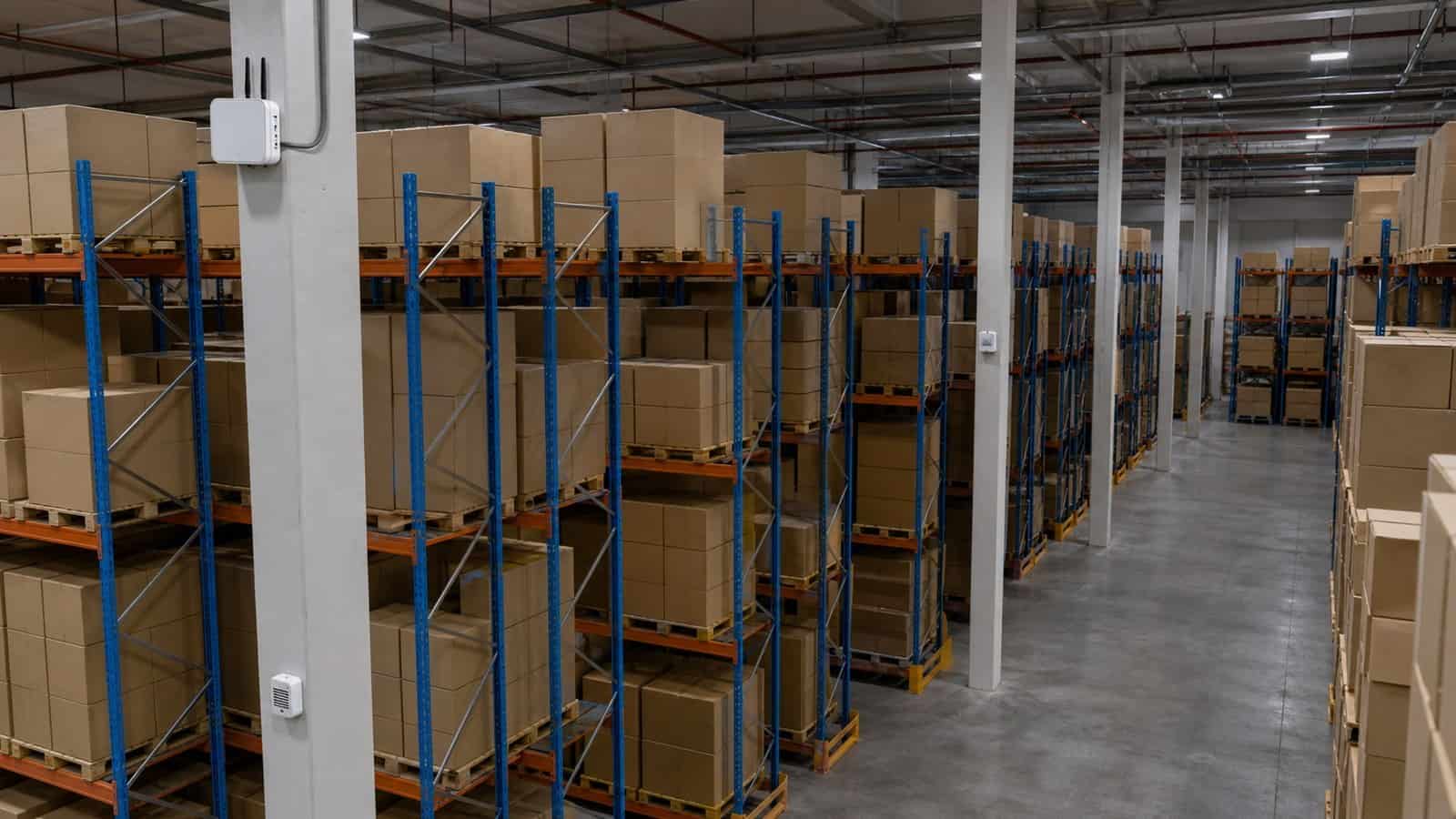
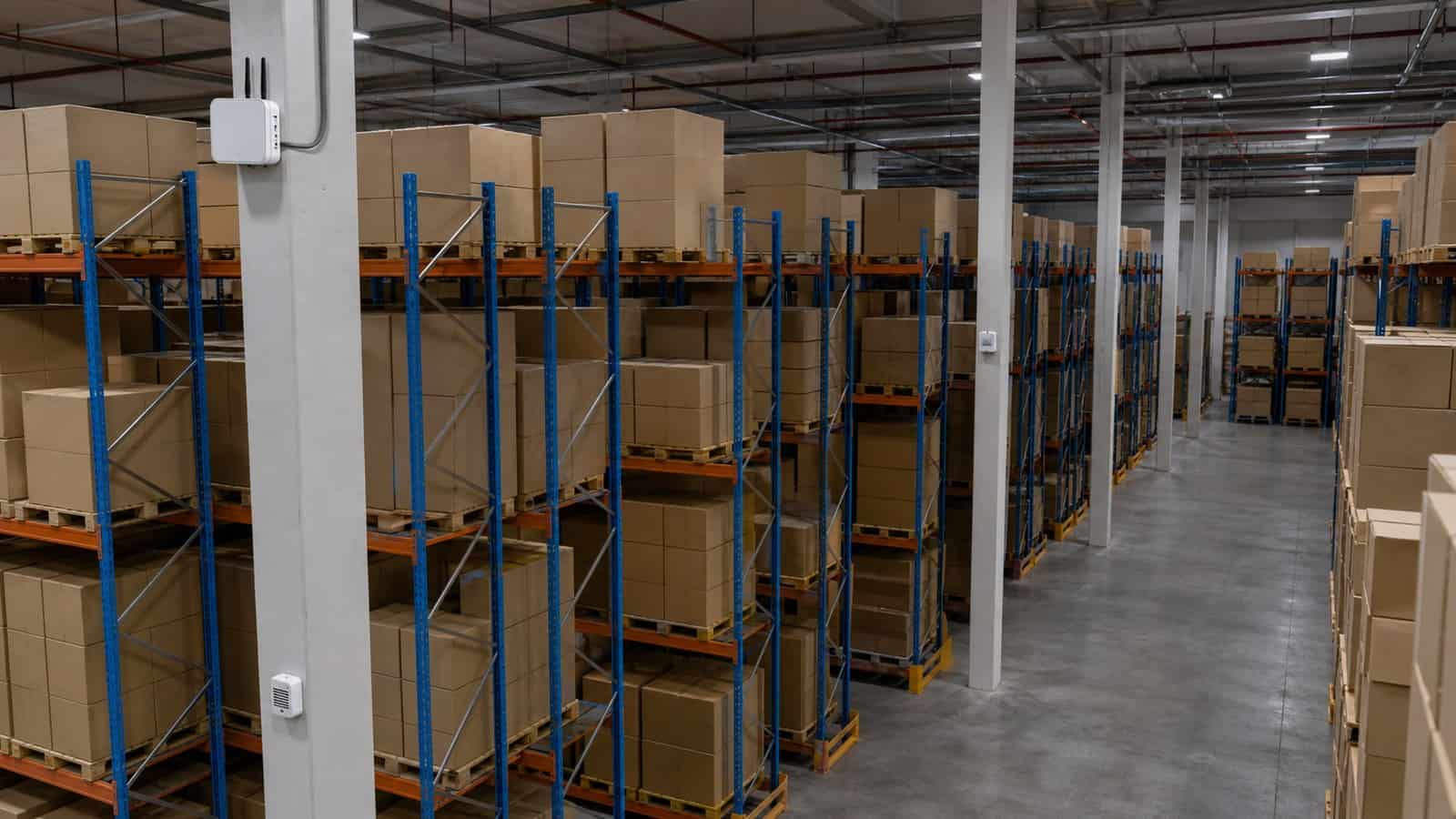
Suppose a warehouse pilot places the gateway in a poor RF position. Many sensors can still communicate, but they require relatively long-airtime settings. The team observes rising channel utilisation and concludes that it needs a higher-channel gateway.
Moving or adding the gateway may instead improve the radio paths and allow more devices to operate efficiently. In other words: A capacity problem can sometimes begin as a coverage problem.
This is one reason the LoRa Alliance’s current capacity guidance includes gateway deployment, macro-diversity, spreading-factor use and message behaviour within the same optimisation discussion.
Downlinks Need Their Own Budget
Uplink channel capacity is only half of the operating picture. LoRaWAN traffic is predominantly uplink, but confirmed messages, configuration changes and control applications introduce downlinks. A downlink is transmitted through a selected gateway rather than through every gateway that received the uplink.
This becomes particularly relevant in applications that:
- Use many confirmed uplinks
- Frequently change device configuration
- Control valves or actuators
- Depend on Class C traffic
- Perform network-management operations requiring downstream messages
Adding receive channels should not automatically be assumed to solve a downlink-heavy application.
The Robustel R1520LG LoRaWAN Gateway datasheet lists LoRaWAN protocol V1.0.4 with Class A/Class C support. The actual traffic design still needs to respect regional rules, application requirements and the capacity of the complete network.
Robustel’s KoolZone vaccine and laboratory monitoring case study provides another useful contrast. R1520-LG gateways connect distributed monitoring sensors in hospitals, laboratories and cold-chain environments and then use cellular backhaul to reach the upstream platform.
The value of this example is not a published gateway-capacity number. It shows why the application traffic model matters: environmental monitoring is a different workload from a network carrying frequent actuator commands or highly interactive downstream traffic. “Number of sensors” alone does not describe either network sufficiently for gateway sizing.
What the Robustel R1520LG 8-Channel LoRaWAN Gateway Means for Capacity Planning
The Robustel R1520LG LoRaWAN Gateway supports up to eight channels receiving data simultaneously. It also provides Ethernet, Wi-Fi and cellular backhaul and can connect to an external LNS or run an embedded ChirpStack architecture.
For capacity planning, the eight-channel specification should be interpreted narrowly and accurately: The gateway can receive LoRaWAN traffic on up to eight configured channels simultaneously.
It should not be translated into:
- Eight devices at once
- A fixed maximum node count
- A fixed number of packets per day for every application
- A guaranteed deployment density
- A fixed coverage area
- A conclusion that a 16-channel gateway will support exactly twice as many devices
Moving from eight to 16 receive channels can provide access to more simultaneous frequency resources in an architecture that makes use of them. Semtech has also discussed 8-to-16-channel expansion as one way of reducing interference pressure in relevant network conditions. But the benefit remains dependent on regional channel plans, device behaviour and network configuration rather than being a universal 2× capacity multiplier.
An 8-channel industrial gateway may therefore remain entirely appropriate for a large sensor estate when:
- Messages are short and infrequent
- Most devices use efficient data rates
- Downlink demand is limited
- Coverage is well planned
- Traffic is distributed rather than synchronised
- Additional gateway sites provide appropriate RF coverage
Conversely, a smaller device estate can still create a demanding radio environment if many devices spend long periods on air or generate frequent bidirectional traffic.
The R1520LG should be selected when its actual eight-channel architecture and wider industrial functions match the project—not because eight channels are presumed sufficient for a particular number of sensors.
Decide Whether You Need More Channels or More Gateways
When the capacity model identifies a problem, the final decision is not necessarily “buy a 16-channel gateway.”
First identify the constraint.
| Observed problem | More receive channels | Another gateway / better placement | Traffic optimisation |
|---|---|---|---|
| High utilisation across available uplink channels | Potentially useful | May also help | Often relevant |
| Many endpoints using long-airtime data rates due to weak RF | May provide limited benefit | Often worth evaluating | ADR/device settings may help |
| Dead zone in one part of the site | Usually not the solution | Usually relevant | Limited value |
| Several buildings need independent coverage | Not necessarily | Often relevant | Not the primary issue |
| Frequent confirmed traffic | Does not remove downlink demand | Additional gateway options may help system design | Review confirmation policy |
| Large bursts at the same reporting time | May help in some architectures | Possibly | Reschedule/randomise traffic where possible |
| Poor cellular or Ethernet backhaul | No effect | No effect on IP problem | Fix backhaul architecture |
| Requirement for radio overlap/resilience | Not sufficient alone | Additional coverage point often more relevant | Not the primary issue |
The 2026 LoRa Alliance capacity guidance is useful here because it does not treat additional gateway resources as the only answer. Its recommendations include gateway-layer optimisation, macro-diversity and more efficient use of airtime, including appropriate confirmed/unconfirmed traffic and spreading-factor behaviour.
For a Robustel R1520LG deployment, the decision process can therefore be:
Measure representative traffic → identify the constrained resource → improve RF and traffic behaviour where appropriate → test under production-like load → add gateway coverage or channel capacity only when the evidence supports it
This prevents both forms of sizing error. Under-sizing can create congestion and poor service once the pilot grows. Over-sizing can add hardware cost and architectural complexity without solving the actual bottleneck. The objective is not to minimise the number of channels. It is to deploy enough radio capacity for the traffic the application genuinely creates.
Preguntas frecuentes
Q1. What does an 8-channel LoRaWAN gateway mean?
An 8-channel LoRaWAN gateway can monitor up to eight configured LoRaWAN receive channels simultaneously, depending on its radio architecture and regional configuration. It does not mean that only eight devices can communicate with the gateway. Device capacity depends on message frequency, airtime, spreading factors, payload behaviour, downlinks and the wider network design.
Q2. Is a 16-channel LoRaWAN gateway twice as powerful as an 8-channel gateway?
No. More receive channels can increase available radio resources in an architecture that uses them, but capacity does not scale as a universal 1:1 ratio with channel count. Regional frequency plans, device traffic, data rates, interference, confirmed messages and gateway topology all influence the practical result.
Q3. How many devices can the Robustel R1520LG LoRaWAN Gateway support?
Robustel specifies the R1520LG LoRaWAN Gateway as supporting up to eight simultaneous receive channels but does not publish a universal maximum device count. A valid sizing exercise should model the actual application traffic rather than converting the channel specification into a node limit.
Q4. Does using a higher spreading factor reduce LoRaWAN capacity?
Higher spreading factors generally increase the time required to transmit a given message, which means the radio channel remains occupied for longer. They can be valuable for difficult links, but a network with many long-airtime devices creates a different capacity profile from one where most endpoints use higher data rates. ADR can help optimise suitable static devices.
Q5. Should I add a 16-channel gateway or a second 8-channel gateway?
The answer depends on the problem. If the limitation is available channel capacity, additional channels may be relevant. If the problem is a coverage gap, difficult RF paths or a requirement for overlapping reception, another gateway location may be more effective. Measure traffic and coverage separately before choosing either architecture.
Conclusión
Choosing between an 8-channel and 16-channel LoRaWAN gateway should begin with an application traffic model, not a device-count threshold. The Robustel R1520LG LoRaWAN Gateway provides up to eight simultaneous receive channels, but that specification does not define how many sensors every project can support. Reporting intervals, payload behaviour, spreading factors, confirmed traffic, downlinks, regional parameters and gateway placement all affect the usable capacity.
Treat the pilot as a source of traffic evidence. Measure how devices actually communicate, identify which part of the radio system is becoming constrained and then decide whether the appropriate response is more channels, another gateway position or a change in traffic behaviour.
The correct channel count is not the largest number available. It is the smallest validated radio architecture that provides sufficient capacity and margin for the application’s expected production traffic.
Explore more articles about Robustel’s LoRaWAN gateway in industrial IoT:

Acerca del autor
Robert Liao | Technical Support Engineer
Robert is an IoT Technical Support Engineer at Robustel, specializing in industrial networking and edge connectivity. A certified Networking Engineer, Robert focuses on the deployment and troubleshooting of large-scale IIoT infrastructures. His work centers on architecting reliable, scalable system performance for complex industrial applications, bridging the gap between field hardware and cloud-side data management.