
LoRaWAN Gateway with Edge Computing: Local Rules, Data Filtering and Cloud Backhaul Guide
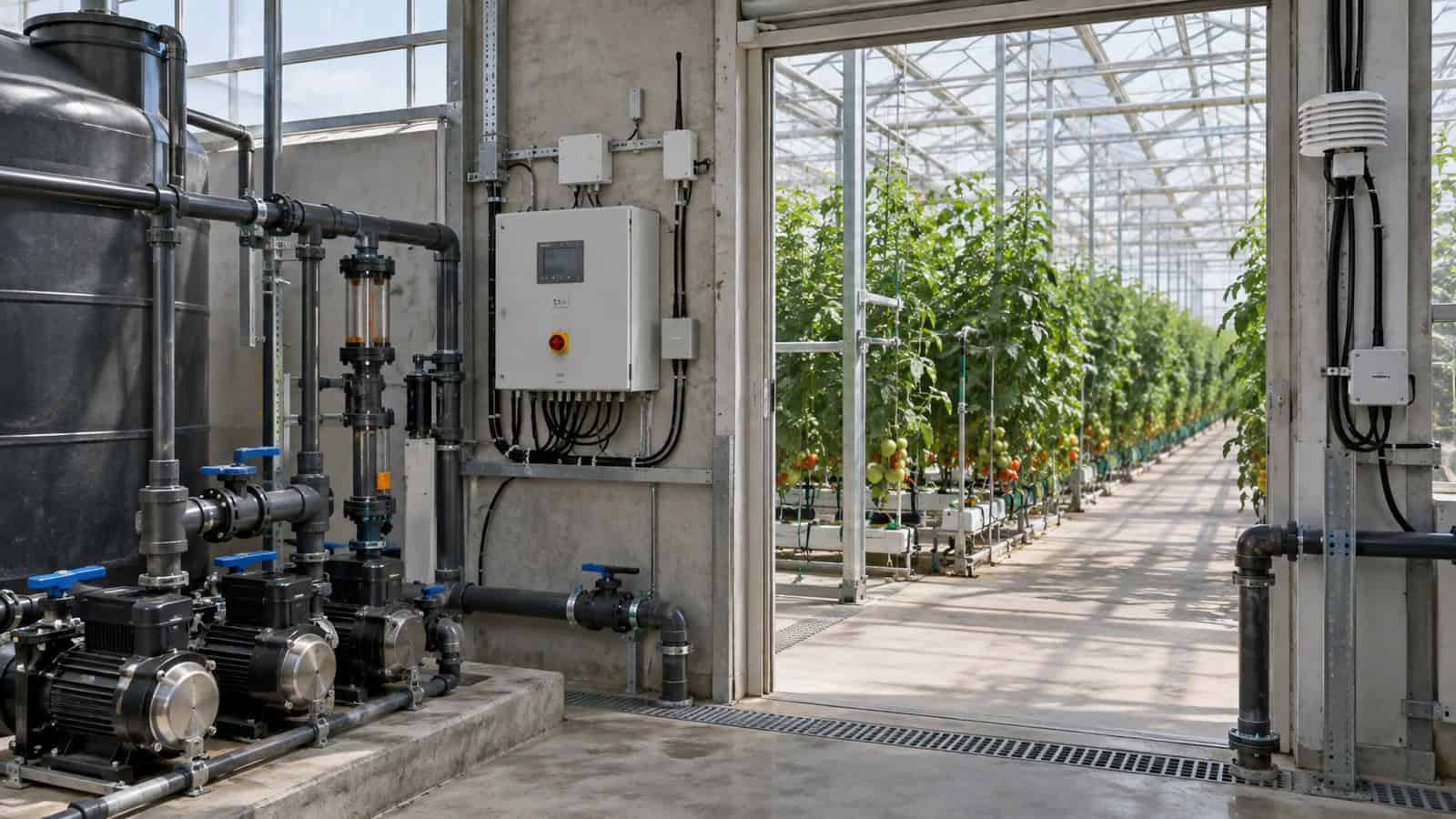
The Robustel LG3120e LoRaWAN Gateway is designed for projects that need LoRaWAN collection, an integrated network server, local processing and flexible backhaul in one industrial device. That does not mean every rule belongs in the gateway. A good edge design decides which functions must continue during a WAN outage, which data needs local context and which decisions should remain in the cloud or supervisory system.
I find it helpful to trace one sensor message all the way to a business action. That exposes where decoding, validation, filtering, storage, alarming and integration actually belong—and who will maintain each step.
Follow the Packet Before Writing the Rule
A LoRaWAN end device sends an uplink through one or more gateways. The network-server layer handles LoRaWAN functions before application data is decoded and delivered to an integration. If the gateway hosts the LNS and edge application locally, several stages can remain on site. If it forwards packets to an external LNS, the useful application context may live elsewhere.
Document these stages separately:
- radio reception and frequency plan;
- network-server ownership and device enrolment;
- payload decoding and unit conversion;
- quality checks, deduplication and timestamps;
- rules, alarms and local actions;
- buffering and replay;
- northbound publishing and application acknowledgement.
Moving all seven stages into a gateway can create a single box that nobody is prepared to maintain. Moving all seven to the cloud can make a simple alarm dependent on backhaul. Choose deliberately.
Put Rules at the Edge When Delay or Disconnection Changes the Outcome
A plant-room leak, freezer temperature excursion or remote pump threshold may justify local action because waiting for a cloud round trip adds avoidable risk. A monthly energy benchmark or cross-site anomaly model usually benefits from central data and broader context.
| Rule characteristic | Better local candidate | Better central candidate |
|---|---|---|
| required response | seconds and useful during WAN loss | minutes, hours or portfolio review |
| data scope | one site or attached asset | many sites and external datasets |
| change ownership | field/controls team with governed release | analytics or application team |
| failure behaviour | safe local alarm or handoff is defined | delayed result is acceptable |
| compute/storage | bounded and benchmarked on the gateway | large history or intensive model |
Local does not automatically mean reliable. The rule needs a known startup state, input-quality checks, storage limits and a way for operators to see that it is running.
Filter Repetition, Not Evidence
LoRaWAN sensors often report slowly, so indiscriminate filtering may save little bandwidth while making diagnosis harder. Filter after the payload has been validated and retain the information needed to distinguish “no change” from “no data.”
Useful techniques include deadbands for stable analogue values, event-driven transmission of state changes, scheduled summaries and local suppression of duplicate application records. Keep alarm transitions, quality flags and the last known good timestamp. If data will be replayed after an outage, make the receiving platform tolerant of delayed and duplicate messages.
Backhaul Design Starts With Outage Behaviour
Cellular, Ethernet and Wi-Fi provide different dependencies, but none is universally available. Estimate normal message volume, management traffic and replay after the longest credible outage. Then test restoration while live messages continue; the combined stream can be more demanding than normal operation.
The Robustel’s Koolzone cold-chain case study documents an R1520-LG deployment rather than an LG3120e deployment. It is relevant evidence for why sensor reach, cellular behaviour, fleet visibility and alarm delivery must be considered together. It does not prove LG3120e performance or compatibility with Koolzone’s application.
How the Robustel LG3120e LoRaWAN Gateway Combines Edge Rules and Backhaul
The Robustel LG3120e LoRaWAN Gateway documents an integrated LoRaWAN network server, eight receive channels, 4G/LTE, a physical SIM plus eSIM, two Ethernet ports, Wi-Fi 6, two configurable RS-232/RS-485 ports and two digital inputs and outputs. Its quad-core platform, Debian-based RobustOS Pro and SDK resources support local applications where the workload has been validated.
On the exact compatible model, Robustel E2C Field can bring LoRaWAN and wired field data into a more coherent workflow: collect from supported sources, apply local logic and alarms, visualise operating data and publish northbound without assembling every component from unrelated tools. The benefit is not merely that software is present on the same gateway. It is a shorter, more transparent path from sensor onboarding to a maintainable data service. That compatibility statement applies to LG3120e only; it must not be transferred to R1520LG, R1320LGe or other LoRaWAN models.
Use the R1320LGe where a compact packet-forwarding role to an existing LNS is the clearer architecture. Use the R1520LG where external LNS options or its embedded ChirpStack design suit the project. The product choice follows LNS ownership and local application requirements, not the desire to put “edge” in the specification.
Keep Safety and Control Outside an Unproven Rule Chain
A digital output can hand an alarm or request to another system, but the gateway should not quietly become an undocumented safety controller. Define electrical states, loss-of-power behaviour, stale-data handling and the authority of the downstream PLC or BMS. Test open circuit, stuck input, missing sensor and backhaul loss separately.
Robustel’s LoRaWAN connectivity for smart buildings application example uses the R1520-LG and shows how wireless sensors, cellular backhaul and portfolio operations can fit together. Use it to understand the service boundary, not as evidence that LG3120e has the same hardware or software profile.
Commission the Data Path in Both Directions
Create known sensor inputs, verify decoded values and timestamps, trigger every alarm state and interrupt the cloud connection. Confirm what remains visible locally, what is buffered and how replay is ordered. Then change one rule under controlled release and prove that rollback is possible.
Commission the return path as carefully as the uplink. If an operator acknowledgement, configuration change or downlink is expected to reach a field device, record where it can queue, expire or be rejected. In practice, this is where otherwise convincing demonstrations fail: the value reaches a dashboard, but nobody has tested how an old command behaves after the WAN returns. Use a harmless representative command and preserve timestamps at every stage.
For a general overview of an integrated LoRaWAN platform, the Robustel R1520LG product overview video is useful background. The LG3120e datasheet, Robustel E2C Field compatibility list and project benchmark remain the controlling evidence for this article’s featured design.
Häufig gestellte Fragen
Q1. What is the purpose of a LoRaWAN gateway?
It receives LoRaWAN radio traffic from end devices and connects that traffic to a network-server architecture. Depending on the model, it may also host the LNS, perform local processing or provide cellular and Ethernet backhaul.
Q2. Is a gateway an edge device?
It can be. A simple packet forwarder mainly transports traffic, while an edge-capable gateway can run decoding, filtering, buffering and applications locally. The workload still has to fit the documented compute and storage resources.
Q3. Is LoRaWAN better than Wi-Fi?
They serve different needs. LoRaWAN is suited to small, infrequent messages over longer distances and low-power devices; Wi-Fi supports higher data rates over a different coverage and power model. Many sites use both.
Q4. Can an ESP32 be used as a LoRa gateway?
It can support some development and single-channel experiments with suitable hardware, but a production LoRaWAN gateway is normally selected for multi-channel reception, frequency-plan compliance, management, backhaul and lifecycle support.
Q5. When is the Robustel LG3120e LoRaWAN Gateway a good edge-computing fit?
It fits sites that need an integrated LNS, local applications, mixed LoRaWAN and wired interfaces, and managed cellular or Ethernet backhaul. Benchmark the actual rules, storage and replay load, and use E2C Field only on the documented compatible LG3120e model.
Schlussfolgerung
The Robustel LG3120e LoRaWAN Gateway is a strong fit when radio collection, local context and upstream integration genuinely benefit from sharing one managed edge platform. Its value comes from a traceable pipeline, not from pushing every possible function into the gateway.
Keep urgent, bounded rules close to the asset; keep portfolio analytics where wider context exists; and prove buffering, replay and failure states before rollout. That produces an edge design that stays understandable when the cloud is unavailable and remains maintainable when the rules change.
For handover, leave one annotated message trace that follows a real device from radio reception to northbound acknowledgement and one witnessed outage test showing the reverse path. Those two records give the next engineer a practical starting point when a sensor is visible locally but absent from the application—or when a cloud instruction never reaches the field.
Explore More Articles About Robustel LoRaWAN Gateways
Über den Autor
Robert Liao | Technical Support Engineer
Robert is an IoT Technical Support Engineer at Robustel, specializing in industrial networking and edge connectivity. A certified Networking Engineer, Robert focuses on the deployment and troubleshooting of large-scale IIoT infrastructures. His work centers on architecting reliable, scalable system performance for complex industrial applications, bridging the gap between field hardware and cloud-side data management.