
How Many LoRaWAN Gateways Do You Need? Capacity and Coverage Sizing Guide
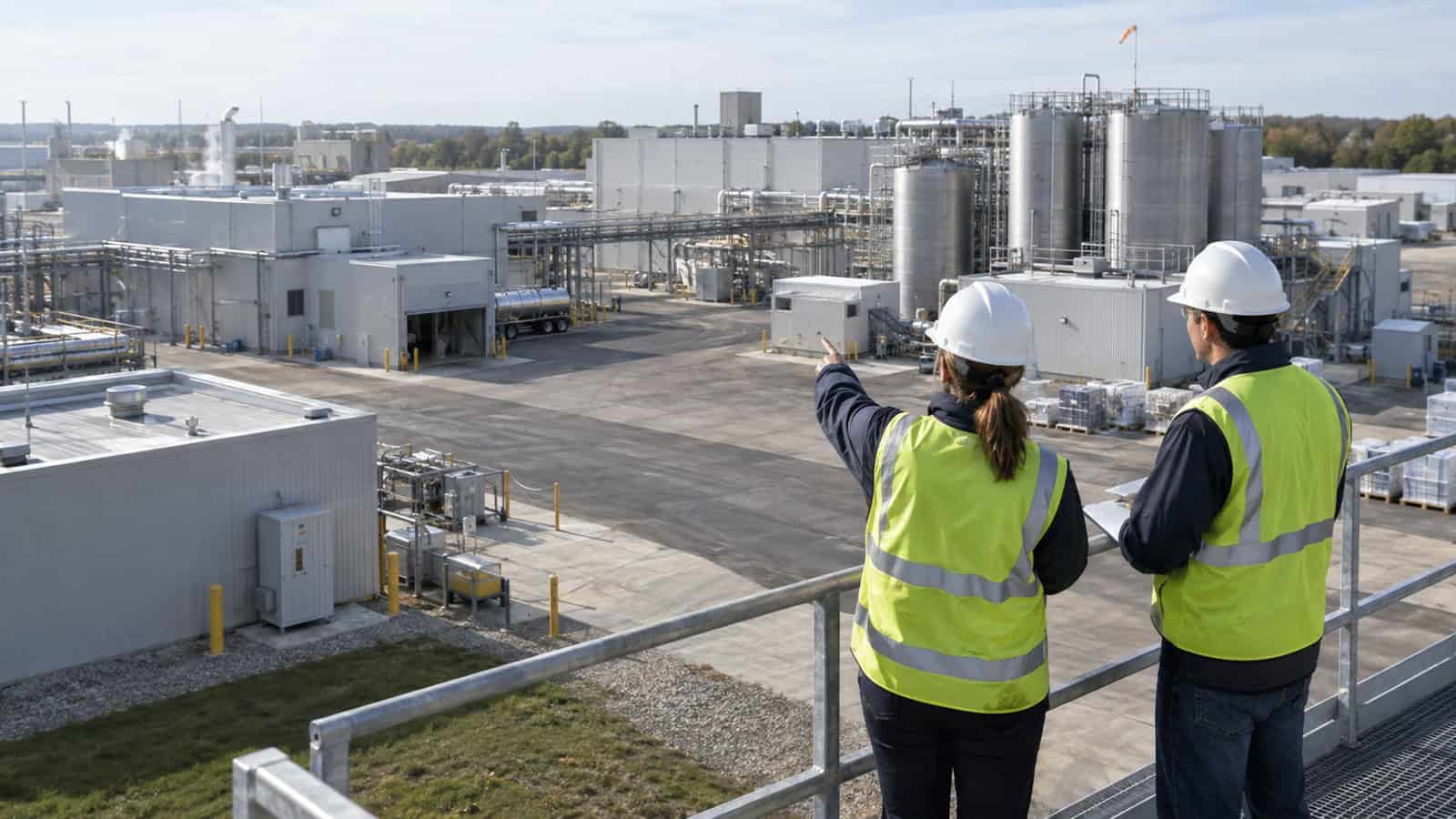
The Robustel LG3120e Industrial Edge Computing LoRaWAN Gateway can combine LoRaWAN reception, an integrated network server and local data operations, but no gateway specification can answer “how many?” without the site and traffic model. Gateway count is driven by the largest requirement among coverage, airtime capacity, resilience and practical installation.
Floor area is only an early planning input. A compact reinforced plant can need more receiving points than a much larger open estate.
Divide the Site into RF Zones
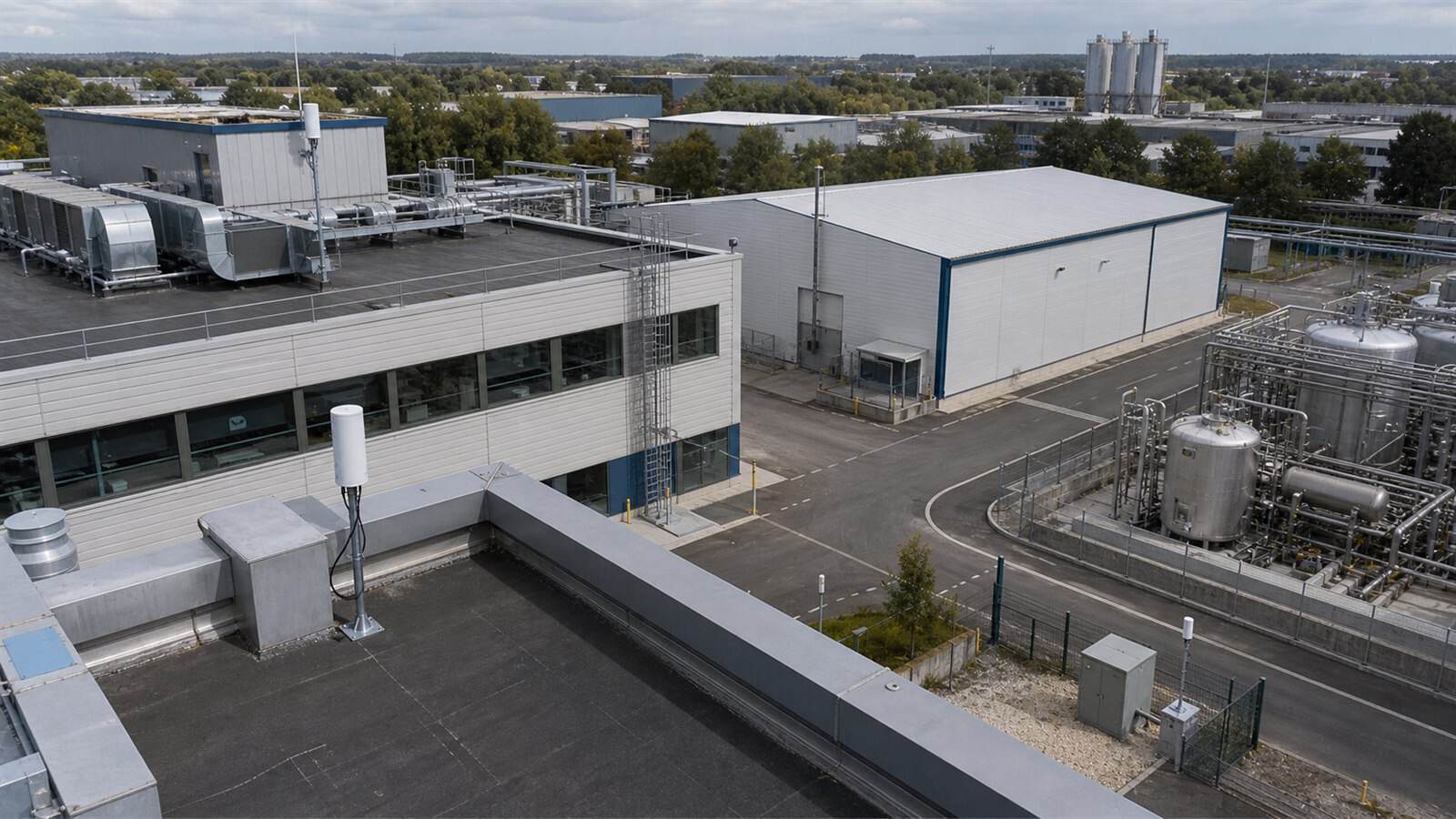
Mark distinct buildings, floors, basements, outdoor areas, terrain changes and metal-dense process zones. Identify the hardest endpoint in each zone and candidate gateway positions with power, backhaul and maintenance access.
One gateway may hear several zones during a survey. Keep margin in the design: a link that works only with a door open or equipment stopped is not a stable production path.
Build an Airtime Model from Endpoint Behaviour
Channel count is not endpoint count. Practical load changes with payload size, reporting interval, spreading factor/data rate, retransmissions and downlinks. Alarm bursts can create the busiest period even when daily traffic is low.
| Eingabe | Warum es wichtig ist | Evidence needed |
|---|---|---|
| Endpoint quantity by zone | Locates demand | Asset schedule |
| Payload and interval | Establishes airtime pattern | Real device configuration |
| Data-rate distribution | Slow links consume more airtime | Survey measurements |
| Retry rate | Weak coverage adds load | Pilot logs |
| Downlink demand | Uses constrained radio opportunities | Application workflow |
| Growth and alarm bursts | Tests headroom | Credible scenario |
Model the busiest interval and then validate it with real endpoints or representative traffic.
Add Gateways for Resilience Only When the Failure Domain Requires It
Receiving the same endpoint at more than one gateway can improve spatial diversity, but multiple gateways do not automatically create an available service. They may share power, backhaul, LNS or site access. Name the failure the additional gateway is intended to survive.
Where an external LNS is used, backhaul loss can isolate every gateway at a site. An embedded LNS changes the local failure behaviour but also changes server ownership, backup and operations. Gateway count and architecture should be reviewed together.
How Robustel LG3120e and E2C Field Affect Sizing
The LG3120e supports up to eight simultaneous LoRa receive channels, documented regional plans, an integrated LNS, two Fast Ethernet ports, cellular/eSIM and Wi-Fi backhaul, plus serial and I/O. Those capabilities allow one site node to combine radio access and selected local operations. They do not establish a fixed sensor limit.
On Robustel LG3120e, E2C Field adds LoRaWAN operations, local processing, alarms, workflows and northbound integration to the gateway’s radio and backhaul role. That gives the site team one operating path from received sensor traffic to useful local and upstream data. It can simplify the application layer, while gateway count still comes from the measured RF and traffic model.
Robustel’s Voytech Systems LoRaWAN BMS case study documents real building deployments using R1520-LG gateways. It provides useful evidence that building geometry and cabling constraints shape gateway placement, without supplying a universal gateways-per-floor rule.
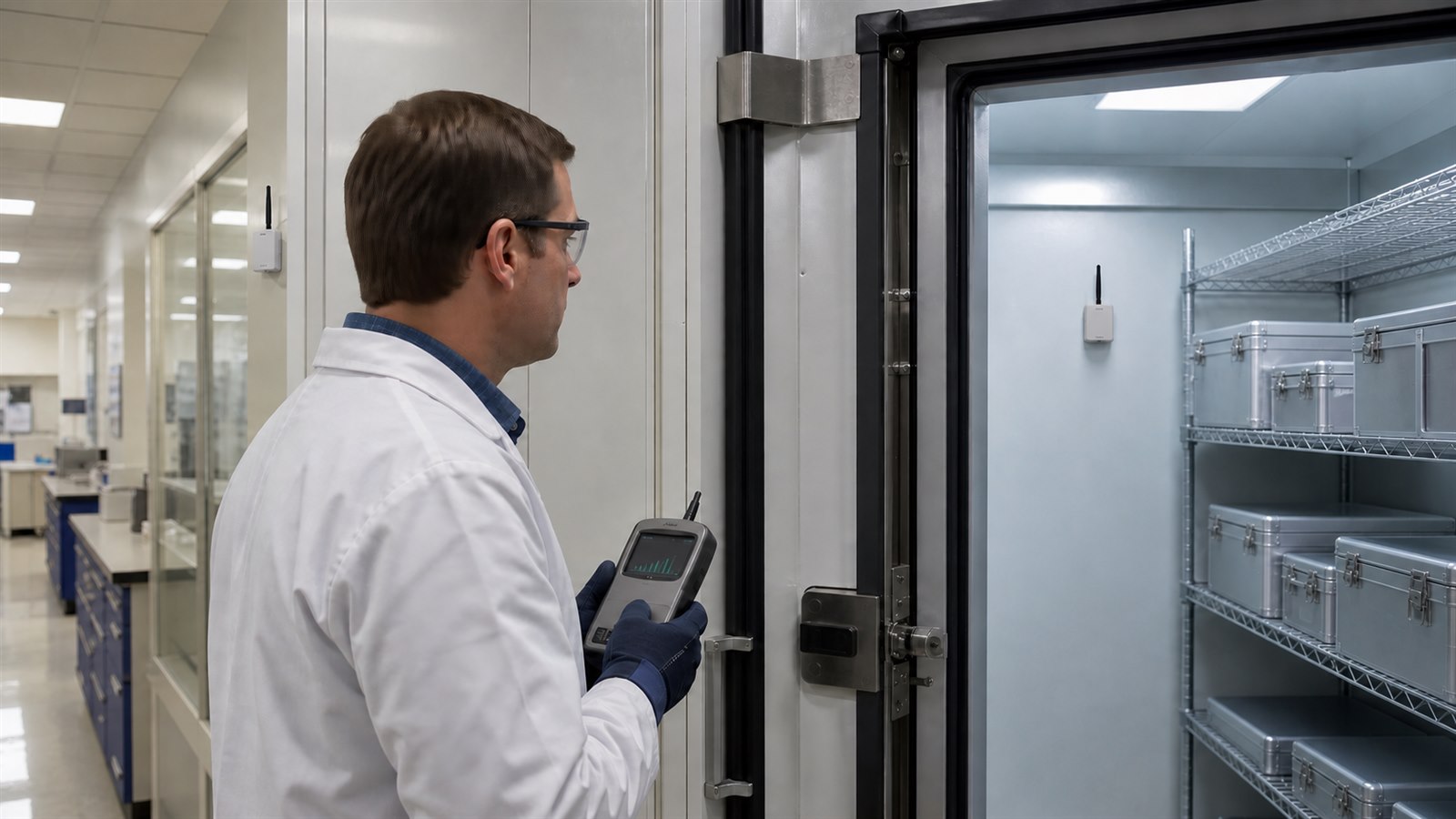
The KoolZone cold-chain case study shows another operating environment where insulated spaces and backhaul form part of the deployment context.
Match Gateway Type to Each Site Role
| Site role | Robustel direction | Sizing implication |
|---|---|---|
| Simple forwarding to existing ChirpStack | Robustel R1320LGe | Count radio sites; server remains external |
| Flexible external or embedded LNS | Robustel R1520LG | Gateway count and LNS placement interact |
| LoRaWAN plus local data operations | Robustel LG3120e | Include compute/workflow ownership in site count |
| Building automation integration | Robustel LG5120 | Count facility interfaces as well as RF zones |
The Robustel LoRaWAN Gateway Portfolio webinar provides an overview of these roles. Exact sizing still comes from the project model.
Use a Repeatable Sizing Procedure
- Map RF zones and candidate mounting points.
- List endpoints, payloads, intervals, device classes and downlinks.
- Survey the hardest point in every zone.
- Estimate airtime under normal and burst conditions.
- Decide LNS location and backhaul for each site.
- Add resilience only against named failure domains.
- Select the gateway role and exact regional variant.
- Pilot, measure retries and revise the map.
- Reserve practical headroom for growth and environmental change.
- Record the evidence behind the final count.
Häufig gestellte Fragen
Q1. How many devices does one LoRaWAN gateway support?
There is no trustworthy answer from device count alone. Payload size, reporting interval, data rate, retries, downlinks and RF conditions determine airtime demand, so model the traffic and then test a representative busy period.
Q2. Does LoRaWAN need a gateway?
Yes. End devices send LoRaWAN radio traffic to one or more gateways, which forward it into the network-server architecture. Multiple gateways may hear the same transmission, but the server is responsible for handling those receptions as part of the wider network.
Q3. What is the maximum range of a LoRaWAN gateway?
There is no universal maximum that can size a production network. Terrain, structures, antenna height, feeder loss, endpoint placement and regional settings all affect usable coverage, so a site survey is more valuable than a nominal distance.
Q4. What is the longest LoRa range ever reached?
Very long demonstrations are possible under exceptional line-of-sight and experimental conditions, but they do not translate into a dependable industrial design distance. Size the network for repeatable packet delivery in the actual building, city or rural terrain and include the seasonal and operational conditions that matter.
Q5. When is the Robustel LG3120e Industrial Edge Computing LoRaWAN Gateway appropriate?
It suits sites that need LoRaWAN connectivity together with local processing and mixed field interfaces. Use the traffic model and survey to decide gateway count; if the requirement is only to forward packets, a simpler architecture may be sufficient.
Schlussfolgerung
The Robustel LG3120e Industrial Edge Computing LoRaWAN Gateway is a strong fit where gateway sizing must account for both LoRaWAN coverage and local field-data responsibility. Use the greater requirement from RF coverage, traffic capacity, resilience and operational placement. Then verify the number with a measured pilot rather than a floor-area shortcut.
Explore more articles about Robustel’s LoRaWAN gateways in industrial IoT:
Über den Autor
Robert Liao | Technical Support Engineer
Robert is an IoT Technical Support Engineer at Robustel, specializing in industrial networking and edge connectivity. A certified Networking Engineer, Robert focuses on the deployment and troubleshooting of large-scale IIoT infrastructures. His work centers on architecting reliable, scalable system performance for complex industrial applications, bridging the gap between field hardware and cloud-side data management.