
Edge2Cloud (E2C) Trinity
An open operational edge platform designed to collect, process, visualise, and integrate industrial data across factory, field, and facility deployments.
Modern operational and infrastructure environments rarely operate within a single protocol, platform, or vendor ecosystem. Industrial equipment, building systems, wireless sensors, cloud platforms, and legacy infrastructure often exist in disconnected silos; Creating integration complexity for system integrators, operators, and industrial teams.
Edge2Cloud (E2C) Trinity provides a flexible operational framework for connecting industrial systems, distributed infrastructure, and modern software platforms through interoperable edge technologies and scalable deployment architectures. Through purpose-built applications including E2C Factory, E2C Field, and E2C Facility, organizations can simplify industrial data integration across manufacturing, remote infrastructure, and smart building deployments.
See E2C Trinity in Action
What is Edge2Cloud (E2C) Trinity?
A Shared Operational Edge Platform for Modern Industrial Environments
Industrial edge computing has evolved far beyond simply connecting devices to the cloud. Modern OT environments require a platform capable of collecting data from hundreds of industrial protocols, processing information locally, hosting operational applications, visualising live operations and securely integrating with enterprise systems—all while remaining scalable across multiple industries.
Edge2Cloud (E2C) Trinity is Robustel’s answer to this challenge.
Built on Debian-based RobustOS Pro and Robustel’s Edge Computing Gateway portfolio, E2C Trinity is a shared operational edge platform that provides the common software foundation for Robustel’s next generation of industrial applications.
E2C Trinity is not a standalone application. It is the platform that powers three purpose-built software applications, each optimised for a different operational environment while sharing the same runtime, software services and development architecture.
Purpose-Built Applications
- E2C Factory – Designed for Industrial automation, manufacturing, machine connectivity and production operations.
- E2C Field – Designed for Utilities, remote infrastructure, LoRaWAN deployments and distributed operational assets.
- E2C Facility (Coming Soon) – Designed for Smart buildings, building automation and integrated facility management.
Why a Shared Platform Matters
Most industrial software solutions are designed for a single discipline. Manufacturing, utilities, building automation and remote infrastructure often require different software platforms, different integrations and different engineering skillsets. The result is duplicated development effort, inconsistent architectures and higher lifecycle costs.
E2C Trinity changes this by providing a common operational edge platform that can be deployed across multiple industries and applications.
Whether you’re collecting PLC data on a production line, monitoring remote utility assets or integrating a building management system, the underlying platform remains the same—allowing engineers to reuse architectures, integrations, workflows and development expertise across every deployment.
Shared Platform Services
Every E2C Trinity application inherits the same core platform services, providing a consistent engineering experience regardless of deployment environment.
- Industrial Connectivity – A common library of southbound industrial communication drivers and northbound enterprise integration services for connecting operational technology with SCADA, MES, enterprise platforms and cloud services.
- Operational Data Services – High-performance data collection, protocol conversion, buffering, edge processing, storage and secure data distribution designed for real-world industrial environments.
- Edge Application Platform – A shared runtime supporting Node-RED, Edge SCADA, dashboards, automation workflows and custom operational applications without changing software platforms.
- Unified Engineering Model – One platform architecture, one deployment model and one operational lifecycle across Factory, Field and Facility applications—reducing engineering effort, simplifying maintenance and accelerating project delivery.
The Result
Rather than building a different software architecture for every industrial project, E2C Trinity provides a single operational edge platform that allows organisations to standardise application development, simplify system integration and deploy intelligent edge solutions consistently across manufacturing, utilities, infrastructure and smart buildings.
Why Modern OT Environments Need E2C Trinity
Industrial and infrastructure environments are becoming increasingly connected — but not necessarily more unified.
Industrial and infrastructure systems are generating more operational data than ever before — but much of that data remains fragmented across isolated devices, protocols, applications, and operational workflows.
Factories, utilities, buildings, transportation systems, and remote infrastructure often combine equipment from multiple vendors and technology generations, making integration increasingly difficult as organisations modernise operations and deploy new sensing, automation, and cloud technologies.
The challenge is no longer simply collecting data. The challenge is making operational data usable across industrial systems, distributed assets, wireless sensing networks, and modern operational applications without introducing excessive complexity or replacing existing infrastructure.
E2C Trinity helps address these challenges through a unified operational edge architecture designed to simplify industrial integration, local processing, visualization, and operational data flow across factory, field, and facility deployments.
The ‘6C’ E2C Trinity DataOps Framework: Simplifying Modern OT Operations
Modern operational environments generate enormous volumes of data across industrial equipment, building systems, wireless sensors, field assets, cloud platforms, and business applications. Yet for many organisations, valuable operational information remains trapped within disconnected systems, incompatible protocols, and fragmented technology environments that limit visibility, efficiency, and decision-making.
E2C Trinity addresses this challenge through Robustel’s 6C DataOps Framework — a practical approach to collecting, processing, managing, visualising, integrating, and controlling operational data at the edge. Together, these six capabilities help organisations bridge OT and IT systems, reduce deployment complexity, improve operational visibility, and build scalable digital transformation initiatives across factory, field, and facility environments.
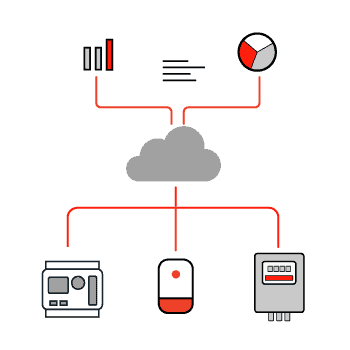
Collect
Unify Data from Disconnected Systems
Acquire operational data from PLCs, industrial equipment, building systems, wireless sensors, meters, and field assets using widely adopted industrial and building automation protocols.
Collect helps organisations eliminate data silos and establish a consistent operational data foundation across mixed-vendor environments and legacy infrastructure.
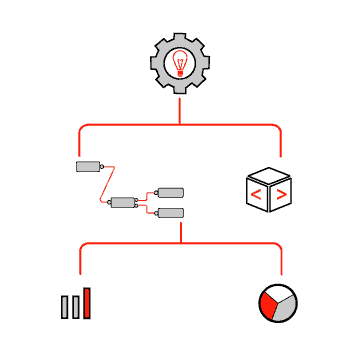
Compute
Transform Data into Operational Intelligence
Process, filter, enrich, and contextualise operational data locally at the edge using Node-RED workflows, edge applications, containerised services, and business logic. Compute reduces reliance on centralised infrastructure while enabling faster operational insights, localised decision-making, and more responsive automation workflows.
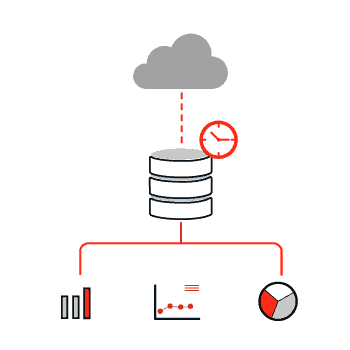
Continuity
Maintain Data Integrity
Store operational data locally through integrated databases and store-and-forward mechanisms designed for environments where network reliability cannot always be guaranteed. Cache helps ensure data continuity during outages, unstable connectivity, or remote deployment conditions while supporting reliable synchronisation with upstream systems.
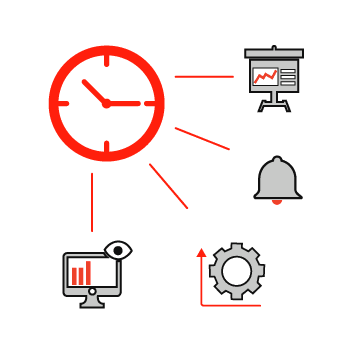
Canvas
Visualise Operations in Real Time
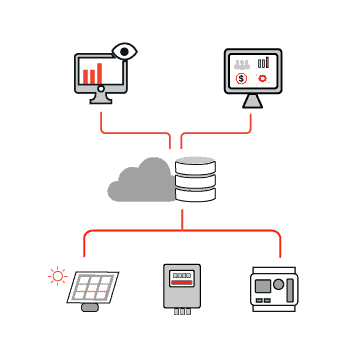
Transform operational data into actionable visibility through dashboards, SCADA interfaces, alarms, trends, and edge-based monitoring applications. Canvas enables operators, engineers, and decision-makers to understand equipment performance, infrastructure health, and operational conditions through intuitive, real-time visualisation tools.
Connect
Integrate OT, IT, and Cloud Platforms
Bridge operational technologies with SCADA systems, enterprise applications, cloud platforms, MQTT brokers, and modern business systems through interoperable northbound integration services. Connect helps organisations build unified operational workflows without forcing infrastructure replacement or proprietary ecosystem lock-in.
Control
Enable Responsive Operational Workflows
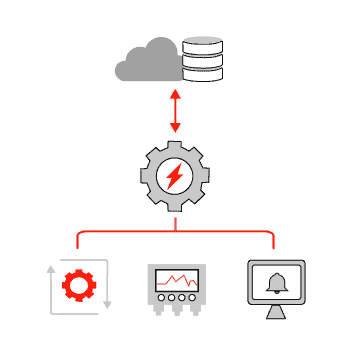
Support localised automation, alarm responses, workflow orchestration, and secure bidirectional communications across operational environments. Control enables organisations to move beyond monitoring alone, helping teams automate responses, improve operational efficiency, and act on critical information closer to where it is generated.
Designed for Factory, Field & Facility Operations
E2C Trinity is designed to support the operational requirements of modern industrial automation, distributed infrastructure, and smart building environments. Through purpose-built applications optimised for different operational ecosystems, organisations can simplify data integration, improve visibility, and support evolving infrastructure requirements across multiple deployment environments.
E2C Factory

Industrial Operations & Edge Integration
Integrate PLCs, industrial equipment, SCADA systems, sensors, and operational applications across manufacturing and industrial automation environments.
E2C Factory helps simplify industrial data collection, visualization, protocol integration, and operational workflows across both brownfield and modern industrial infrastructure.
E2C Field

Distributed Infrastructure Operations
Connect remote assets, distributed infrastructure, wireless sensing networks, and field operations through interoperable edge technologies and LoRaWAN integration.
E2C Field supports operational visibility across utilities, environmental monitoring, transportation, agriculture, smart cities, and remote industrial deployments.
E2C Facility
Smart Building & Facility Integration
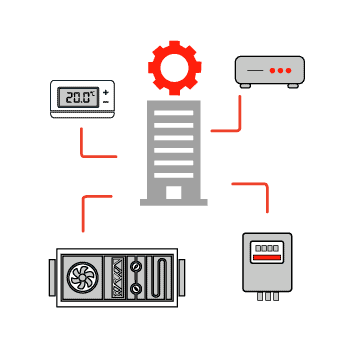
Bridge building management systems, wireless sensors, energy infrastructure, and operational technologies across modern smart facilities.
E2C Facility supports interoperable building automation and BMS environments using BACnet, KNX, LoRaWAN, Niagara Framework, and more to support modern OT/IT integration architectures in buildings and facilities.
Built for Interoperability
Modern industrial and infrastructure deployments rarely operate within a single technology ecosystem. Industrial sites, utilities, smart buildings, and distributed infrastructure environments often combine equipment, applications, and operational technologies from multiple vendors and generations of infrastructure.
E2C Trinity is designed to support these heterogeneous environments through open industrial protocols, flexible deployment models, and ecosystem-friendly operational architectures. Rather than forcing organisations into closed software stacks, E2C Trinity supports integration across industrial systems, wireless sensing networks, cloud services, and third-party operational software platforms.
The protocols and technologies below represent a selection of commonly deployed integrations across the E2C Trinity ecosystem. Detailed protocol support and environment-specific compatibility information is available within the E2C Factory, E2C Field, and E2C Facility product pages.
Industrial & Building Protocols
Support interoperable operational environments using widely adopted industrial and building automation protocols including MQTT, OPC UA, Modbus, BACnet, KNX, and LoRaWAN. E2C Trinity helps simplify communication between mixed-vendor OT systems, enabling operational data exchange across industrial infrastructure, smart facilities, and distributed edge deployments.
Open Software
Ecosystems
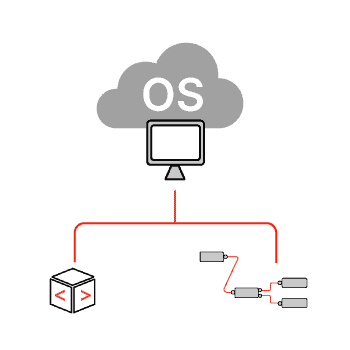
Deploy Docker containers, Node-RED workflows, and third-party operational applications within a flexible Debian-based edge environment. Built on RobustOS Pro, E2C Trinity supports open operational architectures that allow organisations, system integrators, and developers to integrate edge computing applications without relying on closed proprietary ecosystems.
Cloud & Data
Integration
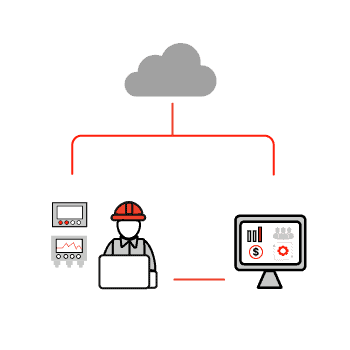
Integrate operational data with cloud services, enterprise applications, SCADA systems, and modern OT/IT workflows. E2C Trinity helps bridge edge infrastructure with centralised operational platforms, enabling organisations to route, process, visualise, and share operational data across distributed industrial and infrastructure environments.
Third-Party
Platform Support
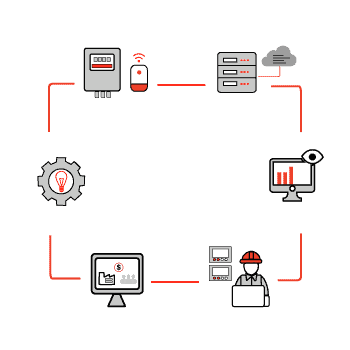
Operate alongside existing industrial software and middleware platforms including Ignition, N3uron, ChirpStack, and other ecosystem technologies. E2C Trinity is designed to complement modern OT and edge computing environments, helping organisations extend operational capabilities while maintaining compatibility with existing software investments and deployment architectures.
Architected to Connect Operational Environments
E2C Trinity is designed to sit between operational assets and modern operational applications — helping organisations connect industrial equipment, building systems, wireless sensing networks, edge infrastructure, cloud services, and operational software platforms within a unified operational architecture.
Through industrial protocol integration, local processing, visualisation, orchestration, and ecosystem-friendly deployment models, E2C Trinity helps simplify how operational data moves across industrial automation, distributed infrastructure, and smart facility environments.
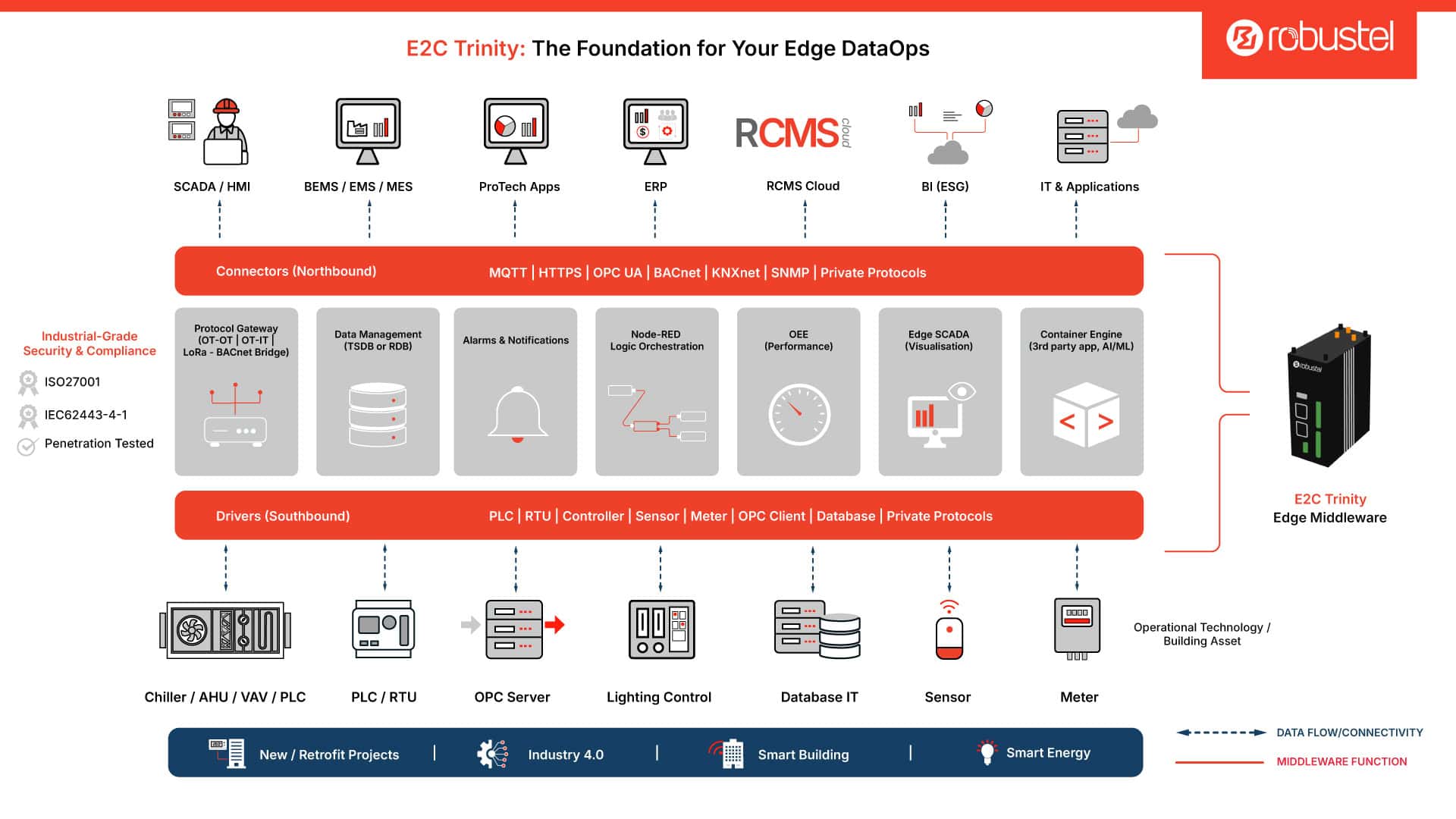
Southbound Integration
Collect operational data from PLCs, controllers, sensors, meters, building systems, databases, and industrial assets using widely adopted industrial and building automation protocols.
E2C Trinity Edge Middleware
Process, visualise, orchestrate, and route operational data locally through interoperable edge services including protocol gateways, visualisation tools, Node-RED workflows, alarms, OEE analysis, and containerised applications.
Northbound Operational Integration
Integrate operational data with SCADA systems, cloud platforms, enterprise applications, RCMS, dashboards, analytics platforms, and modern operational workflows.
Choosing the Right Edge2Cloud Platform
Edge2Cloud ROS and Edge2Cloud (E2C) Trinity are complementary platforms designed for different levels of industrial edge deployment.
Edge2Cloud ROS provides a lightweight, focused platform for industrial protocol conversion and secure OT-to-cloud data transmission. E2C Trinity extends Robustel’s software portfolio into operational edge computing, combining industrial connectivity with local processing, visualisation, automation and application-specific workflows.
|
Capability / Feature |
Edge2Cloud ROS  |
E2C Trinity  |
|---|---|---|
|
Primary Purpose |
Industrial Protocol Conversion Gateway – Lightweight OT-to-cloud connectivity focused on protocol conversion and secure data transmission. |
Operational Edge Computing Platform – Combines industrial connectivity, local processing, visualisation and automation in a single Debian-based platform. |
|
Operating Platform |
RobustOS, with RobustOS Pro supported on selected models such as the R1520LG. |
Debian-based RobustOS Pro, providing a full Linux environment for advanced applications, scripting and custom development. |
|
Southbound Connectivity (OT) |
Essential Industrial Connectivity – IEC 60870-5-101/104, Modbus, Siemens S7 and Router I/O, with BACnet/IP and BACnet MS/TP available on the R1520LG. |
Extensive Industrial Protocol Library – Supports 100+ industrial protocols, including Modbus, OPC UA, Siemens S7, BACnet, KNX, DLT645 and other industrial, building automation, utility and IoT standards. |
|
LoRaWAN Integration |
Flexible LoRaWAN Integration – Connects to an embedded or external ChirpStack Network Server, with payload decoding configured for connected devices and applications. |
Integrated LoRaWAN Platform – Embedded ChirpStack Network Server supporting OTAA onboarding, device provisioning, device management and built-in payload codecs for common environmental, vibration, electricity and water-metering sensors. |
|
Northbound Connectivity (IT) |
Cloud Connectivity – MQTT, AWS IoT and Microsoft Azure IoT. |
Enterprise Integration – MQTT over TLS, Sparkplug B, HTTPS REST API, AWS IoT and Microsoft Azure IoT. |
|
Local Data Processing |
Protocol Mediation – Data acquisition, protocol conversion, data mapping and message forwarding. |
Edge Intelligence – Data acquisition, filtering, transformation, aggregation, buffering, storage, protocol conversion and event-driven processing. |
|
Visualisation & HMI |
Not supported. |
Integrated Edge SCADA – Built-in dashboards and local HMI visualisation for real-time operational monitoring. |
|
OEE Analytics |
Not supported. |
Built-in OEE Analysis – Automatically calculates availability, performance and quality metrics, with reporting, custom analysis dimensions and anomaly alerts. |
|
Automation & Logic |
Connectivity Workflows – Configured through individual Edge2Cloud applications. |
Low-Code Automation – Node-RED workflows, local automation logic and application-specific operational functions. |
|
Application Model |
Individual connectivity applications installed on supported RobustOS devices. |
Shared platform architecture powering E2C Factory, E2C Field and E2C Facility. |
|
Best Suited For |
Lightweight Industrial Connectivity – Projects requiring protocol conversion and reliable, secure OT-to-cloud data forwarding. |
Intelligent Edge Deployments – Projects requiring local decision-making, data processing, visualisation, automation and reusable operational architectures. |
Complementary Platforms, Not Replacement Platforms
Edge2Cloud ROS remains the appropriate choice for lightweight industrial connectivity, protocol conversion and secure cloud forwarding.
E2C Trinity expands the Robustel software portfolio for deployments that require local processing, operational applications, visualisation and advanced edge computing. It complements Edge2Cloud ROS rather than replacing it, allowing customers to select the platform that best matches the technical and operational requirements of each project.
Building the Right Operational Architecture Starts with the Right Ecosystem
Every industrial and infrastructure deployment is different. Manufacturing systems, remote infrastructure, wireless sensing environments, and building automation projects often require different integration strategies, protocols, operational workflows, and deployment architectures.
Whether modernising industrial infrastructure, deploying distributed sensing networks, integrating building systems, or evaluating edge computing architectures, Robustel and its global partner ecosystem can help identify the right operational approach for your environment.