
5G RedCap Routers
Industrial 5G RedCap (NR-Light) Routers for IIoT & Enterprise Connectivity
5G RedCap, standardised under 3GPP Release 17 as NR-Light, is a reduced-capability 5G specification engineered for the broad class of IoT and industrial applications that sit above the constraints of LPWAN but below the demands of enhanced Mobile Broadband. With downlink throughput up to 150 Mbps, native 5G core network (5GC) integration, and meaningful latency improvements, RedCap delivers genuine 5G capability including: network slicing access, the 5G security architecture, and improved spectral efficiency at a device cost and power profile that is realistic for field-deployed industrial hardware.
Robustel’s 5G RedCap router portfolio packages this technology in hardened, industrially-rated enclosures running RobustOS with advanced VPN tunnelling, SD-WAN capability, and dual-SIM failover built in. Fleet management is handled through RCMS, giving OT and IT teams centralised control over configuration, firmware deployment, and connectivity policies across distributed deployments without site visits. Whether you are planning a greenfield IIoT rollout or building a migration path away from LTE infrastructure before network sunset timelines become a business problem, Robustel 5G RedCap routers give you a hardware platform engineered for the long term, without the total cost of ownership overhead that full 5G NR brings to applications that do not need it.
Sie sind sich nicht sicher, welches Produkt für Ihr Unternehmen das richtige ist? Klicken Sie auf die Schaltfläche unten, um noch heute mit einem Robustel-Produktspezialisten zu sprechen.
-
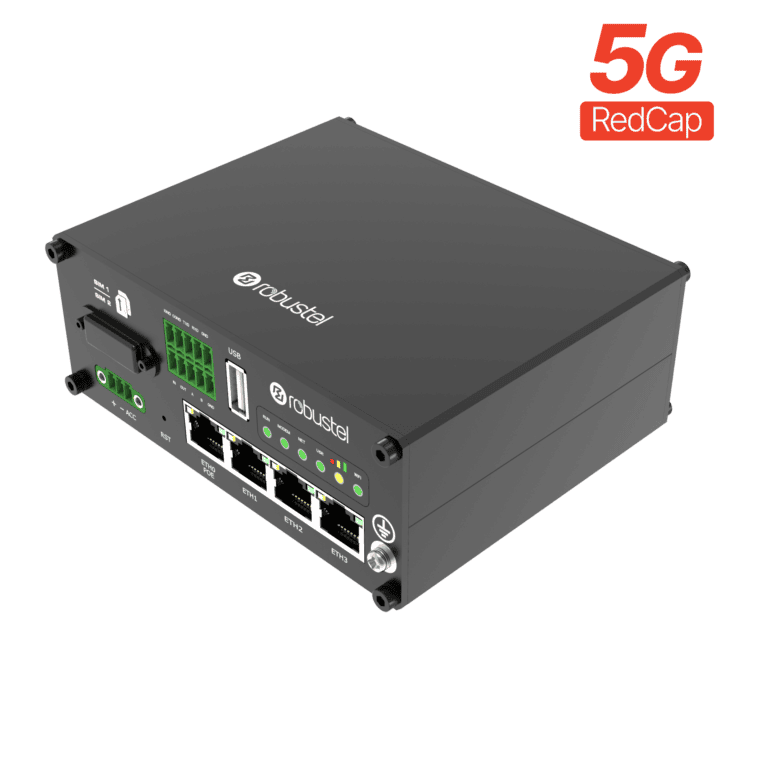
R2110 5G RedCap
Industrial Dual-SIM 5G RedCap Router with 4 x Gigabit LAN, GNSS & Dual-Band Wi-Fi
-
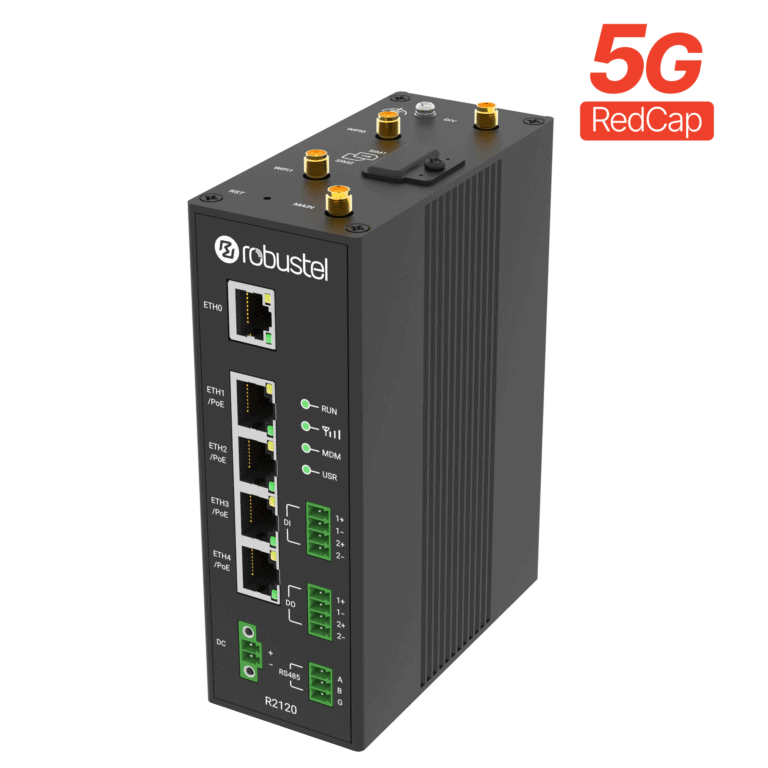
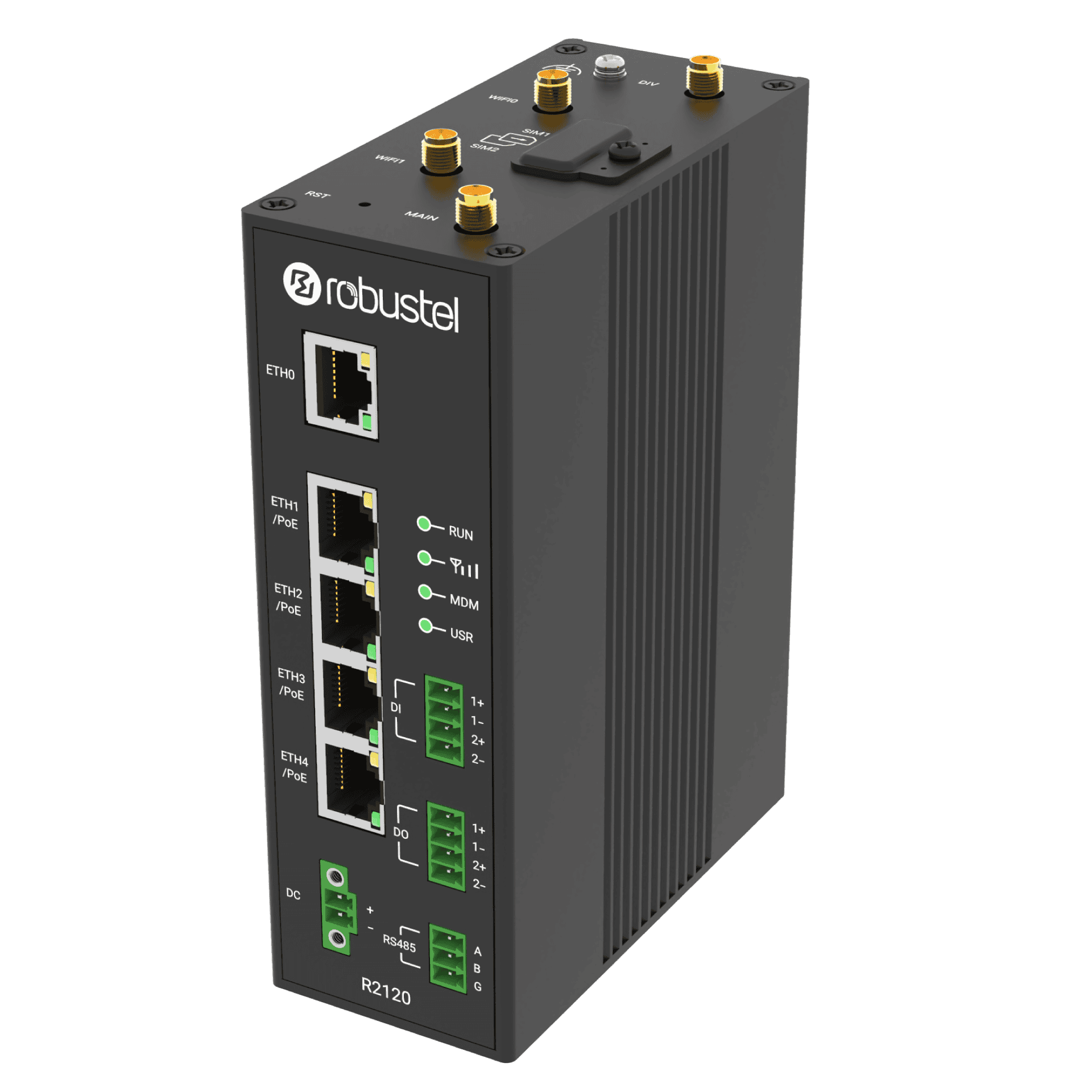
R2120 5G RedCap
Industrial 5G RedCap Dual-SIM PoE-PSE Router with RS-485
-
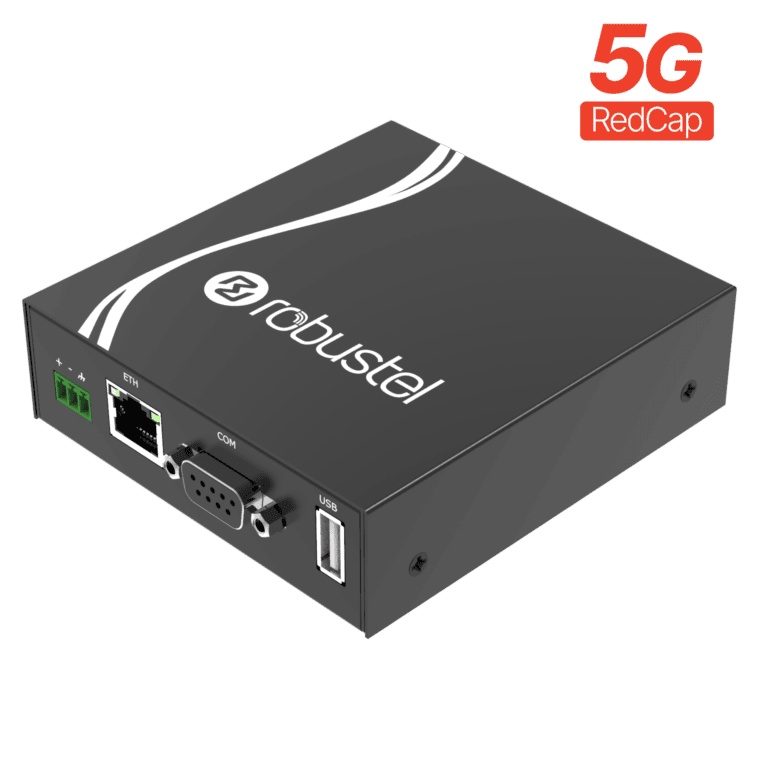
R3000-Lite 5G RedCap
Industrial Dual-SIM 5G RedCap IIoT Router with DB9 Serial RS-232 & RS-485
Why 5G RedCap?
Full 5G NR was designed for peak throughput and ultra-low latency at a cost and power profile that exceeds what most industrial IoT applications require. At the same time, there is a growing category of IIoT deployments industrial video surveillance, remote asset monitoring, smart grid endpoints, connected field gateways where specific 5G capabilities are a genuine operational or compliance requirement: access to the 5G core network, network slicing for traffic isolation, enhanced authentication, or throughput headroom that LTE Cat-4 cannot reliably provide at scale.
5G RedCap, defined in 3GPP Release 17, was built precisely for this tier. It delivers the 5G features these applications need at a device cost and power consumption that makes large-scale industrial deployment commercially viable — giving engineers and procurement teams a genuine choice between connectivity tiers based on application requirements, not a forced trade-off between capability and cost.
5G RedCap Benefits
- Right-Sized 5G Performance for Industrial IoT
With peak downlink speeds up to 150 Mbps and native 5G latency improvements, 5G RedCap delivers the throughput and responsiveness that industrial video, remote diagnostics, and real-time asset monitoring require without the cost and power consumption of full 5G NR eMBB specifications that most IIoT applications will never utilise. - Lower Device Cost and Power Draw Than Full 5G NR
RedCap’s reduced RF complexity and narrower bandwidth requirements translate directly into lower chipset cost and power consumption compared to full 5G NR, making it viable for thermally limited enclosures, battery-assisted devices, and cost-sensitive large-scale deployments where full 5G NR is technically impractical or commercially unjustifiable. - Native 5G Security Architecture
Because 5G RedCap connects to the 5G core network rather than an LTE core, it inherits the full 5G security framework including enhanced mutual authentication, SUPI (Subscription Permanent Identifier) concealment for subscriber privacy, and network slice isolation. For industrial operators with strict cybersecurity requirements or regulatory obligations, this is a meaningful architectural distinction with practical compliance implications. - 5G-Native Architecture for Applications That Require It
Some industrial deployments have requirements that are architectural rather than purely about throughput — network slicing for traffic isolation, 5G core authentication frameworks, or access to operator services that are exclusively provisioned on 5G infrastructure. RedCap provides these capabilities by design. For deployments where they are not a requirement, Robustel’s 4G/LTE router portfolio remains a proven, cost-effective option across a wide range of industrial applications. - Centralised Fleet Management via RCMS
All Robustel 5G RedCap routers are managed through RCMS including RobustLink and Operations Console enabling zero-touch provisioning, remote firmware updates, connectivity policy enforcement, and full fleet visibility across deployments of any scale. The same management layer used across Robustel’s broader product portfolio means no parallel tool chains as your network evolves.