
Industrial Data Quality Architecture: From Raw Signals to Trusted Time-Series Data
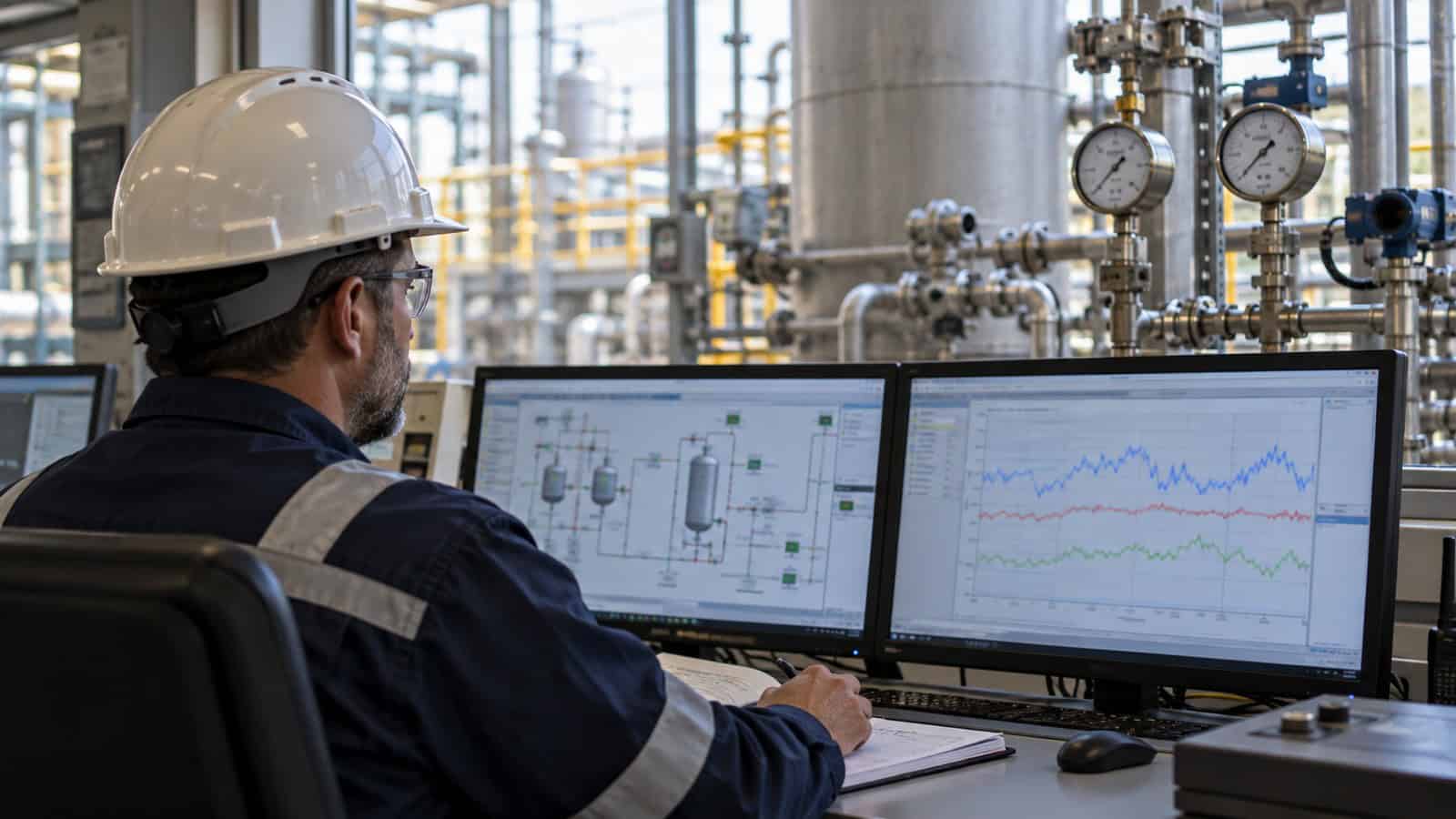
The Robustel EG5120 Edge Computing Gateway can host local data-processing workloads close to industrial equipment, but trusted time-series data begins with a contract that preserves identity, unit, measurement time and quality. Transport success only proves that bytes moved; it does not prove that the receiving application understood the measurement correctly.
A Number Needs Context Before It Becomes Data
A raw value of 250 could mean 25.0 °C, 250 kPa, a counter or an error code. Attach the asset, source address, scale, unit and quality state before publishing it. Keep the raw source where practical so an engineering team can reconstruct how a transformed value was produced.
| Required field | Failure when missing | Acceptance check |
|---|---|---|
| asset/source identity | values from different machines merge | trace one record to a physical source |
| unit and scale | plausible but incorrect magnitude | compare with a known reference state |
| measurement timestamp | delayed data appears current | disconnect and replay a controlled record |
| quality/status | failed sensor appears as a valid number | force timeout or invalid state |
| transformation version | historical meaning changes silently | retain mapping/application version |
Preserve Time Through Outages
Use the measurement timestamp for process analysis and retain reception time for diagnostics. When backhaul returns, current and buffered records may arrive together; the application must not sort them only by arrival time.
Robustel’s video “Why Do We Need Edge Computing If We Have the Cloud?” is useful at this point because it explains why selected work may remain local. Data quality still depends on explicit buffering, timestamp and replay rules rather than on the word “edge”.
Put Semantics Under Change Control
Version register maps, scaling rules, tag names and northbound schemas together. A PLC program change that moves one register can corrupt a dashboard without taking the network offline. Include a known-state test after firmware, PLC or application changes.
Robustel’s machine-builder connectivity application example highlights the need for a repeatable support boundary across shipped equipment. For data quality, extend that operating pattern to the data model so a service engineer can identify which mapping version produced a record.
How the Robustel EG5120 Edge Computing Gateway Supports Data Quality Work
Robustel EG5120 Edge Computing Gateway provides a Debian-based RobustOS Pro environment, local compute and storage, dual SIM 4G, Ethernet, serial and I/O connectivity. It can run supported local applications that collect, normalise, buffer and publish industrial data. Those resources make data-quality controls possible; they do not supply the business meaning of every source.
For compatible EG5120 deployments, Robustel’s E2C Factory can bring documented data collection, processing, continuity, visualisation and northbound integration into the same operational layer. The pairing can reduce separate integration work when the point model and supported protocols are governed from commissioning onward.
| EG5120 operating task | Evidence to retain |
|---|---|
| collect from field source | interface, protocol, address and timeout |
| transform locally | mapping version, scale and quality rule |
| buffer during outage | storage policy, original time and overflow action |
| publish northbound | schema, topic/API endpoint and acknowledgement behaviour |
Test Data That Looks Reasonable but Is Wrong
The hardest faults are not missing values; they are believable values with the wrong unit, source or time. Swap two source identities in a test environment, force a negative value, freeze a reading and replay old records. Confirm that the receiving system exposes the error instead of drawing a smooth but false trend.
Robustel’s smart parking application example shows multiple field-device types sharing a wider architecture. That is a useful reminder to keep identity and quality rules specific to each source class rather than applying one generic payload assumption.
Define Acceptance in the Receiving System
A successful gateway test ends at the consumer, not at the outbound socket. Reconcile counts for a known period, inspect original timestamps, confirm units and verify that gaps and duplicates are visible. Name the person who approves the data for analytics, maintenance or reporting.
Use a test window that contains a known state change rather than a flat signal. Follow that event from the raw input through scaling, timestamping and transport to the final trend, then repeat with a short outage or stale value. This exposes mappings that look plausible during steady operation but place the wrong time, unit or asset identity on a changing process.
The gateway team can prove transport and transformation. The process owner must still confirm that the signal represents the intended equipment state. Keep the accepted source, mapping version and receiving result together so a later change can be investigated without treating every incorrect value as a network fault.
Häufig gestellte Fragen
Q1. What are the main dimensions of data quality?
Common dimensions include accuracy, completeness, consistency, timeliness, validity and uniqueness. Industrial data also needs clear source identity and engineering units.
Q2. Why are timestamps important in time-series data?
They show when the process state was measured. Without the original measurement time, delayed or replayed data can be mistaken for the current condition.
Q3. What causes duplicate industrial data?
Retries, reconnect replay, overlapping collectors and application reprocessing can all create duplicates. Use stable event identity and idempotent handling where the architecture supports it.
Q4. How do you validate sensor data quality?
Compare known physical states with the complete received record, including unit, scale, timestamp and quality. Test invalid and missing states as well as normal readings.
Q5. How does the Robustel EG5120 Edge Computing Gateway support trusted time series?
It provides local compute, storage and industrial connectivity for supported acquisition and processing workloads. The project still defines and validates the source semantics and northbound contract.
Schlussfolgerung
The Robustel EG5120 Edge Computing Gateway can provide a governed place to collect, transform and buffer industrial data close to its source. Trust comes from the contract around those functions: identity, units, time, quality, version and an observable failure state.
Approve the pipeline by forcing a known value, an invalid value and an outage, then reconciling the final records in the consuming system. That test distinguishes a connected data path from a trustworthy one.
Explore More Articles About Robustel Edge Computing Gateways

Über den Autor
Robustel Editorial Team
The Robustel Editorial Team publishes practical articles on industrial connectivity, edge computing, LoRaWAN and device management, focusing on deployment considerations, technical limitations and long-term operation.