
Monthly 5G Data Usage: How to Calculate Camera, PLC and Edge Gateway Traffic
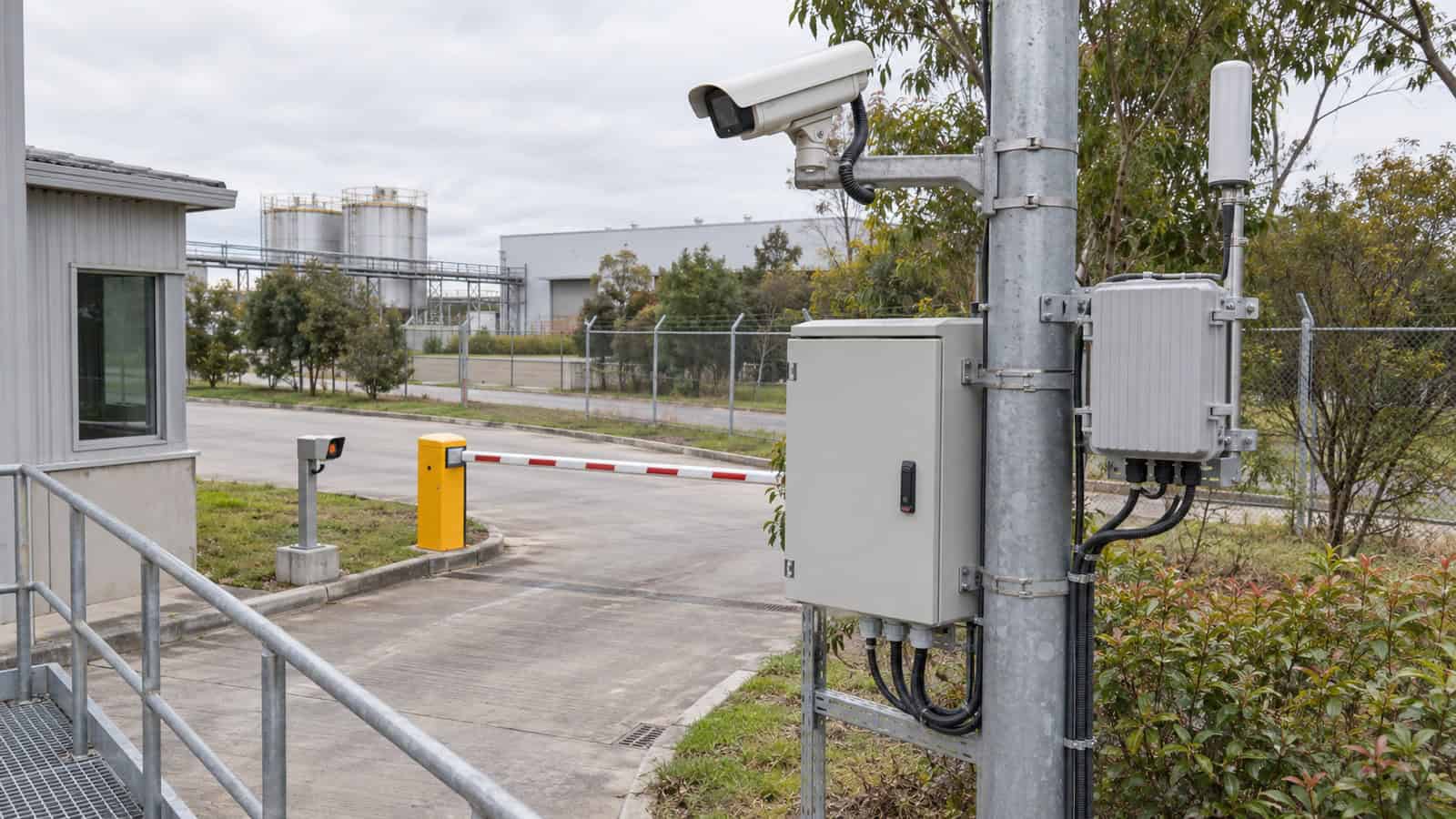
The Robustel R5020 Industrial 5G Router can carry video, telemetry and remote-access traffic on one cellular connection, but the monthly allowance should be calculated as separate workload components because a continuous camera stream, a PLC poll and an engineer’s VPN session scale in different ways. Averaging everything into one Mbps figure hides event bursts, protocol overhead and update days.
The most defensible estimate is a transparent model with named assumptions, a low/expected/high sensitivity range and a representative pilot measurement. It is a planning input, not a carrier billing guarantee.
Inventory traffic by behaviour, not by device count
For every source, record whether traffic is continuous, periodic, event-driven or operator-driven. A camera may have a continuous low-rate stream plus high-quality event clips. A PLC may be polled every second during production but only every minute when idle. Remote support may be zero most days and dominant during an incident.
| Workload | Primary driver | What commonly gets missed |
|---|---|---|
| Continuous video | encoded bitrate × active time | variable bitrate, audio, retransmission |
| Event clips | clip size × events | correlated events and upload retries |
| PLC polling | request + response bytes × tags/polls | headers, empty polls, connection churn |
| Edge summaries | message size × publish rate | acknowledgements and TLS sessions |
| Remote support | measured session rate × duration | screen resolution and file transfer |
| Updates | package size × devices/runs | failed downloads and rollback image |
| Fleet management | keepalive, status and logs | diagnostic bursts during incidents |
The Robustel video “Where Are Industrial 5G Routers Used in Real IoT Deployments?” below helps identify workload classes across distributed sites and vehicles. Use it to improve the inventory, not to assign bitrate or monthly consumption.
Use separate formulas for streams, polls and events
For a continuous stream:
GB/month = bitrate_Mbps × active_seconds_per_month ÷ 8 ÷ 1,000
For periodic messages:
GB/month = bytes_per_exchange × exchanges_per_day × active_days × overhead_factor ÷ 1,000,000,000
For event traffic:
GB/month = average_event_MB × expected_events × retry_factor ÷ 1,000
Keep the chosen decimal or binary unit convention explicit. Add upload and download separately when the carrier account treats them differently. The overhead factor should be measured where possible and include transport, encryption, keepalives and retransmissions, rather than being hidden inside a rounded payload size.
Work a mixed-site example from assumptions
Consider a hypothetical site with one camera sending 1.5 Mbps for eight hours per day, 100 event clips of 20 MB each per month, PLC polling that measures 8 MB per day at the router, two four-hour remote sessions measured at 0.4 Mbps, a 600 MB monthly update and 300 MB for management and logs.
| Component | Calculation | Expected monthly usage |
|---|---|---|
| Continuous camera | 1.5 × 8 h/day × 30 ÷ 8 | 162 GB |
| Event clips | 20 MB × 100 | 2.0 GB |
| PLC traffic | 8 MB/day × 30 | 0.24 GB |
| Remote sessions | 0.4 Mbps × 8 h ÷ 8 | 1.44 GB |
| Update | measured package allowance | 0.60 GB |
| Management/logs | pilot allowance | 0.30 GB |
| Subtotal | sum | 166.58 GB |
The camera dominates, so improving the PLC estimate will barely move the plan. The next useful measurement is the camera’s real encoded rate under daytime and night-time scenes, then the number of simultaneous event uploads.
How Robustel R5020 Industrial 5G Router makes usage measurable
The Robustel R5020 Industrial 5G Router provides 5G/4G backhaul, multiple Ethernet ports for separate local workloads and RCMS fleet operations. This supports an architecture in which cameras, PLC-side equipment and an edge gateway can be observed as different traffic sources instead of one undifferentiated cellular total.
| Planning pain | Verified Robustel R5020/RCMS role | How it changes the method | Acceptance evidence |
|---|---|---|---|
| Mixed LAN workloads | four Gigabit Ethernet ports, configurable LAN/WAN roles | separate or label source networks before measurement | per-source capture or counter reconciliation |
| Fleet-wide consumption | RCMS data visibility and reports | compare sites using the same collection interval | billing-cycle export and carrier invoice |
| Incident investigation | logs and packet capture through the management workflow | distinguish normal traffic from diagnostic bursts | timestamped incident window |
Robustel’s R5020 mining and heavy-equipment application example illustrates why telemetry, video and remote support can coexist on a mobile link. For budgeting, measure each stream on the actual cameras and applications; movement, coverage and retries can change the cellular total.
Run sensitivity tests on the dominant variables
Do not add a single arbitrary contingency to the subtotal. Vary the variables that actually move the result. For the example above, camera bitrate and active hours dominate; on a telemetry-only site, poll frequency and connection overhead may matter more.
| Variable | Low | Expected | High | Why it changes |
|---|---|---|---|---|
| Camera bitrate | 0.8 Mbps | 1.5 Mbps | 3.0 Mbps | scene complexity and encoder settings |
| Active video | 4 h/day | 8 h/day | 24 h/day | operating policy |
| Event clips | 20/month | 100/month | 500/month | alarm threshold and correlated incidents |
| Retransmission factor | 1.00 | 1.05 | 1.20 | radio and path quality |
| Remote support | 0 h | 8 h | 40 h | incident workload |
Robustel’s high-speed branch-office R5020 application example also shows a mixed user and business-application path. Where the router is used for backup, estimate usage during the expected outage window separately from normal monthly management traffic.
Validate the model against a billing-cycle pilot
Run the pilot long enough to include weekday/weekend behaviour, planned updates and at least one representative incident or supervised remote session. Align router counters, application logs and carrier billing cut-off times. Explain gaps caused by rounding, retransmissions or traffic outside the measured LAN segments.
Set two thresholds: an early warning that prompts investigation and a hard commercial limit that triggers an agreed action. Do not automatically block safety or recovery traffic merely to protect a data budget.
FAQs
Q1. How much data is 5G per month?
5G has no fixed monthly usage. Consumption comes from the applications using the link. A continuous industrial camera can use far more data than thousands of small telemetry messages.
Q2. How do I check monthly data usage?
Compare the carrier’s billing-cycle total with router counters and application records over the same timestamps. Reset or snapshot counters at the billing boundary and account for traffic generated by updates, management and retransmission.
Q3. Is 5 GB a lot of data for a month?
It may be ample for low-rate telemetry and too small for even limited video. Decide by calculating each workload, then measuring a representative pilot rather than using a consumer-data benchmark.
Q4. Does 5G itself consume more data?
The radio generation does not increase the bytes required by an identical payload. Faster service may enable higher-quality streams, more frequent uploads or more remote use, which can increase the actual monthly total.
Q5. How does the Robustel R5020 Industrial 5G Router help manage a mixed-traffic data plan?
It connects several local Ethernet workloads to 5G/4G and can be managed through RCMS, allowing teams to observe usage and investigate changes across sites. The budget still depends on measured application traffic and the carrier’s billing rules.
Conclusion
The Robustel R5020 Industrial 5G Router is best suited to mixed industrial workloads when camera, PLC, edge and management traffic are measured as distinct contributors. The router provides the connection and observability boundary; the applications determine the bytes.
Use the formula set to expose assumptions, test the dominant variables and reconcile a full pilot cycle with the carrier record. Purchase capacity from the high-but-credible scenario, then keep an alert margin for incidents and updates rather than burying it in one unexplained percentage.
Explore More Articles About Robustel 5G Routers
About the Author
Robustel Editorial Team
The Robustel Editorial Team publishes practical articles on industrial connectivity, edge computing, LoRaWAN and device management, focusing on deployment considerations, technical limitations and long-term operation.