
Primary, Backup or Out-of-Band 5G Router: Which Role Fits Your Site?
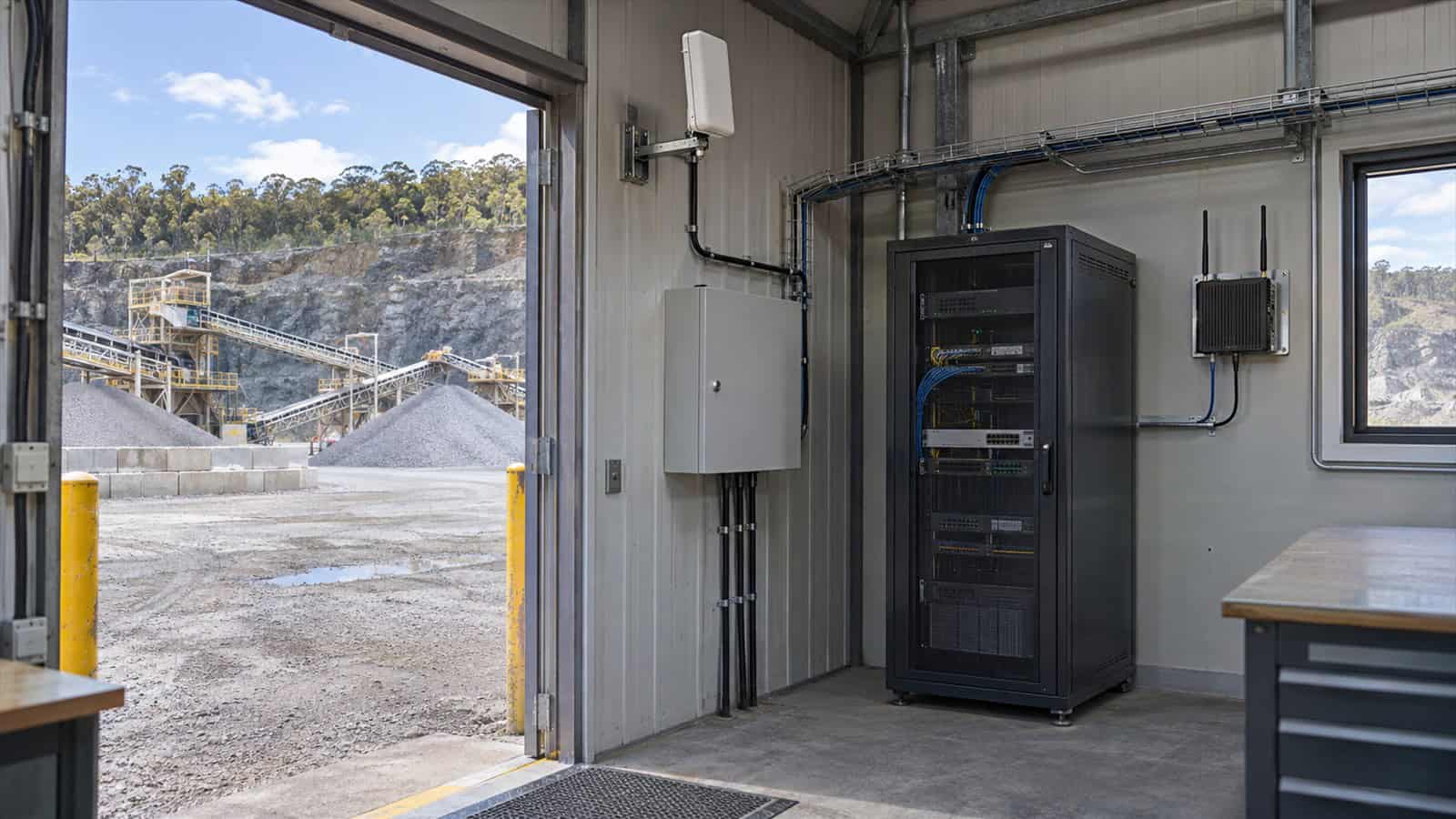
The Robustel R5010 Industrial 5G Router is a focused cellular handoff platform that can serve as a primary WAN, backup path or out-of-band entry point, but the site must choose one accountable role before interfaces, security and failure tests can be designed properly.
Decide Which Traffic the Router Owns on an Ordinary Day
A primary router carries production traffic continuously and is sized for sustained demand. A backup router waits for another WAN to fail, then must restore the same required services. An out-of-band router provides a deliberately separate management path to stranded equipment; it may carry very little traffic until the primary network is broken.
| Role | Normal traffic | Independence needed | Acceptance test |
|---|---|---|---|
| primary | production applications | adequate capacity and carrier resilience | sustained load plus path recovery |
| backup | standby checks and management | separation from failed WAN | application returns after primary loss |
| out-of-band | restricted management | separate credentials and route to console/management | reach target while production LAN is unavailable |
If one router is assigned all three labels, ask which traffic wins during an incident. A backup link saturated by normal workloads may not preserve the bandwidth or address path needed for recovery.
A Backup WAN Must Recreate the Service Path
The alternative link needs the required DNS, VPN, routing, firewall and application access—not just an internet connection. Test sessions that do not survive an IP change and confirm whether the application retries, reconnects or requires manual action.
Robustel’s fixed-line backup over 5G application example illustrates this role clearly. The router is valuable because it changes the available WAN path; the commissioning result still comes from proving that the protected business or industrial service recovers through it.
Measure detection time, route change, tunnel establishment and application recovery separately. That timeline identifies whether tuning belongs in the router, security edge or application.
Out-of-Band Access Must Survive the In-Band Failure
An out-of-band design fails its purpose if it shares the disabled switch, corporate identity path, site power or unreachable firewall with the production network. Connect the cellular path to a management port, console server or dedicated maintenance segment that remains available during the expected fault.
Use named support identities, MFA where the architecture allows it, narrow destination rules and session evidence. Decide how a technician gains access when the normal identity service is down without creating a permanent shared emergency account. Seal and test that break-glass process.
Independence checklist
- separate cellular route and antenna position;
- power backed for the required diagnostic window;
- target management interface available when production switching fails;
- credentials and trust material retrievable during an outage;
- alerting that tells operators which path they are using.
How the Robustel R5010 Industrial 5G Router Fits a Focused Site Role
| Role decision | Verified R5010 capability | Why it fits | Acceptance evidence |
|---|---|---|---|
| clean cellular handoff | one 2.5 Gigabit Ethernet interface | connect 5G to an existing firewall without making the router a local switch | sustain the expected traffic through the handoff |
| constrained cabinet power | optional PoE-PD input | reduce separate power wiring where the approved switch/power budget supports it | cold-start and load-test the final PoE source |
| backup or OOB modem role | USB modem mode and compact architecture | provide a deliberately narrow recovery path to existing infrastructure | reach the target while the production WAN is unavailable |
Robustel R5010 Industrial 5G Router provides a 2.5 Gigabit Ethernet interface, USB modem mode and optional PoE-PD in a compact industrial 5G platform. Those characteristics suit a clean handoff to an existing firewall or management appliance where the cellular router does not need to become the site’s main Ethernet switch.
For a backup role, connect the handoff to the security device that already owns policy and test the complete application route. For out-of-band access, preserve independence and restrict the reachable equipment. For a primary role, confirm that the single Ethernet architecture, power arrangement and management model match the site’s ongoing traffic and support duties.
Robustel’s high-speed branch office routing application example offers a useful contrast from the same 5G portfolio: a multi-port branch design may need more local connectivity than a focused R5010 handoff. Choosing the smaller role deliberately is better than adding interfaces without an ownership plan.
Select by Failure Narrative, Not by Label
Write one incident for each candidate role. “Fibre failed during production,” “the site firewall stopped forwarding,” and “the core switch configuration locked out remote staff” lead to different designs. Walk through how a named engineer detects the event, reaches the equipment, restores service and confirms the site is back on its intended path.
The Robustel video “What Is an Industrial 5G Router and When Do You Need One?” helps teams align on what the cellular router is expected to own. Keep the final role in the network drawing, runbook and monitoring labels so that future staff do not quietly turn a recovery path into ordinary capacity.
FAQs
Q1. What is an out-of-band network?
It is a management path designed to reach equipment independently of the production data path, allowing diagnosis and recovery when the in-band network is unavailable.
Q2. Can a 5G router replace a wired primary connection?
It can be a primary WAN where coverage, capacity, addressing, security and service terms meet the workload. The decision should follow a representative site test.
Q3. What is the difference between backup and failover internet?
A backup is the alternate resource; failover is the policy and mechanism that detects a failure and moves required traffic to it.
Q4. Does out-of-band access need separate power?
It needs enough independence to survive the failures it is intended to diagnose. Shared power may be acceptable only when power loss is outside that design scope or separately mitigated.
Q5. When is the Robustel R5010 Industrial 5G Router a good out-of-band fit?
It suits sites that want a compact 5G handoff to an existing firewall, console or management design and can provide the required path, power and credential independence.
Conclusion
The Robustel R5010 Industrial 5G Router is most valuable when its job is explicit: continuous primary transport, tested WAN recovery or a restricted path into otherwise unreachable equipment.
Choose the role by rehearsing the failure that matters and tracing every dependency needed for restoration. Once that narrative is clear, port count, power, security and monitoring decisions become much easier—and the recovery link is less likely to be consumed by work it was never meant to carry.
Explore More Articles About Robustel 5G Routers
About the Author
Robustel Editorial Team
The Robustel Editorial Team publishes practical articles on industrial connectivity, edge computing, LoRaWAN and device management, focusing on deployment considerations, technical limitations and long-term operation.