
Edge Computing Hardware Sizing Guide: CPU, RAM, Storage and I/O
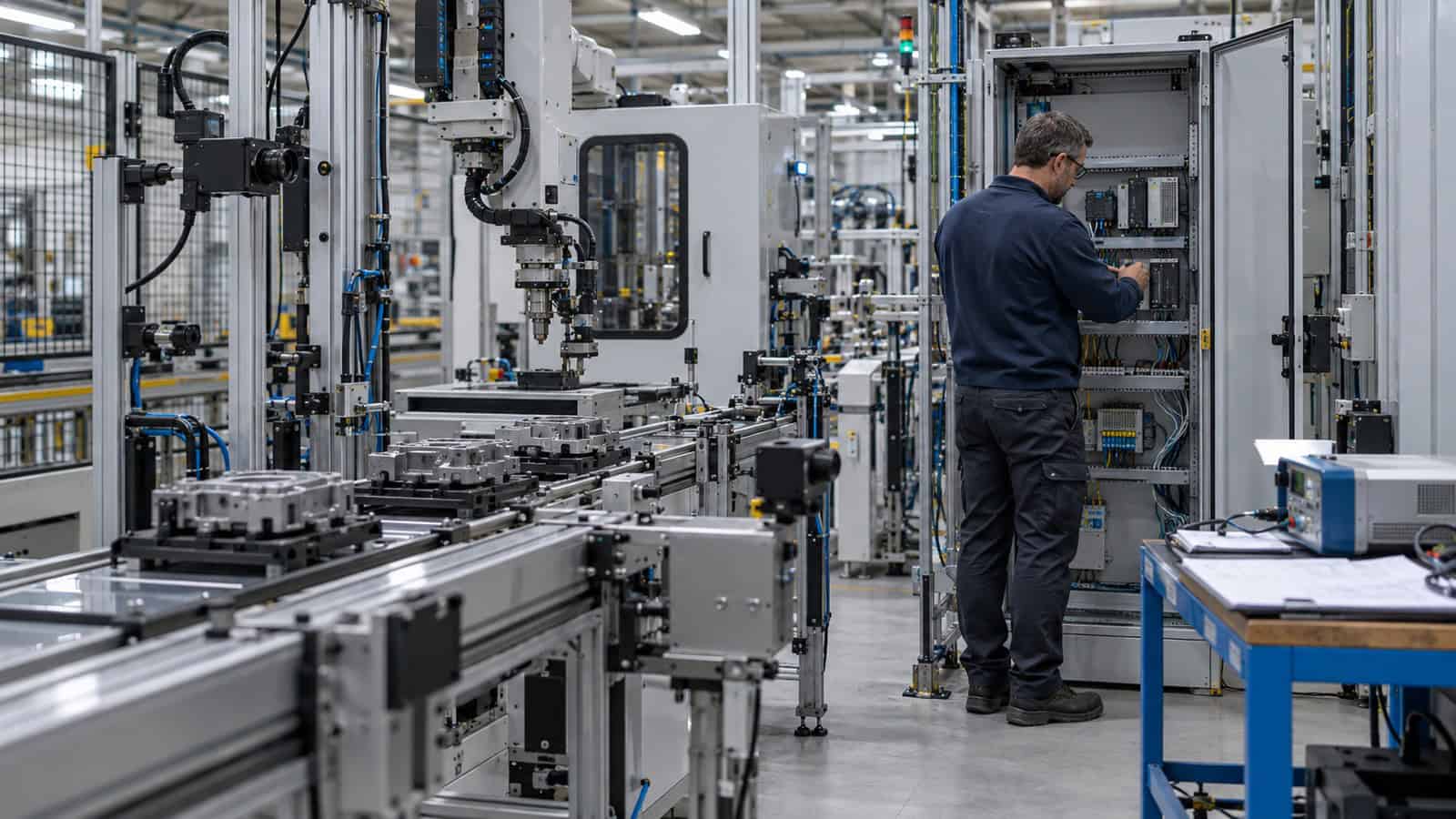
The Robustel EG5200 Edge Computing Gateway with 5x Gigabit Ethernet, Serial, HDMI, USB and 2.3 TOPS NPU fits multi-device sites that need substantial local applications and a broad interface set. It should not be selected from CPU or TOPS alone. Hardware sizing begins with sustained workload, memory peaks, storage writes, connected equipment and recovery behaviour.
Convert the Use Case into Processes and Data Flows
List every local service: protocol connectors, containers, database, dashboard, rules, VPN, message broker and any compatible inference runtime. For each, record input rate, output rate, concurrency, restart behaviour and what happens when the WAN is unavailable.
A protocol bridge for a few serial devices is fundamentally different from several camera streams plus containers and a local database. “Edge analytics” is not a sizing unit.
| Resource | Measure | Common omission |
|---|---|---|
| CPU | Sustained and peak utilization per process | Protocol and encryption overhead |
| RAM | Steady use, startup peak and leak margin | Concurrent containers and caches |
| Storage | Application, logs, database and outage buffer | Write amplification and cleanup |
| Network | Per-interface sustained and burst traffic | Several sources converging together |
| Serial/I/O | Exact electrical interfaces and polling | Assuming a port proves protocol support |
| Accelerator | Model/runtime compatibility and measured load | Treating TOPS as application throughput |
Size Compute, Memory and Storage as One Runtime
CPU, RAM and storage appear as separate rows on a datasheet, but an edge application consumes them as one system. Startup can unpack files while services allocate memory; a WAN recovery can replay stored records while live collection continues. Testing each resource in isolation misses the moments when several demands arrive together.
Profile CPU and Memory Peaks
CPU saturation can delay data processing while memory pressure can trigger process termination or unstable swapping behaviour. Measure the production software, not an empty operating system. Include startup, update, reconnection and log-rotation periods because several services may peak together. A steady average is useful, but the short peak that makes a queue fall behind is often the value that determines usable margin.
Robustel EG5100 and EG5101 use a 792 MHz Cortex-A7 platform with 1 GB RAM and 8 GB eMMC, fitting focused lightweight applications. EG3120e uses a quad-core Cortex-A53 at 2.0 GHz with 2 GB RAM and a serial-rich topology. EG5120 and EG5200 provide higher-resource platforms and documented 2.3 TOPS NPUs for compatible workloads. These specifications establish starting classes; they do not replace measurement of the deployed software.
Budget Storage for Outages and Replay
Separate base software, application images, working data, logs and outage buffering. Define retention and cleanup before deployment. During a long WAN outage, a gateway can remain powered and continue collecting normally while free space declines, so an acceptance test should include the intended outage window rather than only a brief disconnection.
Recovery is a combined-resource event. Buffered data and live data can arrive together, raising storage reads, CPU use, memory queues and uplink demand. Check whether the backlog actually falls, whether old records retain their timestamps and what the application does when retention or capacity limits are reached. Those policies belong to the application design, not to the storage-size headline.
I/O Often Selects the Model Before Compute Does
Robustel EG5200 provides five Gigabit Ethernet ports, two software-configurable RS-232/422/485 interfaces, DI/DO, relay, HDMI and USB. EG5120 has two Gigabit Ethernet ports and a more compact interface layout. EG3120e provides four RS-485 ports for serial-heavy retrofit sites. The correct model may therefore be chosen by physical topology before CPU margin is compared.
Robustel Hardware Fit
| Workload/topology | Starting point | Boundary |
|---|---|---|
| One focused serial workload | Robustel EG5101 | Lightweight resource class |
| Lightweight mixed I/O | Robustel EG5100 | Validate concurrent applications |
| Several legacy serial assets | Robustel EG3120e | Four RS-485 ports; 2 GB RAM |
| Compact higher-compute/inference | Robustel EG5120 | Validate model and runtime |
| Several IP devices and peripherals | Robustel EG5200 | Validate aggregate traffic and storage |
How Robustel EG5200 and E2C Factory Fit the Workload Layer
The EG5200’s 4 GB RAM, 32 GB eMMC, NPU and broad interfaces provide room for multi-service deployments, but production acceptance still requires measurement. Five Ethernet ports do not prove unlimited camera processing, and 2.3 TOPS does not prove a model’s latency or compatibility.
On Robustel EG5200, E2C Factory can use the gateway’s compute and broad interface set as the foundation for supported protocol collection, local processing, data management, alarms, Node-RED workflows and edge visualization. Instead of sizing several separately maintained tools, the project can assess one clearer operational data path on the gateway. The connected protocols and workload still need to be confirmed for the actual machines and applications.
Robustel’s Smart Parking Application Example illustrates EG5120 used for local ANPR-related preprocessing within a distributed design. It is architecture evidence, not measured customer throughput.
Meanwhile, another Robustel Public Safety CCTV Application Example presents a lighter EG5100 role around a remote camera site. Together the examples show why workload scale, not the word “video,” should drive hardware class.
Benchmark the Degraded State
Begin with a long enough steady-state run to expose memory growth, storage writes and thermal behaviour. Record end-to-end update time and resource use before introducing a fault; without that baseline, a team can see that the system recovered but miss that it never returned to normal performance.
Then disconnect the WAN for the intended buffer interval. On restoration, watch live collection and backlog replay together: the useful questions are whether queues keep growing, whether records arrive in order and how long the gateway takes to regain its previous margin. Restart one application and then the whole gateway, confirming that routing and remote access behave as designed if the workload stops.
Set pass/fail limits before the test—for example, the maximum acceptable data age, gap, recovery time and resource utilization. These are project acceptance criteria rather than guaranteed gateway figures, but they turn a general “stress test” into evidence that operations can use.
The EG5000 Series Quick Pitch video provides a product-family overview. Exact resource acceptance must come from the deployed workload.
FAQs
Q1. What is edge computing hardware?
It is the local compute platform that runs selected workloads close to machines, sensors or other data sources. In industrial projects that usually means sizing not only CPU and memory, but also storage, field interfaces, networking, power, thermal conditions and the software lifecycle.
Q2. What are the prerequisites for edge computing?
Begin with a defined workload, its data sources and the result that must remain local. You also need a supported runtime, enough compute and storage margin, suitable interfaces, a security and update model, and an owner for failures when the cloud or WAN is unavailable.
Q3. What device is used for edge computing?
The device may be an industrial gateway, embedded computer or server, depending on workload and site conditions. A protocol-conversion task may need modest compute but several serial ports; machine vision may need an accelerator, fast storage and carefully tested thermal headroom.
Q4. What is an industrial edge gateway?
It combines local application compute with the interfaces and connectivity needed at an industrial site. Its value is the ability to collect, process and forward data near equipment, but its real fit still depends on I/O, environment, maintainability and sustained workload testing.
Q5. How do the Robustel EG5200 Industrial Edge Computing Gateway and E2C Factory work together?
The gateway provides local compute, storage and industrial interfaces for a multi-device site. On this supported hardware, E2C Factory can turn machine data into local processing, alarms, workflows and operational views, giving the team one clearer deployment path instead of several separately integrated software layers.
Conclusion
The Robustel EG5200 Industrial Edge Computing Gateway with 5x Gigabit Ethernet, Serial, HDMI, USB and 2.3 TOPS NPU is a strong fit for multi-device sites whose measured local workloads justify its compute and interface resources. Size from production processes, data flows and failure tests. That exposes whether the project needs more compute, more storage, different I/O or simply a smaller gateway.
Explore more articles about Robustel’s edge computing gateways in industrial IoT:


About the Author
Robert Liao | Technical Support Engineer
Robert is an IoT Technical Support Engineer at Robustel, specializing in industrial networking and edge connectivity. A certified Networking Engineer, Robert focuses on the deployment and troubleshooting of large-scale IIoT infrastructures. His work centers on architecting reliable, scalable system performance for complex industrial applications, bridging the gap between field hardware and cloud-side data management.