
LoRaWAN Packet Loss Troubleshooting: RSSI, SNR, Duty Cycle and Backhaul Checks
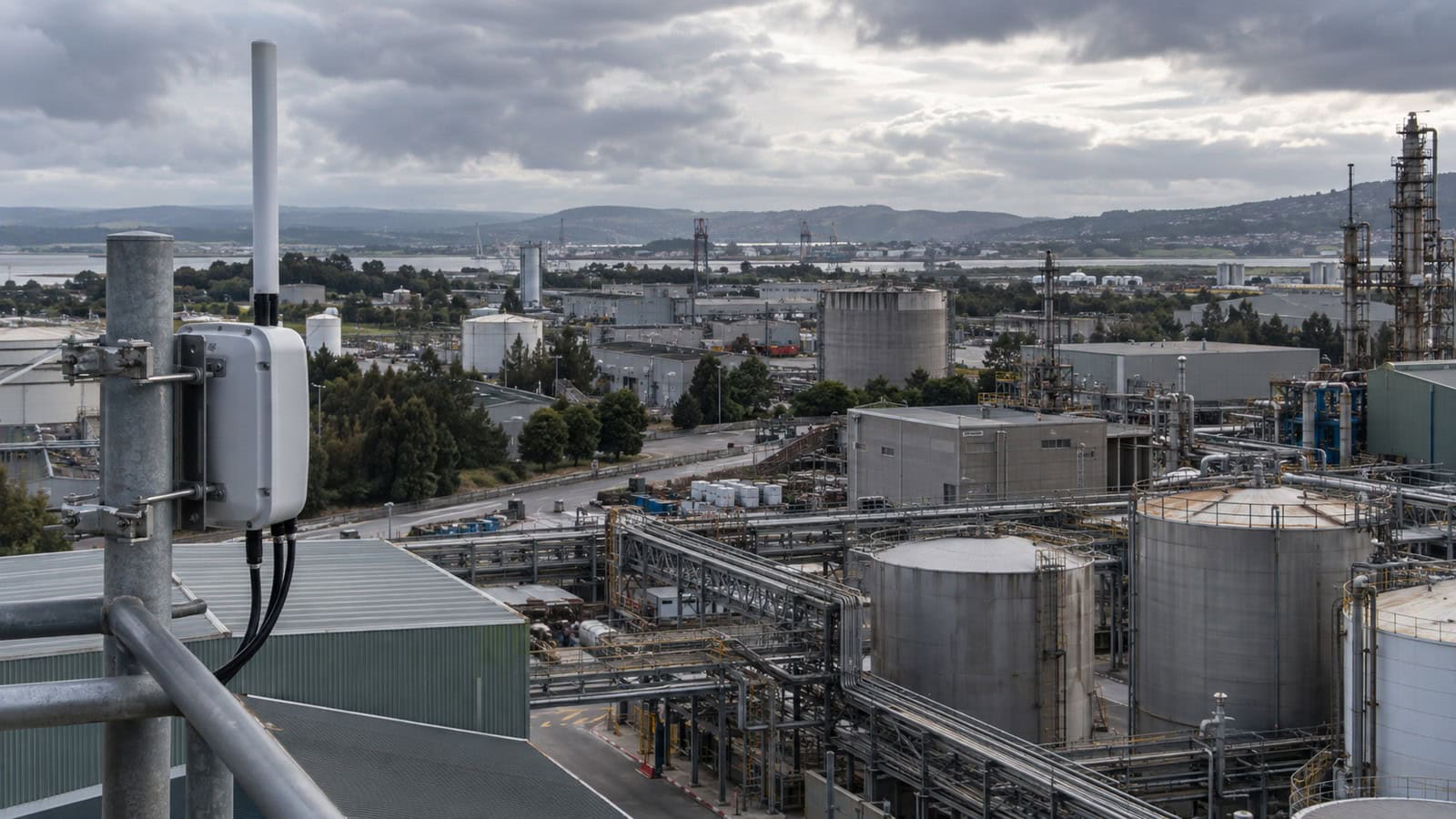
The Robustel R1320LGe LoRaWAN Gateway is a focused packet-forwarding gateway for existing LoRaWAN server architectures, which makes it a useful boundary for packet-loss diagnosis. The first task is to locate the loss: endpoint transmission, radio reception, gateway forwarding, IP backhaul, network-server processing or application delivery.
First Locate Where the Message Disappears
The phrase “packet loss” often arrives before anyone has agreed which packet was expected or where it disappeared. From a troubleshooting standpoint, I would choose one message identifier or timestamp and follow that same event through radio reception, forwarding, backhaul and application ingestion. Percentages become useful after the missing boundary is known.
Use sequence numbers or application timestamps where available and compare the same message across layers. A missing dashboard point may have reached the gateway and server but failed decoding or application delivery. Conversely, a server gap cannot be blamed on backhaul until gateway reception is known.
| Evidence location | What a gap suggests | Next comparison |
|---|---|---|
| Endpoint transmit log | Device power, scheduling or application issue | Device configuration and supply |
| Gateway radio record | RF path, collision or regional mismatch | RSSI/SNR trends and neighbouring gateways |
| Forwarder output | Gateway process or local queue issue | Service state and resource logs |
| LNS input | IP backhaul, session or server endpoint issue | Gateway session and WAN events |
| Application record | Decode, integration or storage issue | LNS output and application logs |
Align clocks before drawing conclusions. A few seconds of drift can make one event appear unrelated to the WAN interruption that caused it.
RSSI and SNR Describe Conditions, Not Delivery
RSSI describes received power and SNR compares signal with noise. Examine their distribution by device, spreading factor, location and time. A single strong packet does not prove a stable path, while a weaker packet may still decode in suitable conditions.
Robustel’s Voytech BMS LoRaWAN case study provides deployment evidence that building materials and plant layout shape the radio path. The engineering lesson is to segment the survey by construction zone and elevation; the case does not supply a transferable range threshold for R1320LGe.
Airtime and Downlinks Change the Failure Pattern
Packet loss can rise when many devices use long airtime, retry frequently or require downlinks. Review payload size, reporting interval, spreading factors, confirmed-message policy and duty-cycle constraints. Adding a gateway may improve reception diversity, but it does not automatically repair an inefficient traffic design.
Use a controlled load test with representative devices rather than multiplying a laboratory success by the planned estate size. Record uplink success, downlink scheduling, retries and application delay as the offered load grows.
Using the Robustel R1320LGe LoRaWAN Gateway as the Forwarding Boundary
Robustel R1320LGe LoRaWAN gateway is designed as a LoRaWAN packet-forwarder gateway with cellular and Ethernet connectivity and RCMS management. Its role is appropriate where an existing external LNS owns network functions and the project wants a focused field gateway.
That boundary simplifies fault ownership: local evidence should show radio reception and forwarding state, while the LNS owns device sessions and higher network behaviour. It also means the gateway should not be credited with functions that belong to the server.
| R1320LGe check | Acceptance evidence | Escalation owner |
|---|---|---|
| Radio reception | Per-device packet trend across representative site states | RF/site team |
| Forwarding session | Stable connection and restart recovery | LoRaWAN platform team |
| Cellular/Ethernet backhaul | WAN loss and restoration timeline | Network operator |
| RCMS visibility | Device status and managed configuration process | Fleet operations |
The Robustel’s LoRaWAN gateway applications video can help the team place the gateway in the wider system before troubleshooting. It does not replace exact packet evidence.
Test IP Backhaul Without Blaming the Radio
Robustel’s Cibicom nationwide LoRaWAN backhaul case study shows backhaul being operated as a distinct layer across a large estate. For troubleshooting, remove or impair the IP path while retaining local gateway evidence, then observe session recovery and how the LNS distinguishes delayed from missing traffic. Cibicom’s LTE450 result remains specific to its network.
If packets stop at the LNS boundary while local reception continues, investigate DNS, routing, VPN or TLS/session state as applicable. Moving the LoRa antenna will not repair that fault.
FAQs
Q1. What causes packet loss in LoRaWAN?
Common causes include weak or obstructed RF paths, interference, simultaneous transmissions, long airtime, excessive retries or downlinks, gateway faults and broken IP backhaul. Locate the missing packet across layers before changing the design.
Q2. What is a good RSSI for LoRaWAN?
No single RSSI value guarantees delivery. Interpret it with SNR, spreading factor, antenna installation, packet history and the receiver’s real performance in the target environment.
Q3. Does LoRaWAN have packet acknowledgements?
LoRaWAN supports confirmed uplinks and downlinks, but acknowledgements consume downlink capacity and can drive retries. Use them selectively according to the application consequence of missing data.
Q4. Can adding another gateway reduce LoRaWAN packet loss?
It can improve reception diversity and coverage when RF is the constraint. It will not fix incorrect regional settings, poor endpoint design, server faults or unsuitable traffic and downlink policy.
Q5. When is the Robustel R1320LGe LoRaWAN Gateway suitable for packet-loss investigations?
It fits estates that use an external LNS and want a focused packet-forwarding boundary with cellular or Ethernet backhaul and fleet management. Server and application evidence must still be collected separately.
Conclusion
In an external-LNS design, the Robustel R1320LGe LoRaWAN Gateway can serve as a defined field forwarding boundary between the radio network and IP backhaul. That separation helps the team decide whether the next test belongs at the endpoint, gateway, WAN or application.
Follow the same expected message end to end and repeat under representative load. The location of the first missing copy is more actionable than a single RSSI value or an estate-wide loss percentage.
Explore More Articles About Robustel LoRaWAN Gateways
About the Author
Robert Liao | Technical Support Engineer
Robert is an IoT Technical Support Engineer at Robustel, specializing in industrial networking and edge connectivity. A certified Networking Engineer, Robert focuses on the deployment and troubleshooting of large-scale IIoT infrastructures. His work centers on architecting reliable, scalable system performance for complex industrial applications, bridging the gap between field hardware and cloud-side data management.