POTS Replacement for Elevator Emergency Call Compliance with the EV8100:
How Robustel and Tsaro Deliver Code‑Compliant Emergency Communications for Elevators and Escalators Across the United States & Canada
Case Study – Fast Facts
End Customer
Tsaro – https://tsarosolutions.com/
Tsaro is an emergency communications software and IoT sensor solutions company focused on safer, more reliable vertical transportation. Its Tsaro AI platform supports multi-carrier VoIP and VoLTE SIM management, VoIP service, and automated daily emergency phone testing, enabling human and AI agents to quickly detect and resolve issues to maximize system availability and regulatory compliance. For organizations managing large portfolios of elevator emergency phones, Tsaro helps streamline the transition from POTS to cellular with minimal disruption.
Beyond elevator emergency communications, Tsaro provides performance monitoring, predictive failure analytics, alerts and notifications, and automated workflows to reduce violations and repeat faults. Its mission is to improve the safety, efficiency, and tenant experience of elevators, escalators, and moving walkways using data-driven insights and open APIs.
Challenges
Elevator emergency phone uptime isn’t determined by a single factor—it depends on the combined reliability of the local network, cellular service, embedded gateway hardware, physical phone equipment, and legacy wiring, which is not always dependable. In a regulated environment, “mostly working” is effectively the same as “non-compliant,” especially when inspections can occur with little warning. Tsaro needed a way to proactively verify the end-to-end audio path, not just cellular service availability, and to generate simple, defensible records of ongoing compliance.
Results
Across 400+ elevators deployed with the Robustel EV8100, Tsaro uses daily test calls to verify voice capability and automatically generate a compliance log. When a unit fails a check, customers are alerted early – often before a missed test call becomes an inspection finding or tenant complaint. RCMS enables Tsaro to monitor and manage the deployed fleet at scale, while the EV8100 provides the on-site POTS replacement foundation for elevator emergency calling. Tsaro AI adds an intelligence layer on top of RCMS data, integrating building portfolio and SIM connectivity data to not only monitor emergency phones but also proactively manage them using AI and human agents for rapid issue detection and resolution.
Continuous compliance for elevator emergency communications, without waiting for the inspection
Tsaro operates in a critical part of smart buildings where the stakes are immediate: passenger safety, regulatory compliance, and reputational risk. Elevator incidents don’t just cause inconvenience – they can result in entrapments, service disruptions, and poor tenant experiences. Tsaro’s platform helps reduce these risks by giving building owners, consultants, and contractors ongoing visibility and actionable evidence to manage elevator performance as a continuous operational responsibility, rather than a periodic scramble.
Elevator emergency communications requirements are evolving beyond legacy “dial tone” expectations. Tsaro needed a field-ready solution to replace traditional telephone connectivity while making compliance measurable – not just a claim on a spec sheet, but a daily-confirmed operational status with records that stand up to scrutiny. In addition to POTS replacement with cellular for legacy audio communications, Tsaro’s turnkey solution using EV8100 is fully forward-compatible with the 2019 ASME A17.1 code-required video messaging system (VMS), without the need for additional gateways or cellular subscriptions.
Business Challenges
Elevator emergency communications sit at the intersection of life-safety, regulated maintenance, and real-world building constraints. Failures can arise from multiple layers – connectivity, cabinet conditions, device faults, or upstream carrier issues – but the outcome is binary: the elevator phone either works during an emergency or it doesn’t. Tsaro’s customers needed confidence that emergency calling would function when required, and Tsaro needed a repeatable method to validate and document that confidence across a growing installed base.
1. Compliance Must Be Provable, Not Implied
Meeting elevator communication codes isn’t just about installing the right equipment on day one – it’s about being able to demonstrate that emergency calling remains available over time, through site changes, and across network variability. Without ongoing verification, failures can go unnoticed until a test call fails, an inspector checks the system, or a passenger needs help.
For building owners and service providers, this creates a costly, high-pressure cycle of reactive troubleshooting, urgent site access, and repeated explanations to stakeholders. Tsaro needed a system that generates “always-on evidence” of voice readiness and reduces the risk of compliance surprises.
2. Uptime Is Multi-Factor in Elevator Environments
Elevator machine rooms and telephone rooms and / or cabinets are not controlled lab conditions. Reliability depends on more than just a carrier signal: the local environment, wiring quality, wall power, device stability, and the realities of how elevators are serviced and modified over their lifecycle all contribute to risk. A cabinet change, degraded component, or unnoticed network issue can all result in the same outcome – no emergency calling.
This complexity makes manual checks insufficient at scale. Tsaro needed a way to continuously detect voice availability issues early so remediation could be planned and prioritized rather than triggered by incidents.
3. Scaling Deployments Without Scaling Operational Burden
Rolling out a POTS replacement program across hundreds of elevators is not a one-time project – it becomes an ongoing operational capability. Each additional site adds monitoring overhead unless deployments are standardized, remotely visible, and managed with consistent workflows.
Tsaro needed fleet-level monitoring and management to support more elevators without turning each new installation into ongoing manual work. The goal: predictable operations, consistent device status, standardized maintenance actions, and rapid identification of exceptions.
Solution Overview
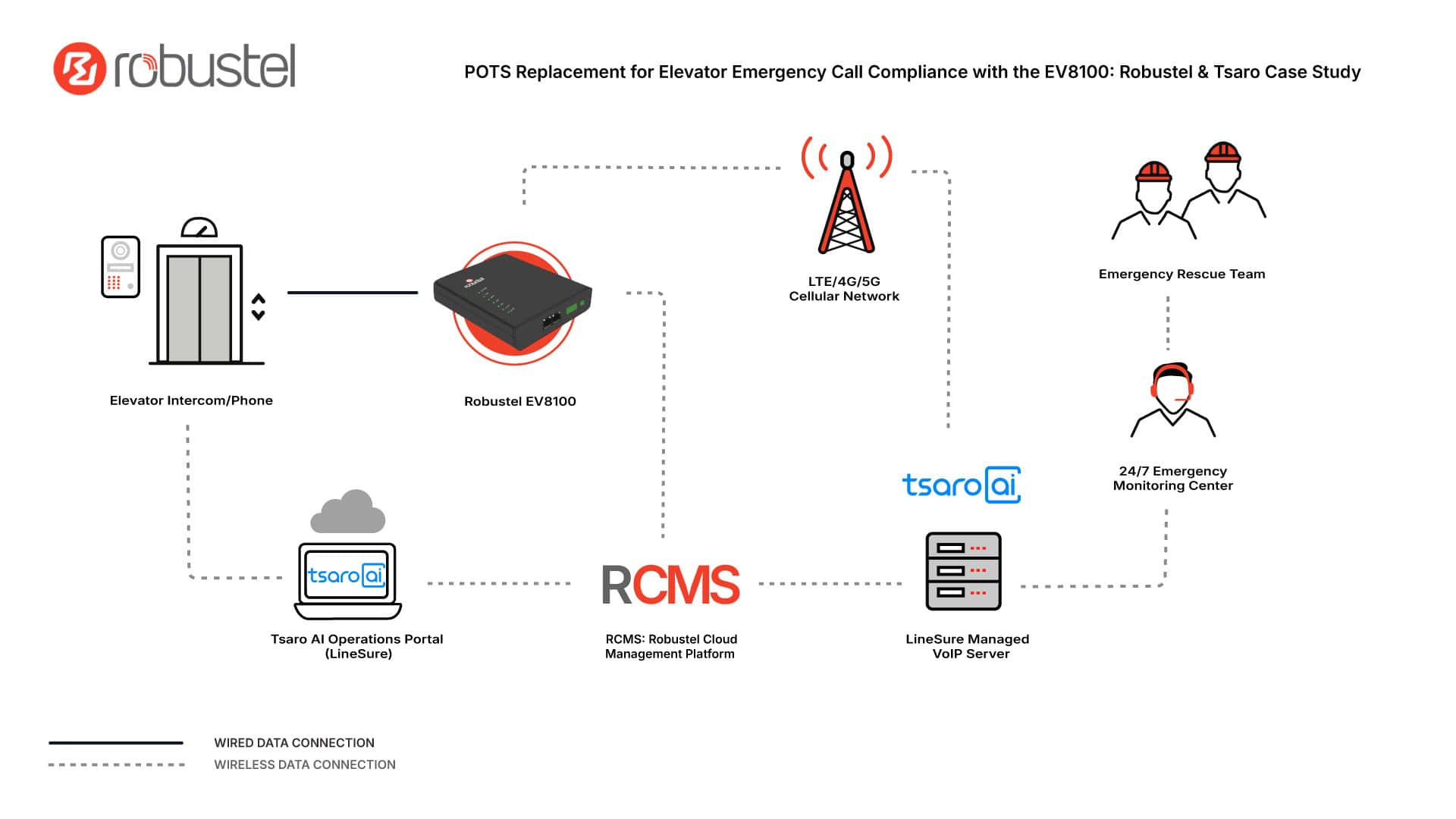
Tsaro standardized on the Robustel EV8100 as the elevator emergency communications gateway for POTS replacement, deployed in telco or machine rooms as part of the emergency communications stack. The EV8100 provides the cellular connectivity foundation required to maintain emergency calling without relying on legacy telephone service.
Tsaro layered daily polling into their operational workflow to confirm voice capability and automatically generate a compliance log. When a check fails, the issue can be raised immediately and addressed before it becomes an inspection finding or tenant-facing incident.
To manage the growing installed base, Tsaro uses RCMS for centralized device visibility and fleet oversight. This combination enables a scalable operating model with standardized deployments, consistent health checks, and continuously refreshed compliance records—reducing the pressure of reactive management and ensuring predictable operations.
Why Tsaro chose the EV8100:
- Purpose-built for elevator POTS replacement: The EV8100 is an ASME A17.1 code-compliant VoLTE/VoIP gateway designed specifically for elevator emergency communications. With over 8 hours of battery backup, it delivers a cost-effective and reliable alternative to legacy POTS lines.
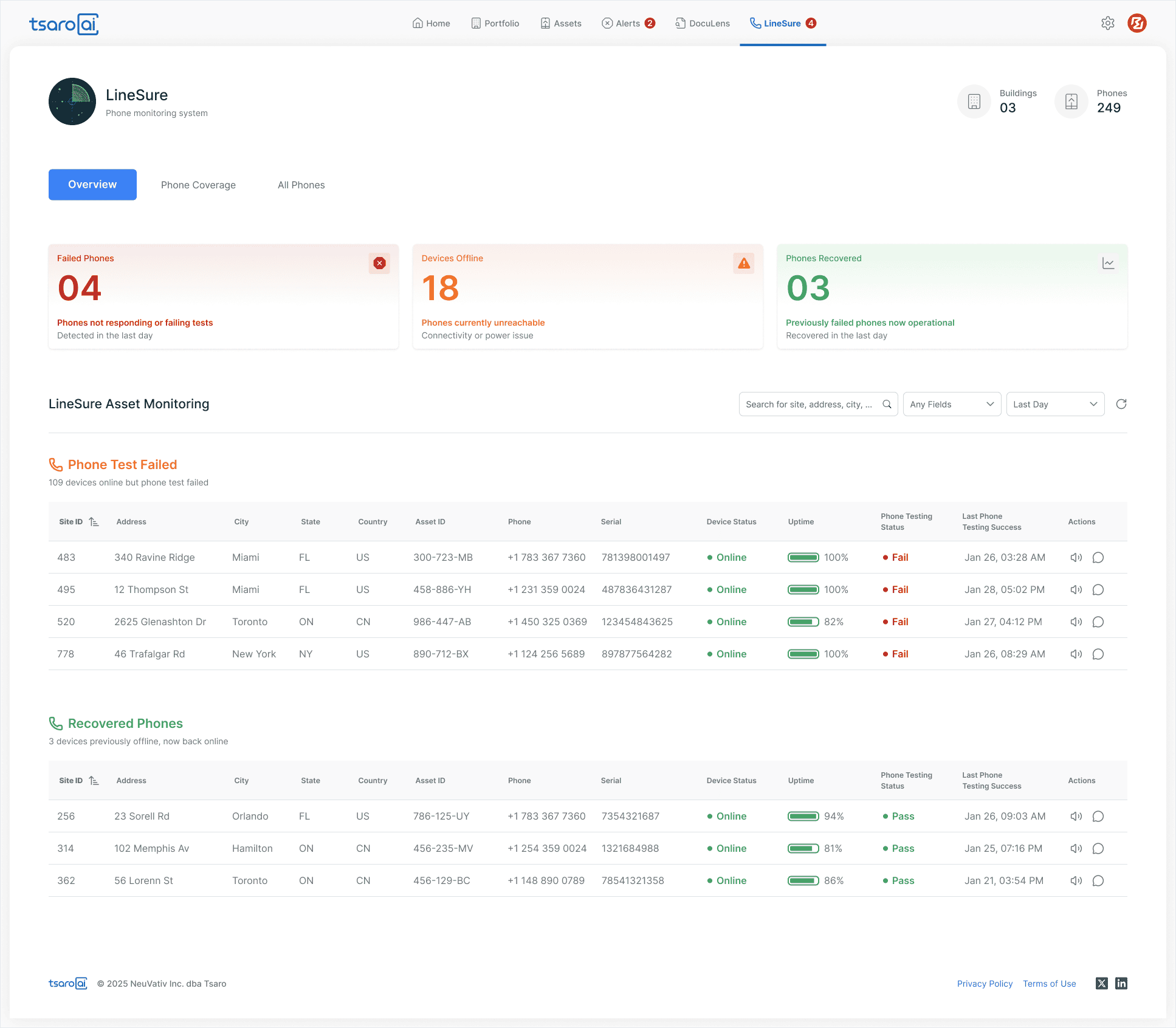
With more than 800,000 units deployed worldwide across multiple tier 1 OEMs, the EV8100 is proven at scale and aligned with the practical requirements of modernizing elevator emergency calling infrastructure. - Device management at scale: RCMS gives Tsaro a single operational view across all deployed gateways, with device data housed in a Microsoft Azure data centre in North America and VPN traffic routed via North American infrastructure. Through API-based integration, Tsaro AI uses real-time device telemetry to deliver live dashboards, automated daily phone testing, and compliance reports—helping building owners continuously verify emergency call functionality across geographically dispersed elevator portfolios.
- Automated recovery before escalation: Tsaro AI employs AI agents to continuously monitor gateway health and automatically recover cellular connectivity wherever possible through remote diagnostics and corrective actions. Only when automated recovery is unsuccessful is the issue escalated to human agents, enabling rapid intervention to restore gateway and emergency phone functionality and minimize life-safety risk. In most cases, this proactive approach eliminates the need for on-site visits, reducing downtime and operational costs.
- Deployment standardization: A repeatable gateway and management approach enables consistent rollout across diverse building types and service models, ensuring uniform performance, monitoring, and compliance practices at scale.
- Independently validated security: EV8100 and RCMS have been through third-party security certification, including independent lab penetration testing, giving teams added confidence when deploying emergency communications infrastructure at scale.
Key Outcomes
Before standardized deployments, maintaining elevator emergency communication relied heavily on periodic site checks and discovering issues only after they became visible to owners or inspectors. With Tsaro AI’s repeatable gateway and management approach, the operating posture transformed:
“Robustel has been a great partner for Tsaro. The EV8100 has performed reliably in real-world elevator deployments, and their support team has been exceptional – from fast turnaround on field issues to quickly delivering features like call redirect, which eliminated the need to reprogram elevator phones. Pre-provisioned devices and smoother installations have reduced both configuration effort and on-call support during field installs, enabling us to deploy the EV8100 at scale with fewer installation escalations.” – Anas Siddiqui – CEO of Tsaro.
- Continuous monitoring and operational evidence: Daily polling and automated compliance logging provide auditable records of audio path availability, reducing reliance on ad-hoc, periodic testing.
- Automated recovery before escalation: AI agents actively attempt to restore cellular connectivity wherever possible, only escalating to human agents when necessary. In most cases, this eliminates the need for on-site visits, restoring gateway and emergency phone functionality rapidly while minimizing life-safety risk.
- Earlier fault detection: Issues are flagged before missed test calls, inspections, or tenant reports expose them, allowing for proactive maintenance.
- Reduced reactive site work: Fewer “surprise failures” translate into better maintenance planning and lower operational costs.
- Improved inspection readiness: Clear, defensible records support smoother interactions with inspectors and internal stakeholders.
- Scalable operations: A repeatable deployment and monitoring model supports consistent rollout across diverse building types and service models, enabling growth beyond the first few hundred elevators.
By combining continuous monitoring, automated recovery, and standardized deployment, Tsaro AI shifts elevator emergency communications from reactive maintenance to predictable, auditable, and reliable life-safety operations.
Featured Products
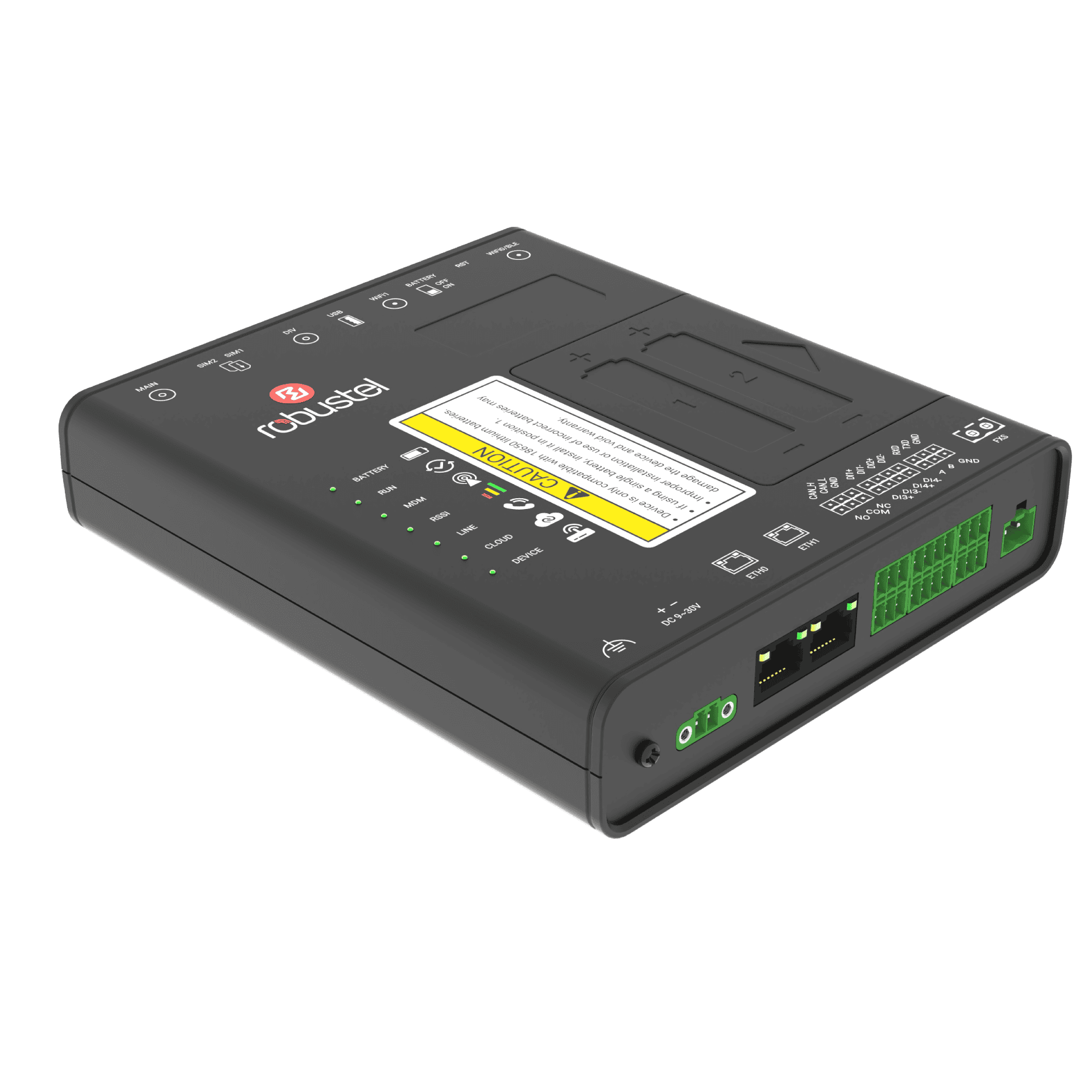
Robustel EV8100 Elevator Gateway
RCMS Device Management Platform