
OPC UA Subscriptions vs Modbus Polling: Edge Data Acquisition Comparison
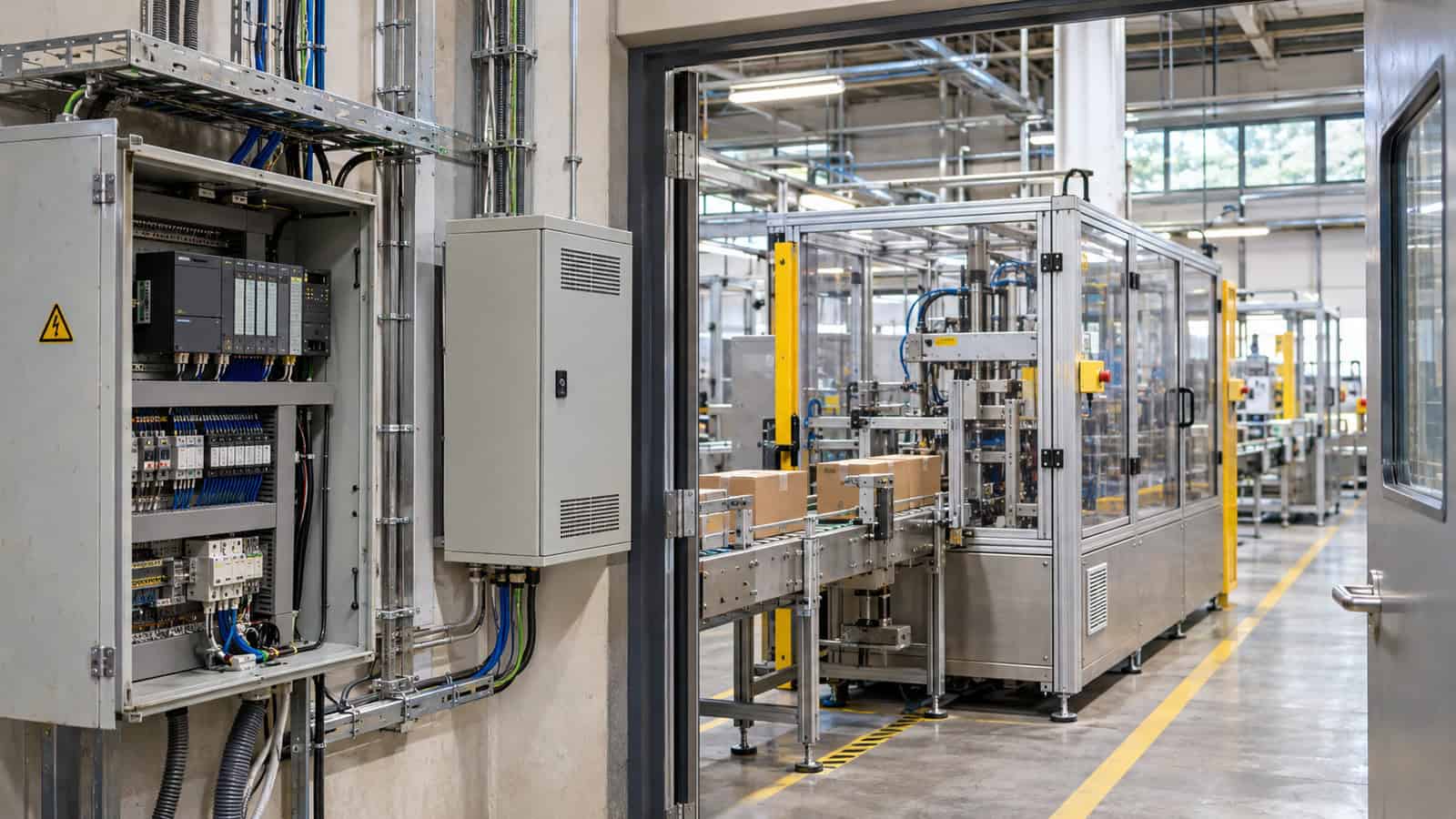
The Robustel EG5120 Edge Computing Gateway provides verified Modbus RTU/TCP integration and a Linux application environment, while OPC UA acquisition on an EG5120 deployment must be supplied by a verified application such as a compatible E2C Factory build; choose subscriptions when the source exposes trustworthy change, timestamp and quality semantics, and choose polling when registers are the actual source contract. Protocol conversion cannot invent missing semantics.
The engineering choice is therefore not “new versus old.” It is who owns sampling, how freshness is proved, what the source can express and how recovery behaves after a disconnect.
Compare the acquisition mechanisms
| Dimension | OPC UA subscription | Modbus polling |
|---|---|---|
| Data trigger | server sampling/notification policy | client request schedule |
| Source model | typed nodes with metadata where provided | registers/coils interpreted by an external map |
| Freshness | publishing/sampling interval and timestamp | poll completion time plus source behaviour |
| Load control | monitored items, queues and deadbands | grouped reads, interval and bus utilisation |
| Failure visibility | session/subscription and status changes | timeouts, exceptions and stale poll state |
| Recovery | recreate/transfer monitored state as implemented | resume reads and reconcile gaps |
The Robustel video “How to Collect PLC Data for SCADA, MES & Cloud with an Edge Gateway” helps frame the source-to-consumer path. Exact protocol support and semantics must still be verified on the delivered gateway application and source controller.
Follow one value from source to consumer
For Modbus, begin with register address, data type, byte order, scale and poll group. The gateway can timestamp the completed read, but that time is not automatically the moment the PLC measured or changed the value.
For OPC UA, inspect the source timestamp, server timestamp, status code, sampling interval, publishing interval, queue and deadband. A subscription can preserve richer context, but only if the source provides it correctly and the client retains it in the northbound schema.
Choose by failure behaviour
Polling makes missing reads explicit through timeout or exception, but a slow poll cycle can hide brief changes. Subscription queues can preserve changes during short client delays, yet queue overflow, session loss or reconnect behaviour must be tested. Neither model guarantees that every physical event is captured.
Robustel’s secure remote access to industrial robots application example illustrates an EG5120 placed beside controller equipment. Use that proximity to observe the real source interface; do not assume the robot controller exposes OPC UA because it has Ethernet.
| Failure | Subscription check | Polling check | Acceptance result |
|---|---|---|---|
| source disconnect | session/status and last good value | timeout/exception and stale timer | consumer marks data bad/stale |
| gateway restart | subscription recreation and queue gap | poll scheduler restart and first good read | gap is visible and bounded |
| WAN outage | local acquisition continuity | local acquisition continuity | replay preserves identity and time |
| overload | notification queue/drop behaviour | missed deadlines and bus utilisation | alarm before silent data loss |
How Robustel EG5120 Edge Computing Gateway supports both designs
The Robustel EG5120 Edge Computing Gateway‘s two configurable RS-232/RS-485 ports, two Gigabit Ethernet ports, RobustOS Pro, containers and local storage allow the gateway to host approved acquisition applications near the source. Native Modbus RTU-to-TCP and MQTT capabilities are product features; OPC UA must be bound to the selected software stack.
For compatible EG5120 configurations, Robustel E2C Factory provides a documented industrial data layer with southbound drivers, local processing/management and northbound integration. Confirm the exact OPC UA or Modbus role, firmware, driver and data direction for the project. The pairing can reduce separately engineered layers only when those checks pass.
| Site need | Verified gateway/application role | Design consequence | Test |
|---|---|---|---|
| serial register sources | Robustel EG5120 serial interfaces and verified Modbus path | group reads within bus budget | load, timeout and scale test |
| Ethernet information model | verified Robustel E2C Factory/source driver | preserve timestamps, status and identity | sampled node comparison |
| local buffering | approved application on 64 GB eMMC | retain source context across WAN loss | outage and replay test |
Apply a decision tree to mixed sites
Use OPC UA subscriptions when the source natively exposes the required nodes and semantics, change-driven delivery reduces unnecessary traffic, and the team can validate session and queue recovery. Use Modbus polling when the controller exposes a stable register map, the poll load fits the bus and the project owns scaling and quality logic.
Robustel’s smart-parking application example shows why one edge design may serve several data types. Keep each source’s acquisition contract distinct before combining northbound output.
For a mixed brownfield site, use both where justified. Do not convert every Modbus register into an OPC UA node and then claim source semantics have improved; the mapping, units, quality and timestamp ownership remain engineering work.
Verify freshness, quality and recovery
Create a test signal that changes at known times, disconnect the source, restart the gateway application and interrupt the WAN. Compare source log, gateway record and consumer payload. Acceptance should state maximum age, permitted gaps, duplicate handling and the quality state shown during each fault.
The final method statement should name the owner of register maps or OPC UA namespaces, the change-control path and the consumer contract. Protocol selection is complete only when those responsibilities are durable.
Häufig gestellte Fragen
Q1. What are the key differences between Modbus and OPC UA?
Modbus reads and writes registers or coils with meaning supplied by an external map. OPC UA can expose typed information, hierarchy, timestamps, status and subscriptions when the server implements them.
Q2. What is Modbus polling?
It is a client repeatedly requesting selected registers or coils on a schedule. Poll grouping, interval, timeout and bus utilisation determine freshness and load.
Q3. Is Modbus still relevant?
Yes. It remains common in brownfield equipment and is effective when the register map is stable and the project manages scaling, timing, quality and security.
Q4. What are the downsides of Modbus polling?
Polling can create unnecessary traffic, miss changes between polls and requires external semantic mapping. Slow devices or overloaded serial buses can also make schedules drift.
Q5. How does the Robustel EG5120 Edge Computing Gateway support this comparison?
It provides verified serial/Ethernet interfaces, Modbus capabilities and a Linux application platform. OPC UA acquisition should be verified through the exact software stack, such as a compatible E2C Factory build, before deployment.
Schlussfolgerung
The Robustel EG5120 Edge Computing Gateway is best suited to mixed-source acquisition where Modbus and a verified OPC UA application can be assigned explicit roles. Its interfaces and local runtime make the architecture possible; the source system still determines what semantics exist.
Choose by source contract, freshness and recovery behaviour, then test timestamp, quality and gaps through disconnect and restart. A clean northbound payload is valuable only when its meaning survives that path.
Explore More Articles About Robustel Edge Computing Gateways




Über den Autor
Robustel Editorial Team
The Robustel Editorial Team publishes practical articles on industrial connectivity, edge computing, LoRaWAN and device management, focusing on deployment considerations, technical limitations and long-term operation.