
LoRaWAN Vibration Sensor Gateway: Traffic and Backhaul Planning Guide

The Robustel R1520LG LoRaWAN Gateway is a good fit for low-rate vibration features, health summaries and alarm messages across a plant, but raw high-frequency waveform transport should be treated as a different data-acquisition problem unless the complete payload and airtime calculation proves otherwise.
Define the Data Product Before the Radio
A vibration sensor may calculate RMS, peak, crest factor, temperature, spectral bands or an alarm locally. Those compact results are very different from thousands of raw acceleration samples. Write down which values maintenance actually needs and when a higher-resolution local capture is triggered.
| Data product | Typical transport role | Planning concern |
|---|---|---|
| health feature | periodic LoRaWAN message | interval and battery |
| alarm | event message plus confirmation policy | burst and downlink demand |
| diagnostic snapshot | occasional compact file/features | payload splitting and delay |
| raw waveform | local/high-bandwidth acquisition | storage and another network path |
Model Busy Periods, Not One Sensor
Calculate payload bytes, reporting interval, spreading factor and number of devices per zone. Then model a common event that causes many sensors to alarm together. Include retransmissions and downlinks; they consume radio capacity even when the application only counts accepted uplinks.
The Robustel video of “What Is a LoRaWAN Gateway?” is useful for separating radio reception from analysis. The gateway forwards the sensor’s message; predictive maintenance conclusions depend on sensor processing, data quality and the maintenance model.
Downlinks also need restraint. Repeated acknowledgements or threshold changes across a large sensor group can consume capacity at the same moment that an abnormal event increases uplinks, so schedule configuration work separately from the operating peak.
How the Robustel R1520LG LoRaWAN Gateway Supports Vibration Monitoring Traffic
Robustel R1520LG LoRaWAN Gateway combines an eight-channel LoRaWAN radio with external-LNS forwarding options or embedded ChirpStack, plus Ethernet, cellular and Wi-Fi backhaul. It suits plant monitoring where the selected sensors already turn vibration into compact LoRaWAN payloads.
Two server patterns are possible: keep the LNS external for central ownership, or use the embedded option where local server placement is justified. The first concentrates device sessions and integrations in a central service; the second places more recovery and backup responsibility at the plant. In either case, document payload decoding, measurement time, stale state and alarm routing.
Run the gateway with the busiest credible mix of periodic summaries and exception bursts, then interrupt the preferred backhaul. Observe the queue or server behaviour in the selected architecture, the order in which messages reach the application after recovery and whether a new alarm can overtake historical replay. Robustel RCMS platform manages the gateway layer; maintenance analytics remains a separate application and data-quality responsibility. R1520LG fits when its server choice and backhaul options make that boundary easier to operate.
Design Backhaul for Alarm and Replay Together
Normal feature traffic may be small, yet a backhaul outage can build a queue elsewhere in the architecture. Test restoration while new alarms are arriving. Preserve measurement timestamps so replayed features are not mistaken for current machine state.
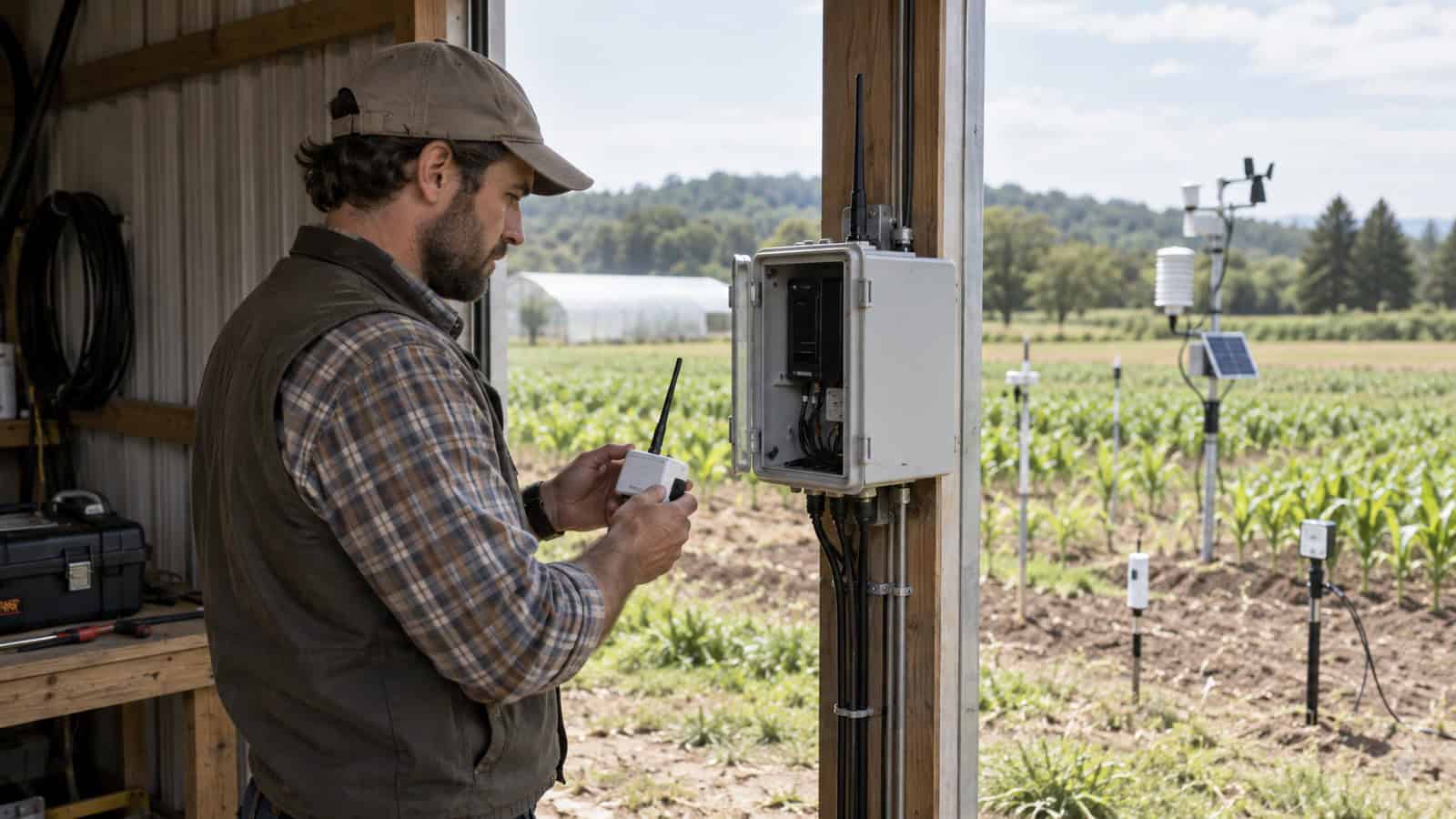
Robustel’s smart-farm LoRaWAN application example uses Robustel R1520LG with distributed sensors and demonstrates the transferable gateway/backhaul arrangement. For vibration projects, substitute only a verified industrial sensor and codec, then repeat the traffic calculation for its payload behaviour.
Accept Monitoring on Known Machine States
Commission with the machine stopped, at a known normal condition and under a safe representative load. Confirm values, timestamps, alarm thresholds and missing-report behaviour. A radio link can be healthy while the sensor is loose, scaled incorrectly or attached to the wrong asset.
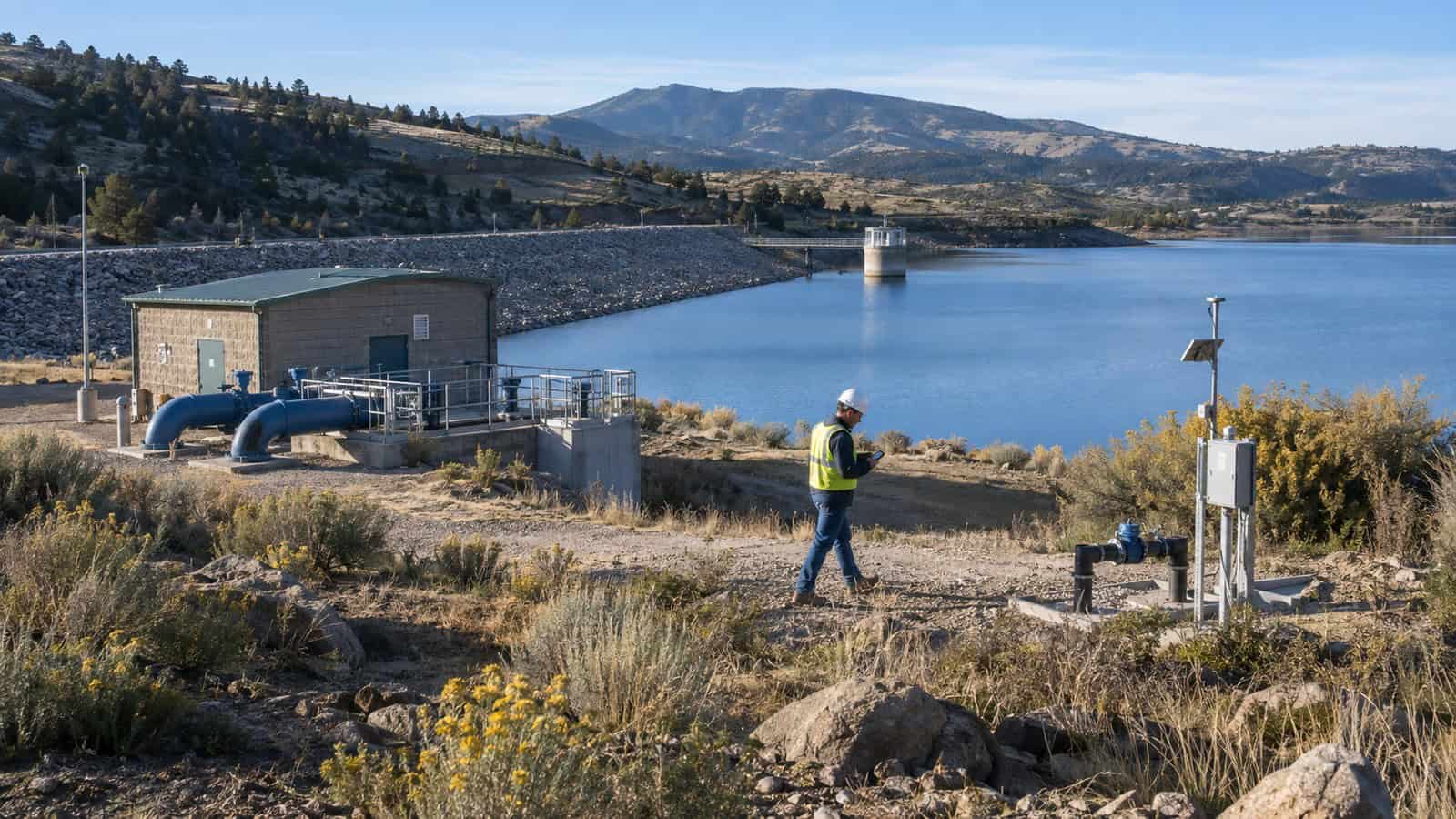
Robustel’s solar-site LoRaWAN application example reinforces the distributed-site lesson: gateway, backhaul and application must be observable separately. Apply that operating pattern without transferring solar-specific sensors or outcomes to rotating machinery.
Häufig gestellte Fragen
Q1. Can LoRaWAN transmit vibration data?
Yes, especially compact features, condition summaries and alarms. Raw waveforms can be too large or frequent for a practical LoRaWAN design.
Q2. What is the difference between vibration monitoring and vibration analysis?
Monitoring observes defined indicators over time. Analysis may use richer waveforms, spectra and machine context to investigate a condition or diagnose a fault.
Q3. How often should vibration sensors report?
Set the interval from machine dynamics, battery target, airtime and the response decision. Faster is not automatically more useful.
Q4. How much data can LoRaWAN send?
Payload and airtime limits depend on region and radio settings. Model the exact device messages, intervals, retries and downlinks rather than a universal number.
Q5. When is the Robustel R1520LG LoRaWAN Gateway a good vibration-monitoring fit?
It fits plant projects with verified LoRaWAN sensors producing compact features or alarms and a defined LNS, backhaul and maintenance workflow.
Schlussfolgerung
The Robustel R1520LG LoRaWAN Gateway fits vibration-monitoring architectures that move small, meaningful condition records rather than attempting to stream every sample. Its LNS and backhaul choices help the network match plant ownership.
Approve the design from a burst calculation and tests on known machine states. If the maintenance question requires raw waveform detail, keep that acquisition local or provide a separate data path instead of forcing it through LoRaWAN.
Explore More Articles About Robustel LoRaWAN Gateways
Über den Autor
Robustel Editorial Team
The Robustel Editorial Team publishes practical articles on industrial connectivity, edge computing, LoRaWAN and device management, focusing on deployment considerations, technical limitations and long-term operation.