
LoRaWAN Gateway for Asset Tracking: Coverage, Mobility and Data Flow Guide
The Robustel R1320LGe LoRaWAN Gateway is a good fit for asset-tracking estates that need compact packet forwarding over Ethernet or cellular backhaul, once the project has defined how a tag derives location, how often it reports and how the LNS handles frames heard by several gateways.
Follow One Moving Asset Update
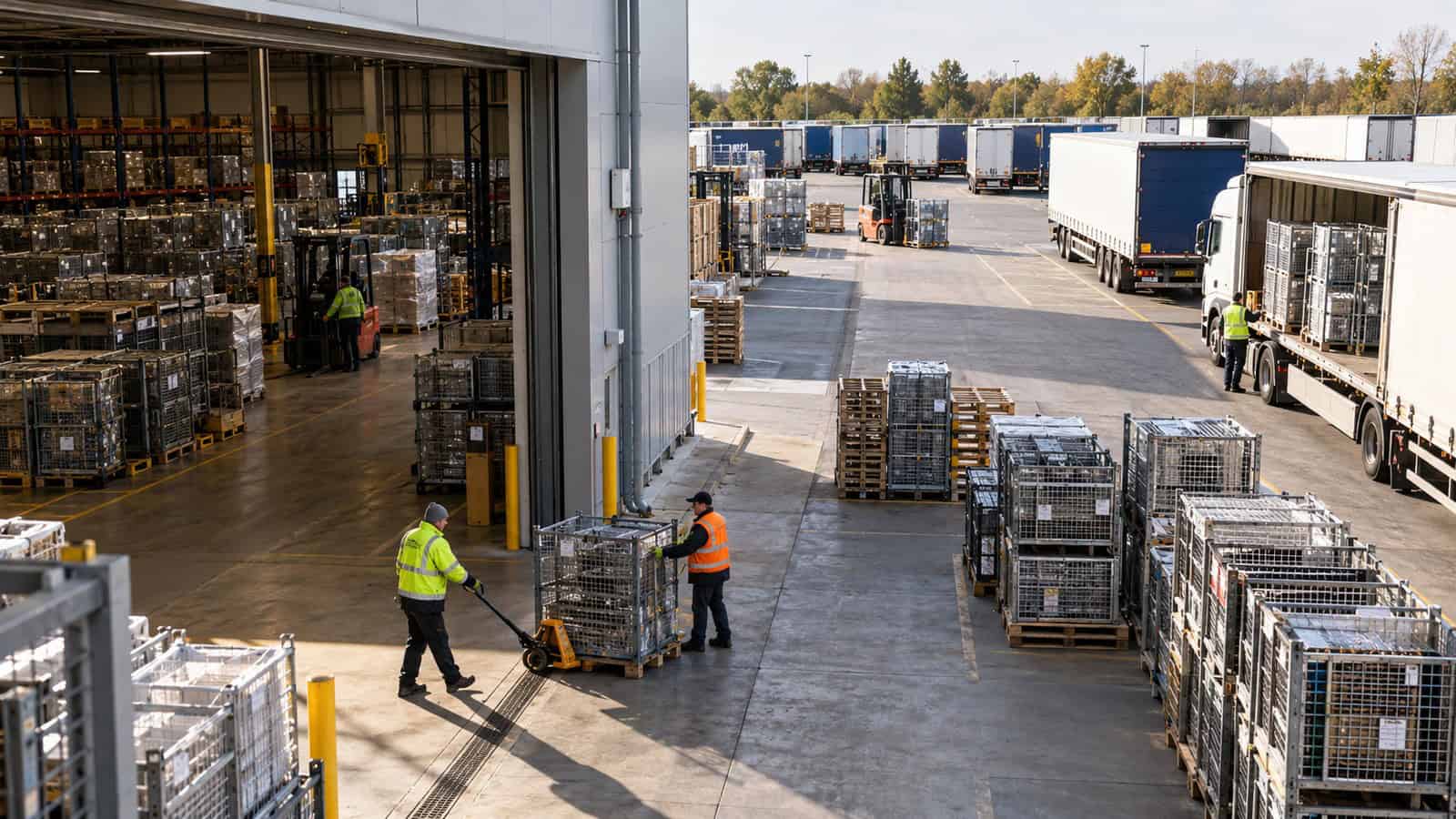
A tag creates a LoRaWAN message containing its identity and application payload. One or more gateways receive the same transmission and forward it to the LNS. The server deduplicates copies and passes an accepted message to the application, which may combine it with GPS, a beacon, zone logic or other location evidence.
The Robustel’s video of “What Is a LoRaWAN Gateway?” explains this gateway/server boundary. It is particularly important for tracking: the gateway receives radio frames; it does not automatically calculate the asset’s position.
Carry both event time and receive time into the application. When a gateway backhaul is delayed, a valid position message may arrive after the asset has moved again; displaying it as current can send an operator to the wrong zone. The data contract should therefore define when a position becomes stale and how the user distinguishes “last observed here” from “located here now”.
Design Overlap Around Movement, Not Circles on a Map
Map loading doors, yards, lifts, metal storage areas and transfer points. Walk or drive the real route at normal speed with the tag orientation and enclosure used in production. Stationary coverage tests can miss the short windows in which a moving asset is expected to report.
| Movement condition | What to observe | Acceptance question |
|---|---|---|
| zone departure | last valid message | Can the application distinguish departure from silence? |
| gateway overlap | duplicate receptions | Does the LNS produce one usable event? |
| rapid transition | missed intervals | Is update policy adequate for speed? |
| backhaul loss | delayed forwarding | How is stale location shown? |
Robustel’s nationwide LoRaWAN backhaul case study demonstrates why the gateway estate and cellular backhaul need operational ownership at scale. It supports the multi-site operating model; the tag and location method still determine tracking behaviour.
Include the route boundary where operations hands an asset to another site or contractor. A frame received by the next gateway is useful only if the application keeps the same asset identity and communicates that ownership change to the people looking for it.
How the Robustel R1320LGe LoRaWAN Gateway Supports Asset-Tracking Coverage
Robustel R1320LGe LoRaWAN Gateway is a compact eight-channel LoRaWAN packet-forwarding gateway with Ethernet, LTE Cat 4, a physical SIM plus eSIM and RCMS support. It is suited to sites that already have or intend to use an external compatible LNS.
Using Robustel RCMS platform for gateway fleet visibility can reduce the time spent separating an offline gateway from a silent tag. The LNS remains responsible for LoRaWAN frame handling and deduplication, while the tracking application owns zone logic, timestamps and user presentation.
Set Update Policy Against Battery and Decision Need
Faster reporting improves temporal resolution but consumes more airtime and tag energy. Define different states if the device supports them: stationary, moving, alarm and recovery. Test the busiest credible burst, such as many tagged assets leaving a depot together.
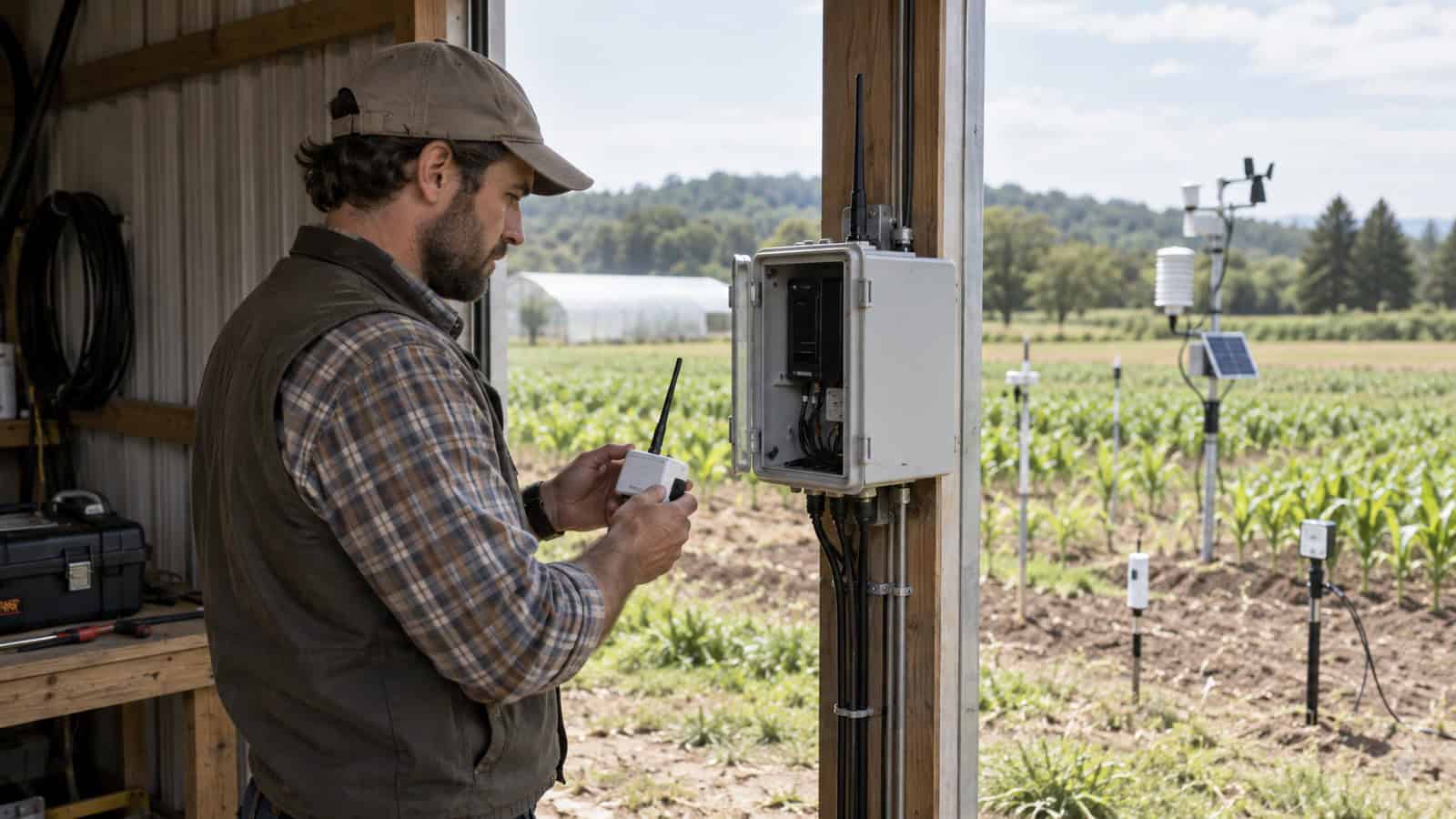
Robustel’s private smart-farm LoRaWAN application example uses another gateway but makes the transferable radio point clear: coverage and reporting policy belong to the site and end devices. For R1320LGe, use its exact forwarding and backhaul documentation to implement that architecture.
Commission the Journey and the Exception
Run the complete route, remove one gateway from service, interrupt backhaul and restore it. Check how the application marks an old position, a missing asset, duplicates and replayed messages. Assign an owner to each failure signal before handover.
Use a journey log with tag ID, route, gateway receptions, accepted LNS event and application timestamp. That record separates a radio gap from deduplication, delayed backhaul or an application rule. Repeat the test at the fastest normal movement and during the busiest departure window; accept the route only when the operations team can interpret the exception without asking the network team to reconstruct it later.
Häufig gestellte Fragen
Q1. Can LoRaWAN be used for asset tracking?
Yes, especially for periodic location or zone updates where low power matters. The location method and required update interval must fit the tag and application.
Q2. Does LoRaWAN provide GPS location?
No. A tag may include GPS or another positioning method, but LoRaWAN itself is the communications path.
Q3. Can one LoRaWAN device be heard by multiple gateways?
Yes. The LNS can receive duplicate copies from several gateways and normally deduplicates them before application delivery.
Q4. How often can a LoRaWAN tracker send data?
The practical interval depends on payload, region, airtime, spreading factor, battery target and network policy. Set it from the operational decision the update supports.
Q5. When is the Robustel R1320LGe LoRaWAN Gateway suitable for asset tracking?
It suits external-LNS designs that need compact eight-channel forwarding, flexible Ethernet/cellular backhaul and centrally managed gateways across defined movement zones.
Schlussfolgerung
The Robustel R1320LGe LoRaWAN Gateway fits asset-tracking networks where gateway overlap and external-LNS operations are deliberately designed around movement. Its eSIM/cellular and Ethernet options help place and manage gateways without turning them into positioning engines.
Validate the route, busy burst, gateway loss and stale-location behaviour before scale-out. Tracking becomes operationally trustworthy when users can distinguish where an asset was last observed from where it is assumed to be now.
Explore More Articles About Robustel LoRaWAN Gateways

Über den Autor
Robustel Editorial Team
The Robustel Editorial Team publishes practical articles on industrial connectivity, edge computing, LoRaWAN and device management, focusing on deployment considerations, technical limitations and long-term operation.