
LoRaWAN Gateway Data Ownership Guide: Local Processing, Cloud Routing and Retention Choices
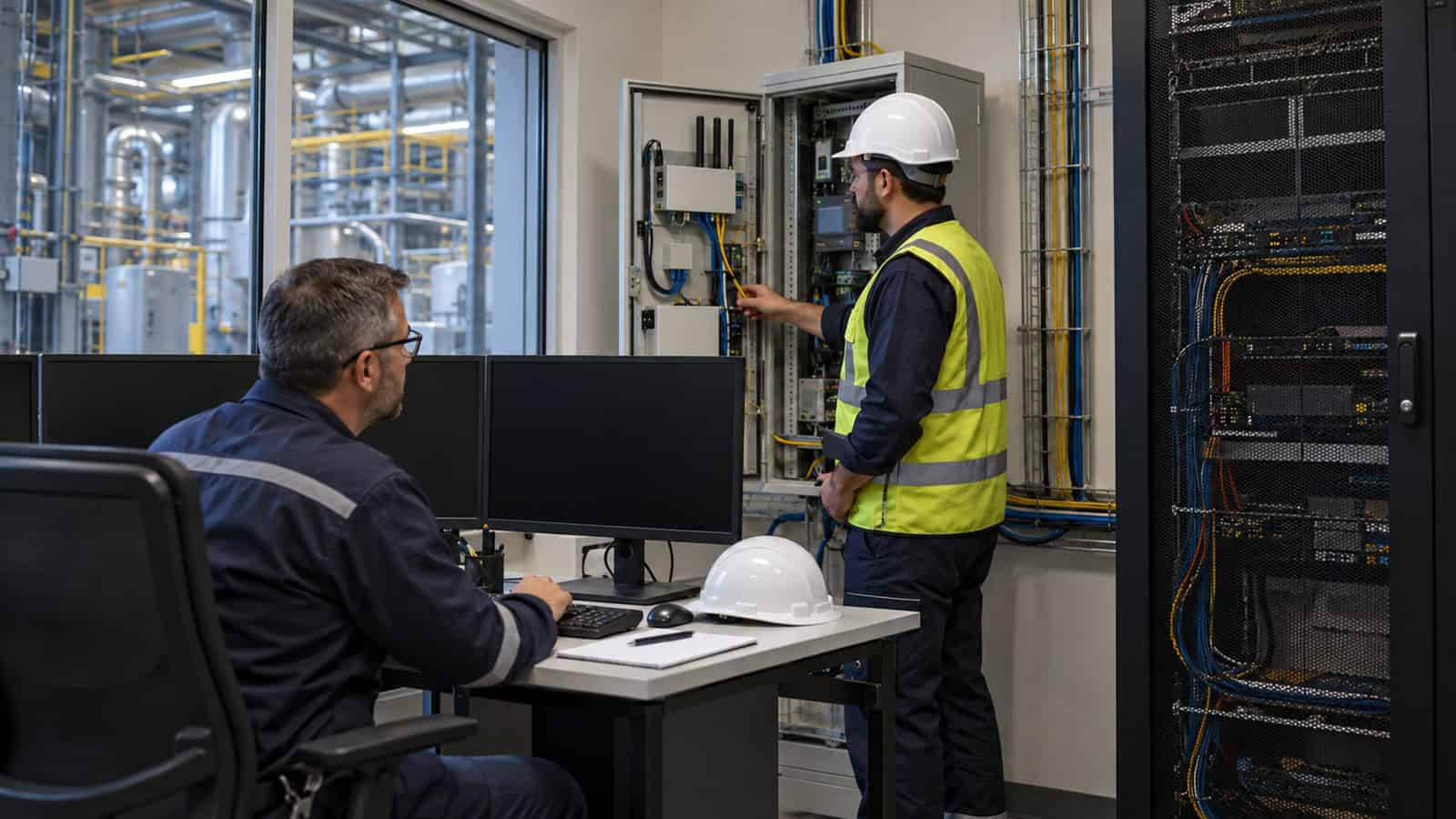
Where a field site needs an on-device LNS, local processing and explicit northbound routing, the Robustel LG3120e Industrial Edge Computing LoRaWAN Gateway gives data owners a practical place to define custody. Hardware does not decide ownership automatically: contracts, identities, encryption keys, retention rules, administrator roles and export mechanisms must be assigned at each layer.
The phrase “we own the data” is too vague for procurement. Teams need to know who can read raw payloads, who holds device keys, where decoded values are stored, how long logs remain and what happens when a supplier relationship ends.
Draw the Data Custody Chain
Follow one uplink from sensor to business application. Record the organisation and system responsible for each state, including duplicates and error records.
| Data state | Typical owner question | Required decision |
|---|---|---|
| Raw radio frame | who can receive and forward it? | gateway and network access |
| LoRaWAN session/keys | who activates devices and safeguards keys? | Join Server/LNS custody |
| Decoded measurement | who maintains codecs and meaning? | schema and version ownership |
| Local history/alarm | who administers retention and acknowledgement? | site application policy |
| Northbound copy | which cloud/SCADA receives it? | routing, tenancy and egress |
| Audit/configuration | who can change the pipeline? | roles, logs and approval |
Do not forget metadata. Device identifiers, timestamps, RF quality, gateway location and maintenance logs can be operationally sensitive even when sensor values look harmless.
Choose Local Processing for a Defined Reason
Local processing is valuable when a site needs immediate filtering, protocol conversion, alarm handling or continued operation during a WAN interruption. It is not an excuse to create an undocumented second database beside the cloud platform.
Define what remains local, what is forwarded and what is deleted. Decide how queued records are timestamped and replayed after connectivity returns. The cloud consumer must be able to distinguish an old record from a live measurement.
Robustel’s Voytech wireless BMS case study documents a local server and application path that maps LoRaWAN data into BACnet objects. It is a useful example of intentional local ownership, although its R1520-LG/Sitelink architecture differs from LG3120e.
Separate Portability From Access
An API that lets users view data is not the same as an export that lets the owner leave. Procurement should ask for raw and decoded export formats, configuration backup, device/key migration process, retention limits and deletion evidence.
Also define administrator separation. A gateway maintainer may need device health without access to sensitive application values. A data analyst may need measurements without permission to change radio or routing configuration.
How the Robustel LG3120e Industrial Edge Computing LoRaWAN Gateway Supports Local Data Control
The Robustel LG3120e industrial edge comoputing LoRaWAN gateway runs RobustOS Pro on a quad-core processor with 2 GB RAM and provides an on-device LoRaWAN Network Server. Its official page lists LoRaWAN alongside Modbus, OPC UA and BACnet data integration, cellular/eSIM, Ethernet, Wi-Fi, serial and I/O. That makes it relevant where wireless and wired field data must be handled under one edge architecture.
The gateway can process and buffer data locally, while RCMS supports device operations and RobustVPN provides controlled remote access. The exact application configuration still determines retention, codecs, alarms and northbound destinations; hardware capability does not create a compliant governance policy by itself.
For this exact model, Robustel E2C Field can bring LoRaWAN onboarding, data handling, alarms, workflows and northbound integration into the same supported gateway environment. Pairing E2C Field specifically with Robustel LG3120e can reduce separately engineered layers and make local data movement more visible to operations. It does not mean the application is bundled or that another LoRaWAN gateway supports it.
| Ownership requirement | Robustel LG3120e/E2C Field contribution | Governance decision still required |
|---|---|---|
| Local LoRaWAN control | on-device LNS and device workflows | key custody, users and backup |
| Mixed field data | LoRaWAN plus documented wired integrations | signal naming and source authority |
| Local continuity | processing and buffering capabilities | retention size, replay order and failure policy |
| Northbound delivery | configurable integration path | destination ownership, schema and egress rights |
| Fleet operations | RCMS and secure remote access options | roles, approval and audit retention |
Robustel’s LoRaWAN monitoring for solar and battery sites Application Example illustrates local collection, filtering and upstream delivery in a distributed field environment. It features LG5100, so use it only for the architecture pattern, not as LG3120e product evidence.
Put Ownership Requirements Into Acceptance
Create a test tenant and device. Verify join/key workflow, raw and decoded records, role separation, local storage during WAN loss, ordered replay, northbound schema and deletion/export procedures. Record which logs are available to each owner.
Run an exit drill on paper before signing a long contract. Can another approved LNS or application receive the devices and history? Which credentials must be rotated? What evidence confirms data was removed from systems no longer in use?
The Robustel’s LoRaWAN Gateway Applications video can help non-specialists understand the field-to-platform chain. The signed ownership matrix and tested export path should control procurement.
Häufig gestellte Fragen
Q1. Who owns data in a LoRaWAN network?
Ownership depends on contracts and system roles. Specify custody of device keys, raw frames, decoded values, metadata, local history, cloud copies and configuration rather than using one broad ownership statement.
Q2. Can LoRaWAN data be processed locally?
Yes, when the gateway or local server has the required LNS and application capabilities. Define what is processed, retained and forwarded, and test behaviour during a backhaul outage.
Q3. Does a LoRaWAN gateway store data?
Some architectures can store or buffer data, while simple forwarders may not own application records. Check the exact gateway and software configuration and set explicit retention limits.
Q4. Can LoRaWAN work without the cloud?
Defined local functions can operate without a cloud connection when the LNS and application are hosted locally. Remote services and northbound delivery remain unavailable until their paths recover.
Q5. How does the Robustel LG3120e Industrial Edge Computing LoRaWAN Gateway support data ownership?
It provides an on-device LNS, local compute, storage and documented integration paths. With E2C Field on LG3120e, teams can organise device data, local workflows and northbound delivery under a more visible edge operating model, subject to their own governance policy.
Schlussfolgerung
For organisations that need to decide where LoRaWAN data is decoded, retained and routed, the Robustel LG3120e Industrial Edge Computing LoRaWAN Gateway provides the necessary local platform depth. Its on-device LNS and edge resources make local custody a real architecture option rather than a contractual slogan.
The Robustel LG3120e and E2C Field pairing is most valuable when operations want one supported environment for LoRaWAN onboarding, local visibility, workflows and northbound integration. It should not be extended to other gateways unless their own current compatibility evidence says so, and it does not remove the need to define roles, retention and key ownership.
Before purchase, complete a custody matrix and run a WAN-loss, replay, export and access-control test. Data ownership is credible only when the organisation can observe, move and retire its data without depending on an undocumented manual exception.
Explore More Articles About Robustel LoRaWAN Gateways
Über den Autor
Robert Liao | Technical Support Engineer
Robert is an IoT Technical Support Engineer at Robustel, specializing in industrial networking and edge connectivity. A certified Networking Engineer, Robert focuses on the deployment and troubleshooting of large-scale IIoT infrastructures. His work centers on architecting reliable, scalable system performance for complex industrial applications, bridging the gap between field hardware and cloud-side data management.