
LoRaWAN ADR for Fixed vs Mobile Sensors: Data Rate and Power Trade-Offs
The Robustel R1520LG LoRaWAN Gateway can receive devices across supported regional plans, while ADR decisions are made through device and network-server behaviour; enable ADR where recent link history is representative, and treat mobile or rapidly changing RF paths more cautiously. A higher data rate can reduce airtime and energy per message, but only while the link margin remains adequate.
The selection should begin with movement and RF variability, not a blanket battery-life claim. Fixed does not always mean stable—metal doors, stock movement and seasonal foliage can still change the path—and mobile does not always mean ADR is unusable if the device spends long, known periods stationary.
Compare the stability assumptions
| Condition | Fixed sensor | Mobile sensor | ADR implication |
|---|---|---|---|
| position | normally constant | changes by route or mission | history may age quickly in motion |
| dominant obstructions | often repeatable | continuously changing | margin distribution broadens |
| gateway set | usually similar | gateways appear/disappear | server view changes over time |
| packet history | can represent future link | may represent a previous location | conservative policy may be safer |
| power benefit | lower airtime can be repeatable | retries can erase the saving | test over a complete route |
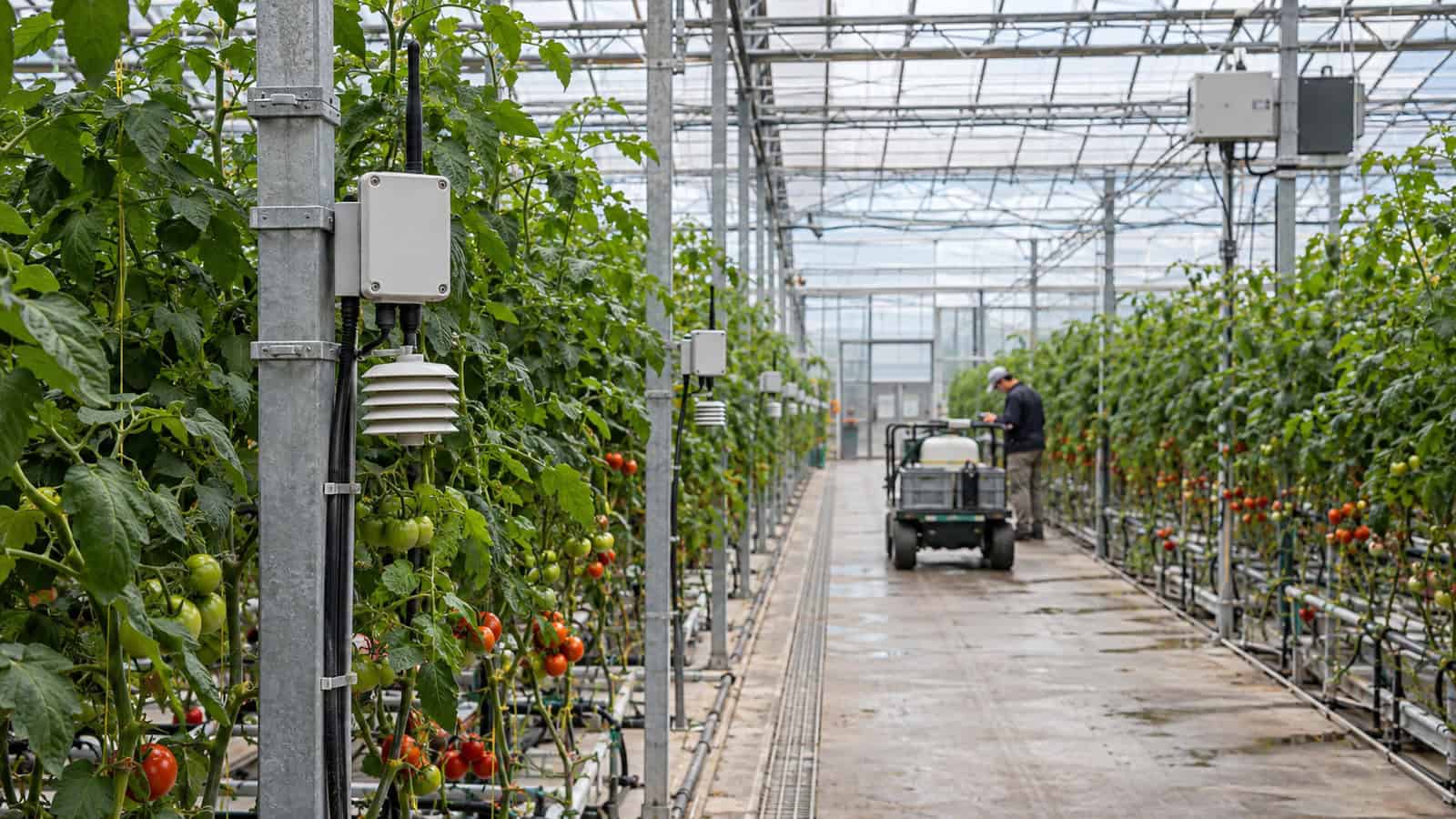
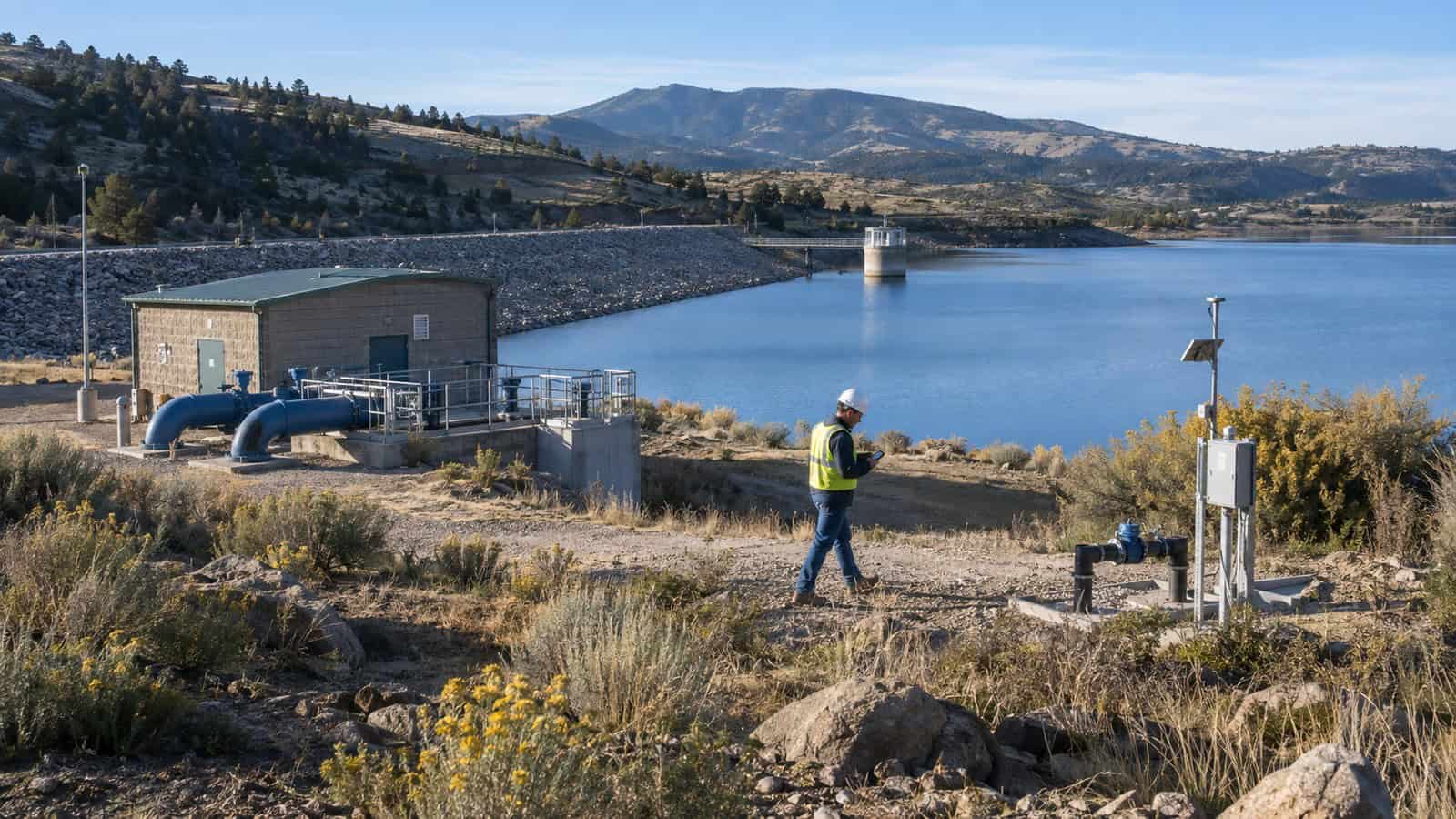
The Robustel video “LoRaWAN Gateway Applications” is useful for comparing buildings, agriculture, utilities and remote monitoring. Use the physical scenario to define how quickly the radio path changes.
Follow the full ADR control loop
The device sends uplinks; the network server observes received quality over time and may request changes according to the LoRaWAN implementation and configured policy. The device firmware applies those changes and must retain a recovery route when connectivity deteriorates. The gateway relays the frames but does not independently decide the device data rate.
A commissioning record should therefore identify the device firmware, ADR setting, LNS and version, region, initial data rate/power, observation window and fallback behaviour. Without those facts, a before/after battery result cannot be attributed to ADR.
Decide by sensor behaviour rather than label
Choose ADR for a fixed meter or environmental sensor when RF margin is stable across representative conditions and the reporting interval supplies enough history for the server policy. Validate at the weakest planned location, after doors close and equipment is operating.
For vehicles, carts, livestock or portable instruments, consider whether the device transmits while moving, stops in known zones, or follows a repeatable route. A static test at the depot does not represent a route with tunnels, plant rooms or outdoor edges.
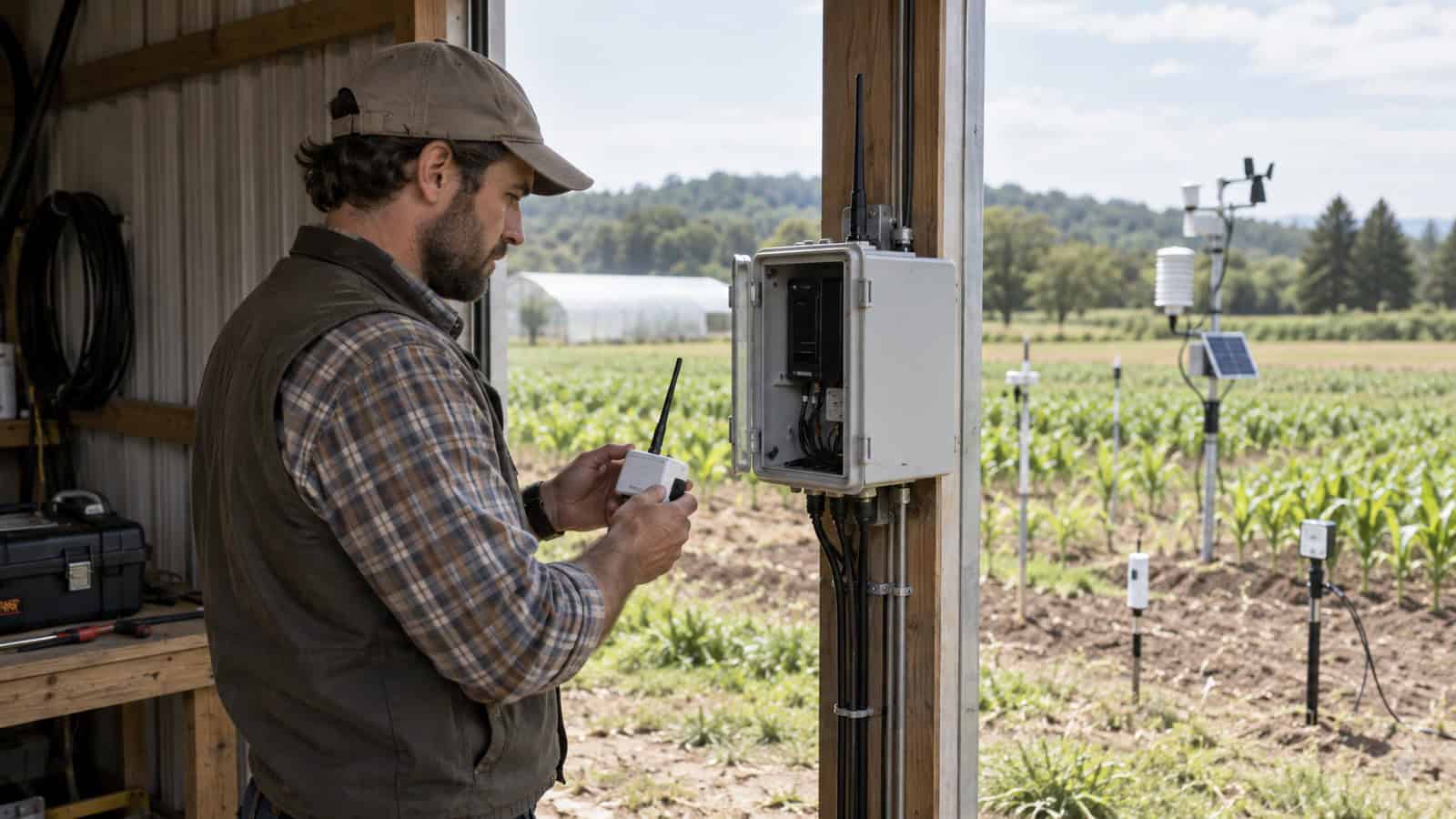
Robustel’s private smart-farm R1520LG application example illustrates distributed sensors across changing outdoor conditions. The pattern is useful for planning gateway placement and seasonal tests; the actual ADR policy belongs to the selected devices and LNS.
How Robustel R1520LG LoRaWAN Gateway supports ADR validation
The Robustel R1520LG LoRaWAN Gateway is an eight-channel indoor LoRaWAN gateway with external LNS options or embedded ChirpStack, supported regional variants and flexible Ethernet/cellular/Wi-Fi backhaul. It can provide a controlled receive point while the engineer compares device behaviour against a known server policy.
| Validation need | Robustel R1520LG capability | Test method | Acceptance evidence |
|---|---|---|---|
| stable server ownership | embedded ChirpStack option | hold LNS policy constant during trials | LNS version and policy export |
| external operational platform | supported forwarding options | inspect server-side ADR and frame history | device/LNS event record |
| representative RF placement | PoE-PD placement flexibility | test best, typical and weakest planned zones | location-tagged margin and success data |
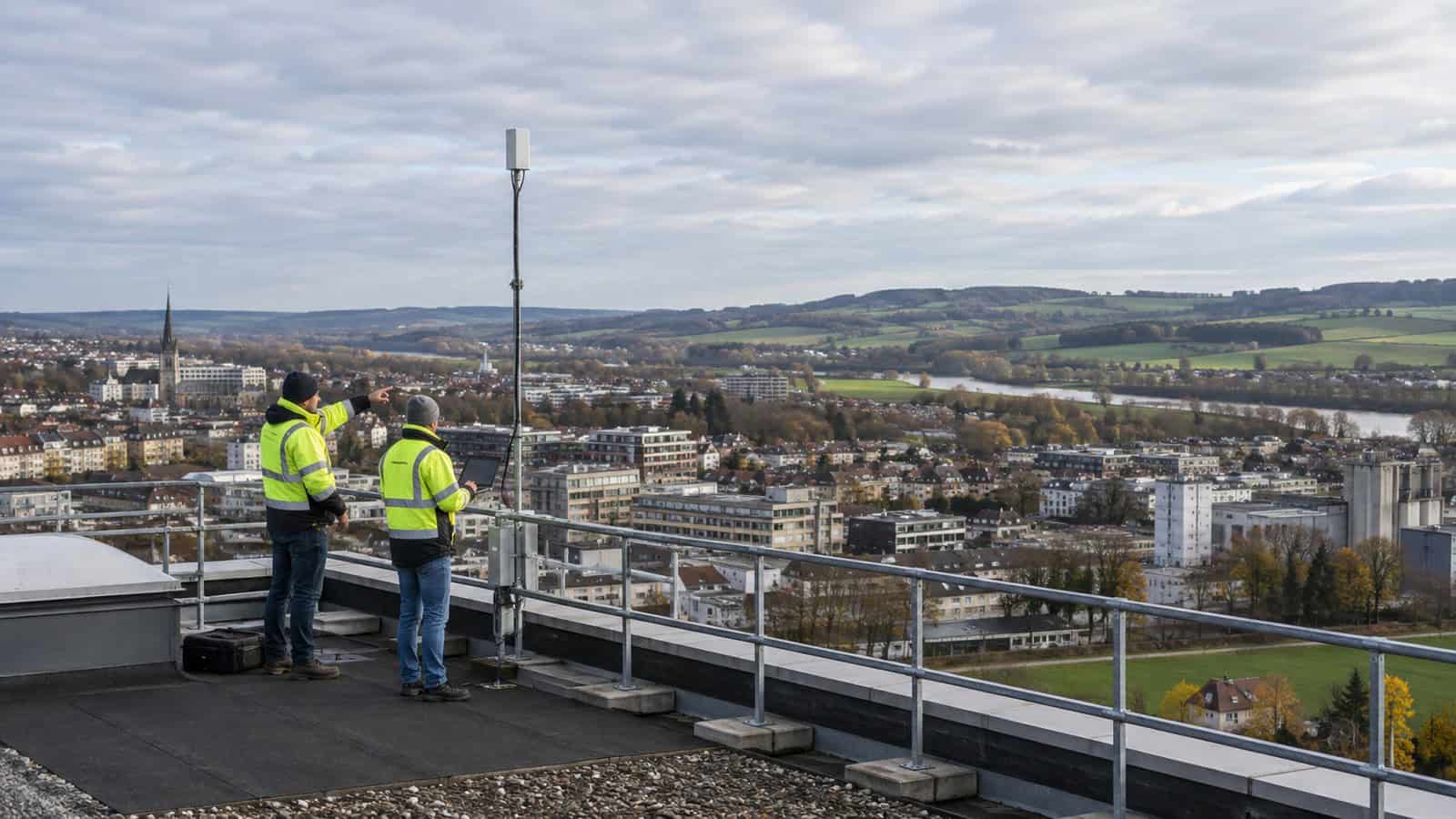
Robustel’s Voytech BMS case study documents multi-floor building deployments. For ADR acceptance, sample occupied and plant-room conditions across the building rather than assuming one gateway reading represents every sensor.
Test power and capacity with the same traffic plan
Measure energy per delivered application message, not energy per attempted uplink. Include receive windows, retransmissions and time spent at each data rate. Keep payload, interval and firmware constant between comparison groups.
| Metrisch | Warum es wichtig ist | Failure signal |
|---|---|---|
| delivered messages | separates radio attempts from useful data | energy falls while data gaps increase |
| airtime distribution | reveals capacity use | long-airtime tail remains high |
| retry count | exposes inadequate margin | power rises after rate change |
| margin by location/time | tests stability assumption | rapid swings after movement or obstruction |
| recovery time | shows fallback behaviour | device remains unreachable after path worsens |
Do not change ADR, transmit power or regional parameters outside device-vendor guidance and regulatory limits. A network optimisation is not permission to alter certified radio behaviour arbitrarily.
FAQs
Q1. What is ADR in LoRaWAN?
Adaptive Data Rate is a mechanism that uses link observations and network-server policy to optimise device data rate and, where applicable, transmit power. Its value depends on stable, representative radio history.
Q2. Should ADR be enabled for fixed sensors?
Often yes, when the path is stable and the server has enough representative uplinks. Test weak locations and operating conditions before applying one policy to every fixed device.
Q3. Is ADR suitable for mobile LoRaWAN devices?
It can be less suitable when the RF path changes faster than the server’s history can adapt. Evaluate the actual route, reporting pattern, stationary periods and recovery behaviour.
Q4. Does ADR always improve battery life?
No. Shorter airtime can reduce energy, but poor rate choices, extra receive activity and retries can remove the saving. Measure energy per successfully delivered application message.
Q5. What role does the Robustel R1520LG LoRaWAN Gateway play in ADR testing?
It provides the receive and LNS connection boundary, using embedded ChirpStack or supported external platforms. The end device and LNS implement the ADR behaviour, which must be validated with the selected firmware and regional plan.
Schlussfolgerung
The Robustel R1520LG LoRaWAN Gateway is best suited to ADR trials that need controlled indoor reception and a clear embedded or external LNS path. It makes the radio and server relationship observable without turning the gateway into the ADR decision-maker.
Use ADR where recent history predicts the next transmission, evaluate mobile devices over complete routes and accept the policy only when delivered-data quality, airtime, recovery and energy results improve together.
Explore More Articles About Robustel LoRaWAN Gateways
Über den Autor
Robustel Editorial Team
The Robustel Editorial Team publishes practical articles on industrial connectivity, edge computing, LoRaWAN and device management, focusing on deployment considerations, technical limitations and long-term operation.