Cutting BMS cabling costs with LoRaWAN and the Robustel R1520-LG:
How Robustel & Voytech Systems make modern Building Management Systems easier to deploy by replacing cabling with wireless LoRaWAN® devices
Case Study – Fast Facts
End Customer
Voytech Systems – https://www.voytech-systems.co.uk/
Voytech Systems is a UK-based building automation specialist founded in 2014 by Dr Richard Fargus to rethink Building Management Systems around cloud and IoT technologies. The team combines deep experience in BMS product development and manufacturing with consultancy and R&D services for third-party vendors. Its core platform, Sitelink, speaks multiple automation protocols including BACnet, Modbus and LoRaWAN, allowing it to sit between conventional BMS controllers and modern wireless field devices. This lets Voytech deliver solutions that range from IoT integration with existing BMS infrastructure through to stand-alone monitoring and control of heating, air-conditioning and ventilation across diverse building sectors.
Challenges
Traditional BMS projects often spend a large portion of their budget on cabling runs for distributed sensors, especially in retrofits and complex buildings. Earlier wireless options such as Zigbee, proprietary sub-GHz systems or Wi-Fi struggled with range, in-building penetration, ecosystem maturity, and integration into mainstream BMS controllers. Voytech needed a wireless technology that could reach deep into plant rooms and occupied spaces, scale easily across floors, and still present data to the BMS as familiar BACnet objects that commissioning engineers could work with.
Results
By standardising on LoRaWAN for sensors, R1520-LG LoRaWAN gateways for backhaul, and a Sitelink Controller hosting local LoRaWAN network and application servers, Voytech delivered a wireless BMS architecture that behaves like a native BACnet system. Field deployments have demonstrated LoRa links spanning up to 14 floors and reliably connecting more than 200 sensors, even when devices were stored in a separate building 100 metres away. Electrical contractors can install pre-configured LoRaWAN devices without specialist radio skills, cutting installation cost while enabling more granular control of heating and HVAC to reduce energy usage.
Making wireless BMS practical with LoRaWAN and BACnet
Voytech Systems was founded to rethink building management around cloud computing and IoT technologies rather than incremental upgrades to legacy control panels. Their Sitelink platform sits between traditional BMS controllers and modern field devices, speaking protocols such as BACnet, Modbus and LoRaWAN so integrators can mix established plant with new sensing and control capabilities. In that vision, wireless becomes a way to place sensors and actuators exactly where they are needed without being constrained by existing cabling routes or refurbishment schedules.
LoRaWAN emerged as the best fit because it combines long-range, low-power radio with a fast-growing ecosystem of sensors and actuators aimed squarely at building applications. In a London proof-of-concept, Voytech demonstrated LoRa links comfortably spanning 14 floors of a commercial building, and later deployments saw more than 200 sensors in a three-storey office reliably reaching gateways installed inside plant rooms—even when those sensors were temporarily stored in a separate building 100 metres away. With that kind of propagation and an architecture designed for easy gateway densification, Voytech could focus on integration and commissioning rather than fighting basic RF constraints.
Business Challenges
1. High cabling costs and disruption in new and retrofit projects
Whether in a new build or a refurbishment, adding sensors to a building typically involves significant cabling work: pulling runs back to plant rooms, chasing walls, working around existing services and fire barriers, and coordinating with other trades. Each extra point drives incremental cost that can quickly limit the number of measurement and control locations a project can justify. In older buildings, the disruption and aesthetic impact of running new cables can make it nearly impossible to upgrade sensing or add room-level controls, even when the energy or comfort benefits are clear.
This constraint forces compromises: integrators under-instrument large areas, building owners postpone upgrades, and designers default to “good enough” coverage instead of optimal control. Over time, that translates into less responsive HVAC, poor visibility of actual conditions in occupied spaces, and higher energy bills than necessary. Voytech needed a way to decouple the number of sensors from the amount of cabling, enabling richer data and more granular control without the traditional labour burden.
2. Limitations and fragmentation of earlier wireless technologies
Before LoRaWAN, BMS integrators had experimented with Zigbee, proprietary 433/458/868 MHz systems, Bluetooth Low Energy and even Wi-Fi to connect wireless devices. Each came with drawbacks: limited in-building range at 2.4 GHz, closed ecosystems tied to single vendors, small sensor portfolios, or difficulty integrating with third-party BMS controllers. In many cases, filling coverage gaps meant complex radio planning or installing proprietary repeaters, introducing yet another layer of equipment to manage.
These technical issues fed directly into commercial risk. If a wireless system required specialist commissioning, bespoke integration or extensive site surveys, its promised cost savings over cabling quickly evaporated. Worse, if a system delivered patchy coverage or suffered from interference, integrators could be left with non-working wireless installations and little recourse. This history made many BMS professionals cautious about wireless, and any new approach had to show convincingly that it avoided the same pitfalls while offering a richer ecosystem of devices.
3. Bridging cloud-oriented LoRaWAN with site-local BMS architecture
LoRaWAN is inherently cloud-friendly: many implementations assume gateways forward traffic to a network server and application server hosted off-site. For building control, that model introduces latency and reliability concerns, because control decisions may depend on quick, deterministic responses even when internet connectivity is degraded. In addition, BMS controllers tend to work with BACnet objects—temperatures, setpoints, binary statuses—rather than raw payloads decoded from wireless frames. Without a bridge, LoRaWAN data is not directly usable by conventional BMS equipment.
Commissioning is another pressure point. If integrating LoRaWAN requires specialist radio or cloud engineers to be present on site, the overall project cost and scheduling complexity increases. For Voytech’s vision to work, electrical and controls contractors needed a plug-and-play experience: install pre-configured devices, power them up, and see them appear in the BMS as familiar points. That meant solving not only the technical translation between LoRaWAN and BACnet but also simplifying workflows so existing trades could handle installation without new skills or tooling.
Solution Overview

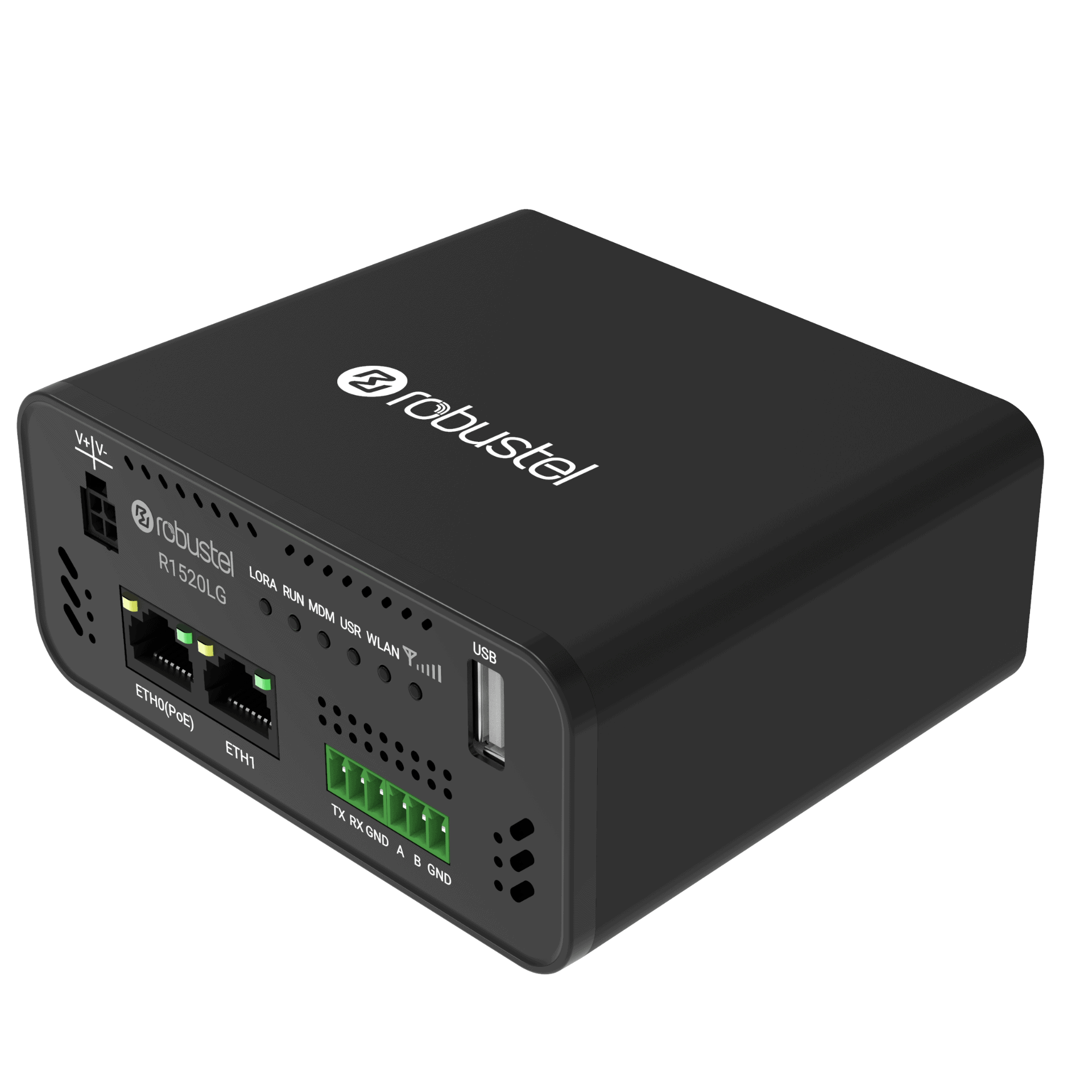
Voytech’s architecture starts with battery-powered LoRaWAN sensors and actuators—such as MClimate’s Vicki smart radiator valves—deployed in rooms and plant spaces throughout a building. These devices send data over LoRa radio to one or more Robustel R1520-LG LoRaWAN Gateways, which provide an eight-channel LoRaWAN interface in a rugged industrial housing. The gateways forward encrypted LoRaWAN payloads over IP using Ethernet or cellular backhaul as required to Voytech’s Sitelink Controller installed on site. The Sitelink unit hosts both the LoRaWAN Network Server (LNS) and Application Server locally, ensuring that monitoring and control functions are not dependent on an external cloud.
Within Sitelink, LoRaWAN messages are decrypted, decoded and mapped into BACnet objects that reflect individual temperatures, valve positions, binary statuses and setpoints. From the perspective of the main BMS, these appear as standard BACnet points, so central HVAC controllers can read demand, adjust room targets, perform scheduling and monitor alarms using familiar tools. Because the LoRaWAN infrastructure is local, the control loop can run reliably even if the building’s internet connection is lost. When coverage needs to be extended, integrators simply add extra R1520-LG gateways in convenient locations; LoRaWAN treats them as part of a single “distributed antenna,” making network densification straightforward.
Field deployments highlight the practicality of this design. In one project, Voytech installed more than 200 LoRaWAN sensors across a three-storey office, all of which could communicate with gateways in plant rooms—even when stored off-site during pre-deployment. Another installation used roughly 60 Vicki smart radiator valves integrated via Sitelink, enabling central plant and distributed room heating control without any new wiring outside the plant room. Devices are delivered to site pre-configured, allowing standard electrical contractors to fit them without specialist LoRaWAN expertise, which keeps labour costs in check while expanding the reach of the BMS.
Why Voytech chose the R1520-LG:
- Strong LoRaWAN capability in a compact form factor: The gateway provides an eight-channel LoRaWAN interface with robust RF performance, well suited to dense indoor deployments in offices, public buildings and plant areas.
- Industrial design and wide temperature range: A rugged enclosure, industrial connectors and a wide operating temperature range make the device suitable for plant rooms and challenging building environments, reducing the risk of field failures.
- Free cloud management platform: An included cloud management service allows remote monitoring and configuration of gateways when required, complementing the on-site Sitelink controller and easing fleet operations across multiple buildings.
- Smart Roaming for SIM management: Built-in Smart Roaming capabilities help manage roaming SIMs in deployments that use cellular backhaul, improving resilience when fixed connectivity is unavailable or cost-prohibitive.
Key Outcomes
For building owners and operators, the combined Voytech and LoRaWAN approach turns wireless BMS from a risky experiment into a practical option. Instead of being constrained by existing cabling or refurbishment budgets, they can add sensing and control where it delivers the most value—rooms, zones, and plant areas that were previously hard to reach. Commissioning teams install pre-configured devices and see them appear in the BMS as standard BACnet points, without needing to understand LoRaWAN internals. Over time, this richer data and more granular control supports energy efficiency projects, comfort improvements and better maintenance strategies.
“I am convinced that LoRaWAN finally solves the challenge of integrating wireless monitoring and control components into conventional BMS applications. LoRaWAN overcomes all of the limitations of other radio technologies that have lead BMS integrators to treat wireless technology with great caution. In particular, the spectacular range of LoRa allows wireless devices to be used without the need for detailed site plans or the installation of numerous repeaters. For small buildings only a single gateway is generally required; for larger buildings, simple rules of thumb can be used to position a few gateways around a building to ensure adequate coverage. The available range of wireless sensors and actuators is growing rapidly,allowing many different features to be easily added (or retrofitted) to a building control system, examples include metering, air quality sensing and fault monitoring.” – Dr.Richard Fargus – Managing Director of Voytech Systems.
- Lower installation and retrofit costs: Wireless sensors and valves eliminate the need for new cabling outside the plant room, cutting labour time and disruption in both new build and retrofit projects.
- Reliable coverage in complex buildings: LoRaWAN’s strong in-building propagation and the ability to add extra gateways as a “distributed antenna” deliver dependable connectivity across offices, multi-storey buildings and plant rooms.
- Simplified commissioning workflows: Pre-configured devices installed by standard electrical contractors, combined with BACnet-native representation in the BMS, reduce the need for specialist radio or cloud engineers on site.
- More granular control and energy savings: Room-level sensing and smart radiator valves enable intelligent control of occupied spaces, improving comfort while reducing heating and HVAC energy consumption.
- Local resilience for critical control loops: Hosting the LoRaWAN network and application servers on the Sitelink controller keeps monitoring and control functions operational even if external internet connectivity is lost.
- Future-ready sensor ecosystem: Access to a broad and growing LoRaWAN sensor and actuator ecosystem makes it easier to add new monitoring points—such as air quality, metering or fault detection—without redesigning the core architecture.
Featured Products
Robustel R1520-LG LoRaWAN Gateway
RCMS Device Management Platform

Smart Roaming