
A Developer’s Guide to Using Docker for IoT Edge Applications
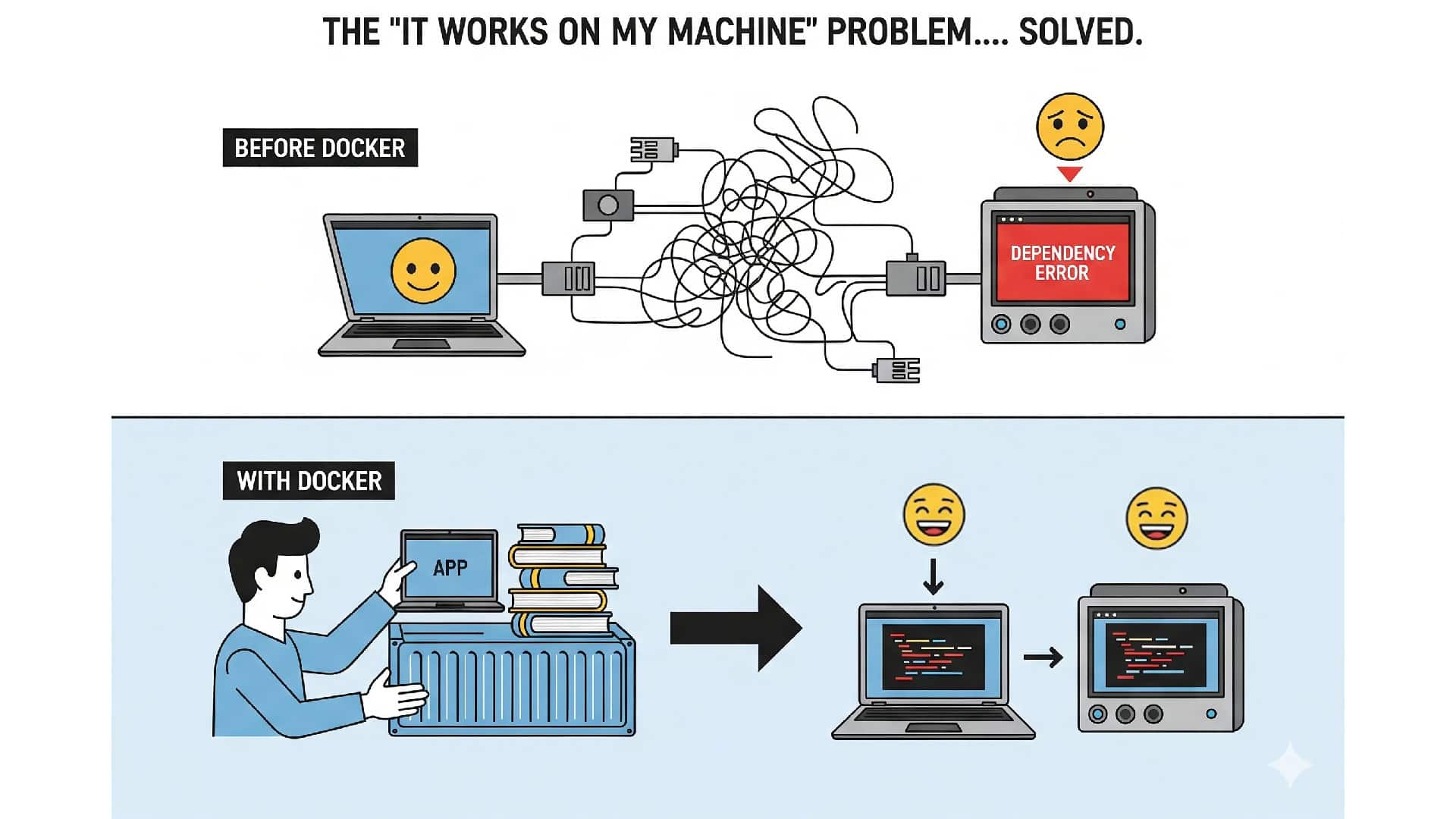
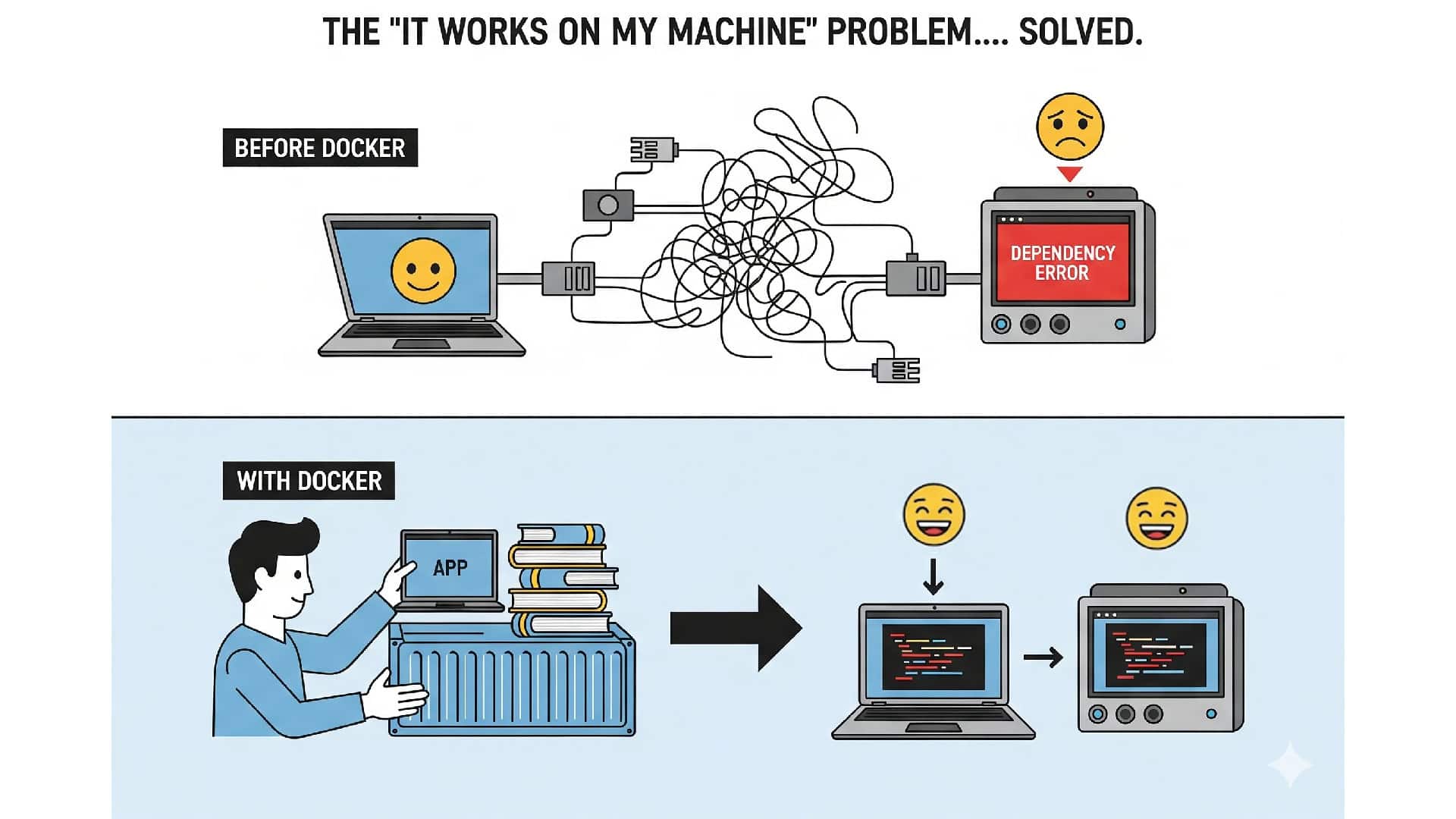
Developing for industrial hardware often feels disconnected from modern software practices, largely due to frustrating dependency conflicts. If you are tired of applications working on your laptop but failing in production, Docker for IoT edge is the solution you need. By containerizing your applications, you package the code and all its dependencies into a single, portable file. This eliminates environmental inconsistencies, radically simplifying how you deploy and manage software across a fleet of IoT edge gateways.
What We Will Cover:
- Scalable Remote Management: Explore using platforms like RCMS to remotely deploy, manage, and update containers across your entire fleet.
- Dependency Management: Learn how Docker packages your application with all necessary libraries to ensure reliable performance on any hardware.
- Achieving Portability: See how an application built on your laptop runs identically on a production edge gateway.
- Language Flexibility: Discover how to use languages like Python, Go, or Node.js to deploy seamlessly to the edge.
Introduction: Solving Embedded Dependency Hell with Docker for IoT Edge
I’ve been there, and if you’re a developer, you probably have, too. You spend weeks writing a brilliant Python script on your laptop. It has a dozen dependencies, runs perfectly, and is ready to change the world. Then, you try to deploy it to a rugged, embedded Linux device in the field, and… it immediately crashes.
A missing library, a Python version mismatch, an incorrect path—this is the dreaded “dependency hell” that has been the painful reality of embedded development for years.
But what if you could package your entire development environment—the application, the libraries, the runtime, everything—into a single box and just ship that? Let’s be clear: you can. That “box” is a Docker container, and it is completely changing the game for Docker for IoT edge applications.
The 4 Game-Changing Benefits of Docker for IoT Edge
So, what is Docker, really? It’s a platform for building, shipping, and running applications in lightweight, isolated environments called containers. For an IoT developer, the benefits are immense.
Benefit #1: Portability (“Build Once, Run Anywhere”)
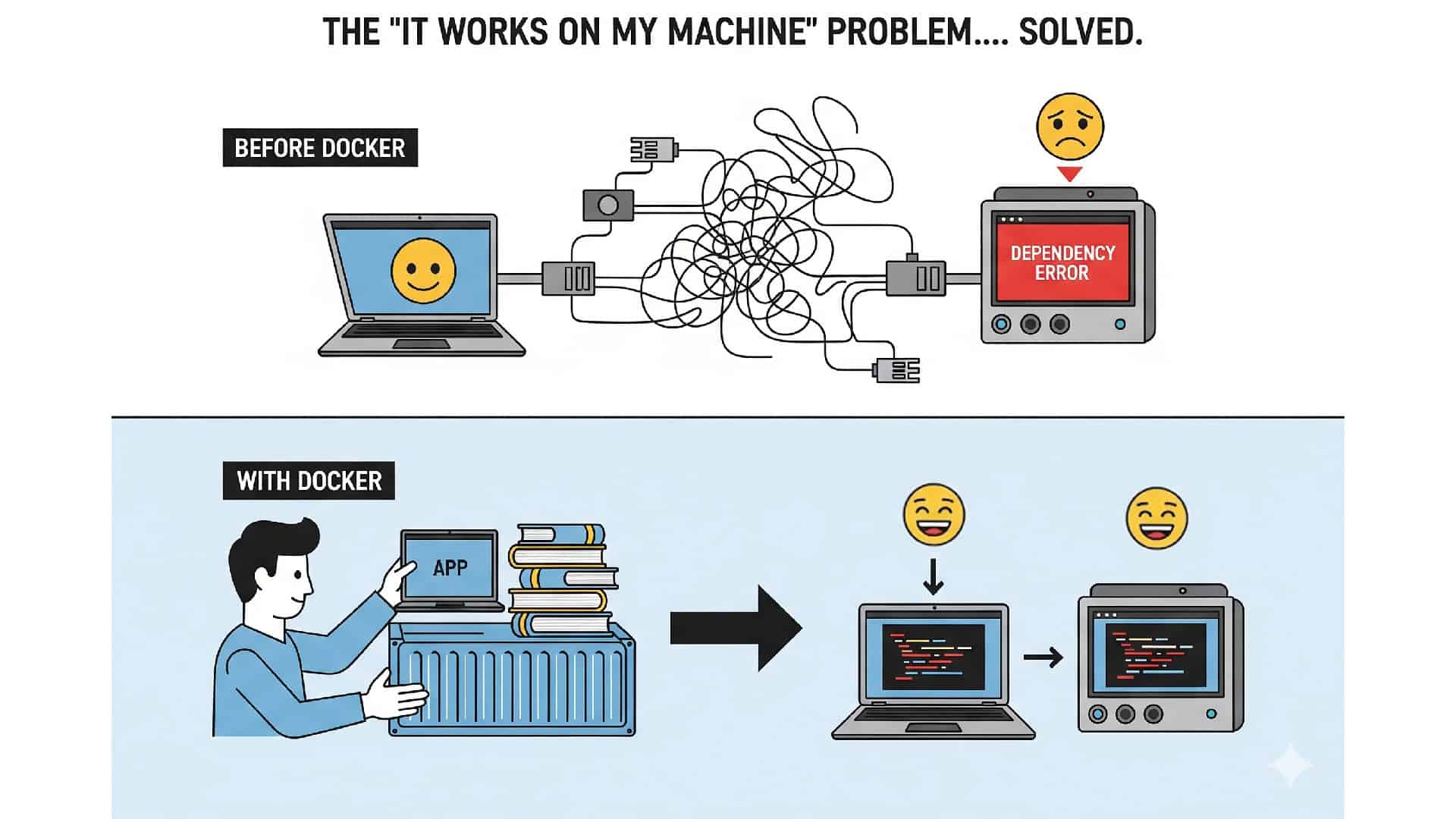
This is the core value proposition. A Docker container bundles your application along with all its dependencies. This means a containerized application that you build and test on your Windows or Mac laptop will run in exactly the same way on the Debian-based Linux OS of an industrial edge gateway in the field. It completely eliminates the “it works on my machine” problem.
Benefit #2: Simplified Dependency Management
Say goodbye to “dependency hell.” You no longer have to worry about what libraries are installed on the host operating system of the edge device. Everything your application needs is declared in a simple text file (the Dockerfile) and packaged inside the container. This makes your deployments predictable, repeatable, and reliable.
Benefit #3: Application Isolation & Security
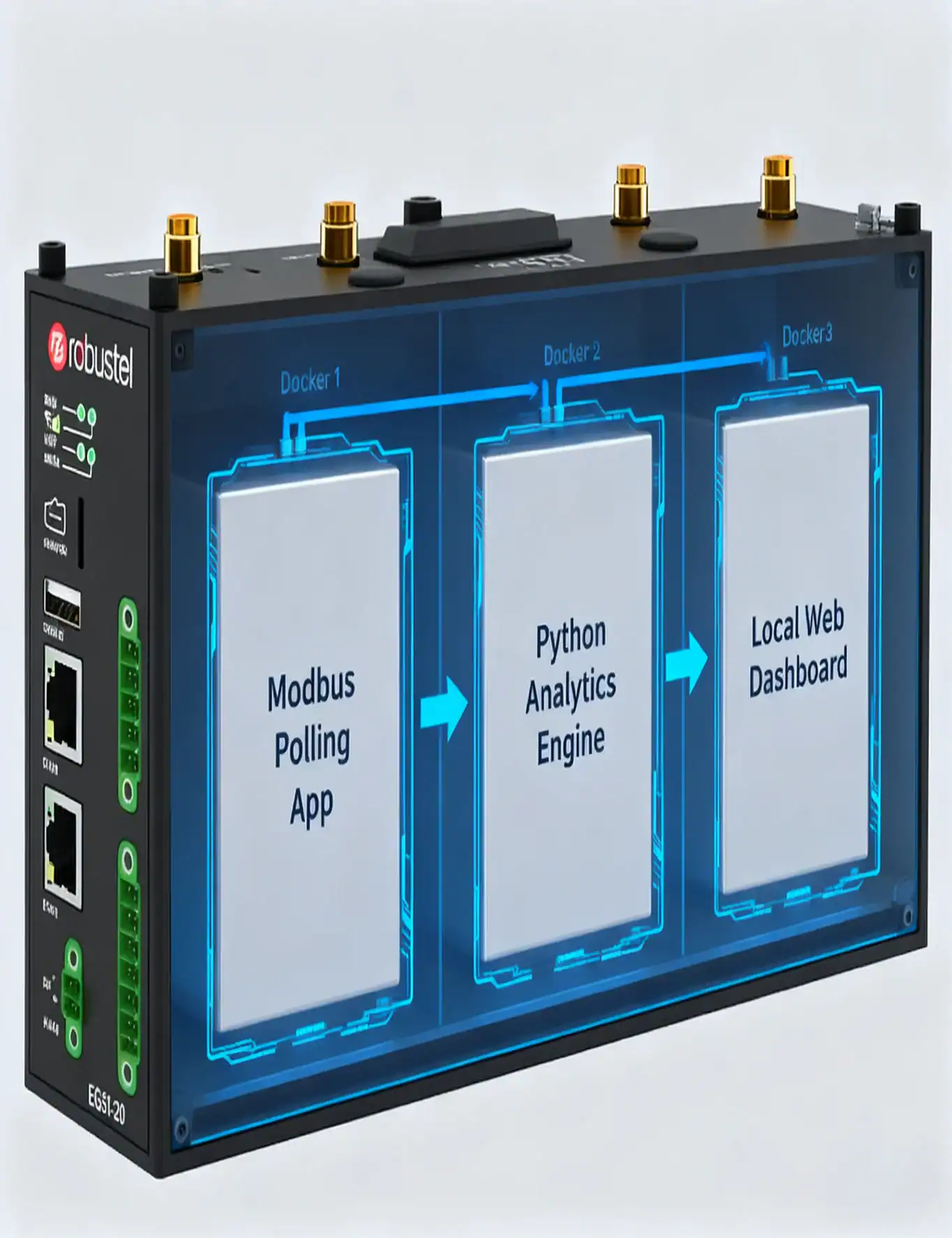
The real ‘aha!’ moment for many architects is the security and stability that isolation provides. You can run multiple applications on the same edge gateway, each in its own isolated container.
- A container for polling Modbus devices.
- A container running a Python analytics script.
- A container for a local web dashboard.
These containers cannot interfere with each other or with the underlying host OS. If one application crashes, it doesn’t bring down the entire gateway.
Benefit #4: Rapid Updates and Rollbacks
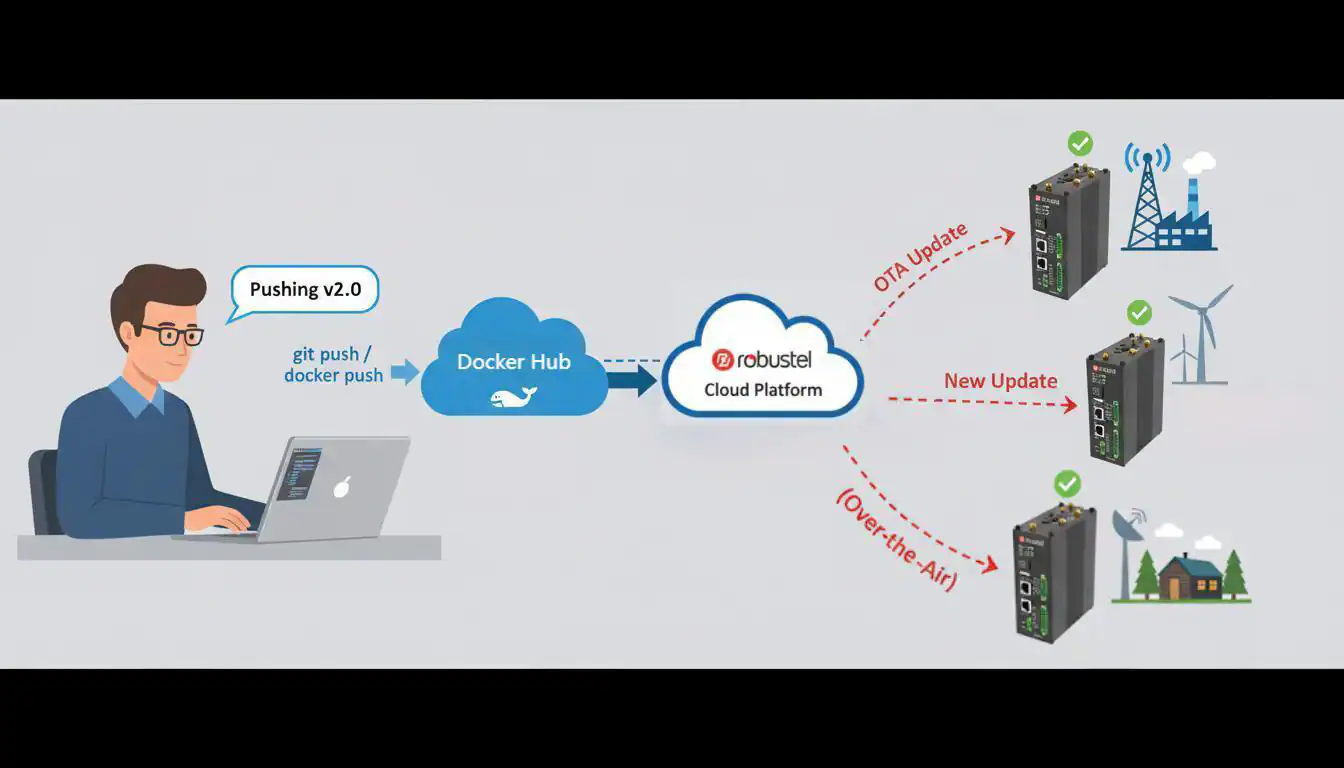
Updating a traditional embedded application can be a risky, complex process. With Docker, it’s incredibly simple. To update your application, you just tell the gateway to stop the old container and run a new, updated version of the container image. If something goes wrong, rolling back is as simple as restarting the previous version.
The Ideal Platform: Docker on an Open, Industrial Gateway
To truly leverage the power of Docker at the edge, you need two things: a powerful hardware platform and an open operating system.
- Hardware: You need a gateway with a modern, multi-core ARM CPU and enough RAM and storage to handle multiple containers.
- Operating System: You need an open OS that provides a standard, up-to-date Docker engine.
This is why a platform like the Robustel EG5120, which combines a powerful Quad-Core ARM CPU with RobustOS Pro (a Debian-based OS), is the perfect environment. It gives developers the hardware performance and the open, familiar software foundation they need to build and deploy containerized applications without limitations.
Managing Your Containers at Scale
So, you’ve deployed your container to one device. How do you manage updates for a fleet of a thousand? This is where a cloud management platform becomes essential. A mature platform like RCMS is designed not just to update the firmware of the gateway, but also to manage the applications running on it. You can use the platform to orchestrate OTA updates for your Docker containers, pushing new versions and features to your entire fleet securely and reliably from a central dashboard.
Conclusion: Modernizing Industrial Edge Development
Docker for IoT edge is no longer just a trend for cloud developers; it is now an essential technology for professional industrial IoT projects. It brings the power, speed, and reliability of modern DevOps practices directly to embedded hardware.
By choosing an open, robust edge gateway that fully supports containerization, you empower your team to build innovative applications, deploy them faster, and manage them more efficiently than ever before. You are no longer held back by environmental inconsistencies or complex deployment pipelines—you are ready for the future of the industrial edge.
Watch: Discover more about the EG5120.
FAQs
Q1: Is Docker fast enough for real-time industrial applications?
A1: Yes. Unlike a traditional virtual machine (VM) that has to emulate an entire hardware stack, a Docker container runs natively on the host OS kernel. This means it has very little performance overhead and is much more lightweight and faster than a VM, making it perfectly suitable for the vast majority of industrial applications.
Q2: What’s the difference between a Docker container and a virtual machine (VM)?
A2: A VM virtualizes the hardware and runs a full, independent guest operating system, which makes it large and slow to start. A container, on the other hand, only virtualizes the application and its dependencies, sharing the same host OS kernel. This makes containers extremely lightweight, portable, and fast.
Q3: What is a Dockerfile?
A3: A Dockerfile is a simple, human-readable text file that contains the step-by-step instructions or “recipe” for building a Docker image. It specifies things like the base OS image to use, the dependencies to install, the application code to copy, and the command to run when the container starts.
About the Author
Robert Liao | Technical Support Engineer
Robert Liao is an IoT Technical Support Engineer at Robustel, specializing in industrial networking and edge connectivity. A certified Networking Engineer, Robert focuses on the deployment and troubleshooting of large-scale IIoT infrastructures. His work centers on architecting reliable, scalable system performance for complex industrial applications, bridging the gap between field hardware and cloud-side data management.