
DTMF Lift Phone Compatibility Guide: What to Test Before Gateway Deployment
The Robustel EV8100 Elevator Voice Gateway supports in-band DTMF, RFC 2833 and SIP INFO, giving lift service providers several ways to carry keypad or autodialler signalling across an analogue-to-IP voice path. In retrofit projects, however, a voice call can connect successfully while DTMF still fails because the lift phone, gateway, SIP service and receiving centre may generate or interpret digits differently.
For installers and maintenance teams, DTMF compatibility should therefore be tested end to end rather than assumed from individual datasheets. This guide uses the Robustel EV8100 to show where digits are created and interpreted, how to test timing and signalling on the installed path, and how to diagnose failures before a lift communication system is accepted into service.
Map Where Digits Are Created and Interpreted
The lift phone may generate tones into an analogue FXS line; the gateway and voice service may carry tones in-band or translate them into signaling events; the receiving centre must interpret the expected sequence.
Record codec, method, digit duration, pauses and the centre’s expected site identifier. A call with clear speech can still fail alarm identification if one digit is missed.
| Test | Observation | Owner |
|---|---|---|
| digit sequence | all digits recognized | monitoring centre |
| audio + DTMF | no clipping | voice provider |
| repeated call | consistent result | installer |
| failover | method survives path change | mobile/SIP owner |
Test the Installed Path Under Real Timing
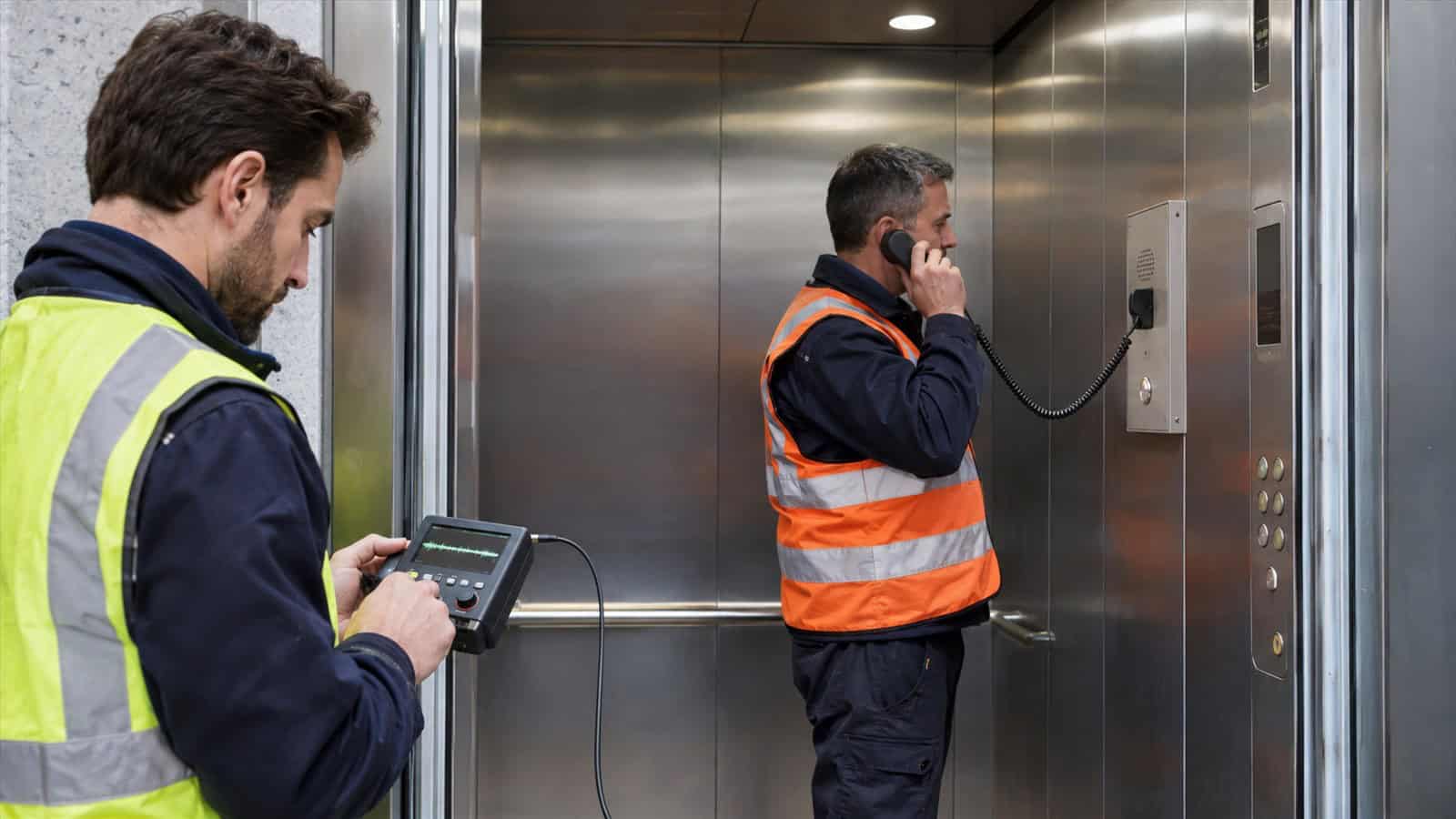
Call from the lift car, not only a bench handset. Travelling cable and installed auto-dialler are part of the analogue path, while busy-hour network conditions can affect VoIP timing.
Repeat calls on each approved SIM/service and after a gateway restart. Confirm caller/site identity, two-way audio, DTMF navigation, disconnect and redial behaviour.
- known digit script
- receiving-centre timestamp
- codec and DTMF mode
- audio observation
- failure and retry result
How the Robustel EV8100 Elevator Voice Gateway Supports DTMF Qualification
| DTMF pain | Verified Robustel EV8100 capability | Signal-path mechanism | Acceptance evidence |
|---|---|---|---|
| analogue digit source | one -48 V FXS interface | receive the installed handset/auto-dialler’s tone path at the gateway | capture the complete digit sequence from the lift car |
| different provider transport | in-band, RFC 2833 and SIP INFO/RFC 2976 DTMF options | select the method that the codec, SIP/mobile service and receiver accept | compare sent and received digits with timestamps |
| failover changes voice path | dual SIM with VoIP/VoLTE capability | repeat the same DTMF test on the alternate approved service | remove primary service and verify identity, digits and audio |
Robustel EV8100 Elevator Voice Gateway’s FXS port bridges the analogue handset to SIP/VoIP or VoLTE paths and documents in-band, RFC 2833 and SIP INFO/RFC 2976 methods.
Those options help match different provider and monitoring-centre designs, but do not establish compatibility by themselves. Select one approved mode and preserve the tested configuration.
If failover changes the voice path, repeat the DTMF test there; data registration on a second SIM is not evidence of accepted voice or digits.
Diagnose a Failed Digit in Layers
First confirm analogue tone generation, then gateway detection/translation, codec and provider transport, and finally receiver interpretation. Change one layer at a time.
Capture timestamps and the centre’s received digits. “DTMF failed” without that evidence encourages random setting changes and hides intermittent faults.
Evidence from Related Deployments
Robustel’s PSTN replacement application example shows the complete chain from analogue handset through FXS and mobile voice service to the receiving endpoint.
Robustel’s TSARO case study demonstrates the operational value of standardised EV8100 deployments and retained fleet records.
The Robustel EV8100 Quick Pitch video below is useful for stakeholder orientation; terminal wiring, carrier acceptance and witnessed calls still require the current product documents and site procedure.
FAQs
Q1. What is DTMF in a lift phone?
It is the tone or signaling method used to send digits such as site identity or menu responses.
Q2. What is RFC 2833 DTMF?
It carries telephone events separately from the encoded audio stream in RTP-based voice systems.
Q3. Why does DTMF fail over VoIP?
Codec, timing, method conversion, provider handling or receiver settings can alter or lose digits.
Q4. Should DTMF be tested after SIM failover?
Yes, because the alternate voice path may behave differently.
Q5. Which DTMF methods does the Robustel EV8100 Elevator Voice Gateway support?
Current documentation lists in-band, RFC 2833 and SIP INFO/RFC 2976.
Conclusion
The Robustel EV8100 Elevator Voice Gateway provides the FXS, cellular voice and management functions for this lift-phone workflow, while the accepted result comes from an authorised end-to-end test in the installed building.
Keep the observed evidence, responsible people and recovery steps together. That record gives the next technician a starting point and prevents a changed network or handset from being treated as the same proven system.
Explore More Articles About Robustel Lift Connectivity




About the Author
Robustel Editorial Team
The Robustel Editorial Team publishes practical articles on industrial connectivity, edge computing, LoRaWAN and device management, focusing on deployment considerations, technical limitations and long-term operation.