
Data Quality at the Edge: Buyer’s Guide to Validation, Deadband and Bad-Value Handling
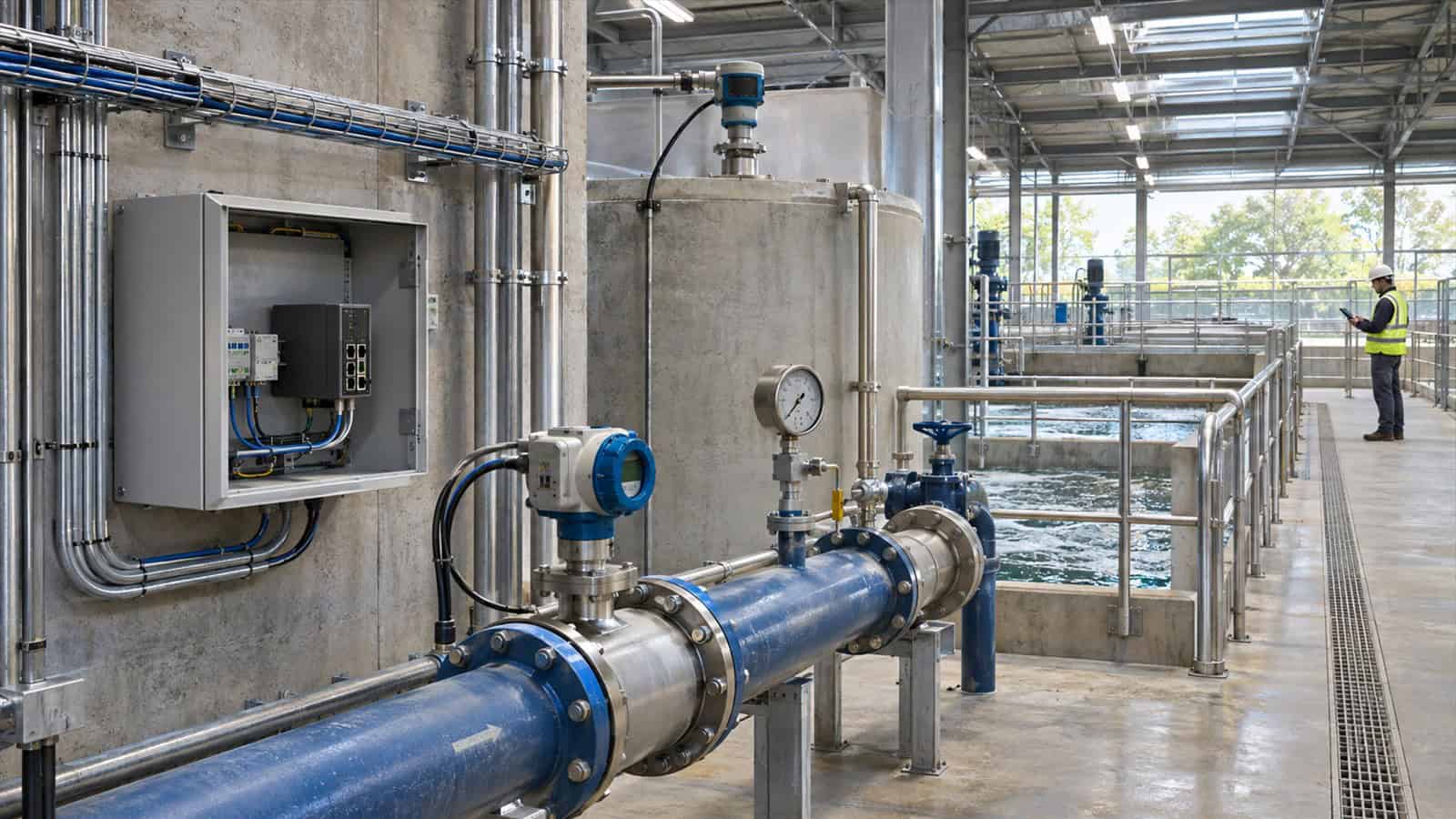
The Robustel EG3120e Edge Computing Gateway provides serial, Ethernet, CAN and I/O interfaces together with local compute, making it a practical acquisition platform for mixed field data. On compatible hardware, Robustel E2C Factory can add a more managed workflow for collection, forwarding, alarms and data operations, helping project teams keep mappings, quality states and outage handling visible rather than distributing them across isolated scripts.
For buyers, the important question is not only whether a gateway can collect a register or sensor value. The design should also define the source identity, raw type, scale, engineering unit, valid range, timestamp source, stale threshold, deadband rule and exception path—and then prove those rules under sensor faults, communication loss and WAN outages.
Start with One Signal and Its Failure Modes
Choose a representative value and record source address, raw type, scale, unit, valid range, timestamp source and stale threshold. Without that contract, a plausible number can be more dangerous than a missing one.
Test open circuit, sensor replacement, negative values, counter rollover and lost time synchronization. Field commissioning should prove that bad states travel with the value instead of being silently replaced.
| Check | Evidence | Bad shortcut |
|---|---|---|
| range | raw and engineering value | clipping without flag |
| freshness | source timestamp and age | arrival time only |
| identity | asset and channel | reused tag name |
| quality | explicit state | zero means bad |
Use Deadband Without Erasing Evidence
Deadband should reduce unnecessary updates only after source dynamics and alarm needs are understood. A slow drift can be operationally important even when every step is small.
Keep raw evidence for selected exceptions and make the deadband configuration versioned. When the threshold changes, downstream analysts need to know why record density changed.
- good, uncertain, bad and stale states
- original timestamp and source
- transformation version
- exception route and owner
How the Robustel EG3120e Edge Computing Gateway and E2C Factory Improve Data Transparency
| Data-quality pain | Verified EG3120e capability | Why it helps | Acceptance evidence |
|---|---|---|---|
| mixed raw sources | up to four RS-485, one RS-232, two analog inputs and CAN | collect close to each source while retaining channel identity | trace one raw value through scale, unit and quality state |
| local validation workload | quad-core 2 GHz Cortex-A53, 2 GB RAM and 8 GB eMMC | run validation, timestamping and bounded local retention at the edge | inject stale/out-of-range values and inspect output state |
| scattered one-off scripts | compatible E2C Factory collection/data operations | make mappings, alarms and outage handling visible in one operated workflow | export the approved configuration and replay an outage |
Robustel EG3120e Edge Computing Gateway offers multiple serial ports, Ethernet, CAN, DI/DO and analog inputs for mixed field data. It can collect close to the source rather than forcing every device through a distant generic interface.
On this compatible hardware, Robustel E2C Factory adds a managed workflow for data collection, forwarding, alarms and data operations. Together they make validation rules and outage handling easier to operate than scattered scripts.
Do not use cleaning to hide source faults. Retain the raw-to-engineering mapping and define who may change it.
Prove the Record Through an Outage
Disconnect one source and the WAN independently. Confirm stale state, local retention where configured, replay ordering and the treatment of current versus delayed values.
Reconcile counts over a full shift and ask the application owner to accept the semantic result, not only the network connection.
Evidence from Related Deployments
Robustel’s machine-builder connectivity application example shows why governed field interfaces and a repeatable support path matter after equipment leaves the factory.
Robustel’s solar monitoring application example adds the remote-site lesson: timestamps, buffering and clear data ownership are as important as collecting a register.
The Robustel video “How to Collect PLC Data for SCADA, MES & Cloud with an Edge Gateway” is useful before acceptance because it follows the data path rather than treating connectivity as the outcome.
FAQs
Q1. What is data quality in IoT?
It is the fitness of data for its intended use, including identity, accuracy, time, completeness and quality state.
Q2. What is deadband in data collection?
A threshold that suppresses small changes; it must not hide meaningful drift or alarms.
Q3. How should bad sensor values be handled?
Preserve the observation, attach an explicit quality state and route exceptions according to consequence.
Q4. Why are timestamps important?
They distinguish when the process changed from when data arrived or was replayed.
Q5. How does the Robustel EG3120e Edge Computing Gateway support data quality?
It provides local interfaces and compute that can host documented validation and collection workflows.
Conclusion
The Robustel EG3120e Edge Computing Gateway provides the physical interfaces and local compute for this architecture, while acceptance depends on traceable data, bounded permissions and a recovery test.
Release the design only when a second engineer can follow one signal from the field source to its consumer and explain what happens when that path becomes stale, invalid or unavailable.
Explore More Articles About Robustel Edge Computing Gateways




About the Author
Robustel Editorial Team
The Robustel Editorial Team publishes practical articles on industrial connectivity, edge computing, LoRaWAN and device management, focusing on deployment considerations, technical limitations and long-term operation.