
Industrial Telemetry Normalization Guide: Units, Scaling and Quality Flags at the Edge
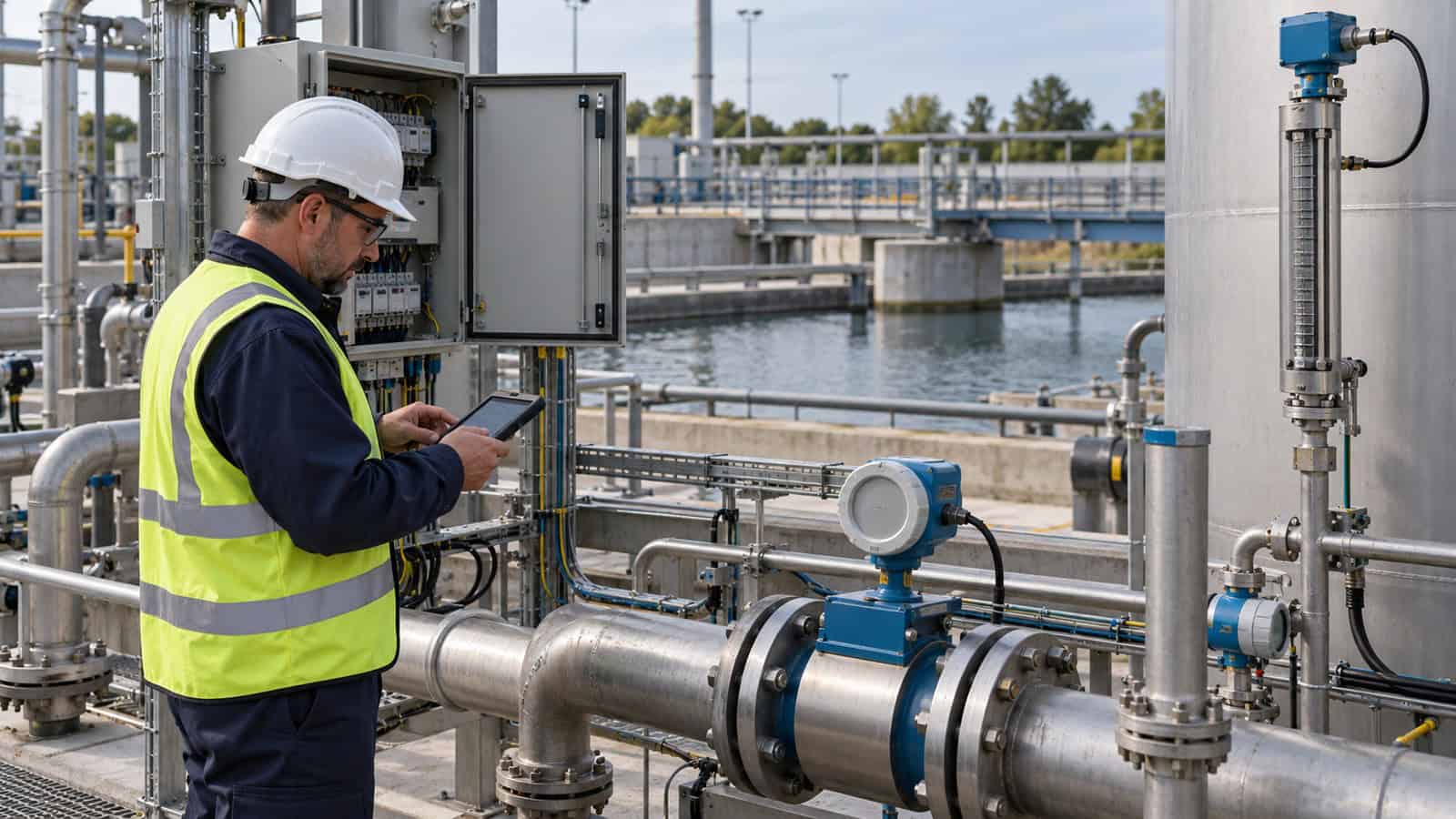
The Robustel EG3120e Edge Computing Gateway is a practical normalization point for serial, Ethernet and I/O telemetry when the project preserves the source value and adds explicit identity, units, scaling, measurement time and quality before northbound delivery.
Follow One Register into a Trusted Record
Suppose a meter returns 2534. It may mean 253.4 V, 25.34 A or an invalid stale register. The edge mapping needs the source device, register, data type, byte order, scale and unit before the value can be compared across assets.
| Field | Example | Why it matters |
|---|---|---|
| raw_value | 2534 | audit and remapping |
| value | 253.4 | usable engineering number |
| unit | V | prevents false comparison |
| asset_id | inverter-07 | binds value to equipment |
| measured_at | source/gateway timestamp | preserves event order |
| quality | good/stale/bad/substituted | stops silent misuse |
Keep Transformations Visible
Store the source register-map revision and transformation rule beside the tag definition. Never replace an invalid value with zero without a quality state; zero may be a legitimate measurement and will create false totals or alarms.
Robustel’s machine-builder application example shows why shipped equipment benefits from a governed data and support boundary. Normalization makes that boundary repeatable: the upstream system receives a stable contract even when field addressing differs between machine revisions.
Test the transformation with known boundary values, not only a normal reading. Include zero, negative values where valid, sensor over-range, missing data and a timestamp discontinuity. The data owner should be able to trace every displayed value back to the source register and rule revision; if that path is missing, a plausible number can pass through the system with the wrong engineering meaning.
How the Robustel EG3120e Edge Computing Gateway Supports Telemetry Normalization
Robustel EG3120e Edge Computing Gateway combines multiple RS-485 ports, RS-232, analogue and digital I/O, CAN, Ethernet and a Debian-based edge environment. It can host the local collection and transformation workload close to the source, reducing the number of undocumented conversions scattered through cloud dashboards.
Pairing Robustel EG3120e with E2C Factory can align the hardware’s field interfaces with a documented workflow for device collection, data management and northbound forwarding. That 1+1 value is operational clarity: engineers can review source, tag and destination in one site workflow while retaining the original measurement context.
The Robustel video of “How to Collect PLC Data for SCADA, MES & Cloud with an Edge Gateway” helps explain where normalization sits between acquisition and delivery. It does not supply the project’s units or scaling rules; those come from device and process ownership.
Approve the combined workflow with a trace test from one raw register through the transformed tag to the receiving application, including its quality and measurement time. EG3120e with Robustel E2C Factory is most valuable when several sources need one reviewable transformation and forwarding process; a simple pass-through project may not need that additional local data-management layer.
Validate Semantics with Known States
Check more than one normal value. Force safe low/high states where possible, disconnect the source, change a known quality condition and restart the gateway. Verify that the destination distinguishes measurement time from receipt time and does not silently reorder replayed records.
Robustel’s smart-parking application example uses another Robustel edge gateway and illustrates how mixed devices need clear roles in one data path. For normalization, that means preserving source identity and quality so a meter value cannot be confused with camera or occupancy events simply because all three reach the same platform.
Set a Data Acceptance Contract
A tag is accepted only when identity, unit, scale, range, timestamp source, stale timeout and quality behaviour are documented. Version the mapping with the PLC, meter or inverter register map. When one side changes, test backward compatibility or roll back both together.
FAQs
Q1. What is data normalisation in IoT?
It is the process of turning source-specific values into a consistent structure with defined identity, units, scale, time and quality while preserving traceability.
Q2. Why are engineering units important?
Units determine meaning. A number without its unit can be compared, alarmed or aggregated incorrectly even when transport is working.
Q3. What is a data quality flag?
It describes whether a value is good, stale, invalid, substituted or otherwise qualified so applications can handle it appropriately.
Q4. Why should raw sensor data be retained?
The raw value supports audit, troubleshooting and correction when a scale, byte order or semantic mapping changes.
Q5. How does the Robustel EG3120e Edge Computing Gateway support normalization?
It provides industrial interfaces and a local application environment where verified collection and transformation logic can run near the source before data is forwarded.
Conclusion
The Robustel EG3120e Edge Computing Gateway fits industrial telemetry projects that need one governed place to acquire and qualify mixed field data. The gateway can carry the logic, but process owners still define what each value means.
Release a tag only when its raw source, transformation, time and quality behaviour survive known-state and failure tests. That acceptance discipline turns successful communications into data an MES, SCADA or cloud application can actually trust.
Explore More Articles About Robustel Edge Computing Gateways

About the Author
Robustel Editorial Team
The Robustel Editorial Team publishes practical articles on industrial connectivity, edge computing, LoRaWAN and device management, focusing on deployment considerations, technical limitations and long-term operation.